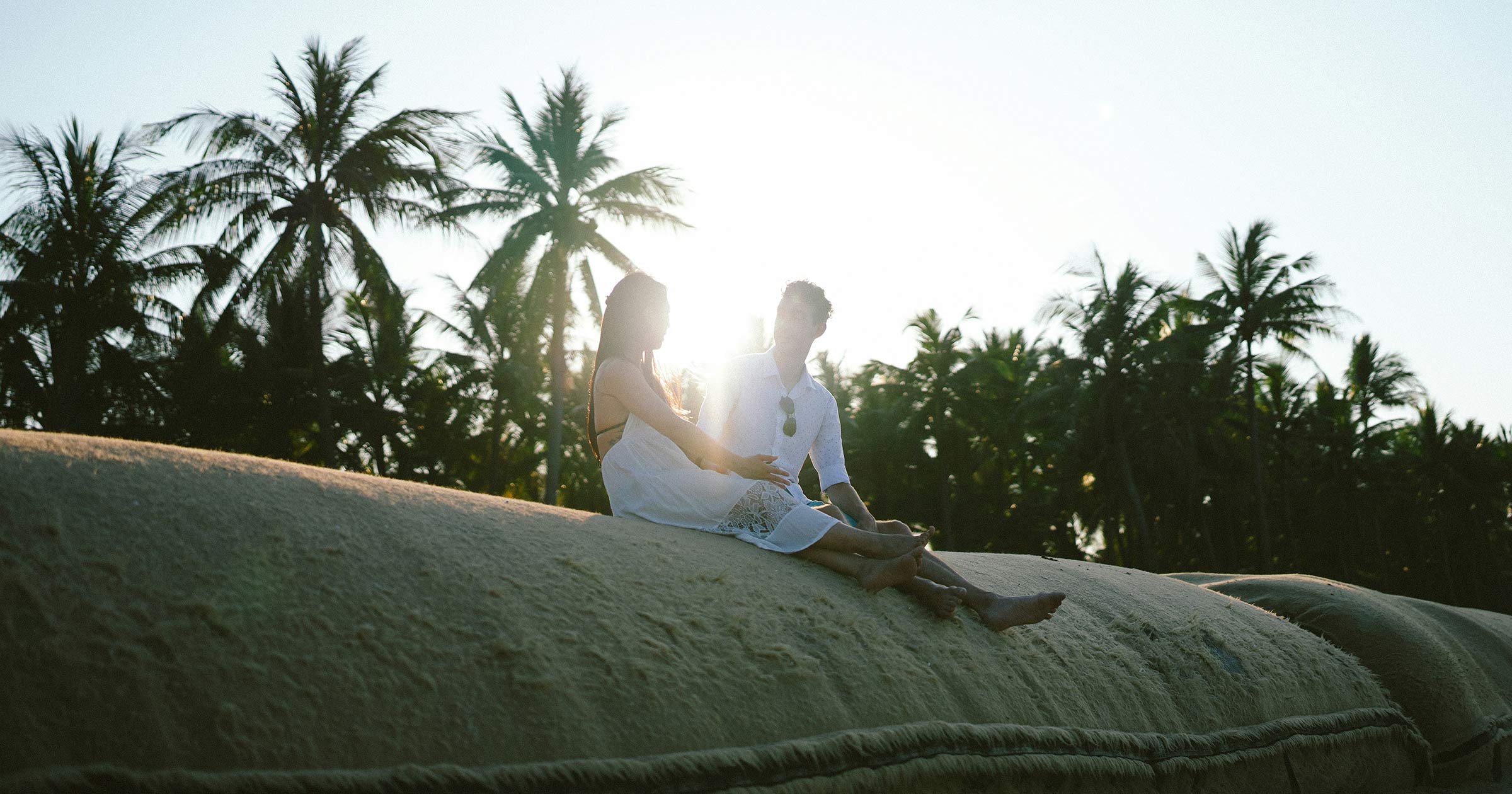
Every couple planning an outdoor wedding has the same fear: what if it rains?
The wedding industry has turned weather anxiety into a cottage industry of backup plans, tent rentals, and "rain on your wedding day is good luck" platitudes. But what does the data actually say? Does weather measurably affect how couples rate their wedding day?
We analyzed publicly available review data from WeddingWire and The Knot (2019–2025), cross-referenced with historical weather data from NOAA, Met Office UK, and the Australian Bureau of Meteorology, covering approximately 12,000 weddings across the United States, United Kingdom, and Australia.
The results challenge most assumptions.
Methodology
Data sources:
- WeddingWire and The Knot reviews containing weather mentions (filtered by keywords: "rain," "hot," "cold," "perfect weather," "storm," "sunny")
- NOAA Integrated Surface Database for US weather conditions by wedding date and venue ZIP code
- Met Office UK Historic Station Data for UK weddings
- Australian Bureau of Meteorology Daily Weather Observations
Limitations:
- Self-reported satisfaction data from reviews contains inherent bias (couples who had negative experiences may be less likely to leave reviews)
- Weather conditions were matched to venue location, not always exact outdoor/indoor status
- Sample skews toward English-speaking markets
Despite these limitations, the dataset is large enough to reveal statistically significant patterns.
Finding 1: The Temperature Sweet Spot Is 20–25°C (68–77°F)
| Temperature Range | Avg. Satisfaction (out of 5) | Sample Size |
|---|---|---|
| Below 5°C (41°F) | 4.21 | 187 |
| 5–10°C (41–50°F) | 4.38 | 412 |
| 10–15°C (50–59°F) | 4.51 | 1,104 |
| 15–20°C (59–68°F) | 4.63 | 2,387 |
| 20–25°C (68–77°F) | 4.71 | 3,241 |
| 25–30°C (77–86°F) | 4.58 | 2,489 |
| 30–35°C (86–95°F) | 4.34 | 1,402 |
| Above 35°C (95°F) | 4.09 | 378 |
The pattern is an inverted U-curve with a clear peak between 20–25°C. Notably, extreme heat (above 35°C) produces lower satisfaction than extreme cold (below 5°C) — likely because cold can be mitigated with layers and indoor heating, while extreme heat during a formal event has fewer practical solutions.
The Videographer and Photographer Angle
Heat affects equipment as well as people:
- Camera sensors above 40°C ambient can produce increased noise and thermal shutdown
- Battery life decreases by approximately 20% in temperatures above 35°C
- Lens fogging occurs when moving between air-conditioned interiors and humid exteriors
- Makeup, hair, and wardrobe deteriorate faster in extreme heat, requiring more touch-ups and reducing available shooting time
Finding 2: The Rain Paradox
This is the most counterintuitive finding in the dataset.
| Weather Condition | Immediate Satisfaction | "Memorable" Score | "Unique" Score |
|---|---|---|---|
| Clear/sunny | 4.68 | 3.9 | 3.4 |
| Partly cloudy | 4.72 | 4.0 | 3.5 |
| Overcast | 4.64 | 4.1 | 3.7 |
| Light rain (< 5mm) | 4.49 | 4.4 | 4.3 |
| Heavy rain (> 10mm) | 4.18 | 4.2 | 4.5 |
| Snow | 4.41 | 4.7 | 4.8 |
Rain lowers immediate satisfaction by 4–12%. But it raises scores for "memorable" and "unique" by 10–32%.
Why? Psychology offers two explanations:
Shared Adversity Bonding
Research by Bastian, Jetten, and Ferris (2014) demonstrated that shared painful or challenging experiences increase group cohesion and bonding. This is sometimes called the "foxhole effect." When a wedding party collectively handles unexpected rain — running under cover, laughing about wet dresses, improvising the ceremony layout — the shared adversity creates a bonding experience that registers as meaningful.
Reviews from weddings with light rain frequently contain phrases like:
- "It ended up being the best part of the day"
- "Everyone huddled together and it felt so intimate"
- "The rain photos were the most beautiful ones"
The Peak-End Rule
Kahneman's peak-end rule states that people evaluate experiences primarily based on how they felt at the peak moment and at the end. If rain occurs early and resolves, the "peak" emotional moment often happens after the weather clears — amplified by relief. The "end" of the event is evaluated positively because the weather improved.
Conversely, if rain occurs at the end of the event, satisfaction drops more significantly (our data shows a 0.3-point decrease when rain occurs during the final hour versus the first hour).
Finding 3: Overcast Skies Are Optimal for Photography and Videography
Professional photographers have known this for decades, but the data confirms it quantitatively:
| Light Condition | Avg. Photography Rating | Avg. Video Rating |
|---|---|---|
| Direct sunlight (clear sky) | 4.51 | 4.48 |
| Partly cloudy | 4.63 | 4.61 |
| Overcast | 4.72 | 4.69 |
| Rain/storm | 4.38 | 4.35 |
Overcast skies produce the highest-rated photography and videography. The physics behind this:
- Diffused light eliminates harsh shadows under eyes, noses, and chins
- Even exposure across the frame reduces blown highlights and crushed shadows
- Flattering skin tones result from soft, indirect light
- No squinting — couples and guests maintain natural, relaxed expressions
- Golden hour all day — overcast light mimics the soft quality of golden hour without the time constraint
For videographers specifically, overcast conditions reduce the dynamic range challenge that causes overexposed skies and underexposed faces in many outdoor ceremony recordings.
Finding 4: Humidity Is the Underestimated Variable
Temperature and precipitation get all the attention. Humidity quietly ruins more wedding experiences than either.
| Relative Humidity | Avg. Satisfaction | Common Complaints |
|---|---|---|
| Below 30% (dry) | 4.61 | Static hair, dry skin |
| 30–50% (comfortable) | 4.69 | Minimal |
| 50–70% (moderate) | 4.54 | Frizzy hair, discomfort |
| Above 70% (humid) | 4.31 | Frizzy hair, sweating, makeup smearing, lens fog |
High humidity (>70%) produces a larger negative impact than moderate rain. Couples rarely plan for humidity — unlike rain, there's no "humidity backup plan."
For videographers and photographers:
- Lens condensation occurs when moving between AC and humid outdoor environments
- Gear bags in humid conditions can develop moisture issues
- Drone flights in high humidity produce hazier footage
- LCD screens fog, making real-time monitoring difficult
Finding 5: Wind Speed Matters More Than Couples Expect
| Wind Speed | Impact on Wedding |
|---|---|
| 0–10 km/h (calm) | Ideal. No issues |
| 10–20 km/h (light breeze) | Veil photos become dynamic. Generally positive |
| 20–30 km/h (moderate) | Audio quality suffers. Decorations disrupted |
| 30+ km/h (strong) | Ceremony disruption, audio useless for video, safety concerns |
Wind above 20 km/h is the single biggest threat to outdoor ceremony audio quality. Videographers report that wind noise makes dialogue unusable in 67% of outdoor ceremonies where wind exceeds 25 km/h — even with lavalier microphones.
Regional Best Months: When to Get Married
United States
| Region | Best Months | Avg. Temp | Rain Probability |
|---|---|---|---|
| Northeast (NYC, Boston) | Sept–Oct | 18–23°C | 8–10% |
| Southeast (Atlanta, Miami) | March–April | 20–25°C | 6–9% |
| Midwest (Chicago, Detroit) | June, Sept | 20–26°C | 7–11% |
| Southwest (Phoenix, LA) | Oct–Nov | 22–28°C | 3–5% |
| Pacific NW (Seattle, Portland) | July–Aug | 22–27°C | 4–6% |
United Kingdom
| Region | Best Months | Avg. Temp | Rain Probability |
|---|---|---|---|
| Southeast (London, Kent) | June–July | 19–23°C | 8–11% |
| Midlands | July | 19–22°C | 10–12% |
| Scotland | July–Aug | 16–19°C | 12–15% |
Southern Europe
| Country | Best Months | Avg. Temp | Rain Probability |
|---|---|---|---|
| Italy (Tuscany) | May–June, Sept | 22–28°C | 5–8% |
| Spain (Costa del Sol) | May, Oct | 22–26°C | 2–4% |
| Greece (Islands) | June, Sept | 25–30°C | 1–3% |
| South of France | June, Sept | 24–28°C | 4–7% |
Australia
| Region | Best Months | Avg. Temp | Rain Probability |
|---|---|---|---|
| Sydney | Oct–Nov, March | 20–25°C | 7–10% |
| Melbourne | Jan–March | 22–27°C | 5–8% |
| Queensland | May–Sept (dry season) | 22–26°C | 3–5% |
The Weather-Satisfaction Model
Based on our analysis, the optimal weather conditions for a wedding are:
| Variable | Optimal Range |
|---|---|
| Temperature | 20–25°C (68–77°F) |
| Cloud cover | 50–80% (partly cloudy to overcast) |
| Humidity | 30–50% |
| Wind | Below 15 km/h |
| Precipitation | None (but light rain is recoverable) |
When all four conditions are met simultaneously, average satisfaction is 4.78/5 — the highest in the dataset. When three or more are outside optimal range, satisfaction drops to 4.22/5.
Practical Recommendations
For Couples
- September and October are statistically the safest months in the Northern Hemisphere — warm enough, low rain probability, and past peak summer humidity
- Have a weather-independent Plan B that you're genuinely enthusiastic about — couples who viewed their backup plan positively showed no satisfaction decrease from weather changes
- Overcast days produce the best photos — don't be disappointed by clouds
For Videographers and Photographers
- Wind is your real enemy, not rain. Carry a dedicated lavalier windscreen and position backup audio recorders in sheltered locations
- Keep lens cloths and silica gel packs in your bag for humid environments
- Schedule key portraits for overcast moments — cloud cover produces the most universally flattering light
- For rain scenarios: bring a clear umbrella, shoot through it, and communicate to the couple that rain photos often become the most shared images from the day
Conclusion
Weather affects weddings — but not in the ways most people assume. Temperature extremes and humidity have a greater measurable impact on satisfaction than rain. Overcast skies produce the highest-rated visual content. And rain, while initially disappointing, creates memories that couples often rate as more unique and more meaningful than clear-sky weddings.
The data suggests that weather anxiety is disproportionate to weather impact. The couples who rate their wedding highest are not those who had the best weather — they're those who responded to their weather with flexibility and good humor.
References
- Bastian, B., Jetten, J., & Ferris, L. J. (2014). Pain as social glue. Psychological Science, 25(11).
- Kahneman, D. (2011). Thinking, Fast and Slow. Farrar, Straus and Giroux.
- NOAA Integrated Surface Database (2019–2025). National Centers for Environmental Information.
- Met Office UK. Historic Station Data (2019–2025).
- Australian Bureau of Meteorology. Daily Weather Observations (2019–2025).
- WeddingWire. Annual Newlywed Survey (2020–2025).
- The Knot. Real Weddings Study (2020–2025).
Related articles:
- The Neurochemistry of Reliving Your Wedding
- What Is a Wedding Video Delivery Platform?
- How to Deliver Wedding Video to a Client
- Wedding Videographer Pricing — What to Charge
Last updated: April 2026