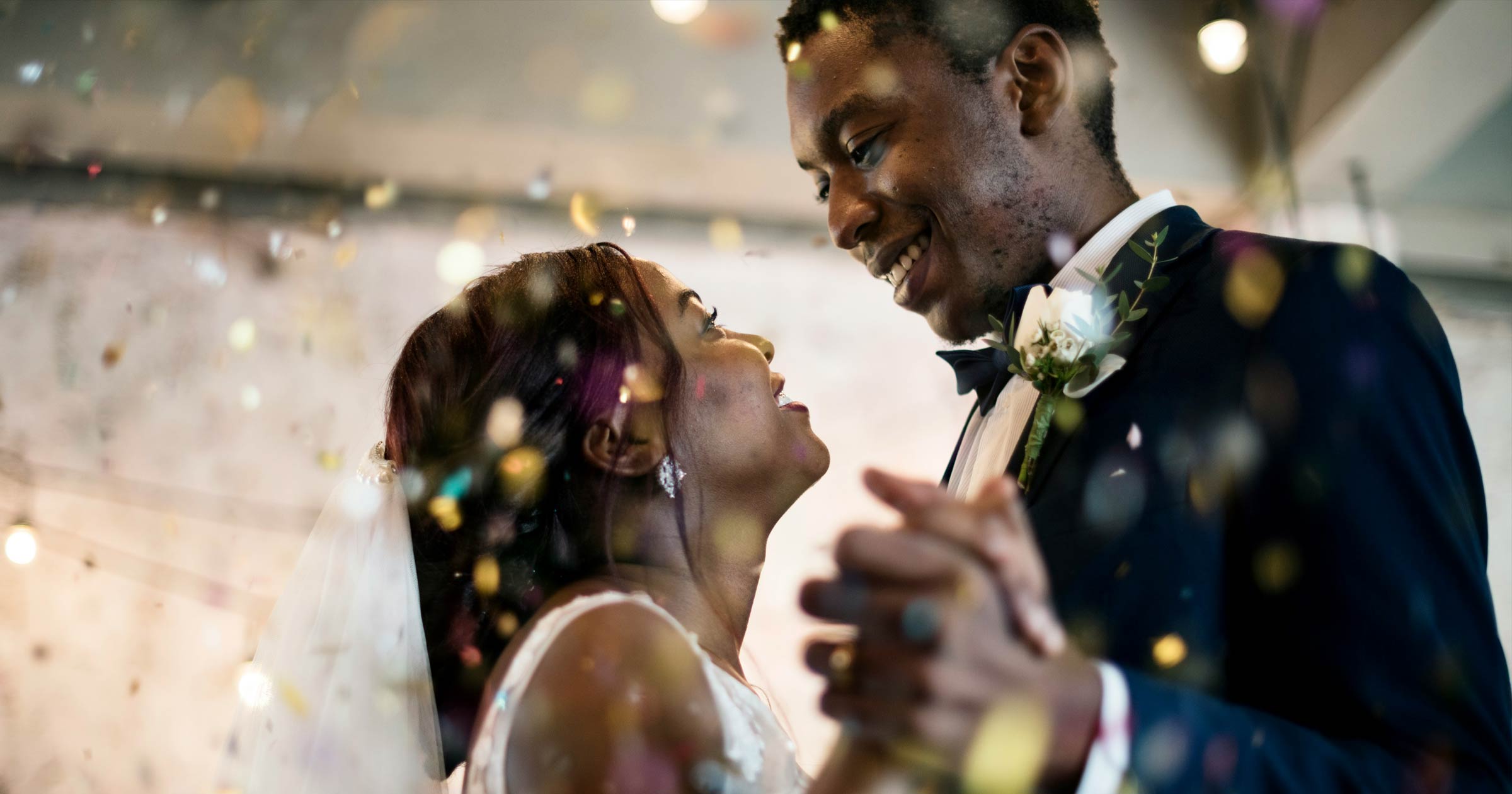
A couple sends a song. "It's our song, it was playing when Nate proposed. Can we use it in the film?"
You know the answer. The couple doesn't. They bought the track on iTunes, it's on their playlist, the DJ played it at the wedding. Whose song is it, if not theirs?
And then six months later, a second message arrives. "We posted the film on YouTube, and there's an insurance ad in the middle of the vows." Or: "Facebook muted the sound." Or the most annoying: "Our grandmother lives in Germany, and the video won't play for her."
Music is the part of a wedding film that videographers debate the most. Forums have been repeating the same myths for decades: "If the film is personal, it's okay," "If it's no longer than 30 seconds, it's okay," "If you list the artist in the credits, it's okay." None of them stand up to the law. And libraries that sell licenses write guides about themselves and rarely explain what their license specifically prohibits. This guide explains what American law says, straight from the source, without legalese, what a synchronization license is, what Musicbed, Artlist, Soundstripe, and Track Club actually allow (and what happens to your videos if you cancel your subscription), whether it's even legal to include a popular song in a film, how Content ID works on a couple's channel, and where you can upload a film without any surprises. This isn't legal advice: consult a lawyer about any disputed case. But after reading this article, you'll know what questions to ask.
Can Wedding Videographers Use Copyrighted Music?
The short answer: yes, if you have a license. Without a license, no, and the personal nature of the film doesn't change that.
Here's where it comes from. The US Copyright Act (Title 17 of the U.S. Code) grants the author a set of specific, exclusive rights: to reproduce the work, create derivative works, distribute copies, and perform it publicly. When you add a song to the timeline and export a film, you create a copy of the song within the new work and give that copy to the client for money. That involves several of these rights, and none of them belongs to you or to the couple.
"But the couple bought the song." Purchasing a track grants the right to listen to it, not to include it in the film. Apple's Media Services Terms, which cover music sold on iTunes, state this explicitly: you may use content "only for personal, noncommercial purposes." Your film is a commercial work, and you're getting paid for it. With a streaming service subscription, things are even stricter: the couple doesn't even own the file.
"But that's fair use." Fair use is a real protection in American law, but it's decided by the courts on a case-by-case basis. The US Copyright Office lists four factors, and almost all of them work against a wedding film. Purpose: a commercial, commissioned work, not an educational or noncommercial one. Nature of the work: the Office explicitly lists songs among creative works for which fair use is recognized less often than for factual works. Amount used: a highlight typically uses half a song or the entire song. Effect on the market: licensing music for video is an existing market, and you're bypassing it. The Office adds that there is no rule about an acceptable number of notes or a percentage, and advises, when in doubt, to ask permission. So, "30 seconds is fine" is a myth.
"But I'll credit the artist in the credits." Crediting the artist is a courtesy, not permission. Music libraries, by the way, often ask for track credit, but on top of the license, not instead of it.
How dangerous is this really? The law provides for so-called statutory damages. The copyright holder doesn't have to prove how much they lost: the court can award between $750 and $30,000 for each work, and up to $150,000 if the infringement is willful. A videographer who has been putting popular songs into films for years is unlikely to be able to convince the court that he didn't know a license was needed.
And let's be honest about the other half. There are almost no high-profile lawsuits against wedding videographers in America. The best-known story dates from 2011. A video of Dallas Cowboys quarterback Tony Romo and Candice Crawford's wedding, edited to Coldplay's "Fix You," went viral. Then it disappeared. As ABC News reported, the videographer who filmed the wedding received a letter threatening a lawsuit, both by mail and by fax. He called it "super scary." The matter ended with a settlement and an agreement not to talk about it. A representative of ASCAP, one of the largest American royalty collection organizations, said at the time that it would be rare for anyone to go after someone over a wedding video. And the Harry Fox Agency, which collects royalties for music publishers, responded more simply: if you use music, get permission.
The risk of a lawsuit is small. But the real cost of unlicensed music isn't a lawsuit. It's a film you can't show in your portfolio. It's a couple whose film gets muted on Facebook. It's a letter that makes you spend a week redoing old work.
What Is a Sync License?
Let's start with a fact that surprises even experienced videographers: every song has at least two owners.
Copyright law lists these as two different types of works. The first is a musical work: the melody and lyrics written by the author. This is usually controlled by a music publisher. The second is a sound recording: a specific performance recorded in a studio. This is usually owned by a label. "Fix You" as a song belongs to the authors and their publisher. Coldplay's recording of "Fix You" from the album belongs to the label.
Hence the two licenses:
| License | What it permits | Who to apply to |
|---|---|---|
| Sync | Combine a musical work with an image: put a song in a film | Publisher (on behalf of the songwriters) |
| Master use | Use a specific recording of this song | Label (on behalf of the artist) |
The word "sync" here is literal: the music is synchronized with the image. Hence the name. When libraries like Musicbed write "sync license," they mean both: the library has contracts with both the authors and the owners of the recordings, and they give you everything in one package. That's their main value: not the catalog, but the fact that you don't have to track down two owners for each track.
What if I play a cover? Many people think that making their own recording solves the problem: the recording is yours, no label is needed. That's half true. The recording is indeed yours, but the song is still someone else's, and a synchronization license from the publisher is still required. American law has a mechanism by which a cover can be released without the author's consent, by paying a set fee. But this mechanism applies to audio releases: the law defines "phonorecords" as recordings of sounds "other than those accompanying a motion picture or other audiovisual work." A wedding film is an audiovisual work. So, a guitar cover by the groom's brother, recorded at the wedding, also can't be included in the film without the publisher's permission.
Music that belongs to no one. Works in the public domain can be used freely: Pachelbel, Wagner, Mendelssohn. But be careful with two things. First, a specific orchestral recording may be recent and protected, even if Mendelssohn died long ago—get recordings from libraries. Second, "well-known" doesn't mean "belongs to no one." Until 2015, "Happy Birthday to You" was licensed in films; Warner/Chappell claimed the rights. Only when documentarians filed a lawsuit did Los Angeles federal judge George King rule that the company didn't have a valid copyright in the lyrics. In 2016, Warner/Chappell agreed to a $14 million settlement, and the song was declared public domain. If people paid for decades even for "Happy Birthday," everything is worth checking.
How to License Music for Wedding Video
A wedding videographer has essentially three paths. The table is for quick selection, and details are below.
| Path | How it works | Who it's for | Main pitfall |
|---|---|---|---|
| Library subscription | Pay monthly or annually, use the tracks in all projects created during the subscription | For those who shoot more than 5–6 weddings per year | Not every plan covers client work; cancellation policies vary |
| Single-track license | Pay for one track per project, perpetual license | For rare projects and tracks outside the subscription | Expensive if the film has many tracks |
| Popular song, direct license | Negotiating with the publisher and the label | Almost no one | Long, expensive, often without a response |
How to read a license in ten minutes. Don't look for the word "royalty-free": it only means you don't pay royalties for each use, not that the music is free or legal for everything. Look for answers to five questions:
- Does the plan cover client work? This is the most common mistake. Many cheap plans are only for the subscriber's own channels. A wedding paid for by a couple is client work.
- Does it cover promoting your business? A film for a couple and the same film in your portfolio or advertising are different things from the perspective of many licenses.
- What happens to published films after cancellation? This is where libraries have the biggest differences (below).
- How do I resolve Content ID claims on other people's channels? On your channel, it's clear. But on the couple's channel?
- What do you receive? A certificate or proof of license for each project. This is what you'll show three years from now.
Paperwork, right away. Soundstripe specifically recommends downloading the Proof of License before handing over a project to a client. This is a good habit for any library: in each wedding folder, add PDF licenses for all tracks, with the track name and date. After three years, your library account may look different, your subscription may have ended, and that's when a claim on the couple's channel will arrive.
Best Music Licensing for Wedding Videos
Below are the four libraries most frequently mentioned by wedding videographers. We don't compare sound: that's a matter of taste, and we've compiled a separate selection of specific songs by genre in the wedding video songs collection. This is only what's stated in their terms.
| Library | Client plan | Price as of November 2, 2026 | What happens after cancellation | Content ID |
|---|---|---|---|---|
| Musicbed | Individual → Wedding Filmmaker: "Wedding Clients Only" or "Wedding & Commercial Clients" | Wedding Clients Only — $79.99/month (with SFX $89.98); Wedding & Commercial Clients — $99.99/month (with SFX $109.98); annual subscription | Annual contract; early cancellation voids subscription licenses; downloaded songs can't be used in new videos after the plan ends | SyncID for YouTube |
| Artlist | Music & SFX Pro ("For client work & commercial use"); Social plan — personal use only | Pro Music & SFX — $299/year ($24.92/month); Pro Music — $16.58/month when paid annually | For subscribers after November 2022 — only videos published during the subscription | Clearlist: channels and videos added during the subscription remain cleared |
| Soundstripe | Pro / Pro Plus | Pro $39.99/month or $239/year; Pro Plus $69.99/month or $399/year | Cannot be used in new projects | YouTube allowlist: Pro up to 5 channels + codes |
| Track Club | Business ("freelancers with end clients") | Business $39/month when paid annually | — | Up to 3 channels per platform (Business) |
Now, the details worth reading licenses for, not reviews.
Musicbed: an annual contract. This is the leader in the wedding niche, and its guide is the top search result. The main thing to know: all Musicbed subscriptions are annual contracts lasting 12 months, even if you pay monthly. Licenses issued with a subscription become perpetual only after you've completed the entire term. If you cancel early, then, according to Musicbed, the licenses become "null and void." After the subscription ends, downloaded tracks cannot be used in new videos. Musicbed also offers a Wedding Single Song License—a license for one track for a specific couple. It's perpetual and allows the couple to publish the film, and you can upload the same edit as an archive to your website or channels, but without advertising text or contact information in the description. Promotional licenses are required for business promotion.
Artlist: the story of a letter. Many still believe Artlist is a "perpetual license": downloaded while subscribed, use it forever. This was indeed the case. In January 2026, editor and educator Larry Jordan published a letter from his reader Rich Kuenneke. He had received a claim on YouTube for an Artlist track; the library cleared it and then sent a letter explaining the rules. It turned out that for those who subscribed after November 2022, the license only covers videos published while the subscription was active. Existing subscribers retained their previous terms. For a wedding videographer, this means something simple: everything you uploaded and published while subscribed is protected if the channel or video is on Clearlist. A track downloaded in 2025 and used in a film a month after cancellation is no longer licensed.
Soundstripe: licensed in your name. Pro and Pro Plus are clearly labeled as plans for freelancers creating content for clients. An important detail from their help: the license is non-transferable and is issued in your name as the account owner. Clients don't need their own account, and they can use the project as long as your license is valid. Hence the advice: add a Proof of License to the project folder before delivery. For YouTube, Pro allows up to five channels in the allowlist, plus codes.
Track Club: read the plan, not the review. It's often recommended to wedding videographers for its low price, and reviews often say the Individual plan is enough for all your weddings. The official pricing page states otherwise: Individual — "for individuals creating content for their personal channels," only web, social media, and podcasts. For client work, choose Business. The price difference is threefold, and that's exactly the difference you'll save until your first audit.
Epidemic Sound is also popular, especially for short videos. According to Epidemic's blog, Pro subscribers have a convenient feature for weddings: an invitation link that allows clients to clear their videos themselves—up to five videos per link, valid for 30 days.
Back-of-the-napkin math. Let's say you shoot 25 weddings a year. Each requires 4–6 tracks: one or two for a highlight, several more for the full film, and a separate track for a vertical video (that's our estimate). Let's say that's five. If you buy each track separately through Soundstripe Digital for $199 with the option to license on behalf of clients, a wedding would cost around $1,000 for music alone. A Soundstripe Pro subscription for $239 per year gives you about $10 per wedding. A hundredfold difference. Subscriptions aren't a matter of taste; they're simply business arithmetic. Purchasing individual tracks makes sense for one special track that's not included in your subscription.
How to License Popular Music for Wedding Video
Let's get back to the couple who wants "their song." Is it legal to do so? Yes, it is. But let's be honest about what it looks like.
You need two permissions: a sync license from the publisher and a master use license from the label. A popular song often has multiple authors and multiple publishers, each with their own share. You can find them through the databases of royalty-collecting organizations: ASCAP, BMI, SESAC. Then you need to write to each of them, negotiate with each, and wait for a price that no one will name in advance. For a film that's due in eight weeks, it's a lottery.
There are services that license commercial music for videos, such as Lickd. But pay attention to the terms: these are usually licenses for publishing on specific platforms, and they don't cover everything a wedding needs.
Therefore, a videographer has three viable options:
| Option | How it sounds for the couple | What's important |
|---|---|---|
| Similar track from a library | "We'll find a song with the same vibe that we can legally play" | The most common solution; send the couple 3-4 options |
| Custom music | "Your film will have its own unique melody" | Musicbed, for example, offers collaboration with an artist on a custom soundtrack; expensive, but sometimes a gift from parents |
| Separate license | "We can try to get permission—it will take time, and the price is unknown" | Only if the couple is willing to wait and pay |
About music playing in the venue. The first dance, where the DJ plays "their song," is a common occurrence. It seems that since the song is playing in the frame as part of the event, it's no longer music in the edit. But your film still ends up with someone else's recording of someone else's song, and the DJ's permission doesn't apply (for the reasons, see the section on licensing music at the venue below). The solution is the same as for editing: either license the track or use a different track.
How to talk to the couple. Don't lecture them on the law. Explain in one sentence why: "If I use this song, you won't be able to post the film on YouTube or Facebook; it will be muted or blocked. But I want you to be able to show it to everyone." It's true, and it's about their interests, not yours. We discussed why a recognizable song isn't always the best choice for a film in a study on music in wedding films.
Wedding Video Music Copyright
Even if you have everything licensed, the film lives on without you. The couple posts it on YouTube, Facebook, Instagram. And that's where Content ID comes in.
How Content ID Works
Content ID is YouTube's system that compares every upload against a database of audio and video content provided by copyright holders. When it finds a match, it applies the rule chosen by the copyright holder: block the video, monetize it with ads, or simply track views. The rule can vary by country: in one country, a video may be shown with ads, while in another, it's blocked. That's why a film might not work for a grandmother in Germany, while everything works for a couple in Ohio.
The scale is so large that no one checks each claim. According to YouTube's transparency report, Content ID processed more than 2.5 billion claims in 2025. More than 90% of these were monetized by the copyright holders: the video remains, but the advertising revenue goes to them. For a wedding film, this means an insurance ad in the middle of the vows. Fewer than one in a hundred claims are contested.
An important distinction: a Content ID claim is not a strike. YouTube explicitly states that a claim doesn't lead to a strike, but a formal copyright takedown request does. Strikes can add up and can result in the channel being deleted. A claim simply says "the music in this video has an owner."
A separate note about Facebook and Instagram. According to Lickd, when uploading directly, they simply mute videos in which they recognize someone else's music. A wedding film without sound is a film without meaning.
When the Couple's Video Gets Claimed
A library license doesn't prevent the system from finding the track: even Musicbed writes that SyncID doesn't prevent a claim, but rather clears it. This means you need a plan for when the couple sends a screenshot.
| Library | How to remove a claim on a couple's channel |
|---|---|
| Musicbed | SyncID: clearing YouTube claims for subscribers |
| Artlist | Add a channel or video to Clearlist during your subscription |
| Soundstripe | Allowlist channels (Pro — up to 5) and codes; Proof of License |
| Epidemic Sound | Invitation link for the client (up to 5 videos, 30 days) |
| Track purchased separately | License certificate — dispute claims |
A practice that saves correspondence: along with the film, send the couple a short email stating, "If YouTube shows a claim for the music, don't worry, send me the link, I'll clear it within a day." And keep the licenses handy. If the couple uploads the film to YouTube in "private" mode, it's helpful to remember that YouTube scans every upload. For more information on access modes, see the article about private videos on YouTube.
Two Versions: The Film and the Social Cut
The most reliable approach, used by many studios, is to create two versions from the start. A film for the couple and a separate short video for social media, where the track is clearly approved for publication on the couple's channels: from your subscription, an allowlisted channel, or with a separate license.
This solves several problems at once. The couple receives a film with the music you chose for the story. And for Instagram and Facebook, they have a ready-made vertical or horizontal video that won't be muted. No one needs to cut the film on a phone.
There's also technical insurance: store the music on a separate track. If something happens to the track in three years, you can replace the music in one evening without affecting the voices. We showed how to export stems in the guide on exporting from Final Cut Pro; in any editing program, it's enough to keep the music on its own tracks and save the project with the master. And why sound matters more than you might think is covered in sound quality research.
It's convenient to deliver the two versions together. In the OurStoria client gallery, the full film, highlight, and short video for social media are all located side by side, as separate videos, and the couple can see them all via a single link with your logo. Label the video clearly: "For Instagram & Facebook"—and the couple will know where to post.
Where Can I Upload Videos With Copyrighted Music?
This question is frequently searched, and the honest answer is: nowhere, if we mean "where can I legally upload a film with unlicensed music?" The law is platform-agnostic. A private link, password, cloud drive, or flash drive all affect who sees the film and whether automated systems will find it. But they don't change whether you have the rights.
We say this frankly, even though we ourselves create a platform for uploading films. Our terms of service require that videographers have the rights to everything they upload, including music. And according to our DMCA policy, we don't pre-screen uploads, but we do respond to a valid notice from the copyright holder by removing the material. No platform will turn an unlicensed song into a licensed one.
The correct question is: where can I upload a film with licensed music so that automated systems don't ruin it? There's an answer here.
Public platforms are designed for everyone to watch videos and automatically protect copyright holders. Sometimes, this happens by mistake: the system doesn't know about your license until you show it. This results in ads in the middle of the vows, blocking in certain countries, and muted sound.
A private gallery is designed differently because it has a different purpose: to show the film to the couple and anyone else the couple shares the link with. OurStoria's private gallery opens via a long, random link, is hidden from search engines, and can be password-protected, and photo and video downloads can have separate passwords (how it works). The gallery is ad-free, and a film with your licensed music won't be muted or blocked by automatic systems like Content ID. A grandmother in Germany sees the same thing as a couple in Ohio.
But a private gallery doesn't replace a license. If the couple wants to upload the film to YouTube, the licensing issue will immediately arise. Therefore, there's only one correct path: licensed music—and then the film lives comfortably both in the gallery and on the couple's channel.
Do You Need a License to Play Music at a Wedding?
This is the most frequently searched question on this topic, and it's usually about something else: is a license required for music to be played in the venue? We won't answer this question for venues and DJs—those are their contracts.
For a videographer, one thing is important. Even if a venue or DJ has everything they need to play music in the venue, that permission covers performing the music in that venue, that evening. The law lists rights separately: performing a work publicly is one thing, reproducing it, that is, making copies, is another. Your film is a copy that will then be viewed for years on different screens. A DJ's license doesn't cover that.
So the phrase "the DJ has everything licensed" has no bearing on the film. This is easy to explain to couples who have already had "their song" played at their wedding.
Music in Your Contract and Portfolio
Two things people remember only when it's too late.
Contract. Music in the contract should be a separate clause. What should be included (this isn't a lawyer's template, but a list of topics):
- the videographer selects music from licensed sources; the couple's preferences are taken into account based on mood and genre;
- the videographer will use a specific commercial song only if licensed; if the couple requests such a song, the cost and licensing terms are discussed separately;
- what the couple can do with the film: watch, store, share the link; publishing on platforms—according to the track license terms;
- who resolves claims on the couple's channels, and how (you, upon request, within a certain period);
- music changes at the couple's request are a paid edit.
Our free contract template for videographers has a section on copyright and usage rights; add a music section next to it and show the text to your lawyer.
Portfolio. Even those who license everything make mistakes here. Many licenses distinguish between "film for a client" and "promotion of your business." Musicbed's Wedding Single Song License doesn't cover promoting a video studio; that requires promotional licenses. A highlight on your website's home page, in ads, or on the studio's Instagram account is promotion.
If you're displaying work through an OurStoria portfolio, keep in mind: this is a public page, visible to search engines, and its purpose is to attract new clients. The same applies to a gallery embedded on your website. Films there require licenses that cover business promotion. It's easiest if your subscription covers both client work and your own marketing; if not, choose films whose tracks are licensed for promotion for your portfolio.
Check your portfolio page right now: open each film and remember where the music is from. If you can't answer, it's a prime candidate for a track replacement.
Once the music is perfect, all that's left is to deliver the film in a way that's convenient for the couple. In OurStoria's client galleries, the full film, highlight, social media video, and photos are all available under a single link with your logo. Viewers don't need to register, and the couple downloads the exact file you uploaded—with your own mix of music and voices. Try it with your latest wedding: upload the film and social media video, set a password for the download, and open the link on your phone—the same way the couple will open it.
Start a 7-day free Pro trial →
We've covered the entire delivery process—from the deadlines you promise during the consultation to the email a week after delivery—in our guide on how to deliver a wedding film to a client. And the export settings that ensure the music and voices sound exactly as you mixed them are in the Premiere Pro export guide.
The Song They'll Hear for Forty Years
Years will pass. Olivia and Nate will rewatch the film on their anniversary. Grandpa Walt will forward the link to the neighbors. Aunt Peggy will post a snippet on Facebook to show off her great-niece.
And every time, the music you selected will play.
A film with licensed music is a film you can show. No ads in the middle of the vows. No silent first dance. No letter from the lawyers three years from now.
They will remember the song. Let it be the one no one will take away from them.
Related articles:
- Wedding Video Songs
- The Soundtrack Effect: How Music Selection in Wedding Films Shapes Emotional Memory — A Psychoacoustic Analysis
- The Sound of a Wedding: How Audio Quality Determines Whether Couples Treasure or Forget Their Film
- How to Upload a Private Video on YouTube (2026 Step-by-Step Guide)
- Final Cut Pro Export Settings for Wedding Video: MP4, 4K, Compressor and Loudness
- How to Deliver Wedding Video to a Client: A Step-by-Step Workflow
- Download Passwords for Wedding Galleries: Guests Watch, the Couple Downloads