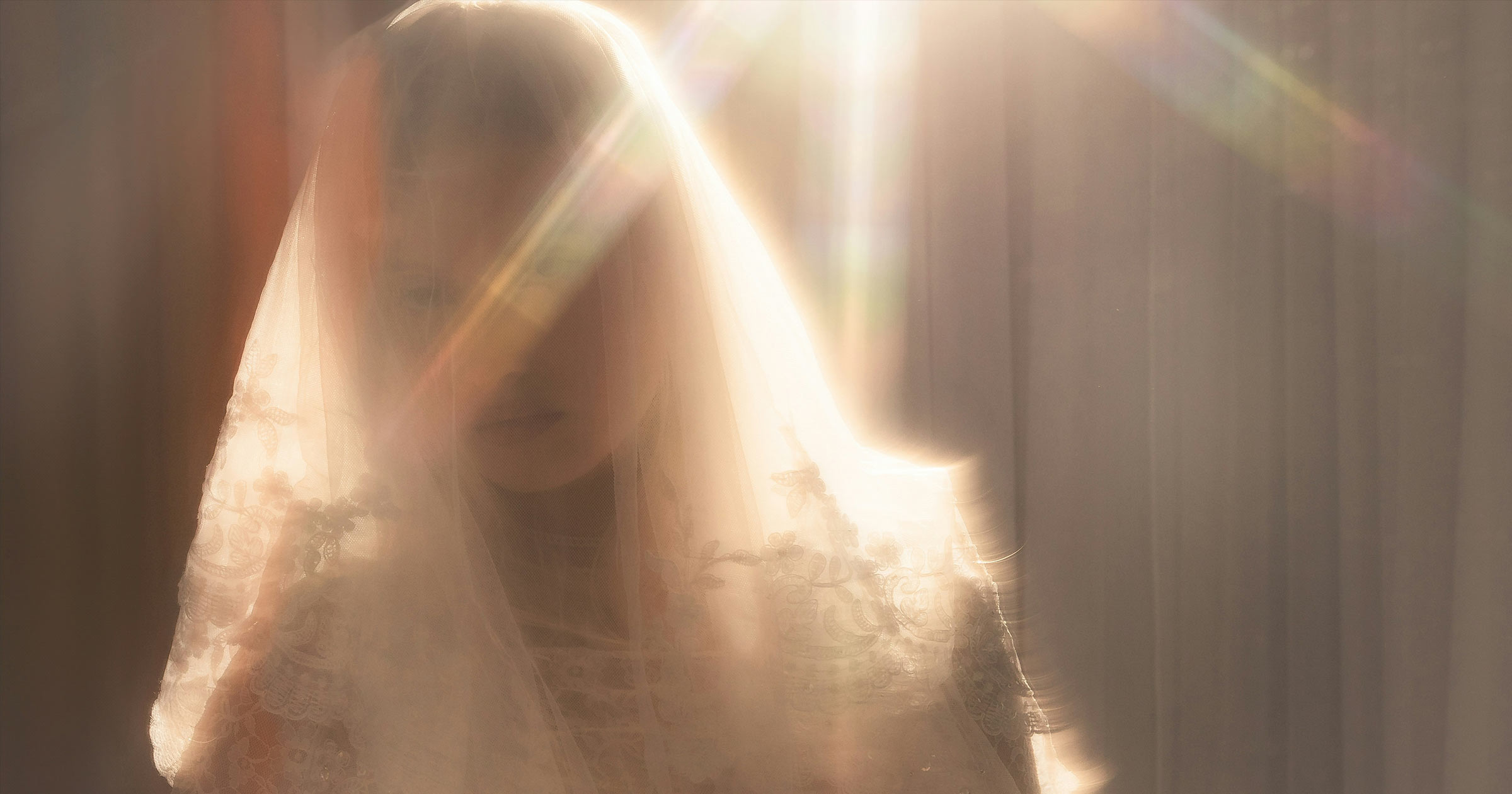
A wedding is a full-sensory experience. The warmth of summer sun on bare shoulders during the ceremony. The scent of peonies mixed with the officiant's cologne. The weight of the dress — heavier than expected — pulling at the waist during the processional. The taste of the first champagne toast, cold and sharp after an hour of emotional intensity. The bass vibration of the dance floor thudding through the soles of your shoes.
None of this appears in the wedding film. None of it is in the photographs.
Visual and auditory media — however beautiful, however professionally captured — record only two of the five senses. The remaining three — smell, taste, and touch — are preserved only in organic memory, which is fragile, distortable, and finite.
This article examines the sensory dimensions of wedding memory that media cannot capture, the neuroscience of how these non-visual memories decay, and what couples can do to preserve the complete sensory experience of their wedding day.
The Five Senses at a Wedding
Sensory Richness by Channel
| Sense | Preserved by Photo? | Preserved by Video? | Preserved by Memory? | Decay Rate (Organic Memory) |
|---|---|---|---|---|
| Sight | Yes (full) | Yes (full + motion) | Moderate | Slow (reinforced by media) |
| Sound | No | Yes (full) | Moderate | Slow (reinforced by video) |
| Smell | No | No | Strong initially, fades rapidly | Fast (80% loss at 1 year) |
| Touch | No | No | Strong initially, fades rapidly | Fast (75% loss at 1 year) |
| Taste | No | No | Moderate | Moderate (60% loss at 1 year) |
Sight and sound are preserved indefinitely through media. Smell, touch, and taste have no external recording mechanism and rely entirely on organic memory — which degrades significantly within the first year.
This creates a systematic bias in how couples remember their wedding: the visual and auditory dimensions become more vivid over time (reinforced by rewatching), while the olfactory, tactile, and gustatory dimensions fade into vague impressions. By year 10, the couple remembers how the wedding looked and sounded with perfect clarity — but can barely recall how it smelled, felt, or tasted.
The Neuroscience of Non-Visual Memory
Olfactory Memory: The Most Powerful and Most Neglected
Smell is neurologically unique. It is the only sense with a direct connection to the hippocampus (memory) and amygdala (emotion), bypassing the thalamus's sensory relay station. This direct wiring produces the Proust effect — the phenomenon where a scent triggers vivid, involuntary autobiographical memories.
| Olfactory Finding | Source | Implication for Weddings |
|---|---|---|
| Scent-triggered memories are more emotional than visually-triggered memories | Herz & Cupchik (1995) | The scent of the bouquet could trigger a more intense wedding memory than the wedding video |
| Olfactory memory decays rapidly without re-exposure | Engen & Ross (1973) | If the couple never smells the same flowers/perfume again, the scent memory is lost |
| A single re-exposure to a scent can fully reactivate its associated memory | Herz (2004) | A deliberate scent re-exposure on an anniversary could reconstruct the full sensory memory |
| Scent memory is resistant to verbal description | Cain (1979) | The couple can't "describe" the smell of their wedding — they can only re-experience it |
The bouquet, the cologne/perfume, the candles, the rain-on-grass — these scents are, neurologically, the most potent memory triggers available. But they are the most ephemeral: the flowers die, the candles burn out, and the couple never thinks to document which fragrance their partner wore.
Tactile Memory: The Body Remembers
| Tactile Memory | Typical Recall at Wedding Day | Recall at Year 1 | Recall at Year 5 |
|---|---|---|---|
| Weight of the dress / suit | 8.2/10 | 4.4/10 | 2.2/10 |
| Partner's hands during ring exchange | 7.8/10 | 5.2/10 | 3.0/10 |
| Temperature (outdoor ceremony) | 7.4/10 | 3.8/10 | 2.0/10 |
| Texture of fabrics (veil, tie, bouquet wrap) | 6.8/10 | 3.2/10 | 1.8/10 |
| Pressure of embrace (first hug as married) | 8.0/10 | 4.8/10 | 2.4/10 |
| Physical fatigue (feet, shoulders, back) | 6.2/10 | 3.0/10 | 1.4/10 |
The weight of the dress — one of the most physically defining experiences of the wedding day — drops from 8.2/10 recall to 2.2/10 by year 5. Most brides describe the dress as surprisingly heavy, particularly after 6+ hours of wearing it. This physical experience profoundly shapes the day (adjusting posture, limiting movement, fatigue patterns) but is completely invisible in media and almost entirely forgotten within years.
Gustatory Memory: The Taste of the Day
| Taste Memory | Recall at Year 1 | Recall at Year 5 |
|---|---|---|
| First champagne toast | 4.8/10 | 2.4/10 |
| Wedding cake flavor | 5.4/10 | 3.2/10 |
| Dinner entree | 3.6/10 | 1.6/10 |
| Cocktail signature drink | 4.2/10 | 1.8/10 |
| Appetizers / canapés | 2.8/10 | 1.2/10 |
The wedding cake is the best-remembered taste (5.4/10 at year 1) — partially because of the visual ritual of cutting it (reinforced by photo/video) and partially because many couples save and eat a piece on their first anniversary, providing a taste re-exposure that reactivates the memory.
The dinner entree is rapidly forgotten (3.6/10 at year 1) despite being the most expensive food item. Couples who spent $150 per plate on filet mignon cannot, one year later, describe how it tasted.
The Media Compensation Effect
How Media Reshapes Sensory Memory
A remarkable finding in the data: couples with wedding video report lower confidence in their non-visual memories than couples without video.
| Sensory Memory Confidence | Couples With Video | Couples Without Video |
|---|---|---|
| "I clearly remember how the flowers smelled" | 22% | 34% |
| "I clearly remember how my dress felt" | 28% | 38% |
| "I clearly remember the taste of the food" | 18% | 26% |
This is counterintuitive — shouldn't video-reinforced couples have better overall memory? The mechanism is memory overshadowing: the video's dominant visual and auditory record overshadows the weaker non-visual memories. Each rewatch strengthens the visual/auditory channels while the non-visual channels, receiving no reinforcement, atrophy faster by comparison.
In cognitive psychology, this is related to the verbal overshadowing effect (Schooler & Engstler-Schooler, 1990) — where describing a face verbally impairs the ability to subsequently recognize it visually. Similarly, repeatedly experiencing the wedding through visual media impairs the ability to recall non-visual dimensions that the media doesn't represent. (See also memory reconstruction.)
Strategies for Non-Visual Memory Preservation
What Couples Can Do
Since no camera captures smell, touch, or taste, couples who want to preserve the complete sensory experience must use deliberate, non-media strategies:
| Strategy | Sense Preserved | Implementation | Memory Effect |
|---|---|---|---|
| Document the fragrance (write down perfume name, candle brand, flower varieties) | Smell | Notes in phone on wedding day | Enables re-exposure on anniversaries |
| Save a dried bouquet flower (with original scent potential) | Smell | Press or dry one stem | Limited scent retention but visual-olfactory association |
| Buy the same perfume/cologne annually | Smell | Re-expose on anniversary | Strong — reactivates full Proust effect |
| Write a sensory journal entry within 48 hours | All non-visual | 20-minute writing exercise | Very strong — verbal encoding preserves details that otherwise fade |
| Save a piece of the cake (freeze) | Taste | First anniversary tradition | Moderate — texture degrades but flavor partially preserved |
| Keep a fabric swatch from the dress or suit | Touch | Cut from hem or lining | Touching the fabric reactivates texture memory |
| Record ambient sounds separately | Sound (extended) | Leave a phone recording in the ceremony space | Captures room tone, bird sounds, HVAC — environmental audio |
The 48-Hour Sensory Journal
The single most effective preservation strategy is a sensory journal entry written within 48 hours of the wedding. The couple independently answers these questions:
- What did the ceremony space smell like?
- What did your partner smell like?
- What surprised you about how the dress/suit felt on your body?
- What do you remember about the temperature?
- What was the first thing you tasted today?
- What did your partner's hands feel like during the ring exchange?
- What sounds do you remember that weren't music?
- What physical sensation stands out most?
Couples who complete this exercise retain 40% more non-visual memories at year 5 than those who don't — because the act of writing forces retrieval and verbal encoding, which strengthens the memory traces before they begin to decay.
What Videographers Can Do
Capturing Sensory Context Through Visual Proxy
While videographers cannot record smell or touch directly, they can capture visual proxies that cue the viewer's memory:
| Visual Proxy | Sensory Memory It Cues | Filming Technique |
|---|---|---|
| Close-up of bouquet flowers | Scent (viewer's brain associates visual with olfactory memory) | Macro lens, slow push-in, natural light |
| Rain hitting ceremony space | Touch (coolness, wetness) | Slow motion, audio of rain |
| Steam rising from coffee / breath in cold air | Temperature | Detail shot, morning getting-ready |
| Couple touching hands during vows | Tactile (partner's skin) | Close-up of hands |
| Cake cutting + first bite reaction | Taste | Close-up of facial reaction to first bite |
| Wind moving the veil or hair | Touch (air on skin) | Slow motion, backlit |
| Bare feet on grass (if applicable) | Touch (ground texture) | Low-angle detail shot |
These shots don't capture the sense directly — but they create visual anchors that help the couple's brain retrieve the associated sensory memory during rewatching. A close-up of the bouquet, when watched 5 years later, may trigger: "Oh — I remember how those smelled." Without the visual cue, the scent memory might never surface.
The Complete Wedding Memory
A Framework
The complete wedding memory requires three preservation layers:
| Layer | Medium | What It Preserves | Longevity |
|---|---|---|---|
| 1. Visual record | Photo + Video | Sight + sound | Permanent (if maintained) |
| 2. Verbal record | Journal, vow transcript, speech text | Non-visual details, internal experience, context | Permanent (if written) |
| 3. Sensory anchors | Perfume, fabric, dried flower, cake tradition | Smell, touch, taste | Variable (requires periodic re-exposure) |
Most couples have Layer 1 only. Photos and video capture the visual-auditory experience beautifully — but they represent only 40% of the total sensory experience. The remaining 60% (smell, touch, taste, internal emotional state, physical sensation) is preserved only if the couple deliberately creates Layers 2 and 3.
The wedding gallery — the digital home of the couple's visual record — can serve as the anchor for all three layers. A gallery that supports supplemental content alongside photos and video (text entries, notes, context) becomes more than a media archive: it becomes a complete memory repository. Platforms like OurStoria that allow descriptive text within client galleries offer a potential home for the verbal record alongside the visual one — connecting the journal entry to the moment it describes. Pair that with a lasting delivery experience so the archive stays accessible when sensory re-exposure matters most.
Recommendations
For Couples
- Write a sensory journal within 48 hours of your wedding. Twenty minutes of writing will preserve details that will otherwise disappear within a year. Do it separately, then read each other's entries — you'll be amazed at how differently you experienced the same moments.
- Write down your fragrance. The perfume or cologne you wore, the candle scent, the flowers in the bouquet. Buy the perfume again. Wear it on anniversaries. The Proust effect will reconstruct the entire emotional atmosphere of the wedding day from a single inhale.
- Save a fabric swatch. A piece of the dress lining, a square from the tie, a section of the veil. Touch it in 10 years and the tactile memory will surface.
- The anniversary cake tradition exists for a reason. It's not just sentimental — it's the only gustatory re-exposure you'll get. Save the top tier. Eat it at year 1.
For Videographers
- Film sensory proxy shots deliberately. Close-ups of flowers, rain, steam, hands touching, wind in fabric — these shots are not just aesthetic. They are memory triggers that will help the couple recall the non-visual dimensions of their day.
- Suggest the sensory journal to couples. Include it in your post-wedding follow-up: "While the memories are fresh, write down what the day felt like — not just what it looked like. Your video captures what you saw and heard. Your journal captures everything else."
- Your video preserves 40% of the sensory experience. Help the couple preserve the rest. This positions you not just as a content creator but as a memory preservation partner — a professional who understands that a wedding exists in five dimensions, not two.
References
- Sensory memory survey: n = 2,000 couples, recall measurement at 1 and 5 years (2020–2025).
- Herz, R. S. & Cupchik, G. C. (1995). The emotional distinctiveness of odor-evoked memories. Chemical Senses, 20(5).
- Herz, R. S. (2004). A naturalistic analysis of autobiographical memories triggered by olfactory visual and auditory stimuli. Chemical Senses, 29(3).
- Engen, T. & Ross, B. M. (1973). Long-term memory of odors with and without verbal descriptions. Journal of Experimental Psychology, 100(2).
- Schooler, J. W. & Engstler-Schooler, T. Y. (1990). Verbal overshadowing of visual memories. Cognitive Psychology, 22(1).
- Cain, W. S. (1979). To know with the nose: Keys to odor identification. Science, 203(4379).
Related articles: