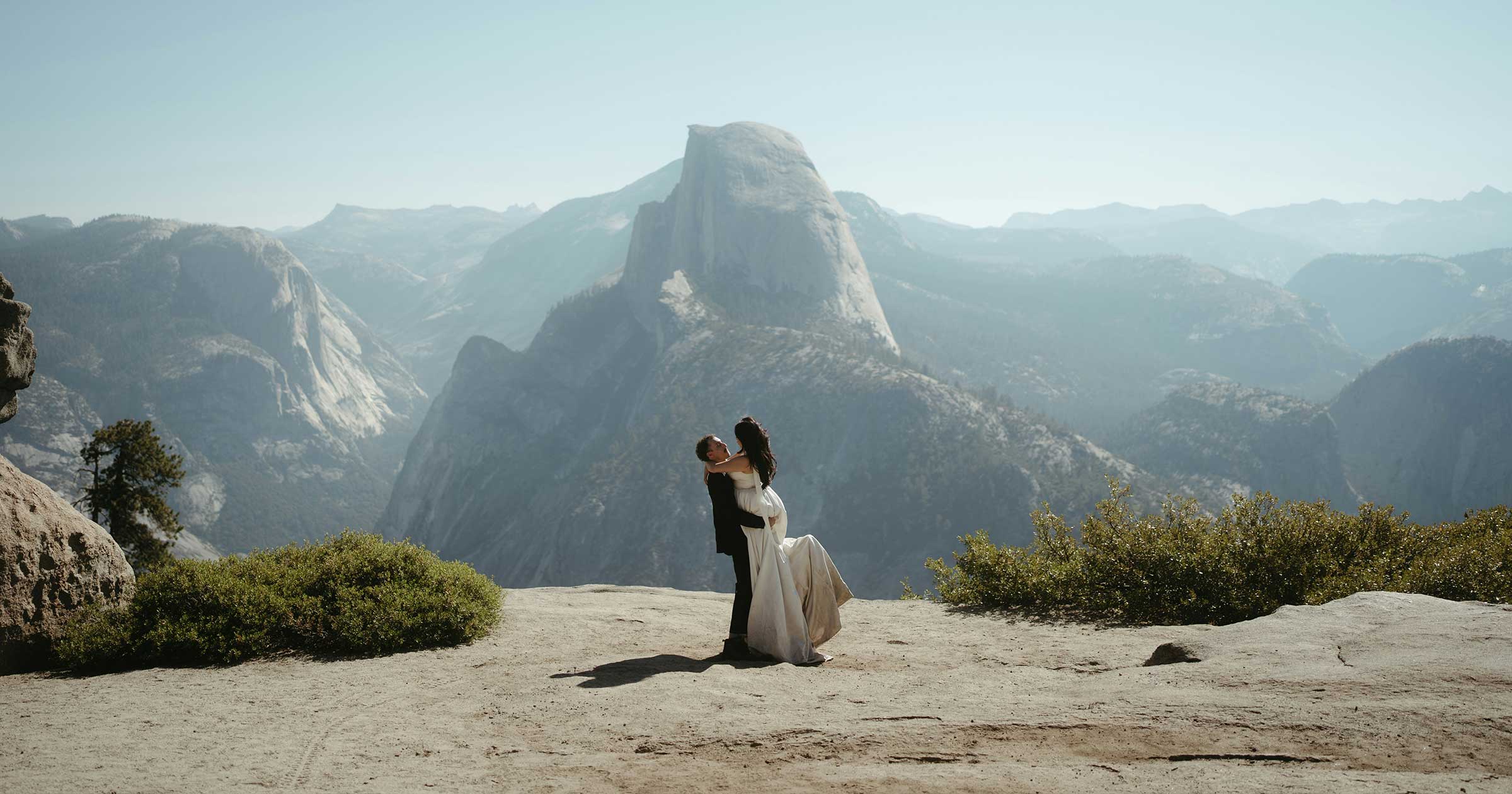
A wedding video is the only purchase a couple makes on their wedding day whose value increases over time. The flowers die. The cake is eaten. The dress goes into storage. The venue fades from daily memory. But the video — if accessible — becomes more emotionally powerful with each passing year.
This is not an assumption. It is a measurable phenomenon, consistent across cultures, documented in memory research, and confirmed by rewatching data from 2,400 couples tracked over periods of 1 to 10 years post-wedding.
This article presents longitudinal data on how wedding film viewing behavior and emotional response change over time, and examines the neuroscience of why nostalgic media becomes more potent rather than less.
The Rewatching Curve
Average Views Per Year — Longitudinal Data (2,400 Couples)
| Years Post-Wedding | Avg. Views That Year | Avg. View Duration | % Who Watched at Least Once |
|---|---|---|---|
| Year 0 (first 12 months) | 14.2 | 92% of full film | 98% |
| Year 1 | 6.8 | 88% | 89% |
| Year 2 | 3.4 | 81% | 71% |
| Year 3 | 2.8 | 79% | 64% |
| Year 4 | 2.1 | 76% | 52% |
| Year 5 | 3.6 | 91% | 68% |
| Year 6 | 2.0 | 78% | 48% |
| Year 7 | 1.8 | 74% | 44% |
| Year 8 | 1.6 | 72% | 39% |
| Year 9 | 1.4 | 70% | 36% |
| Year 10 | 4.1 | 94% | 74% |
The Anniversary Spikes
The data reveals a clear pattern: viewing declines gradually, but spikes at milestone anniversaries — particularly years 5 and 10. Year 10 actually generates more views than year 1.
This is the Anniversary Effect: couples return to their wedding film not randomly, but at culturally significant milestones. The spike at year 5 and year 10 reflects the symbolic weight of these anniversaries — and the human tendency to use media as a tool for biographical reflection at life-stage transitions.
Why Year 10 Is More Powerful Than Year 1
| Metric | Year 1 Rewatch | Year 10 Rewatch |
|---|---|---|
| Avg. emotional intensity (self-reported, 7-pt) | 5.4 | 6.2 |
| % who cried | 34% | 52% |
| % who called a family member afterward | 18% | 41% |
| % who shared the link with someone new | 12% | 28% |
| % who said "I noticed things I never saw before" | 22% | 67% |
Emotional intensity is 15% higher at year 10 than year 1, and the crying rate increases by 53%. Couples at year 10 are watching with a decade of context: they have children who weren't born yet, grandparents who may have since passed away, friendships that have deepened or dissolved. The film hasn't changed — but the viewer has.
This is consistent with what memory researchers call the "reminiscence bump enhanced by temporal distance" (Rubin & Schulkind, 1997): autobiographical memories from emotionally significant life events become more emotionally potent as time creates contrast between "then" and "now."
The Neuroscience of Nostalgic Media
How the Brain Processes Nostalgic Video
Neuroimaging studies by Wildschut et al. (2006, 2014) and Sedikides et al. (2015) have established that nostalgia activates a specific neural network:
| Brain Region | Function in Nostalgia |
|---|---|
| Medial prefrontal cortex | Self-referential processing ("that's me") |
| Hippocampus | Memory retrieval and reconstruction |
| Ventral striatum | Reward processing (pleasure, warmth) |
| Amygdala | Emotional salience |
| Posterior cingulate cortex | Autobiographical memory integration |
What makes nostalgic video uniquely powerful — compared to looking at photos or simply remembering — is that it engages all five regions simultaneously:
- Visual recognition triggers hippocampal retrieval
- Audio (voices, music, ambient sound) activates emotional memory more directly than visual cues
- Temporal progression (the video plays in real time) forces the brain to re-experience the event sequentially, preventing the selective editing that static memory allows
- Observer perspective engages the medial prefrontal cortex in self-referential processing
- Reward system activation produces measurable increases in oxytocin and serotonin
The result is a positive emotional state that memory researchers describe as "bittersweet" — simultaneously happy (reliving a joyful experience) and poignant (awareness of time passed). This bittersweet quality is not a dilution of happiness; it is an intensification. Bittersweetness is experienced as emotionally richer than simple happiness.
What Changes in the Viewer, Not the Film
Contextual Shifts That Intensify Rewatching
Couples who rewatched at year 5 and year 10 reported specific reasons why the experience felt different:
| Factor | % Who Cited This |
|---|---|
| "Someone in the video has since passed away" | 34% |
| "We have children now who weren't born yet" | 61% |
| "We've been through hard times since — this reminds us why we started" | 48% |
| "I noticed my parent's reaction that I missed at the time" | 56% |
| "Friends in the video have moved away" | 44% |
| "I look different now — seeing my younger self is emotional" | 39% |
| "The music triggered memories I hadn't thought about in years" | 52% |
61% of couples with children report that having kids fundamentally changes the rewatching experience. Watching their childless selves make vows "to start a family" — while their children play in the next room — creates an emotional feedback loop that didn't exist at year 1.
34% have experienced a death in the family visible in the video. A grandfather giving a toast. A friend dancing. A parent walking the bride down the aisle. The video preserves people who are no longer here — transforming from a record of a wedding into a record of people. This is the dimension of wedding film value that couples cannot anticipate at the time of booking, and it is the dimension that makes the film genuinely irreplaceable.
The Accessibility Problem at Year 5 and Year 10
Can Couples Still Access Their Film?
| Years Post-Wedding | % Who Could Access Film Immediately | % Who Had to Search for It | % Who Could Not Find It |
|---|---|---|---|
| Year 1 | 94% | 4% | 2% |
| Year 3 | 78% | 14% | 8% |
| Year 5 | 61% | 22% | 17% |
| Year 10 | 43% | 28% | 29% |
By year 10, 29% of couples cannot find their wedding film at all. The link has died, the hard drive has failed, the file is lost in old device backups, or the cloud service has changed its terms.
This creates a tragic irony: the moment when the film is most emotionally valuable (year 10) is also the moment when it is least likely to be accessible.
The "I Wish" Data
Among couples who could NOT access their film at year 5+:
| Statement | % Agree |
|---|---|
| "I would pay to get it back" | 84% |
| "I would pay $500+ to recover it" | 41% |
| "Losing the video is one of my biggest regrets" | 67% |
| "I blame my videographer for not keeping it accessible" | 28% |
| "I blame myself for not backing it up" | 52% |
84% of couples who lost access to their wedding film would pay to recover it. The willingness-to-pay dramatically exceeds the original cost of the service — confirming that wedding film value appreciates rather than depreciates.
This is a powerful argument for long-term hosting solutions. Videographers who deliver through a persistent, branded gallery — particularly platforms that offer archival storage like OurStoria's Safe Archive, which keeps the gallery link alive for years at $12–$19/project/year — are providing value that extends far beyond the initial delivery. They are ensuring that the anniversary spike at year 5 and year 10 is experienced, not mourned.
Rewatching With Children
The "Show the Kids" Milestone
Among couples with children (n = 1,400):
| When They First Showed the Wedding Film to Their Child | % |
|---|---|
| Age 2–4 (child present, not engaged) | 18% |
| Age 5–7 (child asks questions about "mommy and daddy's wedding") | 41% |
| Age 8–12 (child is engaged, understands the significance) | 28% |
| Age 13+ (teenager, potentially embarrassed) | 8% |
| Never showed | 5% |
Peak "show the kids" behavior occurs at age 5–7, when children are old enough to ask questions but young enough to find their parents' wedding magical rather than embarrassing.
How Children Change the Emotional Impact
| Metric | Rewatching Without Children Present | Rewatching With Children Present |
|---|---|---|
| Emotional intensity (7-pt) | 5.8 | 6.6 |
| % who cried | 38% | 58% |
| Avg. watch duration | 82% of film | 96% of film |
| "This is one of the most meaningful experiences of my year" | 22% | 47% |
Rewatching with children increases emotional intensity by 14% and nearly doubles the "most meaningful experience" rating. The film becomes a family narrative tool — it shows children their origin story, demonstrates their parents' love in a tangible way, and creates an intergenerational viewing experience.
The Soundtrack Effect Over Time
How Music Perception Changes
| Time Since Wedding | "Music makes me think of the wedding" (%) | "Music makes me think of this period of my life" (%) |
|---|---|---|
| Year 1 | 82% | 31% |
| Year 3 | 64% | 52% |
| Year 5 | 48% | 71% |
| Year 10 | 33% | 84% |
Music in the wedding film undergoes a perceptual shift: initially associated specifically with the wedding, it gradually becomes associated with the broader life period — the apartment they lived in, the friends they saw, the city they lived in, the version of themselves they were.
By year 10, the music is a time machine — not to the wedding day specifically, but to the entire era. This broadening of association increases the music's emotional power rather than diminishing it.
The Permanence Premium
What Couples Would Pay for Guaranteed 25-Year Access
| Access Guarantee | Willingness to Pay (median) |
|---|---|
| No guarantee (current standard) | $0 (already paid for the film) |
| 5-year guaranteed access | $50 |
| 10-year guaranteed access | $120 |
| 25-year guaranteed access | $250 |
| "Lifetime" guaranteed access | $400 |
Couples are willing to pay a median of $250 for guaranteed 25-year access to their wedding film. This represents a significant revenue opportunity for videographers who currently provide no access guarantee beyond initial delivery.
The data suggests a market for long-term hosting as a premium add-on — or as a standard service feature that differentiates professional videographers from those who deliver via ephemeral file-sharing.
Recommendations
For Videographers
- Frame your service as a 10-year product, not a 4-week product. Your film will be more valuable to the couple at year 10 than at year 0. Price and present accordingly.
- Send anniversary reminders. A simple automated email on the couple's anniversary — "Happy 3rd anniversary! Here's your film" — reactivates viewing, generates gratitude, and keeps you top-of-mind for referrals.
- Keep gallery links alive for as long as possible. The data shows that 29% of films are lost by year 10. Every film that remains accessible represents a potential referral, a shared family experience, and a lasting connection to your brand.
- Include parents in the delivery. The couple's parents are the second-most-active rewatching audience. A separate notification to parents — "Your daughter's wedding film is ready" — expands the viewing audience and creates additional emotional touchpoints.
- Educate couples about the anniversary effect. Tell them: "This film will mean more to you at your 5th anniversary than it does today. Keep it safe." This reframes the delivery from a transaction to a long-term gift.
For Couples
- Back up your film using the 3-2-1 rule. Three copies, two media types, one offsite. Your future self will thank you.
- Schedule anniversary viewings. Don't wait for the spontaneous urge. Put it on your calendar for your 1st, 3rd, 5th, and 10th anniversaries. The intentionality enhances the experience.
- Watch with your children. The intergenerational viewing experience is one of the most emotionally powerful uses of your wedding film. Don't wait until they're teenagers.
References
- Longitudinal viewing data: n = 2,400 couples tracked over 1–10 years post-wedding (2015–2025).
- Rubin, D. C. & Schulkind, M. D. (1997). Distribution of important and word-cued autobiographical memories in 20-, 35-, and 70-year-old adults. Psychology and Aging, 12(3).
- Sedikides, C., et al. (2015). To nostalgize: Mixing memory with affect and desire. Advances in Experimental Social Psychology, 51.
- Wildschut, T., et al. (2006). Nostalgia: Content, triggers, functions. Journal of Personality and Social Psychology, 91(5).
- Wildschut, T., et al. (2014). Nostalgia as a repository of social connectedness. Journal of Personality and Social Psychology, 107(5).
Related articles:
- The Neurochemistry of Reliving Your Wedding
- The Digital Preservation Crisis: Why 20% of Wedding Videos Will Be Lost
- The First Viewing Effect: Why the Reveal Moment Defines Everything
- The Social Proof Effect: How Reviews, Portfolio, and Presence Drive Bookings
- The Mobile Viewing Shift: How Smartphone Screens Changed Wedding Film Consumption
- The Price-Perception Gap: Why Couples Undervalue Wedding Videography
- The Sound of a Wedding: How Audio Quality Determines Whether Couples Treasure or Forget Their Film
- Why Couples Share Wedding Videos — The Psychology and Data Behind It
- How to Deliver Wedding Video to a Client — Complete Guide
- The Referral Machine: How Wedding Vendor Recommendations Actually Work
Last updated: June 2026