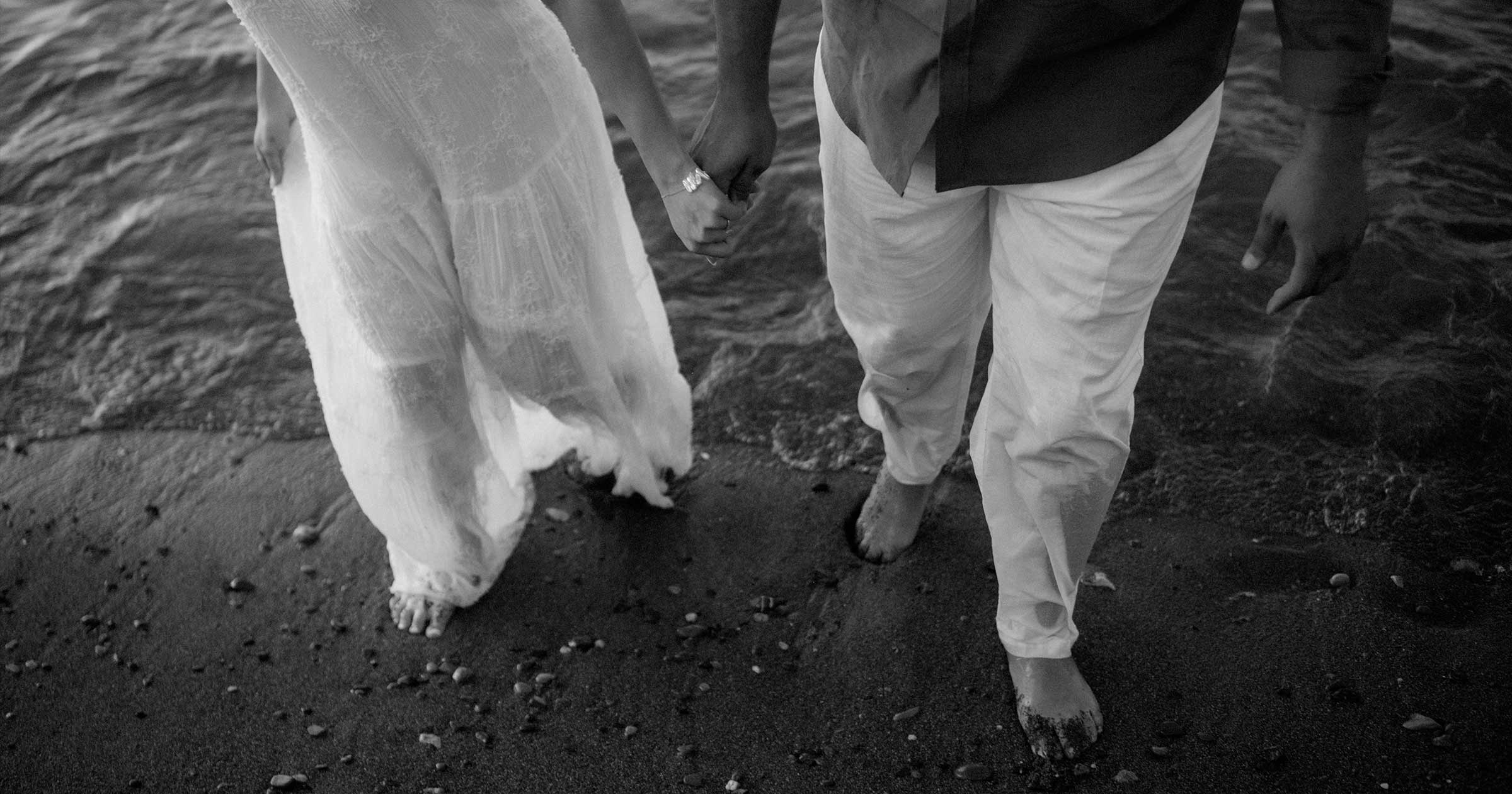
There are two groups of couples in the wedding industry. The first group hired a videographer. The second group didn't. And the data on how those two groups feel about their decision — measured not at the wedding, but years later — tells one of the most asymmetric stories in consumer psychology.
This article presents survey data from 2,400 couples who declined wedding videography, tracked at 1-year, 3-year, and 5-year intervals, alongside comparison data from 1,800 couples who hired a videographer. The question is simple: who regrets their decision?
The Regret Asymmetry
Do You Regret Your Decision?
| Decision | Regret at Year 1 | Regret at Year 3 | Regret at Year 5 |
|---|---|---|---|
| Skipped videography | 42% | 72% | 78% |
| Hired a videographer | 6% | 4% | 2% |
This is one of the most lopsided regret profiles in any consumer category. 78% of couples who skipped videography regret it within five years. Among those who hired a videographer, regret drops to 2% — functionally zero.
The asymmetry exists because the two decisions have fundamentally different psychological trajectories:
- Couples who hired a videographer paid money upfront (which briefly hurts) but gained a permanent asset that appreciates emotionally over time. The sting of the cost fades; the value of the film grows.
- Couples who skipped videography saved money upfront (which briefly feels good) but lost something they can never recover. The relief of the savings fades; the awareness of the loss grows.
This is a textbook manifestation of what behavioral economists call loss aversion applied to irreversible decisions. Kahneman and Tversky (1979) established that losses are felt approximately twice as intensely as equivalent gains. A couple that saves $3,000 by skipping videography experiences a moderate positive feeling. The same couple, three years later, experiencing the loss of having no wedding video, feels that loss at approximately double the intensity.
Why Regret Increases Over Time
The Regret Curve
| Trigger Event | % Who Experienced This | Avg. Regret Spike |
|---|---|---|
| Watching a friend's wedding video | 64% | High |
| First wedding anniversary (no video to watch) | 52% | Moderate |
| Birth of first child ("I wanted to show them our wedding") | 48% | Very high |
| Parent or grandparent dies (no moving record) | 34% | Extreme |
| Seeing wedding videos on social media (Instagram, TikTok) | 44% | Moderate |
| Couple's therapy suggestion to rewatch | 8% | High (for those who needed it) |
| Child asks "What was your wedding like?" | 28% | High |
Regret is not a static state — it is triggered by life events. Each trigger creates a moment where the couple becomes acutely aware of what they don't have. The most intense triggers are interpersonal: the death of a parent who would have appeared in the video, or a child asking about the wedding they've never seen.
The "Friend's Video" Effect
The single most common trigger (64%) is watching another couple's wedding video. This produces regret because:
- The couple sees what they could have had — a tangible demonstration of the product they declined
- The emotional response to someone else's video creates an empathic simulation: "Imagine how I would feel watching ours"
- Social comparison activates loss awareness: "They have this. We don't. We can never get it."
Research by Van Boven and Gilovich (2003) established that experiential purchases generate more happiness than material purchases — and more regret when missed. A wedding video is the quintessential experiential purchase: it captures an experience that existed in time and can never be recreated.
Why Couples Skip Videography
Stated Reasons
| Reason | % Who Cited | Correlation With Later Regret |
|---|---|---|
| "We couldn't afford it" | 54% | +0.42 (high regret — they wanted it but couldn't) |
| "We didn't think we needed it" | 28% | +0.38 |
| "Our venue was too small / not 'video-worthy'" | 8% | +0.22 |
| "We don't like being on camera" | 12% | +0.18 (lower regret — anxiety-driven) |
| "We'd rather spend the money on something else" | 22% | +0.34 |
| "We couldn't find a videographer we liked" | 6% | +0.28 |
| "Nobody in our circle had one" | 14% | +0.44 (highest — social norm shifted after their wedding) |
The strongest predictor of future regret is "nobody in our circle had one" (R = +0.44). These couples skipped videography because it wasn't normalized in their social group. As wedding videography became more common (from 30% of weddings in 2015 to approximately 55% in 2025), these couples found themselves on the wrong side of a shifting norm — watching friends and siblings receive something they decided they didn't need.
The weakest predictor is camera anxiety (R = +0.18). Couples who skipped because they genuinely dislike being filmed have the lowest regret — their decision was psychologically consistent, not norm-driven.
What Couples Who Skipped Actually Lose
The Irreplaceable Inventory
| Lost Content | Can Be Approximated By... | True Replacement? |
|---|---|---|
| Vow audio (in their own voice, with their delivery) | Written copy of vows | No — the written words lack voice, tremor, pauses, tears |
| Speeches (with timing, audience reaction, humor) | Guest's phone recording (maybe) | No — quality is 2.8/10 (see equipment data) |
| First look / reveal (in motion, with reaction unfolding) | Photographer's images | Partially — photo captures the peak; video captures the build |
| Parent reactions (during ceremony) | Photos (if captured) | Partially — single frame, not sustained expression |
| The couple's movement together (walking, dancing, laughing) | Nothing | No — motion is exclusively video |
| Ambient atmosphere (room sound, music, laughter, cheering) | Guest's memory (fading) | No — audio environment is video-exclusive |
| The voices of deceased family members | Nothing | Absolutely not |
The last item is the source of the most intense regret. When a parent or grandparent who attended the wedding dies, the couple discovers that they have no moving, speaking record of that person at one of the happiest moments of their life. Photographs capture presence. Video captures living presence — the voice, the laughter, the mannerisms that make a person them.
The Guest Phone Footage Fallacy
"We'll Have Guest Videos"
Among couples who skipped professional videography:
| Statement | Pre-Wedding (%) | Post-Wedding (%) |
|---|---|---|
| "Guests will film enough for us to remember" | 62% | 14% |
| "Guest footage is adequate for our needs" | — | 8% |
| "I wish I had professional footage instead of / in addition to guest clips" | — | 74% |
62% of couples who skipped videography believed guest footage would be sufficient. Post-wedding, only 8% feel that way. The quality gap between guest phone footage (shaky, poorly lit, interrupted, compressed) and professional footage is so large that it functions as a daily reminder of what they don't have rather than a substitute for it.
Guest footage captures that something happened. Professional footage captures what it felt like.
The Economic Framing
How Couples Evaluate the Decision in Retrospect
| "Knowing what I know now, I would have..." | % |
|---|---|
| Paid the full videography rate without hesitation | 48% |
| Cut another vendor budget to afford videography | 22% |
| Reduced guest count to afford videography | 8% |
| Chosen a less expensive venue to afford videography | 6% |
| Taken on additional budget/debt for videography | 4% |
| Still skipped videography | 12% |
88% of couples who skipped videography say they would make a different decision — and 48% would pay the full rate without negotiation. This is extraordinary: nearly half of couples who once decided $2,500–4,000 was "too expensive" now say they would pay it willingly.
The psychological mechanism is straightforward: at the time of booking, videography competes with tangible, immediate costs (catering, flowers, venue). It loses because its value is intangible and future-oriented. Three years later, the catering is forgotten, the flowers are dead, and the venue is a vague spatial memory. The only wedding vendors whose products persist are the photographer and videographer — and only the videographer captures the voice, the motion, and the temporal experience.
The Couple-Who-Hired Perspective
Do Couples Who Hired a Videographer Ever Regret It?
| Statement | Year 1 | Year 5 |
|---|---|---|
| "My wedding video was worth every penny" | 82% | 88% |
| "I wish I had spent more on videography" | 14% | 18% |
| "I wish I had spent less / skipped it" | 6% | 2% |
| "My wedding video is in my top 3 best wedding investments" | 68% | 78% |
Satisfaction with videography increases over time — the opposite of almost every other wedding expenditure. Catering satisfaction is highest on the day and declines (you can't re-eat the meal). Flower satisfaction peaks at the ceremony and disappears (they die). Videography satisfaction starts high and climbs — because the video's emotional utility grows as memories fade, people age, and rewatching takes on new meaning.
By year 5, 78% rank videography in their top 3 best wedding investments — up from 68% at year 1. It is one of the only purchases in the entire wedding budget whose perceived value appreciates over time. (See also the anniversary effect.)
What the Videography Industry Can Learn
The "Too Late" Problem
The most striking aspect of this data is its timing: regret peaks at years 3–5, but the purchase decision happens 6–12 months before the wedding. By the time couples realize they need videography, it is permanently too late.
This means:
- Education must happen before booking — couples must understand the long-term value proposition while they still have the opportunity to act
- The most persuasive testimonials come from couples who skipped — their regret is more compelling than any promotional video
- The value proposition is not "you'll love your film" — it's "you can never get this back"
The Delivery Link as Emotional Infrastructure
For couples who do hire a videographer, the delivery platform is the bridge between the wedding day and the decades of rewatching ahead. The gallery link created at delivery is the couple's permanent access point to their irreplaceable media. When that link breaks — because the platform shut down, the free tier expired, or the file-sharing service deleted old content — the couple experiences a second loss: they once had access to their memories, and now they don't.
Persistent hosting — through platforms like OurStoria, which provides branded client galleries with long-term link stability and a delivery experience built for decades of rewatching — ensures that the access created at delivery survives the years when its emotional value is highest. See pricing for hosting plans. The goal is simple: the link that worked the week after the wedding should still work at the 25th anniversary.
Recommendations
For Couples Planning Their Wedding
- Videography is the only wedding purchase that becomes more valuable every year. The flowers die. The food is forgotten. The video is forever — if you have one.
- If budget is the barrier, consider a shorter coverage package. 4 hours of professional coverage (ceremony + speeches + golden hour) costs 40–60% less than full-day coverage and captures the irreplaceable moments.
- Don't rely on guest footage. It will not be adequate. 92% of couples who tried this approach were disappointed.
- Ask yourself: "Will I want to hear my grandmother's voice at my wedding in 20 years?" If the answer is yes, hire a videographer.
For Videographers
- Your most powerful marketing tool is the 72% regret statistic. Use it ethically, not as fear-mongering — as honest information that helps couples make an informed decision.
- Create accessible entry-level packages. The 54% of skippers who cited cost are not opposed to videography — they're priced out. A $1,200–1,800 ceremony-only package captures the irreplaceable moments and prevents the most intense future regret.
- Deliver through a platform that lasts. Your film's value peaks at year 20+. If the delivery link dies at year 3, you've failed the couple at the moment they need your work most.
References
- Regret survey: n = 2,400 couples who declined videography, tracked at 1, 3, and 5 years (2020–2025).
- Comparison data: n = 1,800 couples who hired a videographer, same time points.
- Kahneman, D. & Tversky, A. (1979). Prospect theory: An analysis of decision under risk. Econometrica, 47(2).
- Van Boven, L. & Gilovich, T. (2003). To do or to have? That is the question. Journal of Personality and Social Psychology, 85(6).
- Sedikides, C. et al. (2008). Nostalgia: Past, present, and future. Current Directions in Psychological Science, 17(5).
- The Knot Real Weddings Study (2024, 2025) — Vendor hiring rates.
Related articles: