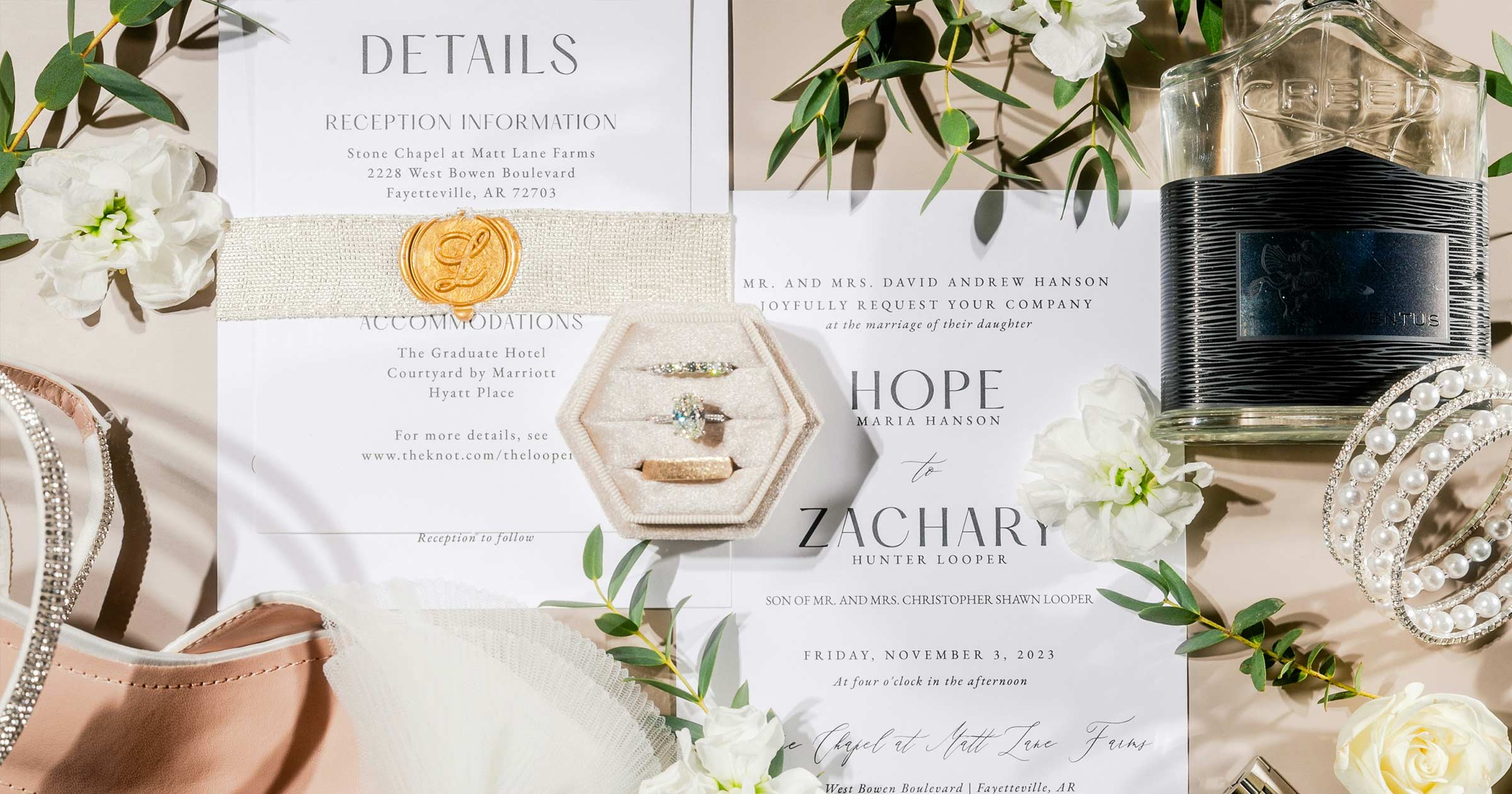
Timing your wedding invitations is one of those planning tasks that sounds simple — until you actually sit down to do it. Send them too early and guests forget, lose the card, or assume the date is tentative. Send them too late and half your guest list already has a conflict, your caterer is panicking, and your seating chart is a fiction. The space between "too early" and "too late" is surprisingly narrow, and it shifts depending on whether your wedding is local or destination, summer or winter, intimate or 300 guests across three countries.
This guide covers every type of wedding invitation, every timeline scenario, and every edge case — from save-the-dates to rehearsal dinner invites, from paper to digital, from a backyard ceremony to an Italian villa. If you're wondering when to send wedding invitations, this is the only resource you need.
The Standard Wedding Invitation Timeline
Before diving into specific situations, here's the month-by-month timeline that applies to most weddings. Think of this as your baseline — adjust from here depending on your circumstances.
12 Months Before the Wedding
Choose your invitation style. Are you going letterpress, foil-stamped, digital, or a combination? This decision affects every deadline that follows because custom printed invitations require lead time for design, proofing, and production. Start your guest list now — even a rough draft. You need to know the approximate number to order save-the-dates, plan your venue capacity, and budget for postage.
8–10 Months Before
Send save-the-dates. This is the "hold this date" notification — not the formal invitation. It gives guests enough time to request time off work, book travel, and arrange childcare without committing to the specific details of the event. More on save-the-date timing below.
4–3 Months Before
Finalize your invitation design and order printed invitations. If you're using a stationery designer, this means final proof approval, paper selection, printing, and assembly. If you're using a digital platform, this is when you finalize the design and set up your online RSVP system. Account for 2–4 weeks of production time for printed invitations, plus time for assembly (stuffing, addressing, stamping).
6–8 Weeks Before
Mail formal wedding invitations. This is the standard window recommended by wedding etiquette experts, the Emily Post Institute, and every major wedding planning platform. Six weeks is the minimum for local weddings; eight weeks is better if you have out-of-town guests. For destination weddings, add more time — we cover that in a dedicated section.
3–4 Weeks Before
RSVP deadline. Set this date strategically: early enough that you have time to follow up with non-responders, but late enough that guests have had a reasonable window to decide. Three to four weeks before the wedding hits the sweet spot. Print this date clearly on the RSVP card — research shows that a specific deadline dramatically improves response rates.
2 Weeks Before
Follow up with non-responders. Yes, this is awkward. Yes, it's necessary. Approximately 15–20% of guests will not respond by the deadline, and you need a final headcount. A friendly phone call works best — avoid texting or social media messages for something this important. We cover RSVP follow-up etiquette in detail later.
1 Week Before
Submit your final headcount to the caterer, florist, DJ, and videographer. This is the number that determines table settings, floral arrangements, meal counts, and how your vendors plan their day. Your videographer needs to know the scale to plan camera positions, assistant coverage, and video delivery timelines.
When to Send Save-the-Dates
Save-the-dates are the advance notice — the "mark your calendar" before the formal invitation arrives. They're especially important for weddings where guests need to travel, take time off work, or coordinate with other family events.
Standard Timeline: 6–8 Months Before
For a typical wedding where most guests are local or within driving distance, send save-the-dates 6 to 8 months before the wedding. This gives guests enough lead time to plan without being so early that the date feels abstract.
Destination Weddings: 8–12 Months Before
If your wedding requires flights, hotel bookings, or passport arrangements, send save-the-dates 8 to 12 months in advance. International destinations push toward the 12-month end, especially if guests need visas. Include the destination, approximate travel costs, and a note that more details will follow.
Digital Save-the-Dates (Video Is Trending)
Paper save-the-dates are classic, but digital versions are gaining ground fast — and video save-the-dates are the fastest-growing format. Instead of a flat card, couples are sending short video clips: a 15–30 second announcement filmed at the proposal location, during an engagement shoot, or even as a playful skit. These can be delivered via email, text, or a private streaming link.
The advantage of video save-the-dates is engagement. Guests don't just glance at them and stick them on the fridge — they watch, rewatch, and share. A streaming link (rather than an email attachment) ensures the video plays smoothly on any device without clogging anyone's inbox. If you're considering video save-the-dates, a dedicated delivery platform provides a far better experience than a YouTube link or an email attachment.
When NOT to Send Save-the-Dates
If your wedding is intimate — under 50 guests — save-the-dates are often unnecessary. Everyone on your guest list is close enough that a personal phone call or group message does the job better. Save-the-dates also don't make sense for weddings planned on a short timeline (under 4 months), because the formal invitation will go out almost immediately anyway.
When to Send Formal Wedding Invitations
The formal wedding invitation is the official request for attendance. It includes all the details guests need: date, time, venue, dress code, and how to RSVP. Unlike save-the-dates, which are casual and informational, formal invitations are the legal tender of wedding planning — they represent a commitment.
US Standard: 6–8 Weeks Before
Mail formal invitations 6 to 8 weeks before your wedding date. This is the universally accepted window in the United States. Six weeks works for local weddings where most guests live nearby. Eight weeks is better if you have a mix of local and out-of-town guests.
Destination Wedding: 8–10 Weeks Before
Guests who need to book flights and hotels need more lead time. Send invitations 8 to 10 weeks before a domestic destination wedding.
International Destination: 10–12 Weeks Before
For weddings abroad, 10 to 12 weeks gives guests enough time to arrange passports, visas, international flights, and extended time off work. This is especially important for destinations requiring visa applications, which can take 4–6 weeks alone.
What to Include in the Invitation Suite
- The invitation itself — date, time, venue name, host line, dress code
- RSVP card — with a pre-stamped return envelope (for paper) or a link to your online RSVP (for digital/hybrid)
- Details card — accommodations, transportation, wedding website URL, parking information
- Reception card — if the reception is at a different location than the ceremony
- Map or directions card — especially for venues that are hard to find or have complicated parking
When to Send Wedding Shower Invitations
This is one of the most commonly searched timing questions — and one where mistakes happen frequently. Wedding showers have their own separate timeline that runs parallel to (but independent from) the main wedding invitation timeline.
Standard Timeline: 4–6 Weeks Before the Shower
Send shower invitations 4 to 6 weeks before the event. Not before the wedding — before the shower itself. This is a critical distinction. The shower typically takes place 2 to 3 months before the wedding, so shower invitations go out roughly 3 to 4 months before the wedding date.
Bridal Shower vs. Couples Shower vs. Coed Shower
The type of shower affects the formality of the invitation:
- Traditional bridal shower: Hosted by the maid of honor, bridesmaids, or a close family friend. Invitation is typically a printed or digital card sent by the host — never by the bride herself.
- Couples shower: Celebrates both partners. Can be hosted by anyone in the wedding party. Slightly less formal, and digital invitations are perfectly acceptable.
- Coed shower: Includes all genders. Often themed (cooking class, wine tasting, game night). Digital invitations are standard for these.
Who Sends Shower Invitations?
The host sends the invitations — not the bride or couple. This is an etiquette rule that still holds. The host is whoever is organizing and paying for the shower, typically the maid of honor, a bridesmaid, or a close family member. The couple can (and should) provide the guest list and registry information, but the invitation comes from the host.
Digital vs. Paper for Showers
Paper invitations are traditional for bridal showers, but digital invitations have become widely accepted — especially for couples showers and coed events. Digital invitations are faster to send, easier to track RSVPs, and more practical for events with a shorter lead time. For formal bridal showers, a printed invitation still carries more weight.
When to Send Rehearsal Dinner Invitations
The rehearsal dinner is the wedding's warm-up act — an intimate gathering the evening before the ceremony. Its invitations follow a more relaxed timeline than the formal wedding invitations.
Standard Timeline: 3–4 Weeks Before
Send rehearsal dinner invitations 3 to 4 weeks before the event. Since the rehearsal dinner happens the night before the wedding, this means invitations go out roughly 3 to 4 weeks before the wedding date.
Who's Invited
- The entire wedding party (bridesmaids, groomsmen, flower girls, ring bearers and their parents)
- Immediate family of both the bride and groom
- Spouses and partners of wedding party members
- Out-of-town guests (this is increasingly standard, though optional for very large weddings)
- The officiant and their spouse/partner
- Anyone involved in the ceremony (readers, musicians)
Formality
Rehearsal dinner invitations can be significantly less formal than wedding invitations. A beautifully designed email, a digital invitation through a platform like Paperless Post, or even a well-crafted group message works fine. The key information: date, time, location, dress code, and whether the dinner is hosted (i.e., food and drinks are covered). If you're planning rehearsal dinner speeches, mention that in the invitation so speakers can prepare.
Destination Wedding Invitation Timeline
Destination weddings require a fundamentally different timeline. Every standard deadline shifts earlier because your guests need to arrange travel, lodging, time off work, and potentially passport or visa paperwork. The general rule: add 2–4 weeks to every standard deadline.
| Milestone | Standard Wedding | Destination Wedding |
|---|---|---|
| Save-the-dates | 6–8 months before | 8–12 months before |
| Formal invitations | 6–8 weeks before | 10–12 weeks before |
| RSVP deadline | 3–4 weeks before | 5–6 weeks before |
| Final headcount to vendors | 1 week before | 2–3 weeks before |
What to Include for Destination Weddings
- Travel information: Nearest airport, airline recommendations, approximate flight costs
- Hotel block deadlines: When the reserved room block expires — this is often 4–6 weeks before the wedding, and guests who miss it pay full price
- Activity options: Excursions, group dinners, welcome party details
- Visa/passport requirements: For international destinations, include what documentation guests need and how long applications take
- Wedding website: A central hub with all details, travel guides, local tips, and FAQ. Consider including a short video tour of the venue — couples who create video invitations for destination weddings report higher attendance rates
How Far in Advance to Send Wedding Invitations (By Situation)
Not every wedding follows the standard timeline. Here's a comprehensive breakdown by scenario, so you can find the exact guidance for your situation.
| Situation | Save-the-Date | Formal Invitation | RSVP Deadline | Notes |
|---|---|---|---|---|
| Local wedding (most guests within 1 hour) | 6 months | 6 weeks | 3 weeks before | The simplest timeline — most guests won't need travel arrangements |
| Domestic destination | 8–10 months | 8–10 weeks | 5 weeks before | Guests need time to book flights and hotels |
| International destination | 10–12 months | 10–12 weeks | 6 weeks before | Allow extra time for passports and visas |
| Holiday weekend (Memorial Day, Labor Day, 4th of July) | 8–10 months | 10 weeks | 5 weeks before | Compete with vacation plans — send earlier and expect more declines |
| Summer wedding (June–August) | 8 months | 8 weeks | 4 weeks before | Peak season — guests book vacations early |
| Winter wedding (December–February) | 8 months | 8–10 weeks | 4 weeks before | Holiday conflicts — avoid mailing in mid-December postal rush |
| Intimate wedding (under 50 guests) | Optional / phone call | 6 weeks | 3 weeks before | Personal outreach replaces formal save-the-dates |
| Large wedding (200+ guests) | 8 months | 8 weeks | 4 weeks before | More guests = more non-responders — build in extra follow-up time |
| International guest list | 10 months | 10–12 weeks | 5–6 weeks before | Account for international postal delays — consider digital delivery |
Digital vs. Paper Wedding Invitations
The digital vs. paper debate is no longer about whether digital invitations are "acceptable" — they are. The question is which format (or combination) best fits your wedding's style, budget, and guest demographics.
| Factor | Paper Invitations | Digital Invitations |
|---|---|---|
| Cost per guest | $3–$15+ (design, printing, postage) | $0–$3 (platform fees, if any) |
| Design flexibility | High (letterpress, foil, custom paper) | Very high (animation, video, interactive) |
| RSVP tracking | Manual (check mail daily, enter into spreadsheet) | Automatic (real-time dashboard) |
| Delivery speed | 3–7 days (domestic), 2–4 weeks (international) | Instant |
| Formality level | Very high — the gold standard | Medium to high (improving rapidly) |
| Eco-impact | Paper, ink, fuel for delivery | Minimal (server energy only) |
| Guest preference: under 35 | Appreciates but doesn't expect | Prefers — convenient and shareable |
| Guest preference: over 55 | Strongly prefers — tangible keepsake | May find it impersonal or confusing |
| Lost/forgotten risk | Higher (misplaced, thrown away) | Lower (searchable in email/text) |
| Keepsake value | High — often saved in scrapbooks | Low — unless printed by the guest |
The hybrid approach is increasingly popular: send a beautiful paper invitation for the formal experience, but include a QR code or URL linking to an online RSVP page. This gives you the elegance of paper with the efficiency of digital tracking. The Knot's 2024 Real Weddings Study found that couples using hybrid paper-and-digital approaches reported 40% faster RSVP response times compared to paper-only couples.
Video Save-the-Dates: The Growing Trend
The fastest-growing format for save-the-dates isn't a card — it's a video. Couples are creating 15–60 second video announcements and sending them as digital save-the-dates, either alongside or instead of traditional paper versions.
Why Video Save-the-Dates Work
- Engagement: Guests watch a video multiple times. A paper card gets glanced at once and pinned to the fridge.
- Personality: Video captures the couple's energy, humor, and chemistry in a way that a flat design cannot.
- Shareability: Guests forward video save-the-dates to family members, creating organic excitement for the wedding.
- Destination previews: For destination weddings, a short video of the venue and location is far more compelling than a printed photo.
How to Create a Video Save-the-Date
- DIY: Film a short clip on your phone — walking together, popping champagne, flashing the ring. Edit in iMovie, CapCut, or any mobile editor. Add text overlay with the date and location.
- Professional: Hire your wedding videographer to film a short save-the-date video during your engagement session. Many videographers offer this as an add-on service.
- Template-based: Use platforms like Canva or Animoto with pre-built wedding templates. Upload your photos, add music, customize text.
Delivery: Why a Streaming Link Beats an Email Attachment
The biggest mistake couples make with video save-the-dates is attaching the video file directly to an email. Large video files (even 30 seconds of HD video can be 50–100MB) clog inboxes, get blocked by email servers, and look terrible when compressed. A streaming link — a URL that opens the video in a browser or app — is the standard for professional video delivery, and it should be the standard for save-the-dates too.
A dedicated video delivery platform provides a polished viewing experience: the video loads instantly, plays in high quality on any device, and doesn't require downloading. It also lets you see who's watched it — useful for gauging guest engagement before the formal invitations go out. If you're a videographer, offering video save-the-dates through a platform like OurStoria is an early-stage revenue opportunity — you create a touchpoint with the couple months before the wedding itself.
Companies to Send Wedding Invitations To (For Free Gifts)
One of the most delightful wedding traditions that many couples don't know about: sending a wedding invitation to certain companies, brands, celebrities, and government offices can earn you a congratulations card, a small gift, or a memorable keepsake. Here's the full list.
The White House
Send your invitation at least 6 weeks before the wedding to receive a presidential congratulations card. Address it to: The White House, Attn: Greetings Office, 1600 Pennsylvania Avenue NW, Washington, DC 20500. Include the couple's names, wedding date, and return address. The card is signed with a printed presidential signature — a frame-worthy keepsake.
Disney
Send your invitation to: Walt Disney World, Attn: Wedding Department, P.O. Box 10040, Lake Buena Vista, FL 32830. Disney typically responds with a signed congratulations card featuring Disney characters. It's not guaranteed, but couples report a high response rate. Send at least 4–6 weeks before the wedding.
Target
If you have a Target wedding registry, the company occasionally sends a congratulations package or discount to registered couples. Check your registry dashboard for any available perks — they change seasonally. Some couples report receiving a small gift bag or coupon booklet closer to the wedding date.
Yankee Candle
Send your invitation to Yankee Candle's corporate address: Yankee Candle Company, 16 Yankee Candle Way, South Deerfield, MA 01373. Some couples have received candle samples or discount codes in return. Results vary, but it's a fun, low-effort attempt.
Build-A-Bear
Send your invitation to: Build-A-Bear Workshop, Attn: Guest Services, 1954 Innerbelt Business Center Dr., St. Louis, MO 63114. Some couples have received store coupons, gift cards, or congratulations cards. If you're planning to have kids at your wedding, a Build-A-Bear gift card makes a great activity for the little ones.
Tiffany & Co.
Send your invitation to Tiffany's flagship store: Tiffany & Co., 727 Fifth Avenue, New York, NY 10022. Tiffany is known for sending a beautiful congratulations note on their signature stationery. No gift typically accompanies it, but the Tiffany blue envelope is a collector's item for wedding scrapbooks.
Kate Spade
Send to Kate Spade's headquarters: Kate Spade New York, 2 Park Avenue, New York, NY 10016. Responses are inconsistent, but some couples have reported receiving a congratulations card or a small discount on wedding-related accessories.
Your State Governor or Mayor
Many governors and mayors have constituent services offices that send congratulations letters for weddings, anniversaries, and other milestones. Search your state's official website for the governor's office address, or contact your city hall for the mayor's office. The response rate is surprisingly high — politicians love sending good news.
Local Businesses
Don't overlook local restaurants, bakeries, florists, and boutiques. Many small businesses offer newlywed discounts, complimentary desserts, or congratulations gifts when they learn about a local wedding. A handwritten note with your invitation to your favorite neighborhood spot is personal and often rewarded with genuine generosity.
Your Favorite Celebrity
Long shot? Yes. Worth trying? Absolutely. Many celebrities have public fan mail addresses listed on their official websites or through services like Fan Mail Biz. Some respond with signed photos or congratulations cards. Address the invitation to their management or publicist with a personal note explaining why they're meaningful to you as a couple. The stories of celebrities who responded — from Betty White (who was legendary for responding to fan mail) to Dolly Parton — are some of the most shared wedding moments on social media.
RSVP Deadline Etiquette
Setting the right RSVP deadline — and handling the inevitable non-responders — is one of the most practically important parts of the invitation process. Get it right and your final planning weeks are smooth. Get it wrong and you're chasing people down three days before the wedding.
When to Set the RSVP Deadline
Set the deadline 3 to 4 weeks before the wedding. This gives you enough buffer to follow up with non-responders, finalize your headcount, and submit numbers to your caterer, venue, and vendors. For destination weddings, push the deadline to 5–6 weeks before.
Research from Behavioral Decision Research (Ariely & Wertenbroch, 2002) found that people are approximately 3 times more likely to respond to invitations with a specific deadline than those with open-ended requests. A vague "please reply at your earliest convenience" produces significantly fewer responses than "please respond by June 15th." Setting a clear, printed deadline on the RSVP card — with the actual date, not "three weeks before the wedding" — optimizes response rates while giving you time to follow up.
How to Follow Up With Non-Responders
- Call, don't text. A phone call is personal, direct, and harder to ignore. Texting feels informal for something this important, and messages can be lost in a thread.
- Be warm, not accusatory. "Hi! We're finalizing our headcount and wanted to make sure we didn't miss your RSVP — are you able to join us on the 24th?" works. "You never responded to our invitation" doesn't.
- Give a mini-deadline. "We'd love to know by Friday so we can confirm with our caterer." This creates gentle urgency without pressure.
- Have one person handle all follow-ups. Assign this to the partner who's less anxious about confrontation, or delegate to a trusted family member. Don't split the list between multiple people — it leads to confusion and duplicate calls.
Online vs. Paper RSVP
Online RSVP systems are faster, cheaper, and produce fewer errors than paper response cards. With a paper RSVP, guests handwrite their response, put it in a pre-stamped envelope, and mail it back — a process that takes days and introduces the possibility of lost mail, illegible handwriting, and guests who forget to include their name.
Online RSVP (through a wedding website or invitation platform) gives you real-time tracking, automatic headcount updates, meal preference collection, and the ability to send reminder emails to non-responders. Even if you send paper invitations, including a QR code or short URL for online RSVP is the modern best practice. The Knot's 2024 study found that couples using digital RSVP tools reported 28% less planning stress overall.
Common Invitation Timing Mistakes
Even well-organized couples make these errors. Avoid them and your invitation process will be significantly smoother.
Sending Invitations Too Early
Sending formal invitations more than 10 weeks before the wedding (for a non-destination wedding) seems proactive but backfires. Guests forget. They set the invitation aside "to deal with later" and lose it. The RSVP deadline feels so far away that they procrastinate — and then forget entirely. Stick to the 6–8 week window.
Sending Invitations Too Late
Anything under 4 weeks for a formal invitation creates problems. Guests who need to arrange childcare, travel, or time off work can't do so on short notice. You'll get more declines and more frustrated guests who wanted to attend but couldn't make it work.
Wrong Postage
Wedding invitations are often heavier and oddly shaped compared to standard mail, which means they require extra postage. A square envelope, a thick card stock, or an invitation suite with multiple inserts can push you into the next postage bracket. Take a fully assembled invitation to the post office and have it weighed before buying stamps for 150 envelopes with insufficient postage.
Not Including an RSVP Deadline
An invitation without a specific RSVP date is an invitation to be ignored. Never use "kindly respond" without a date. Print the exact date: "Please respond by July 15, 2026."
Not Accounting for Postal Delays
Domestic mail that once took 2–3 days now routinely takes 5–7. International mail can take 2–4 weeks. If you're mailing invitations to guests in multiple countries, consider sending international invitations 2 weeks before domestic ones, or offer international guests a digital option.
Forgetting Inner Envelopes
For formal weddings, the traditional invitation suite includes an inner envelope (which lists exactly who is invited — "Mr. and Mrs. Smith and Family" vs. "Mr. and Mrs. Smith" alone) and an outer envelope (which carries the mailing address). Skipping the inner envelope for a formal wedding feels incomplete to etiquette-conscious guests. For semi-formal or casual weddings, a single envelope is perfectly fine.
Not Proofreading Everything
Typos in wedding invitations are permanent and public. Triple-check the date, the day of the week (make sure they match — "Saturday, June 14th" is only correct if June 14th actually falls on a Saturday), the venue name, the RSVP deadline, and every single guest's name on the envelopes.
For Videographers and Photographers
If you're a wedding videographer or photographer reading this guide, the invitation timeline matters to your business in ways you might not have considered.
Video Save-the-Dates Are a Revenue Stream
Couples are increasingly interested in video save-the-dates, and your engagement shoots are the perfect opportunity to create them. A 15–30 second video announcement — filmed during or alongside the engagement session — is a natural add-on service. Price it as an à la carte item or bundle it with your engagement session package. The production time is minimal (you're already filming), and the perceived value to the couple is high.
The Invitation Timeline Helps You Plan Your Schedule
When you know that formal invitations go out 6–8 weeks before the wedding, you know that the couple's final headcount — and the confirmation of whether they need a second videographer, additional coverage hours, or specific ceremony coverage — lands about 1 week before the event. Build your pre-wedding check-in call around this timeline.
Wedding Websites and Video Invitations Create Early Touchpoints
Offering a wedding website or video invitation service through a platform like OurStoria creates a relationship with the couple months before the wedding day. This early touchpoint builds trust, increases your perceived value, and often leads to referrals — the couple tells their engaged friends about the videographer who helped them create a stunning video save-the-date, not just the one who filmed the ceremony.
If you're looking to expand your service offerings beyond the wedding day itself, building a workflow around save-the-date videos, invitation videos, and post-wedding video delivery creates a comprehensive client experience that starts at engagement and extends well beyond the last dance. Explore OurStoria's plans to see how the platform supports videographers at every stage.
The Science Behind Invitation Timing
Invitation timing isn't just tradition — it's backed by research on decision-making and communication psychology.
Studies in behavioral decision research, particularly the work of Ariely and Wertenbroch (2002) on deadline-driven commitment, demonstrate that people are approximately three times more likely to complete a task when given a specific, externally imposed deadline compared to an open-ended or self-imposed one. Applied to wedding invitations, this means that a printed RSVP deadline of "June 15th" produces dramatically better response rates than "at your earliest convenience." The ideal window — 3 to 4 weeks before the wedding — balances urgency (close enough to feel real) with flexibility (enough time for guests to check schedules and coordinate).
On the digital side, The Knot's 2024 Real Weddings Study found that couples who used digital tools for invitation management — including online RSVP, guest list apps, and digital save-the-dates — reported 28% less planning stress and 40% faster RSVP response times compared to couples who used paper-only methods. The study also found that hybrid approaches (paper invitations with digital RSVP) are growing at 25% year-over-year, suggesting that the "either/or" debate is being replaced by a "both/and" approach. Couples don't have to choose between tradition and efficiency — they can have both.
Your Complete Invitation Timing Checklist
Print this, screenshot it, or bookmark this page. Here's your complete timeline in one scannable list:
- 12 months before: Start guest list, choose invitation style
- 10 months before: Order save-the-dates (destination) or begin designing them (standard)
- 8 months before: Send save-the-dates (destination)
- 6–8 months before: Send save-the-dates (standard)
- 4 months before: Finalize invitation design, place order with printer
- 3 months before: Receive printed invitations, begin assembling and addressing
- 10–12 weeks before: Mail invitations (international destination)
- 8–10 weeks before: Mail invitations (domestic destination)
- 6–8 weeks before: Mail invitations (standard)
- 4–6 weeks before shower: Send shower invitations
- 3–4 weeks before: Send rehearsal dinner invitations
- 3–4 weeks before: RSVP deadline
- 2 weeks before: Follow up with non-responders
- 1 week before: Submit final headcount to all vendors