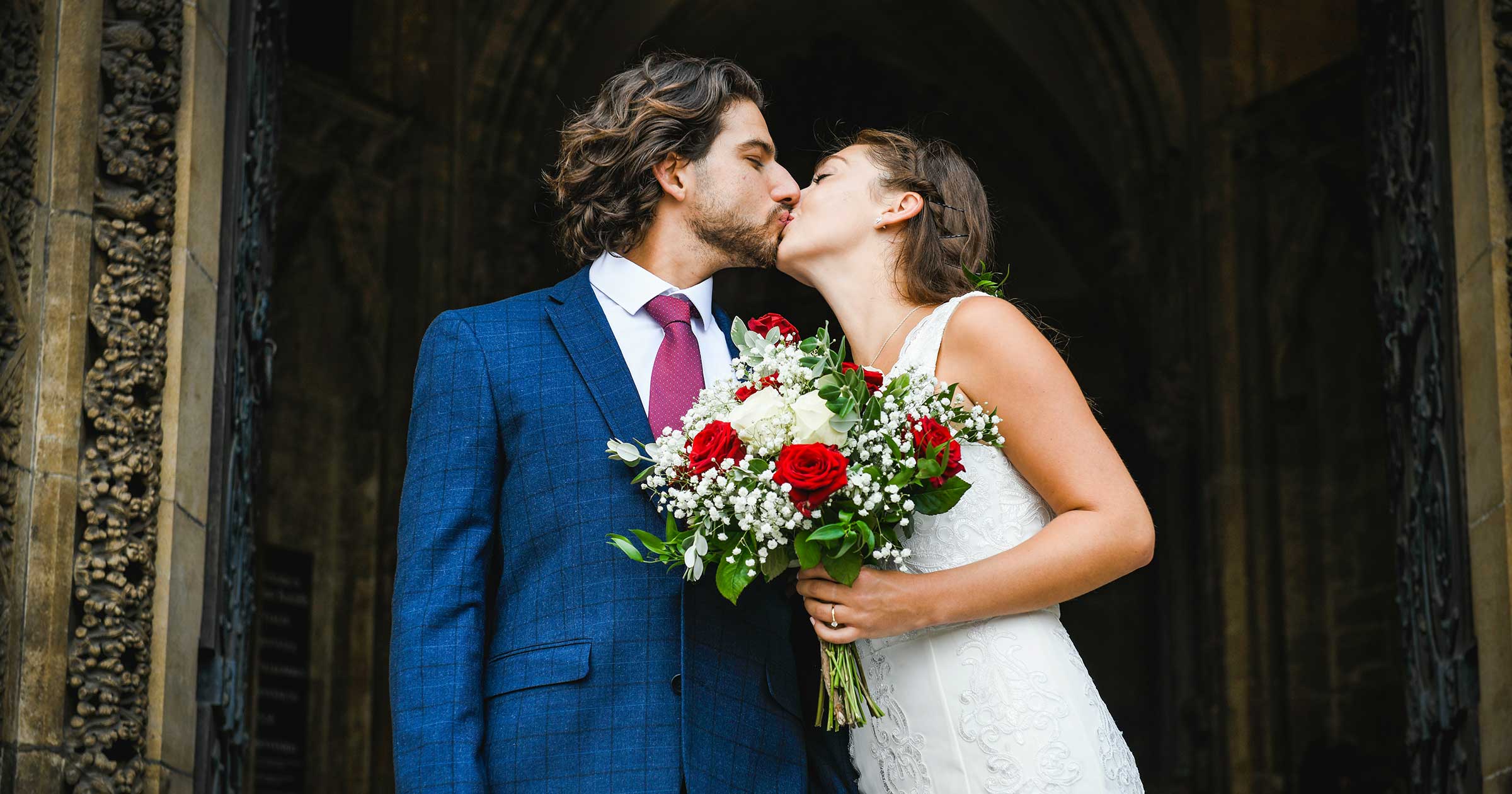
You will watch your wedding video more times than you think. Not in the first week — though you will watch it then too, probably three times in a row. But in five years, when your toddler asks what your dress looked like. In ten years, when you hear your grandfather's toast and realize you had forgotten the exact words. In twenty years, when the two of you sit on the couch on your anniversary and press play, and the whole day comes back — not as a memory, but as an experience.
That video will be made by someone you chose. And choosing the right person is one of the most consequential decisions in your entire wedding planning process, yet it is also one of the most misunderstood.
Most couples spend more time researching their caterer than their videographer. This is understandable — food is tangible, immediate, and easy to evaluate. Video feels abstract until it exists. But the caterer feeds your guests for four hours. Your videographer creates the only artifact that preserves what your wedding actually felt like. The distinction matters.
Research on episodic memory conducted at Harvard University's Department of Psychology has demonstrated that video triggers significantly stronger autobiographical memory recall than static images. Dr. Daniel Schacter's work on memory reconsolidation shows that when couples watch their wedding video, the brain doesn't simply "remember" the event — it re-experiences it through a process called vivid episodic retrieval. Couples who have wedding video report measurably stronger emotional connections to their wedding day memories years later compared to those who rely solely on photographs. The neural mechanisms involved — particularly activity in the medial temporal lobe and prefrontal cortex — respond more robustly to dynamic audiovisual stimuli than to still images. In practical terms: your wedding video doesn't just remind you of your day. It lets you feel it again.
This guide will help you choose a wedding videographer with confidence — whether your budget is $2,000 or $20,000, whether you want a cinematic masterpiece or a simple documentary record. We will cover what to look for, what to ask, and what red flags to avoid. If you are also researching how much wedding videography costs, we have a separate deep-dive on pricing — but here, the focus is on the decision itself.
Start with Style, Not Price
The most common mistake couples make when searching for the best wedding videographers is starting with price filters. Price tells you what someone charges. Style tells you what your film will feel like. These are fundamentally different questions, and answering them in the wrong order leads to poor matches.
There are three dominant styles in modern wedding videography:
Cinematic
Characterized by dramatic camera movement, shallow depth of field, carefully designed color grading, and a narrative structure that often reorganizes the day's events for emotional impact. A cinematic film might open with your vows playing over slow-motion getting-ready footage before cutting to the ceremony. The emphasis is on artistry and emotion. If you find yourself drawn to films that feel like movie trailers, you want a cinematic wedding videographer.
Documentary
Chronological, observational, and focused on capturing events as they unfold. Documentary-style videographers prioritize authentic moments over stylized compositions. The film follows the real timeline of your day — getting ready, ceremony, cocktail hour, reception — with minimal interference. Audio tends to feature real ambient sound and speeches captured in full. This style works exceptionally well for couples who want an honest, unmanipulated record of their wedding.
Traditional
Straightforward coverage with fixed camera positions, often resembling event documentation more than filmmaking. Traditional videography is less common among modern professionals but remains popular in certain cultural and religious wedding contexts where complete ceremony capture is essential.
Many experienced wedding filmmakers blend elements of all three styles. The key is identifying which dominant approach resonates with you. Watch five to ten wedding films from different videographers on YouTube or Vimeo. Notice which ones make you feel something. That emotional response is your most reliable compass.
Research by Dr. Sheena Iyengar at Columbia University on decision-making and choice overload has shown that consumers presented with too many options experience what psychologists call the paradox of choice — they become less satisfied with their eventual selection, not more. Her landmark studies demonstrate that narrowing an initial set to 3–5 strong options after applying a clear filtering criterion (in this case, style preference) produces significantly higher post-decision satisfaction than evaluating 15–20 options simultaneously. Apply this principle: identify your preferred style first, then narrow to a shortlist of 3–5 videographers whose aesthetic matches. You will make a better decision with less stress.
Watch Full Films, Not Just Reels
Instagram and TikTok have transformed how couples discover videographers. This is both good and bad.
It is good because social media has made wedding videography visible to couples who would not have otherwise considered it. When you see a beautifully shot first-dance clip on your feed, something clicks — I want that for my wedding.
It is bad because a 30-second reel is the most misleading sample of a videographer's work. A reel shows the single best moment from the single best wedding with the single best lighting conditions. It tells you almost nothing about what your film will actually be like.
Here is what full films reveal that reels cannot:
- Consistency — Can the videographer maintain quality across an entire 8-minute highlight, or do the middle sections feel flat?
- Audio quality — Speeches, vows, and ambient sound are the emotional backbone of any wedding film. Reels are set to trending music. Full films expose whether the videographer captures clean audio.
- Pacing and editing — A great wedding film breathes. It has quiet moments and energetic ones. It builds. This is invisible in a 30-second clip.
- Storytelling — Does the full film have a narrative arc? Does it feel like a story, or like a collection of pretty shots strung together?
- Low-light performance — Receptions happen in dim ballrooms, candlelit barns, and tented venues. Full films show whether the videographer can handle these conditions.
Ask every videographer on your shortlist to share 2–3 full wedding films. If they cannot or will not, that itself is information. For a deeper understanding of what separates a good wedding film from a great one, see our complete guide to wedding video.
The Portfolio Red Flags
A portfolio is a curated collection — every videographer shows their best work. But even curated portfolios reveal patterns if you know what to look for.
Warning Signs to Watch For
- Every highlight is from the same venue. This might mean the videographer has a preferred vendor relationship with that venue and produces consistently in that setting — but cannot adapt to different environments. Ask about variety.
- Inconsistent audio across films. If speeches are crisp in one film and muffled in the next, the videographer may not own reliable audio equipment or may not prioritize it. Audio is non-negotiable — our research on how audio quality impacts the wedding video experience shows it is the single most cited factor in couple satisfaction.
- Jarring transitions and over-editing. Excessive speed ramps, whip pans, lens flare overlays, and aggressive color grading can mask a lack of strong source footage. The best wedding films feel effortless.
- Stock music on every film. Licensed music is normal and expected. But if every single film uses the same generic royalty-free tracks, it suggests the videographer does not invest time in music selection or does not have access to quality music libraries.
- No full ceremony or speech footage available. If the videographer only shows highlight reels and has no full-length ceremony or toast clips to share, they may not capture complete audio recordings — which means if your vows are not in the highlight, they may not exist anywhere.
- Outdated work. A portfolio showing only footage from 3–4 years ago could indicate the videographer has scaled back their business or has not been booking recent weddings.
10 Questions to Ask Before Booking
Once you have a shortlist of 3–5 videographers whose style and portfolio impress you, it is time for the conversation. These ten questions will reveal everything you need to make a confident decision.
- How many weddings have you filmed? — Experience matters, but context matters more. An experienced wedding filmmaker with 80 weddings over four years has likely encountered every lighting condition, weather disaster, and timeline change. Someone with 200 weddings over fifteen years may have more total experience but might also be less current with modern techniques. Ask about recent work specifically.
- What happens if you get sick or have an emergency on my wedding day? — This is the question most couples forget to ask and the one that matters most. A professional videographer will have a documented backup plan — either a network of trusted colleagues or business insurance that covers a replacement. If the answer is vague, keep looking.
- What is your turnaround time? — Industry standard ranges from 6 to 16 weeks for a highlight film. Some videographers deliver within 4 weeks; some take 6 months. Neither is inherently wrong, but you should know the timeline upfront. Get it in writing.
- How will you deliver our final films? — This question is so important it gets its own section below. The short version: a Google Drive link that expires is not the same as a permanent branded gallery you can share with family for years.
- Do you work with a second shooter? — A second camera angle transforms wedding coverage. We explore this in depth in the second shooter section and in our research on the measurable impact of a second videographer.
- What equipment do you use for audio? — You do not need to understand audio gear, but you should hear specifics. Wireless lavalier microphones on the officiant and groom, a shotgun mic on the camera, and a recorder for the DJ's audio feed — these are baseline for professional wedding audio capture.
- What is included in the contract, and what costs extra? — Drone footage, same-day edits, RAW footage, extended coverage hours, travel fees — these are all common add-ons. Make sure you understand what is included in your quoted price and what would be additional.
- Can I see a full wedding film, not just a highlight reel? — If they hesitate or say they only produce highlights, consider whether that meets your needs. Some couples want only a highlight. Others want full ceremony, speeches, and reception coverage.
- How do you handle low-light situations? — Ceremonies in dark churches, receptions in candlelit barns, sparkler exits — low light is the technical challenge that separates professional equipment and skill from consumer-grade work. Ask to see examples from dimly lit venues.
- What is your cancellation and rescheduling policy? — Post-2020, this question is essential. Understand the deposit structure, refund terms, and how date changes are handled. A fair contract protects both parties.
Understanding Packages and Pricing
Wedding videography pricing varies enormously, and the variation is not random. It reflects experience, equipment investment, editing time, and business overhead. Here is what you can generally expect at each price tier in the US market. For a more comprehensive breakdown, see our wedding video cost analysis.
| Price Range | What You Typically Get | Best For |
|---|---|---|
| $1,500 – $2,500 | Solo shooter, 6–8 hours, 3–5 min highlight, digital delivery (Google Drive/Dropbox), 8–12 week turnaround | Budget-conscious couples who want a solid record of their day without cinematic polish |
| $3,000 – $5,000 | Solo or dual shooter, 8–10 hours, 5–8 min highlight + ceremony edit, professional audio, drone footage possible, 6–10 week turnaround | Couples who want a polished film with good production value and full ceremony capture |
| $5,000 – $10,000 | Dual shooter standard, full-day coverage, cinematic highlight (8–15 min) + documentary edit, professional branded delivery, 4–8 week turnaround | Couples who prioritize cinematic quality and want a complete, multi-film package |
| $10,000+ | Multi-camera team, unlimited hours, multiple edited films, same-day edit option, premium delivery experience, 4–6 week turnaround, destination travel included | Luxury weddings where video is a top priority and no creative compromises are acceptable |
Important: Price does not always correlate perfectly with quality. A talented videographer in year three of their career, charging $3,500, may produce work that rivals someone charging $8,000 in a major metro area. Geographic market, cost of living, and business overhead all affect pricing. Focus on the work itself — does their portfolio move you? — and treat price as one factor among several.
For videographers reading this and looking to structure their own packages, our wedding videographer pricing guide covers package strategy in detail.
The Delivery Question Most Couples Forget to Ask
Here is a scenario that happens thousands of times every year: a couple invests $5,000 in wedding videography. The videographer delivers a stunning film. It arrives as a Google Drive link in an email. The couple watches it, loves it, shares the link with family. Six months later, the link expires. The couple searches their inbox, cannot find the original email. The file is gone.
How you receive your wedding film matters almost as much as the film itself. Yet most couples never think to ask about delivery until it is too late.
Here are the common delivery methods and their trade-offs:
- Google Drive / Dropbox / WeTransfer — Free for the videographer, functional for the couple, but impermanent. Links expire. Storage gets reorganized. Files get accidentally deleted. There is no presentation — just a file in a folder.
- USB drive — Physical, permanent (until it gets lost), and somewhat romantic in a tangible way. But you cannot easily share a USB with your grandmother in another state, and USBs fail over time.
- YouTube / Vimeo (unlisted) — Convenient for sharing, but quality is compressed, you have no control over the platform, and ads may appear. Not ideal for something this personal.
- Branded streaming gallery — A dedicated, password-protected online gallery where your film streams in full quality, can be shared with a custom link, and is preserved indefinitely. This is the professional standard for modern wedding videography services, and it is what couples increasingly expect.
When evaluating videographers, ask specifically: "How will I receive my films, and for how long will I have access?" The answer tells you a lot about how a videographer values the post-wedding experience. For a deeper look at delivery methods and why they matter, read our guide on how videographers deliver wedding video to clients.
If your videographer uses a professional video delivery platform like OurStoria, your films live in a beautifully branded gallery that you can share with anyone, stream on any device, and access for years — not days.
Second Shooter: The Single Best Upgrade
If you have room in your budget for exactly one upgrade, make it a second shooter.
A solo videographer can produce excellent work. But physics imposes hard constraints: one person cannot simultaneously capture your face and your partner's reaction during the vows. They cannot film the ceremony from the back of the church and get a close-up of the ring exchange. They cannot cover the dance floor and the cocktail conversations happening in the next room.
A second shooter solves this with a second camera angle. The result is not just "more footage" — it is footage that enables fundamentally better storytelling in the edit. Here is what a second angle adds:
- Reaction shots during vows and speeches — The moment your partner's eyes fill with tears during your vows is captured even while the primary camera stays on you.
- Ceremony coverage from multiple perspectives — Wide establishing shots and intimate close-ups can be intercut, creating a cinematic viewing experience.
- Simultaneous event coverage — During cocktail hour, one shooter can stay with the wedding party while the other captures candid guest moments.
- Safety redundancy — If one camera has a technical issue during a critical moment, the other camera is still rolling. This alone is worth the investment.
Our analysis of the impact of a second videographer on wedding films found that couples who invested in dual coverage reported 34% higher satisfaction with their final film compared to solo-shot weddings in the same price bracket. The cost difference is typically $500–$1,500 — a modest percentage of the total package price for a substantial quality improvement.
When asking your videographer about this, a good follow-up question is: "Is your second shooter someone you work with regularly, or do you hire freelancers?" Consistent teams produce better results because they have established communication and shooting patterns.
Reviews, Referrals, and Red Flags
Once you have narrowed your list based on style, portfolio, and the conversation, it is time to verify. Reviews and referrals are your final quality check — but they require nuanced reading.
Where to Check Reviews
- Google Business Profile — The hardest reviews to fake and the most trusted by other couples.
- The Knot and WeddingWire — Platform-verified reviews from couples who confirmed their booking through the platform.
- Facebook — Useful for seeing how the videographer interacts with past clients in comments and responses.
- Instagram comments and DMs — Ask the videographer if you can contact a recent client directly. Any confident professional will say yes.
How to Evaluate Reviews
- Look for specifics. "Amazing videographer, loved our film!" is nice but uninformative. "John captured our grandfather's speech perfectly despite the terrible acoustics in the church" tells you something real.
- Pay attention to process, not just outcome. Reviews that mention communication, professionalism, flexibility during timeline changes, and how invisible the videographer was during the ceremony — these indicate someone who is easy to work with on the day itself.
- Check the response to negative reviews. Every business gets an occasional negative review. How the videographer responds reveals character. Defensive, dismissive responses are a red flag. Thoughtful, professional responses suggest someone who takes their work seriously.
- Count recent reviews. A videographer with 200 reviews but none in the last six months may have changed their business or quality level.
Understanding Vendor Referral Dynamics
When your venue coordinator or photographer recommends a specific videographer, understand that this is not always a neutral recommendation. Vendor referrals in the wedding industry operate within a complex ecosystem of mutual relationships, and sometimes financial arrangements. This does not make the recommendation invalid — many of the best vendor matches come through these networks — but it means you should still do your own evaluation. Our research on how couples choose their videographer found that photographer-referred videographers had a 78% satisfaction rate, compared to 71% for directory-found and 69% for social-media-discovered videographers. The referral channel works — but verify independently.
Building Your Shortlist: A Practical Framework
Here is a step-by-step approach to efficiently finding your videographer without drowning in options:
- Define your style preference — Watch 10–15 wedding films across different styles. Identify whether you lean cinematic, documentary, or traditional.
- Set your budget range — Be honest about what you can invest. A realistic budget eliminates 70% of options immediately, which is helpful.
- Identify 8–10 candidates — Use Instagram, Google, wedding videography directories, photographer referrals, and venue preferred vendor lists.
- Watch full films and narrow to 3–5 — Eliminate anyone whose full work does not match their highlight reels.
- Have the conversation — Use the ten questions above. Pay attention to communication style — you will be working with this person on one of the most important days of your life.
- Check reviews and references — Verify their reputation through the channels listed above.
- Book with confidence — Sign the contract, pay the deposit, and move on to the next item on your wedding planning list.
This framework typically takes 2–3 weeks from first search to signed contract. Resist the urge to rush — but also resist the urge to endlessly compare. Decision fatigue is real. Once you have found someone whose work moves you, whose communication is professional, and whose reviews confirm consistency — book them before their calendar fills up.
What to Expect After Booking
A great videographer does not disappear between booking and the wedding day. Here is what professional communication typically looks like:
- 1–2 weeks after booking: Contract signed, deposit received, confirmation email with next steps.
- 2–3 months before the wedding: Check-in email to confirm details, discuss timeline, and ask about venue specifics.
- 1 month before: Detailed questionnaire about the day — timeline, key moments, special requests, family dynamics, important guests, shot list preferences.
- 1 week before: Final confirmation with logistics — arrival time, parking, vendor meal, point of contact.
- Wedding day: Professional, unobtrusive presence. A good videographer blends in.
- Post-wedding: Timeline for delivery, teaser delivery within 1–2 weeks (if included), full film delivery per contract terms.
If a videographer goes silent after receiving your deposit, that is a red flag worth addressing directly. Professional communication throughout the planning process is not optional — it is a core part of the service.
Your Wedding Film Is Forever — Choose Accordingly
Your flowers will wilt. Your cake will be eaten. Your dress will go into storage. But your wedding video — if you choose the right person to create it — will be something you return to for the rest of your life.
The best wedding videographers are not just people who own cameras and editing software. They are storytellers who understand that they are capturing something irreplaceable. They combine technical skill with emotional intelligence, and they deliver not just a file, but an experience — from the first inquiry to the moment you press play on your finished film.
Choose someone whose work makes you feel something. Choose someone who communicates clearly and professionally. Choose someone who answers your questions without defensiveness and shows you full films without hesitation. Choose someone whose vision for your wedding film matches yours.
And when you find that person, book them. Your future self — watching that film on your tenth anniversary, with your children asking questions about the day — will thank you.
For more on the complete wedding video journey, explore our wedding video complete guide. If you are a videographer looking to deliver a premium viewing experience to your couples, see how OurStoria transforms wedding film delivery with branded streaming galleries, mobile-optimized playback, and permanent access — so the films you create are experienced the way they deserve to be. Check our plans and pricing to get started.
Related Articles
- The Complete Guide to Wedding Video
- Wedding Videographer Cost Guide: What to Charge and Why
- How Couples Choose Their Wedding Videographer — The Data
- The Measurable Impact of a Second Wedding Videographer
- Wedding Video Optimal Length: What the Data Says
- How to Deliver Wedding Video to Your Client
- Wedding Video Cost Analysis
- Wedding Videography Shot List Template
- How Much Does a Videographer Cost? (2026 Pricing Guide)
- Best Wedding Videography Editing Software in 2026