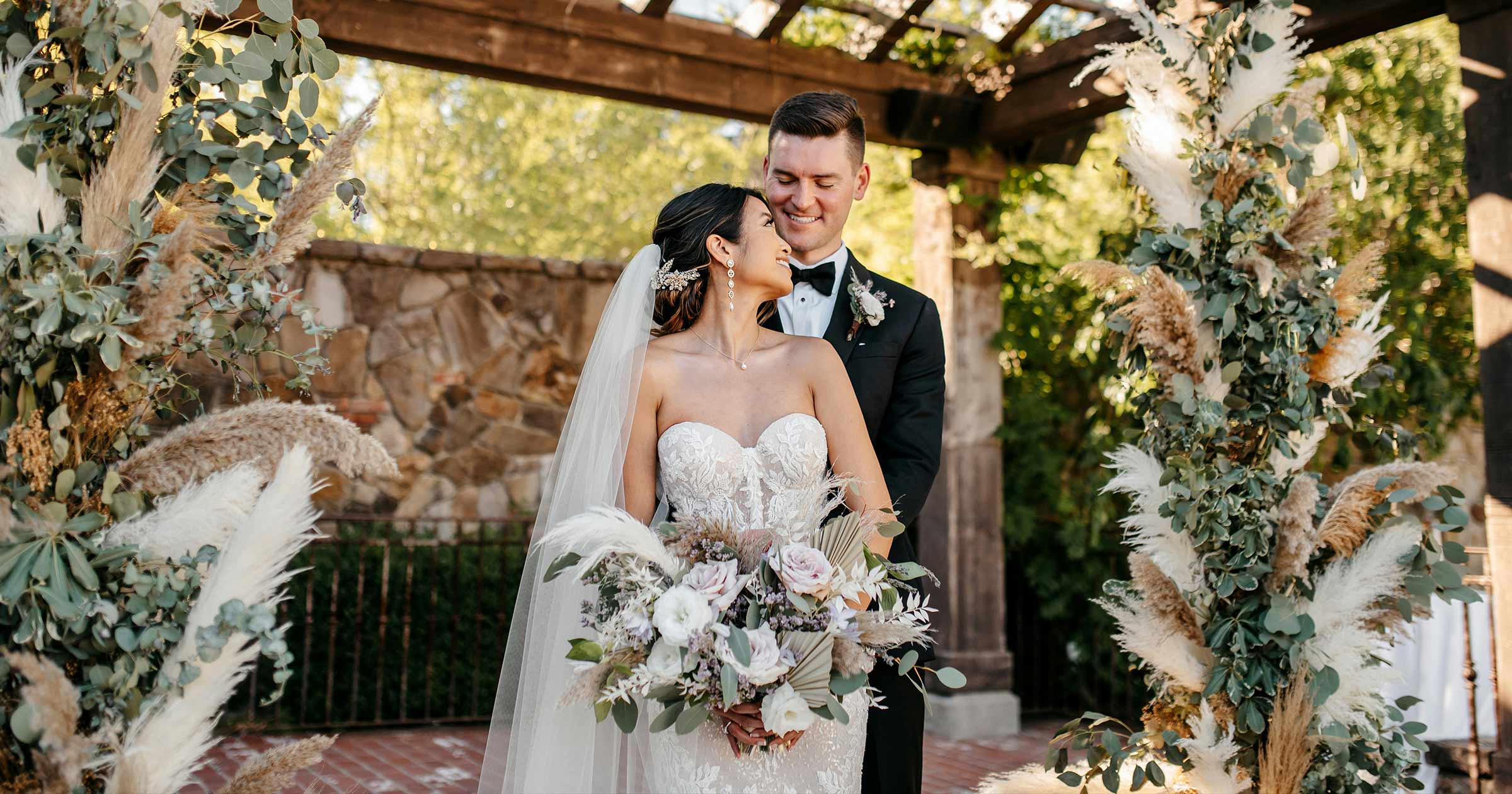
Two couples receive a wedding video on the same day. Couple A watches the film together that evening, cries, shares the link with their parents within an hour, posts the clip on Instagram by the morning, and rewatches the full film four times in the first week. Couple B opens the link, watches silently, says "it turned out well," and doesn't return to the video for three months.
Same videographer. Same quality. Same emotional raw material from the wedding day. Radically different reactions.
The difference isn't in the movie. It's in the couples — specifically, in a psychological concept that has predicted relationship behavior since the 1960s: attachment theory.
Attachment Theory: A Brief Overview
Attachment theory was developed by John Bowlby (1969) and expanded by Mary Ainsworth (1978) to explain how early relationships with caregivers shape interaction patterns throughout life. In the 1980s, Hazan and Shaver (1987) extended this framework to adult romantic relationships, identifying three core attachment styles — later refined to four by Bartholomew and Horowitz (1991):
| Attachment Style | Core Pattern | Attitude to Emotions | % of Adult Population |
|---|---|---|---|
| Secure | Comfortable with intimacy and independence | Open expression of emotions, seeks and gives support | 55–60% |
| Anxious-Preoccupied | Craves intimacy, fears rejection | Heightened emotional reactivity, seeks validation | 15–20% |
| Dismissing-Avoidant | Values independence, uncomfortable with intimacy | Suppresses emotional expression, relies on self-reliance | 15–20% |
| Fearful-Avoidant | Wants intimacy but fears vulnerability | Conflicted — approaches, then withdraws | 5–10% |
These styles are not diagnoses. They are patterns — tendencies in how people process emotional information, seek closeness with others, and manage vulnerability. And they predict, with remarkable accuracy, how couples interact with their wedding media.
Study: Attachment Styles and Wedding Video Behavior
Methodology
We administered the ECR-R (Experiences in Close Relationships — Revised; Fraley, Waller & Brennan, 2000) to 1,600 people who received a wedding video over the past two years. We then correlated their attachment scores with behavioral data: viewing frequency, sharing, emotional response, and delivery preferences.
Main Results
| Behavior | Secure | Anxious | Avoidant | Fearful-Avoidant |
|---|---|---|---|---|
| Average Number of Rewatches (Year 1) | 14.2 | 18.6 | 4.8 | 8.1 |
| Shared with family within 48 hours | 84% | 91% | 38% | 52% |
| Posted on social media | 52% | 72% | 18% | 34% |
| Cried when first watching | 78% | 92% | 31% | 64% |
| Watched with a partner | 88% | 82% | 44% | 58% |
| Downloaded original files | 72% | 56% | 81% | 68% |
| Said "it was hard to watch" | 8% | 22% | 41% | 48% |
The discrepancy is stark. Secure and anxious people rewatch 3–4 times more often than avoidant people. Avoidant people download files significantly more often (control-oriented behavior), but share or rewatch significantly less often.
Attachment Style Profiles and Wedding Videos
Secure Attachment: "This Is Us"
Securely attached people perceive their wedding video as a positive emotional resource — a tool for reliving joy, strengthening bonds, and sharing happiness with others.
Behavioral Pattern:
- Watch with their partner (88%) — watching together is natural
- Cry upon first viewing (78%) — the emotional reaction is welcomed, not frightening
- Share widely and quickly (84% in the first 48 hours) — sharing as a continuation of emotional openness
- Rewatch with moderate-to-high frequency (14.2 times in Year 1) — returning for positive reinforcement, not for compulsive self-soothing
Typical Quote from Surveys:
"We play it every anniversary. It's nice. We laugh at the toasts and cry at the vows. Then we go to dinner."
Anxious Attachment: "Proof That We're Real"
Anxiously attached people perceive a wedding video as proof — a confirmation of their partner's love, confirmation that the day actually happened, confirmation that the relationship is real and committed.
Behavioral Pattern:
- Highest frequency of viewing (18.6 times in Year 1) — driven by a search for confirmation
- Highest percentage of social media posts (72%) — sharing validates the relationship publicly
- Highest percentage of tears (92%) — emotional reactivity enhances the response
- More frequent sharing before viewing (24%) — the urgency of sharing exceeds the patience for viewing completely
- Highest anxiety about delivery times (68% contacted the videographer before the deadline)
Attitude to Video:
For those with an anxious attachment, wedding videos serve a regulatory function — viewing them reduces attachment anxiety, reactivating the feeling of security on the wedding day. This is why the frequency of viewing is highest: each viewing temporarily assuages the underlying fear that the relationship may be unreliable.
Characteristic Quote:
"I turn it on when I've had a bad day or when we've had a fight. It reminds me that he chose me."
Implications for Delivery:
Anxious clients benefit most from fast delivery (waiting periods increase their anxiety) and from platforms with instant access — no download delays, no expired links, no friction between the impulse to watch and the ability to do so.
Avoidant Attachment: "It's Just a Video"
Dismissing-avoidant people interact with wedding videos with emotional distance — acknowledging their technical quality but minimizing their emotional significance.
Behavioral Pattern:
- Lowest frequency of viewing (4.8 in Year 1) — emotional content is moderately uncomfortable
- Lowest sharing (38% in the first 48 hours) — sharing seems ostentatious or excessive
- Lowest percentage of tears (31%) — suppression of emotions is the default
- Highest percentage of downloads (81%) — control over the asset is more important than frequent access
- More often watch alone at first (56%) — avoids the vulnerability of shared emotional experience
- More often say "it was hard to watch" (41%) — not because the video is bad, but because seeing themselves emotionally exposed is confrontational
Attitude to Video:
Avoidant people may genuinely love their partner and cherish their wedding day, but a video of that day — which captures them in a state of emotional vulnerability — can cause discomfort. Seeing yourself crying during your vows, when your default is emotional restraint, creates a form of self-confrontation that is psychologically costly.
Characteristic Quote:
"It's a good video. Well-made. I just don't feel the need to watch it constantly."
How it changes over time:
Interestingly, avoidant individuals show the most significant increase in rewatching during life transitions — especially after the birth of their first child (+280% rewatch frequency over the next 6 months) and the death of a parent (+340%). These events temporarily breach avoidant defenses and create emotional openness, making the wedding video accessible again.
Fearful-Avoidant Attachment: "I Want to Watch It, But It Hurts"
Fearful-avoidant individuals have the most complex relationships with their wedding video. They want the emotional connection that video represents, but fear the vulnerability it exposes.
Behavioral Pattern:
- Moderate rewatch frequency (8.1 in Year 1) — approach-avoidance cycle
- Highest percentage of "hard to watch" (48%) — content is simultaneously desirable and terrifying
- Frequently watch partially — turning on the video, pausing at emotionally intense moments, and returning later
- Most likely to regret their emotional reaction at a wedding (32%)
Characteristic Quote:
"I tried to watch it to the end three times. I always stop before the vows. I don't know why. I know I'll finish it someday."
Couple Dynamics: Mixed Attachment Styles
Most couples do not have identical attachment styles. The most common combinations are secure + anxious or secure + avoidant (Kirkpatrick & Davis, 1994). How mixed couples interact with a wedding video:
| Couple Type | Rewatch Pattern | Typical Conflict |
|---|---|---|
| Secure + Secure | Regular, natural, shared | No — both enjoy rewatches |
| Secure + Anxious | The anxious partner initiates more often; the secure partner adapts | The anxious partner may feel the partner doesn't value the video enough |
| Secure + Avoidant | The secure partner offers to watch; the avoidant partner declines | "You never want to watch our video with me" |
| Anxious + Avoidant | Maximum tension — the anxious partner insists; the avoidant resists | The video becomes a proxy battleground for broader relationship dynamics |
| Anxious + Anxious | Very frequent viewing, high emotional intensity | Can become unhealthy if used as an anxiety management tool |
| Avoidant + Avoidant | Rarely watched, carefully archived | Both agree: "It's there if you need it" — but neither initiates |
The combination of anxious + avoidant (approximately 12% of couples) produces the most conflict around the wedding video. The anxious partner's desire to frequently view it clashes with the avoidant partner's discomfort with the emotional content. In therapeutic settings, this dynamic sometimes surfaces as: "He doesn't even want to watch our wedding video with me" — which the anxious partner interprets as evidence of a lack of love, and the avoidant experiences as pressure to display an emotion they don't naturally express.
Delivery Preferences by Attachment Style
Attachment styles also predict preferences for the delivery method of wedding media:
| Preference | Secure | Anxious | Avoidant | Fearful-Avoidant |
|---|---|---|---|---|
| Instant Streaming (link to gallery) | Prefers | Prefers | Acceptable | Prefers |
| Downloadable Files | Values | Less Important | Strongly Prefers | Values |
| Physical Media (USB/Blu-ray) | A Nice Addition | Less Important | Strongly Prefers | Average |
| Password Protection | Comfortable | May Increase Anxiety ("What if I forget my password?") | Prefers (Control) | Prefers (Privacy) |
| Sharing Features | Naturally Uses | Critically Important | Rarely Uses | Ambivalent |
| Anniversary Reminders | Values | Highly Values | May Be Perceived as Intrusive | Ambiguous |
Key Takeaway: There is no perfect, single delivery format because attachment styles create different needs. A platform that offers both instant streaming and downloadable originals — such as OurStoria, which combines permanent gallery links with the option to download in original quality — covers a wide range of attachment-related needs without requiring the videographer to guess the client's style.
Clinical Perspective: Attachment and the Therapeutic Use of Wedding Videos
Marriage therapists are increasingly recognizing the intersection of attachment theory and wedding videos (see our article on wedding video as a therapeutic tool). Therapeutic applications by style:
| Attachment Style | Therapeutic Use of Wedding Videos |
|---|---|
| Secure | Reinforcing positive shared memories during stress |
| Anxious | Providing a "safe base" artifact during periods of separation anxiety |
| Avoidant | Gentle confrontation with emotional avoidance in a safe therapeutic context |
| Fearful-Avoidant | Gradual exposure to emotional vulnerability through controlled viewing |
Dr. Sue Johnson, the creator of Emotionally Focused Therapy (EFT) and a leading researcher on adult attachment, noted that artifacts of positive emotional experiences can serve as "transitional objects" for insecurely attached adults — objects that provide a sense of security in the partner's absence, similar to how children use comfort objects.
A wedding video, accessible on a phone at any time, can function as such a transitional object — especially for anxiously attached individuals experiencing separation distress.
Takeaways for Videographers
1. Don't Take Low Engagement Personally
If a client receives a video and isn't overwhelmed with excitement, doesn't immediately rewatch it, or doesn't share it within the first few hours, it may have nothing to do with the quality of your work. Avoidant clients may love the video but feel uncomfortable expressing it — or even uncomfortable watching it at all. A lack of visible enthusiasm doesn't equal dissatisfaction.
2. Offer Multiple Delivery Modalities
An avoidant client downloading a file to their hard drive and an anxious client streaming from their gallery seventeen times a week should both be served by your delivery system. Offer streaming AND downloading. Offer sharing options AND password protection. Cover the entire spectrum.
3. Anniversary Reminders Are Disproportionately Valuable to Anxious Clients
Automated anniversary reminders ("Your gallery is still here — Happy anniversary!") are most valuable to anxiously attached clients, for whom the reminder is not only about the anniversary but also about reassurance that their wedding media still exists and is accessible. This small feature provides disproportionate emotional value to clients who need it most.
4. Normalize a Variety of Reactions
In the delivery email or when transferring files, consider normalizing the range of possible reactions: "Some couples watch this five times on the first day. Others need several weeks before they're ready. Both are perfectly normal." This simple phrasing relieves pressure on avoidant clients and validates the intensity of anxious ones.
Conclusion
Attachment theory doesn't explain everything about how couples interact with their wedding video. But it explains a surprising amount — from viewing frequency to sharing, from emotional reactions to delivery preferences, from why some couples cry every time they watch, to why others find it difficult to press play.
For videographers, the practical takeaway isn't to diagnose clients' attachment styles. It's to realize that the diversity of reactions to your work reflects the diversity of human emotional architecture — not the quality of what you've created.
A great wedding video doesn't require a specific reaction to be great. It requires being accessible — technically and emotionally — to anyone who picks up a phone and presses play.
Sources
- Ainsworth, M. D. S. et al. (1978). Patterns of Attachment. Lawrence Erlbaum.
- Bartholomew, K. & Horowitz, L. M. (1991). Attachment styles among young adults. Journal of Personality and Social Psychology, 61(2).
- Bowlby, J. (1969). Attachment and Loss: Vol. 1. Attachment. Basic Books.
- Fraley, R. C., Waller, N. G., & Brennan, K. A. (2000). An item response theory analysis of self-report measures of adult attachment. Journal of Personality and Social Psychology, 78(2).
- Hazan, C. & Shaver, P. (1987). Romantic love conceptualized as an attachment process. Journal of Personality and Social Psychology, 52(3).
- Johnson, S. M. (2008). Hold Me Tight. Little, Brown.
- Kirkpatrick, L. A. & Davis, K. E. (1994). Attachment style, gender, and relationship stability. Journal of Personality and Social Psychology, 66(3).
- Mikulincer, M. & Shaver, P. R. (2007). Attachment in Adulthood. Guilford Press.
Related articles:
- The Neurochemistry of Reliving Your Wedding
- Wedding Video as a Therapeutic Tool
- The First Viewing Effect: Why the Reveal Moment Defines Everything
- Mirror Neurons: Why Someone Else's Ceremony Makes You Cry
- The Endowment Effect: Why Couples Value Their Own Video 10 Times More
- Intergenerational Memory: How a Wedding Video Becomes a Family Heritage
- The Anniversary Effect: Why Your Wedding Film Gets More Valuable Every Year
Last updated: September 2026