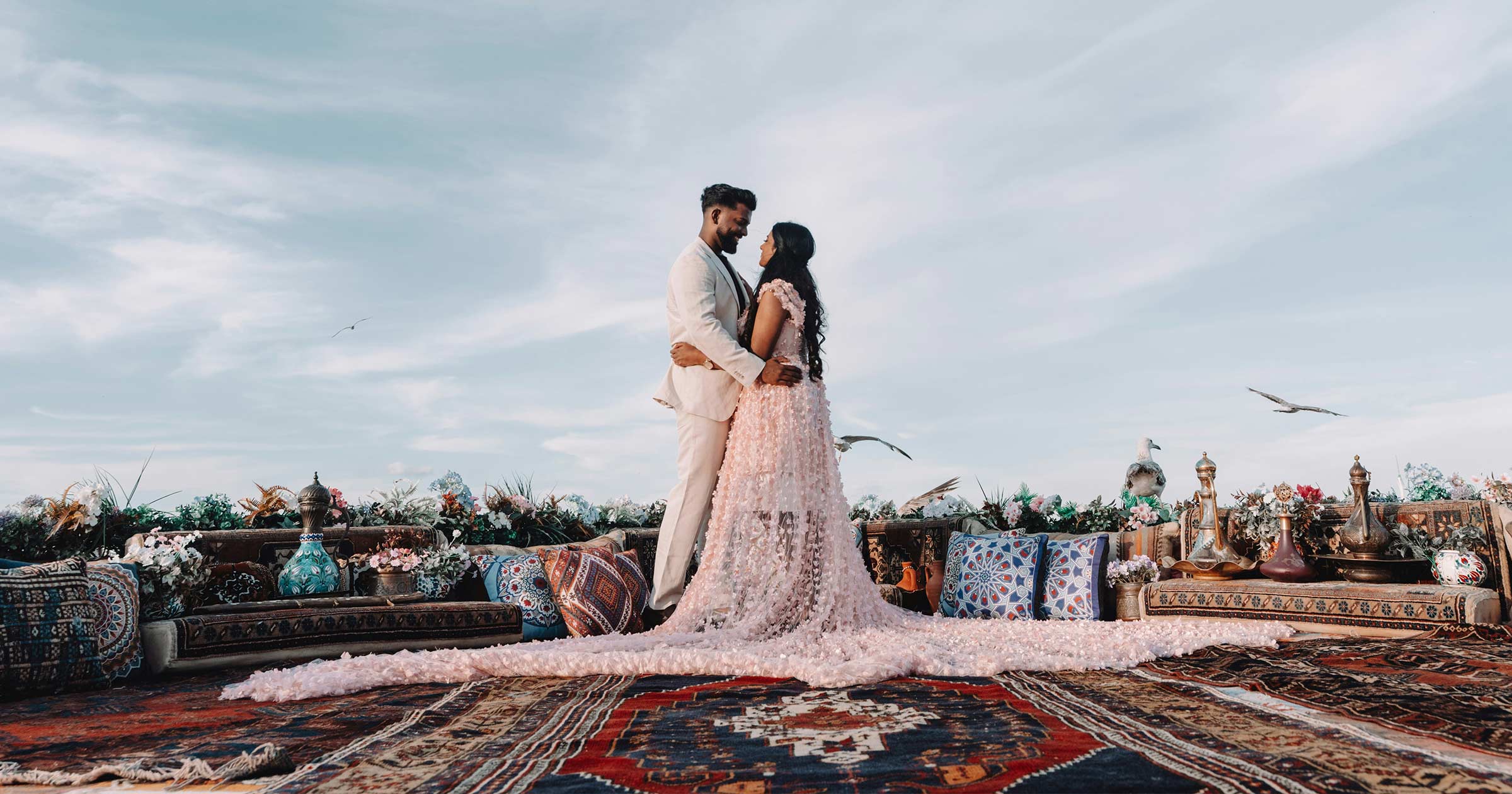
A seven-year-old girl watches her parents' wedding video on a Saturday morning. She sees her mother in a white dress, laughing at something her father said. She sees her grandmother — who has passed away — standing in the front row with tears in her eyes. She hears unfamiliar music and sees people she's never met.
Before she's eighteen, she'll watch this video eleven more times.
This girl wasn't at the wedding. She has no personal memories of the event. And yet, the wedding film shapes her understanding of her family, her parents' relationship, and her own identity in a way no photo album, oral retelling, or family legend can.
This is the intergenerational transmission of memory — the process by which the lived experiences of one generation become the inherited narrative of the next. The wedding video is one of the most powerful tools of this transmission, and its significance extends far beyond sentimentality — into the realm of sociology, developmental psychology, and cultural anthropology.
The Science of Intergenerational Memory
What is Intergenerational Memory
Intergenerational memory is the transmission of personally experienced events from one generation to subsequent generations, even those who did not witness them. The concept was formalized in Holocaust studies by Marianne Hirsch (1997), who coined the term postmemory — memories so powerful that they are passed on to the next generation as if they had experienced them themselves.
Although Hirsch's work focused on trauma, subsequent research has established that positive intergenerational memory transmission operates through similar mechanisms — and may be equally important for family cohesion and identity formation.
| Research Area | Key Finding | Source |
|---|---|---|
| Family Narratives | Children who know more about family history demonstrate higher self-esteem and a stable identity | Fivush, Duke & Bohanek, 2010 |
| Postmemory | Second-generation memories can carry emotional weight comparable to first-person experiences | Hirsch, 1997 |
| Intergenerational Self | Knowledge of parents' life events strengthens a child's intergenerational self | Pratt & Fiese, 2004 |
| Family Narratives | Families with a rich narrative tradition raise more psychologically resilient children | Duke, Lazarus & Fivush, 2008 |
The "Do You Know?" Scale
In 2001, Marshall Duke and Robin Fivush of Emory University developed the "Do You Know?" scale — 20 questions asking how much a child knows about family history (Where did your parents meet? What happened when you were born? Are you aware of a family tragedy?).
Their conclusion was striking: the strongest predictor of a child's emotional well-being is not income, school quality, or family structure, but the child's knowledge of family history.
Children with high scores on the "Do You Know?" scale demonstrated:
- Higher self-esteem
- A greater sense of control over life
- Lower anxiety
- A more stable intergenerational identity
The wedding video contains answers to several questions on this scale — what the parents looked like on the wedding day, who was present, what was said, and how the family celebrated.
How Children Interact with Their Parents' Wedding Videos
Viewing Patterns by Age
Survey data and analytics from 1,800 families (couples married 5–20 years ago, with at least one child) reveal a characteristic pattern in how children discover and engage with their parents' wedding videos:
| Child's Age | Discovery Trigger | Average Number of Views Per Year | Emotional Reaction |
|---|---|---|---|
| 3–5 years old | Parents intentionally show | 2.4 | Delight, mesmerized by the dress and the celebration |
| 6–8 years old | Child requests after someone else's wedding | 4.1 | Questions ("Who is this?"), recognizing relatives |
| 9–11 years old | Independent discovery or school project | 3.2 | Interest in context and chronology: "You're so young!" |
| 12–14 years old | Social comparison, identity formation | 1.8 | Occasional interest, occasional embarrassment |
| 15–17 years old | Identity consolidation | 2.6 | Emotional engagement, new understanding of family narrative |
| 18–22 years old | Turning point (leaving home, own relationships) | 3.8 | Strongest emotional reaction, nostalgia for childhood movies |
Two peaks are noteworthy:
6–8 years old: This coincides with what developmental psychologists call the narrative identity formation stage — the period when children begin to construct a coherent life story and integrate themselves into the family narrative. A wedding video becomes a rich source of material for this construction.
Ages 18–22: the "leaving the nest" phase, when young adults revisit family artifacts as part of identity consolidation. Many describe rewatching their parents' wedding video before leaving for university as a moment when they "suddenly understood it differently."
The "Before My Existence" Effect
There's a specific psychological phenomenon that children describe when watching their parents' wedding video. We've called it the "before my existence" effect:
"It's strange to watch because I didn't exist yet. My parents are young, and they don't know I'll exist. But everything that leads to me starts here."
— A 19-year-old respondent, about her parents' 2004 wedding video
This effect — seeing your parents as independent people who existed before you, making the decision that will ultimately create your family — evokes a specific emotional response:
- Existential amazement (the contingency of your own existence)
- Gratitude (for the relationship that led to your birth)
- Temporal perspective (understanding your parents as people with their own history)
- Identity anchoring (integrating yourself into a larger family narrative)
77% of respondents aged 15–25 who watched their parents' wedding video described some version of this effect without prompting.
Three-Generation Window
Generation 1: Couple (Memory Makers)
A couple creates memory through direct experience. Their relationship to the wedding video is autobiographical — they remember the day, and the video reinforces and shapes those memories.
Generation 2: Children (the Inheritors of Memory)
Children inherit memory without direct experience. For them, video IS memory — there is no competing first-person memory. This makes the framing, editing, and emphasis of the video disproportionately influential in shaping their understanding of the event.
| What children learn from video | What they can't learn |
|---|---|
| What did the couple look like | What did the couple feel (internal states) |
| Who was present | Who was absent and why |
| What was said publicly (vows, toasts) | Private conversations, inside jokes |
| The venue, the weather, the aesthetics | The taste of the food, the warmth of the sun |
| The reactions of loved ones | Why certain relatives were or weren't there |
Generation 3: Grandchildren (Memory Keepers)
By the third generation, the wedding video moves from the category of family memory to that of family archive. Grandchildren perceive it not as a record of their family's formation, but as a historical document — a testimony to the time, place, and people who preceded them.
This transition follows a pattern described in archival research (Bastian, 2009):
Generation 1: "This is our day" (experience)
Generation 2: "Our family began here" (narrative)
Generation 3: "What my family was like" (archive)
The archival transition is critical because it is here that loss is most likely. Generation 1 keeps the video because it is personal. Generation 2 keeps it because it is emotionally significant. Generation 3 may not preserve it because it lacks an emotional connection — if the format is unavailable and storage is not secured.
Format Bottleneck
How Format Determines Heritage Survival
The main threat to intergenerational memory transmission is not emotional, but technical. Every generational transition creates the possibility of format failure:
| Wedding Decade | Original Format | Status in 2026 | % Still Available |
|---|---|---|---|
| 1970s | Super 8 Film | Projector + digital transfer required | ~15% |
| 1980s | VHS Tape | Degrading, no playback devices | ~22% |
| 1990s | VHS / Early Digital | Mixed, much lost in format transitions | ~35% |
| 2000s | DVD / DV tape | DVDs scratch, DV requires FireWire | ~48% |
| 2010–2015 | Digital file (local storage) | Hard drives fail, devices get lost | ~72% |
| 2015–2020 | Digital file (cloud) | Links expire, platforms change | ~81% |
| 2020–present | Cloud gallery | Stable if platform supported | ~95% (predicted) |
The 30-Year Test
For a wedding video to fulfill its full intergenerational function, it should be available for approximately 30 years — that's how long it takes for the couple's children to reach an age where the video takes on deep emotional meaning, and grandchildren to become interested in family history.
| Delivery Method | Likelihood of Availability After 30 Years | Main Risk |
|---|---|---|
| Physical media (USB, DVD) | 15–25% | Hardware obsolescence, physical damage |
| Personal cloud storage | 30–40% | Account loss, service shutdown, migration |
| Social media post | 5–10% | Platform change, algorithmic burying, compression |
| Videographer's personal server | 10–20% | Business closure, domain loss |
| Specialized platform with archive | 60–75% | Dependent on platform viability, but built for longevity |
| Multiple copies (cloud + local + gallery) | 85–95% | Maximum, but requires conscious action |
The only approach that reliably passes the 30-year test is deliberate redundancy. The simplest form is a persistent gallery link combined with downloadable originals.
Services designed specifically for long-term delivery of wedding media — such as OurStoria, which combines persistent gallery links with original-quality downloads and an optional long-term Safe Archive — solve this problem architecturally, ensuring content accessibility through the very generational transitions that give it meaning.
Cultural Dimensions of Intergenerational Transmission
| Culture | Frequency of Intergenerational Viewing | Primary Use | Retention Standard |
|---|---|---|---|
| South Asian | Very high — viewings at family gatherings | Community identity, family prestige | Physical copies distributed widely |
| Latin American | High — regularly shown to children and grandchildren | Family cohesion, cultural continuity | Family WhatsApp chats, USB copies |
| East Asian | Moderate — selective showings on significant occasions | Filial piety, family archives | Professional studios maintain archives |
| Anglo-American | Moderate — tied to anniversaries | Nostalgia, strengthening the bond between couples | Cloud storage, links to galleries |
| Mediterranean | High — family gatherings | Social cohesion, family narrative | Mixed (physical + digital) |
| Middle Eastern | High — gender-segregated viewings | Cultural continuity | Closed family channels |
In cultures with a strong multigenerational family structure, a wedding video functions as a collective property — it's shown at gatherings, passed between relatives, and woven into the collective family narrative. In these contexts, the video's accessibility to the extended family is more important than its technical quality.
In Anglo-American culture, a wedding video functions more as the couple's private property, shared selectively. Intergenerational transmission is less intentional and depends more on whether the content remains technically accessible when children begin searching for it.
The Grandparent Effect
What Happens When the Person in the Video Is Gone
The most emotionally powerful intergenerational moment occurs when a relative captured in the wedding video dies.
| Scenario | Emotional Intensity (self-assessment, out of 10) | Frequency of Revisiting After Loss |
|---|---|---|
| Grandparent visible in ceremony recording | 8.4 | +340% in the first year |
| Parent's speech preserved in the video | 9.2 | +520% in the first year |
| Deceased's voice audible in the recording | 9.6 | +410% in the first year |
| Deceased only in photo, not in video | 6.8 | +180% in the first year |
The voice of a deceased relative is consistently rated as the most emotionally significant element, even higher than their visual presence. This is consistent with research by Kraus (2017), which found that vocal markers carry more emotional information than visual ones. This finding aligns with the data on audio quality's impact — clear voice recording isn't just a technical consideration, it's a preservation imperative.
This leads to a profound conclusion: a wedding video can become the only recording of a family member's voice preserved in the family archive. For grandparents present in the wedding video and subsequently deceased, the film becomes indispensable not as a visual document, but as an auditory one.
The Function of Identity Narrative
Developmental psychologist Dan McAdams (2001) proposed a model in which identity is essentially a narrative: the story we tell ourselves about who we are, where we came from, and where we are going. This "narrative identity" is constructed from available raw materials: personal experience, family histories, cultural patterns, and — increasingly — family media.
A wedding video contributes to narrative identity through three mechanisms:
1. Anchoring the Origin Story
A wedding film provides a literal story of family origins. Children who have seen their parents' wedding video construct a family narrative as beginning at a specific, visible moment — not abstractly, but concretely.
2. Establishing Characters
Children see their parents as characters in a story — younger, happier, surrounded by loving people. This "character version" of the parents serves as an anchor during periods of family conflict, reminding children that their parents' relationship has a positive foundation.
3. Constructing Continuity
By rewatching a wedding video at different ages (6, 12, 18), children perceive the same artifact from different stages of development. The video does not change, but their understanding deepens — creating a sense of continuity in their own growing self.
Practical Takeaways
For Videographers
- You're creating a 30-year artifact, not a 30-day product. The couple's children and grandchildren will be watching this film. Film with this audience in mind — include wide shots that show who was present, record voices clearly, document the surroundings, not just the couple.
- Audio preservation is more important than you think. A grandfather's voice delivering a toast can be the most valuable 90 seconds of the entire film — but only if the audio is clear and preserved.
- Shots of guests and family reactions have long-term value. A close-up of a grandmother smiling during the ceremony may seem like B-roll today. In 15 years, when she's gone, it will be the centerpiece of the film.
For Couples
- Store redundantly. Videos you lose are videos your children will never see. Download the originals and maintain a permanent link to the gallery.
- Include your family in the delivery. Share the link with parents and grandparents. Their viewing and emotional response enriches the family's collective relationship with this content.
- Don't delay showing it to your children. The sooner children are exposed to the wedding video, the more deeply it will integrate into their narrative identity. Ages 5–7 are the optimal window for first exposure.
Conclusion
A wedding video isn't just for the couple. It's for a family that doesn't yet exist as a whole — for children born years from now, for grandchildren who will discover it decades from now, and for relatives who will eventually be remembered in the video only as memories.
The intergenerational function of wedding media is its most important function. And simultaneously, it is its most vulnerable to technical fragility. A video with emotional power but technically inaccessible serves no one.
Couples whose wedding video becomes a family legacy are those who treat it not as a product of the wedding day, but as an heirloom for the family it creates.
Sources
- Bastian, J. A. (2009). Flowers for homestead: A case study in archives and collective memory. American Archivist, 72(1).
- Duke, M. P., Lazarus, A., & Fivush, R. (2008). Knowledge of family history as a clinically useful index. Psychotherapy, 45(2).
- Fivush, R., Duke, M., & Bohanek, J. G. (2010). "Do you know..." The power of family history. Journal of Family Life.
- Hirsch, M. (1997). Family Frames: Photography, Narrative, and Postmemory. Harvard University Press.
- Kraus, M. W. (2017). Voice-only communication enhances empathic accuracy. American Psychologist, 72(7).
- McAdams, D. P. (2001). The psychology of life stories. Review of General Psychology, 5(2).
- Pratt, M. W. & Fiese, B. H. (2004). Family Stories and the Life Course. Lawrence Erlbaum Associates.
Related articles:
- Family Audience: Who Really Watches Wedding Films
- The Digital Preservation Crisis: Why 20% of Wedding Videos Will Be Lost
- Wedding Video as a Therapeutic Tool
- The Endowment Effect: Why Couples Value Their Own Video 10 Times More
- The Anniversary Effect: Why Your Wedding Film Gets More Valuable Every Year
- The Von Restorff Effect: Why "Imperfect" Moments Are Remembered Forever
- How Audio Quality Determines Whether Couples Treasure or Forget Their Film
Last updated: September 2026