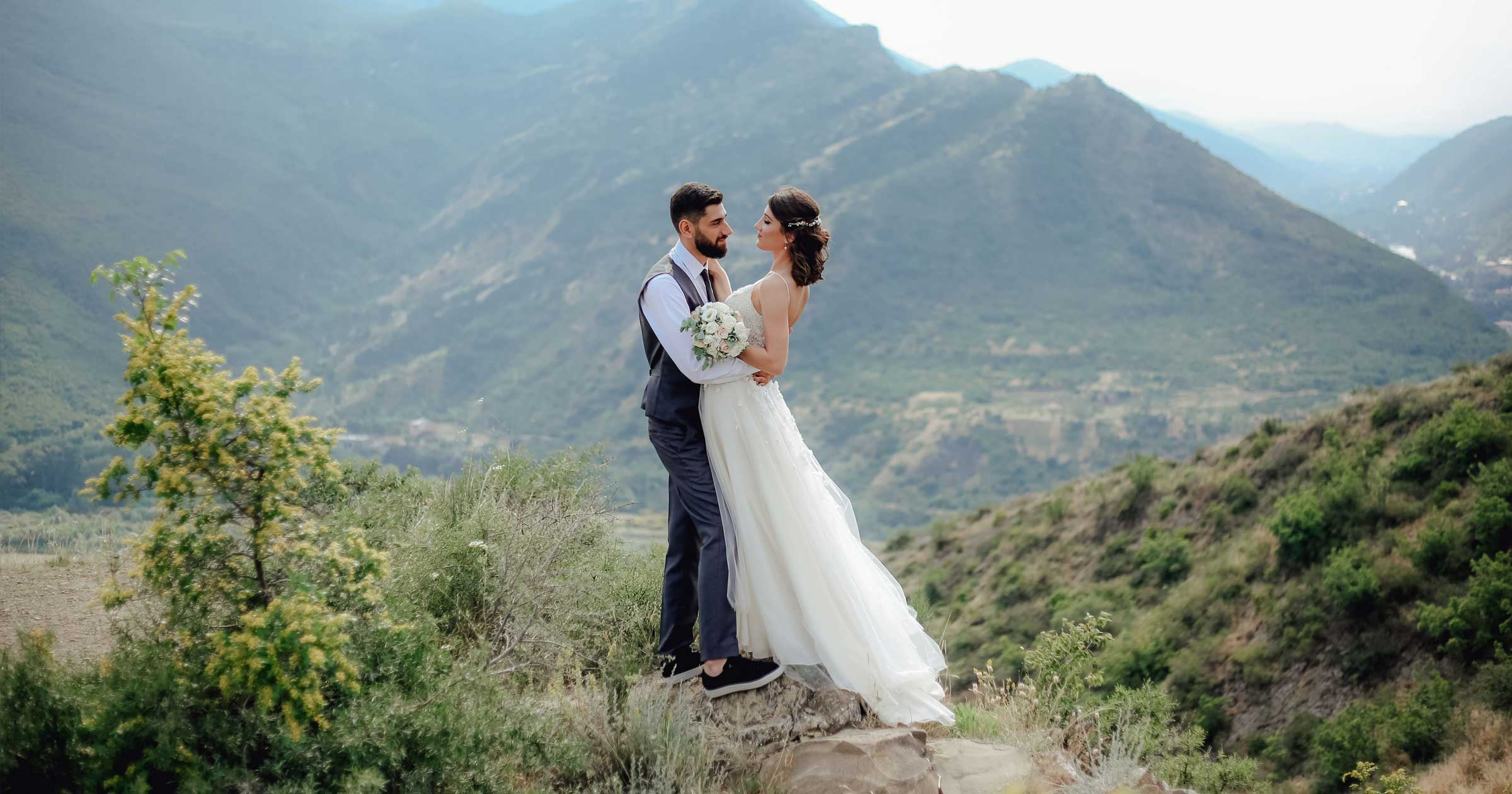
Ava said this at dinner, almost casually: "Maybe we should just elope?"
Brandon put down his fork. They'd been engaged for four months, and in those four months, they'd accumulated a 140-line guest list, three voicemails from Ava's mom about seating arrangements, and one argument about whether to invite a great-uncle neither of them had seen since prom. "Elope" sounded like a joke. But a week later, they were Googling what it even meant to elope and get married. Was it legal? Would Grandma Bonnie be offended? And what would they say to the people who'd already bought their dresses?
If you're reading this, you're probably having a similar evening. The word "elopement" is everywhere these days: on photographers' Instagrams, in wedding magazines, in friends' conversations. And almost everywhere, it's explained with one phrase: "a small wedding without guests." That's true, but not the whole story. The word encapsulates four hundred years of history, a very specific bureaucracy (different in every state), and the last question couples think about: how will the family see a day they weren't there for?
Let's break it down: what the word means today, where it came from, how elopement is legally structured, how it differs from a micro wedding and a courthouse wedding, who attends it, and how to tell your family afterwards. If you've already decided and need a plan, we have a separate step-by-step guide on how to elope, and ideas for places are in our roundup of the best places to elope.
What Is Eloping?
Today, "to elope" in America means getting married in a small, pre-planned way—no big wedding, no long guest list, often in a beautiful location, and often just the two of you or a few close friends.
Note the word "planned." A modern elopement isn't a midnight getaway with a suitcase. It's a day the couple chooses themselves: with a license from the county clerk's office, with an officiant (or without one—in some states, it's possible), with a photographer and videographer, and with vows written weeks in advance. Often, it involves an overnight stay in the mountains, on the coast, or in the city where the couple first met.
Secrecy is no longer necessary. Many couples who elope tell their parents in advance, and some even invite them along. The word remains, but the meaning has shifted: "eloping" now means escaping not from family, but from the format of a large wedding—with a banquet hall for 120 people, seating arrangements, a DJ, and a budget comparable to a down payment on a house.
Here's what the difference looks like in numbers. According to The Knot Real Weddings Study, which included 10,474 American couples getting married in 2025, the average wedding cost $34,000, with an average of 117 guests. Elopement is a conscious move away from this average: instead of 117 people, there are two, five, or ten.
What an elopement isn't. It's not necessarily a secret. It's not necessarily Las Vegas and Elvis. It's not a "poor man's wedding" or a sign of a family feud. And it doesn't have to mean no celebration: many couples get married on their own, then a month or two later gather everyone for dinner or a backyard party.
Elopement Meaning: From Running Away to a Planned Day
To understand why the word has such a scandalous connotation, it's worth looking into its past.
A word that began as a scandal. "Elope" came into English from the Anglo-French "aloper" — "to kidnap, to run away." Merriam-Webster dates the first known use to 1593. And the original meanings weren't exactly romantic. "Elopement" was what a married person did when they left their spouse for a lover. And some dictionaries now mark the meaning "to leave secretly to marry without parental consent" as obsolete. So, the word that today describes the most tender mountaintop wedding was used in courtrooms and gossip four hundred years ago.
The Village They Fled To. The main story of elopement took place not in America, but on the border between England and Scotland. In the mid-18th century, Lord Hardwicke's Marriage Act was passed in England: from 1754, those under 21 required parental consent, and weddings had to be held publicly, in their own parish, before a priest. The law applied to England, but not Scotland. And in Scotland, parental consent was not required, and one could marry almost anywhere.
So the lovers boarded a carriage and headed north. The first village across the border was Gretna Green. When a toll road was built through it in the 1770s, it became easily accessible from England, and the village became the wedding capital of Britain. Weddings were performed there not by priests, but by blacksmiths—the most respected craftsmen in the area. They "sealed" their marriages with a hammer blow to an anvil, earning them the nickname "anvil priests." The most famous of them, Richard Rennison, performed 5,147 ceremonies.
Scotland later imposed its own barrier: from 1856, to marry there, one had to live in the country for 21 days. A carriage no longer saved the day. But the name "Gretna Green" remained synonymous with elopement. Readers of Jane Austen will remember this scene: in Pride and Prejudice, Lydia Bennet leaves a lighthearted note to her friend saying they're off to Gretna Green, and the entire Bennet family lives in horror for several chapters, because a marriage contracted in such a way is a disgrace, and one that never happens is an even greater one.
American version: escape from the press. In America, the word gradually lost its connection with parental prohibition and came to mean "quietly, without a big wedding." A good example is the wedding of Marilyn Monroe and Joe DiMaggio. They initially planned to marry in Las Vegas, at the El Rancho Hotel, but canceled. For weeks, newspapers speculated about where and when. Joe's sister told reporters the couple had "gone for a drive," and the papers temporarily declared them "missing." Then, on January 14, 1954, they arrived at San Francisco City Hall, and Judge Charles Peery married them in his office. Inside were only six friends. Outside, when the news finally leaked, about three hundred people were waiting—reporters, city hall employees, and autograph hunters.
Put these stories together, and it turns out that escape has always been an escape from something: from the law, from parental "no," from the press. Today, couples are fleeing something else—a format that doesn't suit them. But one thing has remained the same: there's almost no one there. Which means almost no one sees it. We'll come back to this later.
What Is an Elopement Today?
Today's elopement is best described by what's most important and what's optional.
Essential:
- Small circle. Most often, just the couple. Sometimes, 2–10 of the closest people: parents, a brother or sister, a best friend. There's no strict limit: no one will come with a ruler to count the guests.
- The ceremony is the center of the day. At a large wedding, the ceremony takes up 20–30 minutes of the ten hours. At an elopement, it is the day. Vows are usually written by the couple themselves, and they are read to each other, not to the audience.
- The location is chosen for the sake of the event itself, not for capacity. A mountain lake, an empty beach at dawn, a viewing platform in a national park, the steps of City Hall, the backyard of the house where the bride grew up. The venue doesn't have to accommodate 117 people—it only needs to accommodate two.
- The marriage is real. This is important: an elopement is a wedding, not a photo shoot. There's a license, there are signatures, and the marriage is registered in the county. (That said, some couples sign the marriage license at the clerk's office at home, while an "elopement" in the mountains is a symbolic ceremony. This is also a normal option.)
Optional:
- Photographer and/or videographer. Many couples don't skimp on this—because there's no one else there to remember it for them.
- A walk or hike. This is where the whole genre of "adventure elopement" comes from: a ceremony after a summit climb or a kayak trip.
- Dinner afterward. A restaurant for two, a picnic, pizza in the room.
- A celebration later. A party for everyone in a month or a year, where you can show a film.
Who decides whether it's an elopement or not? Only you. If you're getting married in Yosemite with just the two of you and call it an elopement, it's an elopement. If you invite eight people to dinner after the ceremony and call it a micro wedding, it's a micro wedding. These words aren't for the application form, but to help you explain to your family exactly what you've planned.
Elopement vs Micro Wedding vs Courthouse Wedding
These three formats are often confused because they share the same idea: "smaller than a regular wedding." But they are structured differently, and families react to them differently.
| Elopement | Micro wedding | Courthouse wedding | |
|---|---|---|---|
| How many people | A couple, sometimes up to 10 of their closest friends | Usually up to 50 guests | A couple + witnesses, if required by state law |
| Where | Anywhere: outdoors, in the city, traveling | Venue, restaurant, home | County clerk's office or courthouse, city hall |
| What's most important | The ceremony and the day itself, just for two | A celebration, but intimate | The legal part |
| Invitations | Usually no | Yes | Usually no |
| Reception | No or dinner for two | Yes, small | No (sometimes lunch afterwards) |
| How long | From a couple of hours to a whole day | Like a wedding, only shorter | 10–30 minutes |
| Photo/video | Often the main expense | Like at a wedding | Sometimes a photographer for an hour |
| How the family finds out | Often afterward, from a call or the film | The family is there | Often afterward |
Where the lines are blurred. A city hall wedding can be an elopement if the couple calls it that: Monroe and DiMaggio essentially "eloped" to the judge's office. And an elopement can include a trip to the clerk's office: the couple signs the marriage certificate on Tuesday and reads their vows on a cliff by the ocean on Saturday.
What the choice really influences. The expectations of family members. If you tell your mom, "We're having a micro wedding," she'll ask where and when she should be. If you say, "We want to elope," the first question will be, "So we're not invited?" Therefore, it's helpful to decide in advance what format you're choosing and refer to it consistently in conversations with everyone.
How Does Eloping Work?
The most surprising part of eloping is that it requires as much paperwork as a large wedding. The difference is that the paperwork isn't about guests. It's about the county.
In the US, marriage is regulated by states, and licenses are issued by counties. Therefore, there's no one-size-fits-all answer to "how to get married"—there's a location-specific answer. The general process is as follows:
- Marriage license. This is obtained from the County Clerk's office (sometimes the Register of Wills or Recorder's office) in the state where the ceremony will take place—not where you live. Typically, both of you need to show up in person with ID. The license has an expiration date, and sometimes a waiting period—how long you have to wait between receiving it and the ceremony.
- Solemnization. Someone must perform the marriage: a judge, a priest, or a registered officiant. In some states, you can solemnize it yourselves.
- Witnesses. Some states require them, while others don't.
- Signatures and Return. After the ceremony, the license is signed and returned to the county within the specified time. Only then is the marriage officially recorded, and you can order a copy of the marriage certificate.
It sounds straightforward, but in practice, the details can make a big difference. Here are a few states where the rules are particularly different (according to official county and state websites, as of November 2026):
| State | Waiting time after license | Validity | Officiant | Witnesses |
|---|---|---|---|---|
| Colorado (example: Larimer County) | Not mentioned | Valid for 35 days | Self-solemnization is possible | Not required; any age allowed if present |
| Pennsylvania (Philadelphia, self-uniting license) | Valid from the third day after filing | 60 days | The couple performs the ceremony themselves | Two witnesses sign the license |
| New York | No sooner than 24 hours after issue | 60 days | Registered officiant only; ship captains can't | At least one, no minimum age |
| Nevada (Clark County, Las Vegas) | No waiting time | — | Authorized officiant | Check with the clerk |
| California | — | 90 days | Authorized officiant; in San Francisco — a friend for a day | Public license: 1–2 witnesses; confidential license: no witnesses |
Now, let's talk about what's behind these lines.
Colorado: You can marry yourselves. This is the main reason Colorado is so popular with couples who want to be alone at the ceremony. State law allows couples to "perform" their marriage themselves—without an officiant or witnesses. The Larimer County Clerk states this bluntly: witnesses are not required in Colorado, and if you want someone to sign, there is no age limit—"Feel free to have children sign!" Imagine: instead of a witness, your eight-year-old niece's signature appears on the license. The license must be used within 35 days of issue, and the signed certificate must be returned to the county within 63 days of the ceremony. The fee in Larimer is $30.
Pennsylvania: A Quaker Heritage. Here, too, you can marry without an officiant, but in a different way. For centuries, Quaker meetings have married couples without a minister: two people simply stand and promise each other. The state has preserved this option as a separate license—self-uniting. In Philadelphia, you need to request a special license; it's signed by the couple and two witnesses, after which the license is returned within 10 days. It becomes valid on the third day after submission and is valid for 60 days. It costs $100—$10 more than a standard license.
New York: 24-hour waiting period and no captains. If you're planning a wedding in New York "immediately after we receive the license," that won't work: the ceremony can't take place earlier than 24 hours after the exact time of issue. The only way around this is through a judge. At least one witness is required, and the state has a touching detail: there's no minimum age for a witness. And the myth that you can get married on a ship with a captain is dispelled by a separate line: ship captains are not authorized to perform weddings in New York.
Nevada: No waiting period. Las Vegas has become the capital of quickie weddings for a reason. Clark County states succinctly: there is no waiting period. Show up together with your original IDs, pay $102, and you can get married that same day.
California: A Friend Instead of a Judge. Two things are interesting here. First, there are two types of licenses: a regular (public) license, which requires at least one witness and a maximum of two can sign, and a confidential license, which requires no witnesses and isn't a public record. Second, San Francisco has a Deputy Marriage Commissioner for a Day program: any adult 18 years of age or older can perform one ceremony for one specific couple. So, your best friend or older sister becomes the officiant for exactly one day—provided your license is issued by San Francisco County and the ceremony takes place in California.
The main rule. Rules change, fees increase, and neighboring counties within the same state have different procedures. Everything above is a guideline, not legal advice. Before traveling, visit the website of the county clerk where the ceremony will be held and check four things: waiting period, validity period, who can perform the ceremony, and how many witnesses are needed. If anything is unclear, call: clerks answer these questions every day.
What to do if you're getting married abroad. In that case, the laws of that country apply, and they can be much more complicated than in the US: certificates, translations, apostilles, residency requirements. Many couples therefore marry legally at home with the clerk and have a symbolic ceremony abroad. For more information on how to plan all this, see the how to elope guide.
Who Comes to an Elopement?
The short answer: those you can't imagine the day without. A longer version is more interesting, because couples often have doubts about it.
Just the two of you. The purest option. No staged ceremonies, no "now smile at your aunt." Many couples say it was the first time since getting engaged that they truly heard each other. The downside is obvious: no one close to you saw you say it.
You plus a photographer/videographer. In practice, this is the most common "two-person" arrangement. Sometimes the photographer also acts as a witness where one is needed. Check in advance whether this is possible—it depends on the state, not the photographer.
You plus an officiant. If the state doesn't allow self-solemnization, someone must perform the ceremony. This could be a local officiant who specializes in elopements, or a friend of yours, if state law allows it (as in San Francisco with its one-day deputy program).
You plus your closest relatives. Parents, siblings, best friend—up to ten people. This is still an elopement, if that's what you've decided. Honesty is key here: if you're inviting the bride's mother, consider how the groom's mother will react. Sometimes it's easier to invite all four parents or none.
What about Grandma? This is the hardest question. Brandon's grandmother, Bonnie, lives in Tennessee; she's 84, and she won't be going to the Colorado mountains. At a big wedding, she'd be flown in, seated at the front table, and would see everything. At an elopement, she doesn't have that chance. This is something to think about beforehand, not when you call her. Below is how couples handle it.
How Families Find Out
Once upon a time, the family learned about the wedding from a note on the table—that's how the Bennets learned about Lydia. Now there are more options, and it's worth choosing early.
Tell them in advance. Many couples do this: they don't invite them, but they give a heads-up. "We've decided to get married just the two of us in September, and we'll gather everyone for dinner in October." The upside is that no one will find out the news from Instagram. The downside is that you'll have months of conversations about why you did it that way. If you choose this path, talk about your decision, don't make excuses: "We want this moment to be ours alone" sounds better than "Well, weddings are so expensive these days."
Tell them right after. Call your parents that same evening, still in your wedding clothes. This is the most common option—and the most emotional. Tip: call the ones who might be most offended first, and do it by voice, not by text. A wedding announcement in the family chat is not what Mom wants to hear.
Tell after you get back. Dinner with your parents, where you show off your rings. Or an announcement in postcards to everyone else—with a photo from that day.
Show. And here's the most important part. Your family will listen to the rest of your story about how wonderful it was at the lake out of politeness. And when they see the bride read her vows with a trembling voice, they don't need an explanation. Showing the day is the best answer to "why weren't we there?" If a videographer filmed the day, send your family a link to the film along with the news: play it on the big TV at your parents' dinner, and for those who are far away, send a link they can open without signing up. News with a film attached is perceived very differently than news with the accompanying line, "We'll show you later."
Celebration afterward. Many couples throw a party sometime later: a barbecue, dinner at a restaurant, a backyard celebration. There's no ceremony, no seating arrangements, and no scheduled first dance. But you can show a movie on the screen, and your grandmother, who couldn't make it to the mountains, will finally see you get married—surrounded by everyone who loves you.
Why the Film Matters When Family Isn't There
At a big wedding, a hundred people remember the day. Each one will take away a piece of their own: someone will remember how their father's voice trembled, someone else will remember how the ring didn't fit right away. Twenty years from now, you'll piece together the day from these pieces at the celebratory table.
At an elopement, there are no witnesses. Or maybe just two. Twenty years from now, only you will be able to remember what Brandon said when he saw Ava by the lake. And then, no one.
That's why for couples who are eloping, video isn't an optional extra, but the only way the rest of the family will ever see that day. Photos will show what you looked like. Film will show what you said and how you said it: the laughter mid-vow, the wind that drowned out the first sentence, the pause when neither of you could continue.
What to ask your videographer for in advance. Not just a beautiful three-minute clip with music. Ask for:
- The vows in their entirety, as a separate clip. This is something your family will want to watch again. A highlight reel with music usually leaves just two phrases of the vows.
- Lavalier microphone. In the windy mountains or by the ocean, the vows won't be audible without a separate microphone. Ask the videographer how they record outdoor sound.
- Photos and videos in one place. So Mom doesn't have to search for the movie in one email and the photos in another.
- The way Grandma will watch the movie. It sounds funny, but that's the key question. A link that requires registration, a password, three emails, or an app won't reach Grandma. A 20-gigabyte file in the cloud won't either.
Here's how it worked out for Ava and Brandon. They got married in Colorado: just them, a videographer, and Ava's brother, who signed as a witness (though, according to state law, he didn't have to). Three weeks later, the videographer sent them a link to a gallery on OurStoria: the film, the vows as a separate clip, and photos from that day side by side—all in one link that didn't require downloading or registration to view. Ava sent it to her mother, Arlene, along with a long message. And Grandma Bonnie watched the film on Saturday on her living room TV with a neighbor. Then she called Brandon and asked why he'd waited so long before his vows.
If you're still choosing a videographer, ask how they deliver the film. A good answer goes something like this: "One link with the film, the vows as a separate clip, and photos side by side, and it can be accessed on both a phone and a TV." You can ask the videographer to deliver the film through a gallery like OurStoria—for you, this means a single link that's safe to send to the whole family. We wrote about who actually watches wedding films after the couple and why grandparents are a special audience in our article on the family audience for wedding films.
If you're a videographer filming elopements, you'll find permits, venue rules, and drone regulations in our wedding filming guides.
How to Get Eloped
If after all this you feel like this is your format, here's a short version of the plan. For a detailed step-by-step guide, check out the article how to elope.
- Agree among yourselves on what elopement means to you. Is it just the two of you or with loved ones? Is it a secret or is everyone in the know? Is there a celebration afterward or not? Until this is decided, everything else will be contentious.
- Choose a location—and check the laws right away. The state and county determine everything: how long to wait after getting a license, who performs the ceremony, whether witnesses are required. If you want to get married without an officiant, look into states that allow it. For venue ideas, check out our roundup of the best places to elope.
- Check the location's permits. National parks, beaches, and city parks often require a permit for a ceremony, even for two. This is separate from the marriage license.
- Find a photographer and videographer who films elopements. This is a different genre than a wedding for 150 guests: more walking, less staging, sound in the wind. Ask right away how they share the film with the family.
- Decide how and when you'll tell the family. And who to call first.
The Day Nobody Else Saw
The word "elope" has come a long way. Four hundred years ago, it was used to describe a scandal. Two hundred and fifty years ago, it was used to describe a carriage speeding toward the Scottish border. Seventy years ago, it was used to describe a movie star hiding from reporters in a judge's chambers.
Today, it's a different word. It's about two people deciding: the most important moment of their lives belongs to them. Not to a 117-person hall, not to the seating arrangements, not to the uncle no one has seen since graduation.
But there's a downside to this decision, and it's worth keeping in mind. At a big wedding, everyone remembers the day. At an elopement, only you do. So preserve it so that someday others will see it too. The mother who never got to the lake. The grandmother who couldn't make it there. The child who isn't even here yet, who in twenty years will ask, "How did you get married?"
Have something to show them.
See what a wedding film gallery looks like →
Related articles:
- How to Elope: 8 Steps From the First Talk to Sharing the Film
- Best Places to Elope: 14 Spots in the US and Abroad, and the Catch at Each
- The Family Audience: Who Actually Watches Wedding Films Beyond the Couple — Generational Viewing Data
- The Micro-Wedding Revolution: How Smaller Events Changed Wedding Videography Forever
- Destination Wedding Videography: Logistics, Storytelling Challenges, and Satisfaction Data From 1,400 Events
- How to Deliver Wedding Video to a Client: A Step-by-Step Workflow