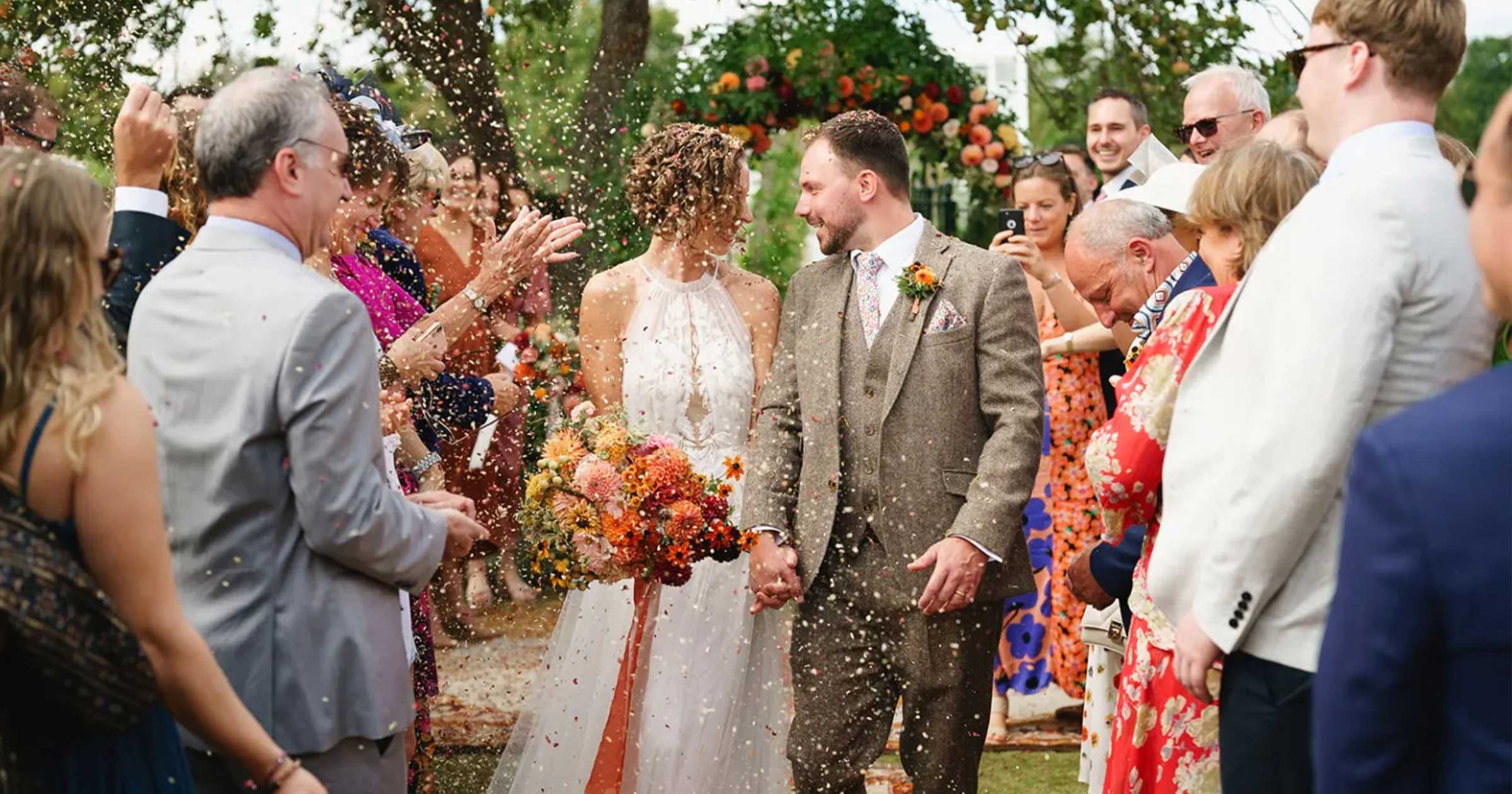
The consultation went perfectly. Naomi laughed at your story about the dove at the Newport ceremony, Preston asked about the drone, and both nodded as you showed the full film from last September. Finally, Naomi said, "Please send everything in writing. We'll discuss it and get back to you."
You closed your laptop, feeling like the date was yours.
A week later, silence. Two weeks later, a short email: "Thank you so much, we've decided to go with a different videographer."
It's not that they chose someone else that's disappointing. It's that you don't know where you lost. In the films? Unlikely, they liked the films. In the price? Maybe. Or maybe in that very "send everything in writing" thing. The document you sent that evening—a PDF with three packages, a price list for extras, and the phrase "let me know if you have any questions"—was your second meeting, remotely. You weren't there. There was only the text. And this text spoke to the couple differently than you had spoken an hour earlier.
This guide is about writing a proposal that continues the conversation, rather than replacing it with a price list. We'll explore how a proposal differs from an estimate and a contract, the nine parts it consists of, how to present the three packages and the price, how to send it quickly, what to do when a venue, planner, or company sends you an RFP instead of a couple, how to keep in touch without being pushy, and what to do when a repeat request arrives a year later. If you need a ready-made file, you can download it separately: free proposal template for videographers. Here's why it's structured this way.
Proposal, Quote, Contract: Three Different Documents
Many videographers confuse three documents, leaving the client with a single, inconvenient hybrid: a price list with terms and conditions in fine print.
| Document | What question it answers | When to send | Tone |
|---|---|---|---|
| Quote / Estimate | "How much will it cost?" | Upon request, when the scope is already clear | Numbers and line items |
| Proposal | "Why you and what exactly will we get?" | After the consultation, while the couple is choosing | Conversation, story, choosing from packages |
| Contract / Agreement | "What happens if something goes wrong?" | After "yes" | Legal, precise |
An estimate talks about money. It's good when the client has already decided they want you and is checking the exact amount.
The proposal describes the couple's wedding. This is the document in which Naomi and Preston see their own day: their ceremony at 4:00 PM, their parents flying in from Portland, their request to have "my brother's toast in full." The price is there, but it's not the first item.
The contract discusses risks. Cancellation, rescheduling, portfolio rights, raw footage, equipment failure. A proposal doesn't need all of this—a single line, "After your 'yes,' I'll send the contract and an invoice for the advance payment," is sufficient. We discussed what exactly should be in the contract itself in a separate article about the videographer's contract.
Why is it important to separate them? Because each document has its own reader in its own mood. Proposals are read on the couch, together, sometimes out loud, sometimes forwarded to Mom. Contracts are read carefully, with a pencil. If a proposal includes a clause that says "no refund if cancelled less than 90 days in advance," it will sound cold at the very moment the couple is imagining their film. Everything in its place.
Videography Proposal: The 9 Sections That Get Signed
Below is a structure that works for weddings and can be easily adapted for corporate jobs. This is our working framework, not an industry standard: the order can be changed, but each block answers a question the couple will ask.
First, an observation about how this document will be read. Back in 1997, Jakob Nielsen of the Nielsen Norman Group tested how people read text on a screen. 79% of subjects didn't read, but scanned: they picked out headings, highlighted words, and first lines of paragraphs. Only 16% read word for word. In the same study, a page version roughly halved in size proved 58% more user-friendly than the original. Since then, screens have gotten smaller and attention spans have become shorter: your proposal will almost certainly be opened on a phone, between work and a dress fitting. Hence, two rules: each section begins with the most important point, and anything that can be omitted is.
1. Cover: names, date, valid until
The couple's names, wedding date, venue, your name, and logo. And one line that almost everyone forgets: "Proposal valid until November 27." We'll explain why in the follow-up section.
How to distinguish a good cover from a bad one: A bad one says "Wedding Videography Packages 2027." A good one says "Naomi & Preston · June 12, 2027 · Rosecliff." The first one says "here's our catalog." The second one says "this is about you."
2. A personal note
Three to five first-person sentences, referencing what the couple said in their consultation. Not "We'd love to capture your special day," but "You said your biggest fear is missing Preston's dad giving a toast—he rarely speaks in public. That's why I keep a separate recorder on the podium in each package."
There's something important in this paragraph: the word "because." In the late 1970s, Harvard psychologist Ellen Langer and her colleagues Blank and Chanowitz conducted a famous experiment at the copy machine at the Graduate Center of the City University of New York. A person approached the line and asked to go first. Without explanation, 60% agreed. With the phrase "because I'm in a rush," the rate was 94%. And with the phrase "because I have to make copies," which explains nothing at all (everyone in line makes copies), the rate was 93%. To be fair, the experiment was later repeated with varying success, and for a larger request (to copy twenty pages), the empty reason no longer worked. But for you, the caveat is more useful than the effect itself. An empty "because" only helps in small matters. In a decision worth several thousand dollars, a real reason works. Every "because" you give in a personal note should be based on what the couple said.
3. About you, in one screen
Not a biography with your first camera at twelve years old. How many weddings have you shot, what style do you work in, what's most important to you in a film—all on a single phone screen. Example: "I've been shooting weddings since 2018, about 25 per season. I work in a documentary style: I don't stage scenes, but I record each speech in full."
4. Your Wedding at a Glance
A brief summary of what you heard: ceremony time, where they get ready, number of guests, special moments (a surprise dance with the father, a choir from the grandmother's church), what the couple doesn't want ("no staged walks across the field"). This section does two things. The couple sees that you listened. And you catch mistakes before the contract is signed: if Naomi replies, "Actually, the ceremony is at 3:30 PM," it's better to find out now.
5. Packages
Three packages with clear differences. Details in the next section.
6. Add-ons
A short list of add-ons: second camera operator, drone, same-day edit, raw footage, extra hour. Each has a price and a single sentence explaining why it's needed. No more than eight to ten lines: a long menu turns choosing into an exam.
7. How you'll receive your film
This section is almost always skipped, and that's a mistake. The couple isn't buying a shoot, but the moment when they'll open the film in three months. Describe it: when the teaser will arrive, when the full film will arrive, what it will look like, who will be able to see it.
It's best to show rather than describe. If your past weddings are available in OurStoria client galleries, insert a link to one of them in this section (with the couple's permission). Naomi will open it on her phone and see exactly what she'll receive herself—the film, individual clips of the ceremony and toasts, photos alongside, and your logo at the top. No registration required, and the player works on any connection—whether it's on a train or on grandma's old tablet. A single link in the proposal is more convincing than the paragraph "the film will be delivered in a beautiful online gallery."
8. What happens when you say yes
Briefly, step by step: contract signing and advance payment → questionnaire 60 days out → call two weeks before → wedding → teaser → film. People are more likely to agree when they see what's coming next. Especially if this is their first wedding, which is the case for most couples.
9. Next step and the date you hold
One button or one request: "Reply to this email with which package you prefer, and I'll send you the contract." Plus the date until which you hold their day. Not three options, but one.
All of this is already compiled in the ready-made proposal template: 13 sections: cover, letter, packages, payment schedule. The nine blocks above are the skeleton, if you prefer to write in your own words.
Three Packages and How to Show the Price
Why there are three packages, and why the middle one is usually chosen most often, is discussed in detail in our article on the psychology of pricing in wedding videography, with research. Here's the practical side: how the three packages appear on the page so the couple can choose, rather than comparing you to your neighbors in the table.
Packages are named by their meaning, not by the metal. "Bronze, Silver, Gold" suggest to the couple that the bottom one is for the poor. Better are "Highlight," "Story," and "Full Day." The name itself explains what's inside.
The difference between the packages is in the result, not the hours. "8 hours of filming" versus "10 hours of filming" says nothing to the bride. "The film ends with the first dance" versus "the film ends with a send-off with sparklers" says everything.
The top package should be genuine. Not a fake "anchor" that no one will buy, but something you'd genuinely want to shoot more often. A good candidate for the top package is a full documentary with chapters. A two-hour film without navigation is watched once. With chapters like "Getting Ready," "Ceremony," "Toasts," and "First Dance," a mother can immediately find her husband's toast, and ten years later, a couple can revisit their vows without scrolling through everything. In OurStoria's client galleries, chapters are loaded directly from Premiere or DaVinci Resolve markers—how to do this is covered in the article about wedding film chapters. In a proposal, it's a single line in the top package: "Full film with chapters—jump to any moment in one tap." It's a simple line, but it stands out.
Example of a layout (numbers are approximate, to illustrate the structure):
| Highlight | Story | Full Day | |
|---|---|---|---|
| Who is it for | Small weddings, the main thing is emotion | Most couples | Those who want to rewatch the whole day |
| What's in the film | Highlight 4–5 minutes | Highlight + ceremony and speeches in full | Highlight + full film with chapters |
| Audio of speeches | Excerpts | Each speech in full | Each speech in full |
| Second camera operator | — | ✓ | ✓ |
| Film delivered in | 10 weeks | 10 weeks | 12 weeks |
The packages themselves, what to include in them, and how to calculate the cost can be found in the article about wedding videography packages and in our pricing guide.
How to write the price
Now, about how the price appears on the page. There's a study here that surprised the authors themselves.
Sybil Yang and Sheryl Kimes from the Cornell School of Hotel Administration, along with Mauro Sessarego from the Culinary Institute of America, tested how the price format on a menu affects how much guests spend. The experiment took place at the institute's actual cafe in Hyde Park, New York: 201 guests received one of three menus. One had prices with a dollar sign ("$20"), the second had just a number ("20"), and the third had prices in words ("twenty dollars"). The researchers were betting on the written prices: they look elegant. They were wrong. Guests who saw just a number on the menu spent the most—an average of $5.55, or about 8% more. The written prices worked just as well as the dollar sign. Kimes explained it this way: any mention of dollars, whether by symbol or word, reminds a person of the “pain of paying.”
You shouldn't apply the results of a lunch at a cafe to your wedding budget exactly. But the habits that follow from it cost nothing and do no harm:
- Without cents. "4,800," not "$4,800.00." Extra zeros make the number heavier.
- Price after the description, not before. The couple first reads what they'll receive, then sees the total.
- One figure per package. Not "$3,200 + $400 second camera operator + $250 music." Everything in the package is already included in the price.
- Payment schedule separately and in simple terms. "30% now to secure the date, 70% two weeks before the wedding" is clearer than "retainer and balance."
How Fast to Send It
The most common proposal error isn't in the text at all. It's sending it three days later.
In 2011, Harvard Business Review published a study by James Oldroyd, Christina McElheran, and David Elkington, "The Short Life of Online Sales Leads." The authors examined how quickly American companies responded to website inquiries. According to accounts of the article, they tested more than two thousand companies: about a third responded within an hour, while almost a quarter didn't respond at all. Those who responded within an hour were almost seven times more likely to turn the inquiry into a real conversation than those who responded later. The title says it all: a client's interest is short-lived.
A couple at the selection stage is exactly that kind of lead. They usually simultaneously message two or three other videographers. After the consultation, they're at their peak: they've discussed everything, they're happy with everything, and they're eager to make a decision. Each day that follows smooths out this peak, and new offers arrive.
Our benchmark is 24 hours after the consultation. It's best to do it that same evening, while you still remember the details: what Naomi called her grandmother, what Preston said about the drone. Three days later, the letter will come out polite and empty.
Calculation on a napkin. How much does an hour spent on a proposal cost? Let's say the average order is $4,500, and out of five consultations, you close two. If a well-written and quickly sent proposal turns two out of five into three out of five, that's an extra wedding for every five meetings. A proposal takes about an hour; five proposals take five hours. Five hours for $4,500 is about $900 per hour. This is our rough estimate, but the order is clear: the proposal is the most expensive hour of your week, more expensive than editing.
To make it within 24 hours, you need a template: the general sections (about you, extras, "what happens after 'yes'") are written once and for all, and for each couple, you only rewrite the letter, the wedding overview, and, if necessary, the packages. This is 30–40 minutes in the evening after the call.
Request for Proposal Video Production: When a Venue, Planner, or Company Sends an RFP
Sometimes it's the other way around: instead of you writing a proposal after a conversation, you're sent a document with questions and a response deadline. RFP stands for Request for Proposal. In the wedding world, it's sent by:
- venues that are compiling a list of recommended vendors;
- planners for a specific large wedding, especially a destination wedding or one with multiple days;
- companies — a corporate event, conference, company anniversary, interview with the founder;
- foundations, universities, government customers — for them, an RFP is mandatory according to procurement rules.
First, decide whether to respond. RFPs are often sent to ten vendors at once, and a response takes half a day. A few simple checks can save many evenings:
| Sign | Respond | Think twice |
|---|---|---|
| Budget specified | Yes, and it's within your range | No, or "make us an offer" without details |
| Scope described | Date, hours, and output | "Video about our event" |
| You were personally invited | The planner or venue knows your work | Mass mailing to all videographers in the city |
| Response time | A week or more | "By tomorrow" |
| Selection criteria | Spelled out | Unclear how they'll select |
This is our table, not a rule. Sometimes a mass mailing from a venue leads to five weddings a year. But if you're in the right column for three out of five, an honest, short decline is better than half a day spent on a response that no one will read.
Read the criteria before asking questions. US federal procurement is governed by the Federal Acquisition Regulation (FAR). Its uniform contract format has two sections that should be opened first. Section L is "instructions to offerors": format, page limits, what to include, where to submit, and by what time. Section M is "evaluation factors for award": what points are awarded and which is more important: price or experience. An RFP from a venue in Connecticut won't include a Section M, but the logic is the same: every RFP has a section that states how the selection process will be conducted. Find it and respond to that section. If it says "experience working at our venue," the first paragraph should be about weddings you've shot there, not about your philosophy.
Respond in their format. If the RFP asks for five items, provide five items, in the same order and with the same titles. The person comparing the ten responses has their own spreadsheet in front of them. The easier it is for them to transfer your answer into this table, the higher you'll rank. A creative PDF instead of point-by-point answers loses here.
What they almost always ask and what to prepare in advance:
- Examples of work relevant to their task. For a venue—weddings at this venue or similar ones. For a company—corporate videos, even if you have two.
- Insurance. Venues and companies often require a liability policy and a certificate of insurance naming them as additional insured. Find out from your agent in advance how long this takes.
- Usage rights. Companies almost always ask who owns the video and where it can be shown. This is a contract matter, not a proposal matter: in your response to an RFP, state that the terms of use will be in the contract and provide a general framework. For details, see the article on the videographer's contract.
- What the output will look like. This is often more important for a company than for a couple. A video from an internal event shouldn't be circulated online, and a lawyer wants only certain people to be able to download it.
The last point is a good place to stand out from the "files will be shared via a link" type of responses. You can be specific: "The video will be in a separate gallery with a password; downloading is protected by a second password that only your employees will receive." At OurStoria, this is configured for each gallery: a password to log in and separate passwords for downloading videos and photos, with no expiration date, so the link won't expire after a week. How this works at weddings, where parents ask the same question, is in the article about gallery download password.
Questions go in the question period. Most formal RFPs have a deadline for submitting written questions. Take advantage of it. Asking "what's your estimated budget?" or "how many contractors are you considering?" shows you're reading carefully—and the answer can sometimes save half a day of work.
After You Hit Send
The proposal is out. Now the couple does one of three things with it: respond, postpone, or forget. Your job is to prevent the second option from becoming the third.
The date you hold
Remember the "valid until" line on the cover? That's what it's for.
Psychologists Stephen Worchel, Jerry Lee, and Akanbi Adewole conducted an experiment that was later recounted in every textbook. Participants were given cookies from a glass jar to taste and rate. Some had ten cookies in their jar, others had two. The cookies were identical. But the ones from the jar with two were rated as more desirable. What happens next is more interesting. If a person saw the number of cookies in the jar drop, they were valued more highly than the ones that were scarce to begin with. And if the cookies dwindled because other people took them, they were valued even more highly than if they disappeared by accident. The study was published in the Journal of Personality and Social Psychology.
Your Saturday in June is that same jar with two cookies, only honestly. Saturday, June 12th, comes only once, and others might actually request it. Therefore, the deadline you hold for the date isn't manipulation, but information the couple needs. Our benchmark is seven days. If another request for the same date arrives during this time, state it directly: "I received another request for June 12th. The date is still yours until Friday—I just want you to know." Don't invent competitors. Couples almost always sense falsehood, and one such story in a brides' chat is enough.
Follow-up without pushing
Our working schedule after sending:
| When | What to write | Why |
|---|---|---|
| Day 2 | "I wanted to make sure everything was received and opens. If it's more convenient to discuss in person, here's a link to a 15-minute slot on the calendar." | Emails get lost in spam; some couples prefer talking to reading. |
| Day 5 | Something useful without selling: "You said the ceremony is at 4:00 PM in June—here's how the light falls at that time at a similar venue." | Remind them of your presence with something useful. |
| Day 9, hold deadline | "The date is held for you until tomorrow. If you've decided otherwise, just let me know, and I'll release it without any hard feelings." | Close the matter in both directions. |
After the third email, there's silence from you. "No" is better than endless "maybe," and a couple who hasn't been pestered sometimes returns a month later on their own. We discussed how effective reminders sound and where politeness turns into pressure in our article on client communication.
Make "yes" a one-minute job
When a couple writes "we're going with the Story package," everything should take minutes, not days. The contract and prepayment invoice are ready the same day, signed online.
Electronic signatures are no longer a novelty in the United States. On June 30, 2000, Bill Clinton signed the ESIGN Act in Congress Hall in Philadelphia, just steps from the hall where the Declaration of Independence was signed. First, he signed a paper copy. Then he inserted a microchip card into the reader and entered the password—"Buddy," the name of his dog. Tech journalists immediately noted that a password based on a pet's name was not particularly secure. But the law is in effect: as of October 1, 2000, electronic contracts and signatures in the United States are not invalidated simply because they are electronic. Rules for specific types of documents and for different states and countries vary, so you should still show the text of your contract to a lawyer in your state. A ready-made template is available in our contract template.
Why Video Production Proposals Get Ignored
If proposals rarely receive responses, the reason is almost always one of these:
| Error | What it looks like | What to do |
|---|---|---|
| Price list instead of a letter | PDF "Packages 2027," the same for everyone | Cover with their names and a letter with their details |
| Sent three days later | The couple is already on their second consultation with someone else | 24 hours, general blocks written in advance |
| Five packages | The couple compares lines and puts them aside | Three packages with different results |
| All about you | Three pages about equipment and awards | One "about me" screen, the rest about them |
| Price without context | Amount before description, with all the ".00" | First what they will receive, then the number |
| No next step | "Let me know if you have any questions" | One specific step and a hold date |
| Contract inside the proposal | Cancellation clauses on the second page | Contract after "yes" |
| Can't open on phone | Heavy 40 MB PDF, small font | Lightweight file or link, large text |
The last line deserves a few words. You're checking your proposal on a 27-inch monitor. The couple opens it on their phone during lunch, and the bride's mother opens it on a tablet in the evening. Before sending, open the proposal on your phone. If you have to pinch-zoom the package table, convert it to three cards, one above the other.
And one mistake that's not in the table: writing the proposal as if only the couple will read it. It will be read by the parents, who often pay. Preston's dad, who pays for the video, will read the package section differently than Naomi. He cares that every speech is recorded in its entirety, including his own, and that the family will have the film in ten years, not just until they change phones.
When They Come Back
There are proposals that are the easiest to write and the most often forgotten: answers to repeat requests.
Scenario one: The couple came back after a "no." A month later, Naomi writes: "That videographer couldn't make it because the date was rescheduled. Are you still available?" You don't need a new proposal from scratch here. A short letter is all you need: "Glad you're back. The date is available. Here's your proposal with the updated hold date—everything as discussed." Don't punish the couple for their first choice with price or a cold tone: they remember who was pleasant.
Scenario two: Past clients call again. Two years after Naomi and Preston's wedding, her younger sister, Paige, writes. She saw their film, is getting married herself, and wants "one like Naomi's." This is the warmest possible request, and the proposal for her is different:
- The letter begins with a shared story. "I still remember how you and Naomi danced to that song from your childhood."
- The example is their own film. Not someone else's wedding, but the one where Paige was a bridesmaid.
- A discount is optional. A warm request isn't about the price. If you want to express gratitude, it's better to give an extra gift (for example, a separate clip of speeches) than to lower the price.
For this scenario to work, Naomi's film needs to be accessible after two years. Not "the link has expired" or "I'll look on an old disc." Galleries of past weddings on OurStoria can be converted to Safe Archive: the link remains the same, and the couple and their family can still download the film and photos. When Paige writes, "I want it like my sister's," you're sending the same link Naomi received two years ago. This is the best example you have: genuine, their own, and time-tested.
Start a 7-day free Pro trial →
The Page They Read Twice
The couple will read your proposal at least twice. The first time, quickly, that evening, checking the main points: how much and what we'll get. The second time, together, slowly, as they decide. The second time, they're no longer reading the prices. They're searching for themselves: their grandmother, their toast, their Saturday in June.
At this point, your camera is still in the bag. There's no film. There are only a few pages of text, and from them, the couple tries to imagine what their film will be.
Write these pages so that they can easily imagine it.
Related articles:
- Pricing Psychology in Wedding Videography: How Anchoring, Framing, and Presentation Affect Booking Rates
- Videographer Contract: 12 Clauses That Protect Your Wedding Business
- Wedding Videography Packages: What's Included and What They Cost
- Client Communication Patterns in Wedding Videography: When Silence Means Satisfaction and When It Means Danger
- The Consultation Effect: How the Booking Meeting Shapes Expectations, Trust, and Final Satisfaction
- How to Deliver Wedding Video to a Client: A Step-by-Step Workflow
- Wedding Film Chapters: How to Add Them from DaVinci Resolve and Premiere Pro