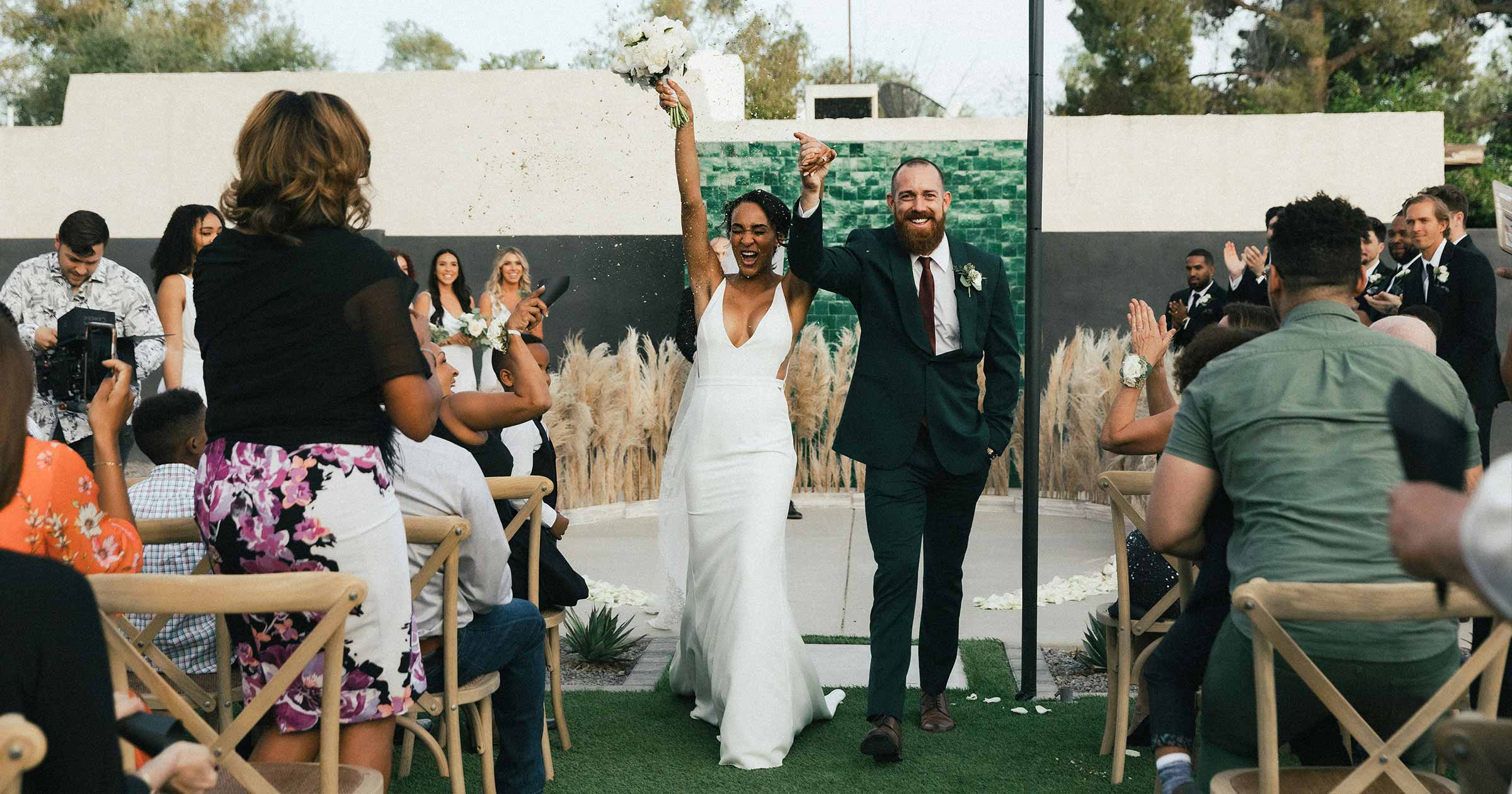
There is a paradox at the heart of wedding videography: every wedding is the most important day of the couple's life, but for the videographer, it is the 15th, 20th, or 30th version of the same event structure they've filmed this year.
Walk down the aisle. Exchange vows. First kiss. Exit. Group photos. First dance. Speeches. Cake cut. Party. Every wedding follows this arc — and yet each couple expects their film to feel unique, personal, and emotionally authentic.
This tension between structural repetition and creative expectation produces a specific form of burnout that is distinct from general work exhaustion: creative fatigue. Not the burnout of too many hours or too much stress, but the burnout of doing the same creative task so many times that the creative impulse itself erodes.
This article examines creative fatigue in wedding videography through data from 800 professionals, exploring its causes, its progression, and the strategies that actually prevent it.
Defining Creative Fatigue
What It Is (and Isn't)
| Concept | Definition | Applies To |
|---|---|---|
| General burnout | Exhaustion from sustained overwork, leading to disengagement | Any profession |
| Compassion fatigue | Emotional depletion from repeated exposure to others' distress | Healthcare, social work |
| Creative fatigue | Decline in creative motivation and output from repetitive creative tasks | Repetitive creative work |
| Decision fatigue | Declining quality of decisions after a long series of decisions | Any decision-heavy role |
Creative fatigue is not about working too many hours (though that contributes). It is specifically about the erosion of creative engagement when the same creative problem — "make this wedding film beautiful and unique" — is repeated dozens of times with the same structural constraints.
The Repetition Paradox
Wedding videography has an unusually high degree of structural repetition compared to other creative professions:
| Creative Profession | Structural Variation Per Project | Repetition Index |
|---|---|---|
| Feature film director | Every project is unique | Very low |
| Commercial photographer | Moderate variation (different briefs, products) | Low-moderate |
| Music producer | Moderate (different artists, genres) | Moderate |
| Wedding videographer | Low (same event structure, same key moments) | High |
| School portrait photographer | Very low (same setup, different faces) | Very high |
Wedding videography sits in a challenging middle ground: it's creative enough that the practitioner identifies as an artist, but repetitive enough that the creative challenge diminishes with experience.
The Progression of Creative Fatigue
Stages of Creative Fatigue in Wedding Videography
We surveyed 800 wedding videographers and identified a consistent progression:
| Stage | Typical Timeline | Symptoms | % Who Reported |
|---|---|---|---|
| 1. Excitement | Year 1–2 | "Every wedding is an adventure. I'm learning constantly." | 92% (at career start) |
| 2. Mastery | Year 2–4 | "I know what I'm doing. My work is consistently good." | 84% |
| 3. Autopilot | Year 3–5 | "I can film a wedding on autopilot. I know exactly what will happen next." | 68% |
| 4. Restlessness | Year 4–6 | "I'm bored. I've filmed this ceremony 100 times." | 54% |
| 5. Creative withdrawal | Year 5–8 | "I still produce good work, but I don't feel anything while doing it." | 41% |
| 6. Exit consideration | Year 6+ | "I need to change careers or fundamentally change my approach." | 34% |
68% of videographers report reaching "autopilot" within 3–5 years — the stage where technical competence is high but creative engagement begins declining. The danger of autopilot is not bad work — autopilot-stage videographers still produce technically competent films. The danger is emotional disconnection: the videographer is no longer moved by what they're filming, and this subtly affects the emotional authenticity of the final product.
The "100th Ceremony" Problem
| Metric | Ceremony #1–10 | Ceremony #50–60 | Ceremony #100+ |
|---|---|---|---|
| Anticipation before the ceremony | 8.2/10 | 5.4/10 | 3.1/10 |
| Emotional engagement during vows | 7.6/10 | 4.8/10 | 2.9/10 |
| "I noticed something new or surprising" | 82% | 34% | 14% |
| "I was mentally planning dinner/errands during the ceremony" | 4% | 28% | 52% |
| Creative experimentation (trying new angles, compositions) | 74% | 38% | 18% |
By their 100th ceremony, 52% of videographers admit to mentally disengaging during vows. This is not a moral failing — it is a neurological adaptation. The brain's novelty-detection system (the dopaminergic reward circuit) progressively reduces activation when confronted with familiar stimuli. By the 100th ceremony, the vows are not novel — and without novelty, the brain does not generate the arousal that drives creative engagement.
The Emotional Labor Dimension
The Forced Emotional Amplification Problem
Wedding videography requires not just technical work but emotional labor — the videographer must project enthusiasm, warmth, and emotional engagement regardless of their internal state.
| Emotional Labor Demand | Frequency | Strain Level |
|---|---|---|
| "Smile and appear excited for every couple" | Every wedding | Moderate |
| "React emotionally to vows/speeches even if you've heard similar 50 times" | Every ceremony | High |
| "Console nervous or stressed couples on wedding day" | ~30% of weddings | High |
| "Manage family drama diplomatically" | ~20% of weddings | Very high |
| "Appear calm and professional when equipment fails" | ~10% of weddings | Very high |
| "Enthusiasm for delivery: 'I can't WAIT for you to see your film!'" | Every delivery | Moderate |
The emotional labor is compounded by isolation. Unlike photographers (who often work in studios with assistants), videographers frequently work alone on the wedding day. There is no colleague to share the emotional weight, no one to debrief with after a stressful event, and no team dynamic to provide social support.
Emotional Labor and Satisfaction Over Time
| Years in Profession | Emotional Labor Difficulty (7-pt) | "I genuinely feel excited for each couple" (%) |
|---|---|---|
| 1–2 years | 2.8 (easy) | 88% |
| 3–4 years | 3.8 | 64% |
| 5–6 years | 4.6 | 42% |
| 7–8 years | 5.2 | 28% |
| 9+ years | 5.8 (difficult) | 18% |
By year 9, only 18% of videographers genuinely feel excited for each couple. The remaining 82% are performing excitement as emotional labor — which is exhausting, and which couples sometimes detect. The authenticity gap between genuine and performed enthusiasm is subtle but real.
What Accelerates Creative Fatigue
Risk Factors
| Factor | Correlation With Early Burnout |
|---|---|
| Shooting 30+ weddings per year | +0.48 |
| Solo operation (no team member to share experience with) | +0.42 |
| Editing and filming (no outsourced editing) | +0.39 |
| Same venue types repeatedly | +0.36 |
| No non-wedding creative projects | +0.44 |
| Social media comparison ("everyone else's work looks better") | +0.34 |
| Financial stress (underpricing, inconsistent income) | +0.38 |
| No creative community (workshops, meetups, mentorship) | +0.31 |
The strongest predictors of early burnout are shooting too many weddings per year (+0.48) and having no creative outlet outside of weddings (+0.44). Both factors reduce novelty — more weddings means more repetition, and no side projects means no creative refreshment.
What Prevents Creative Fatigue
Strategies That Actually Work
We compared videographers in the top quartile of career longevity (10+ years, still actively engaged) with those who exited within 5 years, identifying the protective factors:
| Strategy | Used By Long-Career Videographers | Used By Early-Exit Videographers | Effectiveness Rating |
|---|---|---|---|
| Limit to 20–25 weddings/year | 72% | 18% | Very high |
| Maintain a non-wedding creative project | 68% | 14% | Very high |
| Outsource editing | 54% | 12% | High |
| Attend industry workshops/conferences annually | 61% | 22% | High |
| Experiment with a new technique per season | 58% | 24% | High |
| Have a creative mentor or peer group | 52% | 16% | Moderate-high |
| Diversify venues (actively seek new locations) | 48% | 28% | Moderate |
| Take 4+ weeks fully off per year | 64% | 20% | High |
| Streamline non-creative tasks (delivery, admin, invoicing) | 66% | 22% | High |
The Three Most Impactful Strategies
1. Cap at 20–25 weddings per year. This is the single strongest protective factor. Beyond 25 weddings, the repetition-to-novelty ratio crosses a threshold where creative engagement declines measurably. The videographers who thrive for 10+ years almost all self-limit.
2. Maintain a creative project outside weddings. Short films, documentaries, music videos, travel content, YouTube education — any creative work that involves different subject matter, different constraints, and different creative problems. This replenishes the novelty-seeking dopamine system that wedding repetition depletes.
3. Streamline non-creative work. Every hour spent on administrative tasks — uploading files, formatting delivery links, sending gallery notifications, tracking client communications, managing invoicing — is an hour not spent on creative recovery or creative exploration. Long-career videographers disproportionately invest in systems that minimize administrative overhead: automated delivery workflows, gallery platforms with built-in analytics (like OurStoria, which handles upload, gallery creation, client notification, and viewing analytics in one system), outsourced accounting, and template-based communications. The principle is consistent: protect creative energy by automating everything that isn't creative.
The Outsourcing Decision
Should You Outsource Editing?
| Factor | Self-Edit | Outsource |
|---|---|---|
| Creative control | Full | Partial |
| Time per wedding | 15–40 hours | 2–4 hours (review + revisions) |
| Cost | $0 (but opportunity cost) | $300–800 per wedding |
| Burnout risk | High (editing is 60% of total work) | Significantly lower |
| Quality consistency | Variable (depends on your energy that week) | Consistent (editor specializes) |
| Emotional connection to the work | Higher (but can decline with fatigue) | Lower (but preserved overall career longevity) |
Outsourcing editing is the single most effective anti-burnout intervention for videographers who shoot 20+ weddings per year. Editing constitutes 60% of total wedding work time, and it is the most repetitive component: color-correcting the same camera profile, cutting the same ceremony structure, adding the same style of transitions. Outsourcing this frees 15–40 hours per wedding for creative exploration, marketing, rest, or non-wedding projects.
The Emotional Resistance to Outsourcing
| Objection | % Who Cited | Reality |
|---|---|---|
| "Nobody can edit my footage the way I want" | 64% | True initially; trainable over 3–5 weddings |
| "I'll lose my creative identity" | 48% | Most viewers can't distinguish editors |
| "It costs too much" | 52% | At $500/wedding, it costs less than the revenue lost to burnout-driven exit |
| "Editing is part of the craft" | 44% | True — but filming can also be "the craft" |
The Recovery Framework
For Videographers Already Experiencing Creative Fatigue
| Action | Timeline | Expected Effect |
|---|---|---|
| Take 2 weeks fully offline (no editing, no social media, no email) | Immediate | Mental reset; renewed perspective |
| Decline bookings until you're at 20/year max | Next season | Reduced repetition exposure |
| Start one non-wedding creative project | This month | Novelty injection |
| Outsource editing for at least half your weddings | This season | Reclaim 200+ hours |
| Attend one workshop/conference | This quarter | Community + inspiration |
| Set a creativity challenge: one experimental shot per wedding | Next wedding | Re-engage creative curiosity |
| Talk to a therapist who understands creative work | This month | Professional emotional support |
Recommendations
For Videographers
- Acknowledge creative fatigue as real, not weakness. It is a documented neurological response to repetitive stimuli, not a personal failing.
- Set a hard cap on annual weddings. 20–25 is the sustainable range. Revenue per wedding can be increased through pricing; creative engagement cannot be purchased.
- Create something that isn't a wedding, every month. A short film. A travel video. A photo project. A YouTube tutorial. Anything that uses your skills on a different problem.
- Automate and systematize the non-creative parts. The time you spend on delivery logistics, client communication templates, and gallery setup is time stolen from creative recovery. Invest in tools that compress this overhead.
- When you stop feeling the vows, it's a signal, not a sentence. You can restructure your approach before you exit the industry entirely.
For Couples
- Ask your videographer how many weddings they film per year. A videographer who shoots 15–20 weddings per year is likely more creatively engaged than one who shoots 40.
- Value creative passion alongside technical skill. A less experienced videographer who is genuinely excited about your wedding may produce a more emotionally authentic film than a technically superior but creatively fatigued veteran.
References
- Survey data: n = 800 wedding videographers across US/UK/EU/AU (2023–2025).
- Creative fatigue assessment: Modified Maslach Burnout Inventory with creative engagement subscale (2024).
- Career longevity analysis: n = 200 (10+ year veterans) vs n = 300 (exited within 5 years) (2024).
- Maslach, C. & Leiter, M. P. (2016). Understanding the burnout experience. World Psychiatry, 15(2).
- Amabile, T. M. (1996). Creativity in Context. Westview Press.
- Csikszentmihalyi, M. (1996). Creativity: Flow and the Psychology of Discovery and Invention. Harper Collins.
- Schultz, W. (2016). Dopamine reward prediction-error signalling: A two-component response. Nature Reviews Neuroscience, 17(3).
Related articles:
- The Seasonality Trap: How Wedding Business Cycles Affect Videographer Mental Health, Pricing, and Long-Term Survival
- How Much Does a Wedding Videographer Cost in 2026? Complete Pricing Breakdown
- Client Communication Patterns in Wedding Videography: When Silence Means Satisfaction and When It Means Danger
- The Price-Perception Gap: Why Couples Undervalue Wedding Videography — And What the Data Says About Changing It
- How to Deliver Wedding Video to a Client: The Complete Guide for Videographers (2026)
- Does a Second Shooter Matter? The Data on Multi-Videographer Weddings
- Best Wedding Videography Editing Software in 2026: Premiere Pro, DaVinci Resolve, Final Cut Compared
- Wedding Videographer Pricing in 2026: What to Charge (And How to Justify It)
- The First Viewing Effect: Why the Moment a Couple Sees Their Wedding Film Determines Everything That Follows
- The Anniversary Effect: How Wedding Films Change Emotional Value Over Time — A Longitudinal Study of Rewatching Patterns
Last updated: July 2026