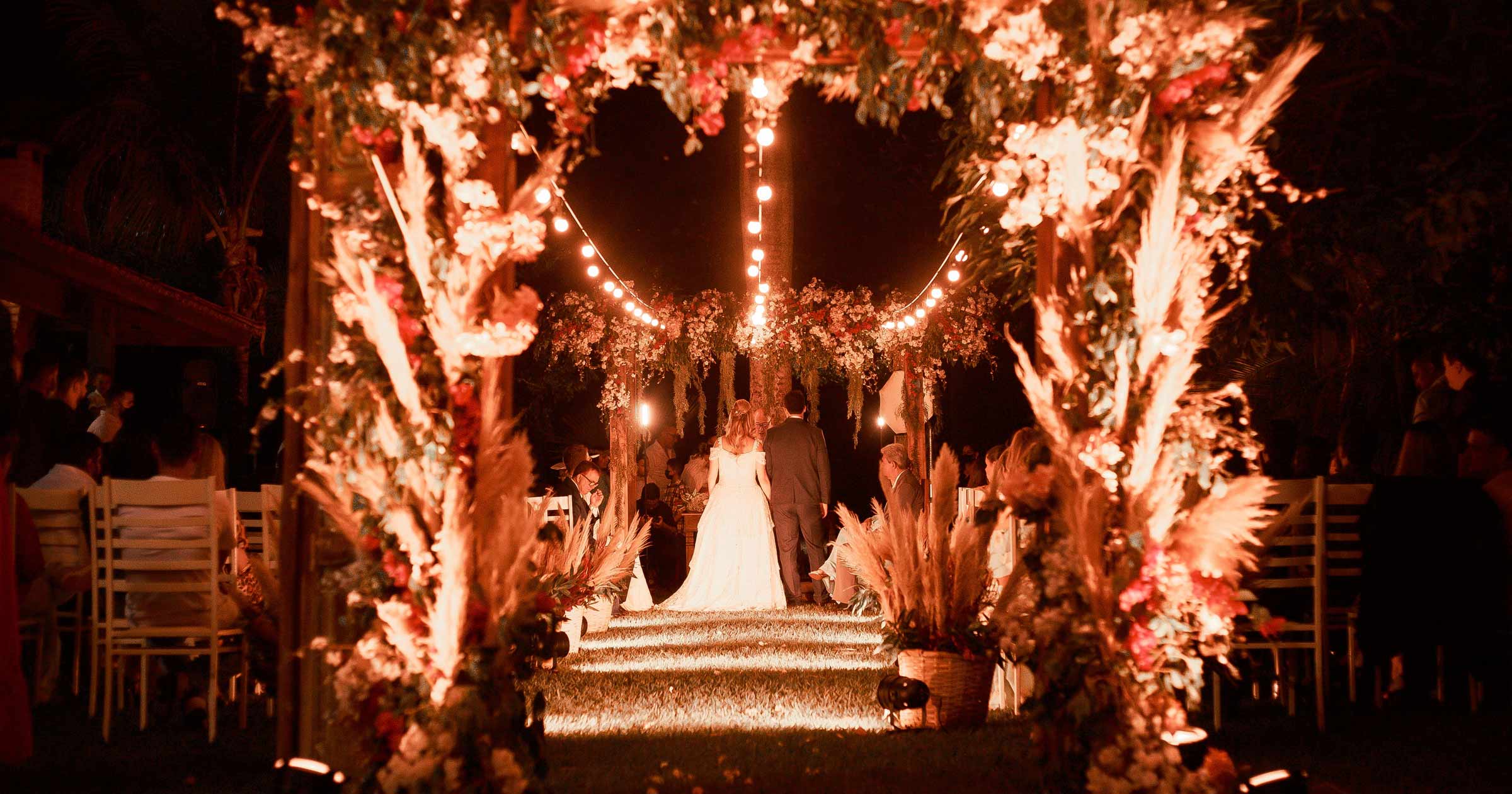
The couple watches the highlight reel on the first night. They watch it three times in a row, then send it to their mom, then post it on Instagram.
And eight years later, on an ordinary Tuesday, the bride isn't looking for a highlight reel. She's looking for her father's toast. In its entirety, with the pause where he lost his train of thought and the laughter from the audience that saved him. Her father is gone. In the highlight reel, eleven seconds of the toast remain, accompanied by piano.
This is a documentary. Not a "long version of a highlight reel," but a different product: the day as it was, with all the words and pauses. It's not watched for the beauty of the shot. It's watched to hear people again.
Filming it is easier than it seems, and harder than you'd like. Easier because you don't have to stage scenes and cut to the track. Harder because one missed minute of sound ruins the entire concept, and editing an hour-long film can eat up a weekend if you don't know where you can cut.
This guide covers everything from a videographer's perspective: what a couple is actually buying, how documentary filming differs from cinematic filming on set and in editing, seven techniques that make a film, how to put together a 30–90 minute film that people watch to the end, and how to sell a long film in a package instead of giving it away.
What Are Documentary-Style Wedding Films?
A wedding documentary is a complete chronological account of the day: getting ready, first look, the entire ceremony, portraits, reception, full toasts, first dance, and after-party. Length is typically 30 to 90 minutes. There is music, but it doesn't drive the edit: the main sound is live—voices and the audience.
The word "documentary" isn't just for show. This style has a real pedigree, and it explains why it's structured the way it is.
Where it all began. In the spring of 1960, producer Robert Drew assembled a small crew—Richard Leacock, D.A. Pennebaker, Albert Maysles, and Terence Macartney-Filgate—and went to Wisconsin to film the presidential primary between John F. Kennedy and Hubert Humphrey. No voiceover, no staged interviews. Camera operators simply followed the candidates: in cars, in hotel rooms, in crowds shaking hands. This was made possible by technology—mobile cameras and lightweight, portable sound recording equipment. The film, titled "Primary," gave viewers an intimacy impossible with older documentaries. It is now preserved in the US National Film Registry.
Note the order: first came lightweight sound, then a new genre. As long as sync sound required a truckload of equipment, a documentary filmmaker could only shoot picture and lay a narrator over it. Once the microphone became portable, the most important thing became possible—letting people speak for themselves. A wedding documentary relies on exactly the same thing: recorded voices.
Two approaches within a style. Around the same time, in France, sociologist Edgar Morin and ethnographer Jean Rouch filmed "Chronicle of a Summer" and coined the term cinéma vérité—"cinema-truth"—in honor of Dziga Vertov's "Kinopravda." Over time, documentarians differentiated between the two approaches:
- Direct cinema (the American approach of Drew and Leacock): the camera observes, and people forget about it. Film scholar Bill Nichols called this "observational mode," and in everyday speech it's called "fly on the wall."
- Cinéma vérité (the French approach): the camera is not hidden, the filmmaker provokes the situation—asking questions, bringing people together, becoming a "catalyst."
A wedding documentary is almost always direct cinema with touches of vérité. You don't stage scenes, but you might ask a grandfather to say a few words to his grandchildren over cocktails. You can, but decide in advance how much of this will be in the film: two or three short inserts liven up the story, ten turn it into a report with interviews.
What the couple is really buying. Not "more minutes." The couple is buying three things:
- Every word. The vows, the aunt's reading, all the toasts from the first word to "Cheers!"
- People who didn't make the highlight. The cousin who flew in from Seattle. The neighbor who babysat the bride as a child. There's no room for them in the highlight, but in a documentary, there is.
- The flow of the day. How the morning turned into the ceremony, and the ceremony into the evening. This is something memory no longer holds ten years later.
Documentary vs Cinematic Wedding Film Differences
Couples often compare styles based on mood: "romantic" versus "honest." For you, the difference is more practical: it changes where you stand, what you're recording, how many hours you spend editing, and what you list in your price list. We covered how couples choose between formats in a separate article comparing a highlight and a documentary through the couple's eyes. Here's the view from behind the camera.
| What | Cinematic film | Documentary |
|---|---|---|
| Main content | Image: movement, lighting, composition | Sound: voices, audience reactions, atmosphere |
| Position on the set | Closer to the couple, often with direction ("walk through it again") | Farther away, a long lens, without intervention |
| Camera | Gimbal, slider, drone, shallow depth of field | Tripod and monopod at key moments, handheld in between |
| Recording | Short, "good" segments | Continuous during the ceremony and toasts, without pauses |
| Editing | Events can be reordered to music | Chronological, words are not cut |
| Music | Drives the edit | Backing in transitions, quieter under live sound |
| Length | 3–10 minutes, sometimes a film is 20–40 minutes | 30–90 minutes, sometimes more |
| Where the hours are spent | Selection and rhythm | Synchronization, sound, editing long scenes |
| Risk | A boring film if it lacks "beautiful" elements | A lost film if the sound is lost |
The last line is the most important. A poorly shot cinematic film can be saved by editing: the music will save it. Nothing will save a documentary with a hole in the toast recording. Therefore, in documentary filming, sound is not a "secondary concern," but a primary one.
Why it's not an "either/or" choice. Most studios sell both products together: a short cinematic highlight and a long documentary. At a single wedding, these are two separate shoots taking place simultaneously. A highlight needs moments, while a documentary needs continuity. We discussed how to put together a good highlight in our article about wedding highlights, and cinematic techniques in our guide to cinematic wedding filming.
Who especially needs a documentary? From our experience, these are couples who:
- have a long or religious ceremony — a Catholic Mass, a Jewish wedding with a chuppah and seven blessings, a Hindu ceremony lasting several hours. A highlight shows such a ceremony in 40 seconds, but the family wants the whole thing;
- have many speakers — six toasts, a song from the sister, a slideshow from friends;
- have elderly relatives — grandparents, for whom the family will want to rewatch the ceremony;
- have a distrust of "music videos" — couples who say outright, "We don't want a music video, we want the way it was."
If you hear any of these during a consultation, suggest a documentary first, not at the end of the conversation.
Documentary Style Wedding Film Techniques
Seven techniques that distinguish documentary filming from "just filming all day."
1. Record audio as if there won't be a picture
A simple rule: at any event where there's speaking, you should have two independent audio sources. Ceremony: a lapel recorder on the groom plus a recorder at the lectern or a recording from the mixing console. Toasts: a recording from the DJ's mixing console plus a recorder at the mic or on the couple's table. If one doesn't work, you have a second.
Why is this more important than in a highlight? In a highlight, a line from the vows is an embellishment: if it doesn't work, you can use another one. In a documentary, the vows are the film itself. No recording means no scene, and no picture can replace it.
How to tell good preparation from bad: before the ceremony, you can say where the backup track for each voice is being recorded. If the answer is "well, the camera is recording too," then there is no backup track. For more on the gear, see our guide to recording audio at a wedding.
2. Don't stop recording
The second main reason for lost minutes isn't gear, but habit. A highlight camera operator hits "stop" between "good" moments and saves recording time. A documentary cameraman records nonstop, from the first word to the last, during the ceremony and toasts.
How this works in practice:
- Cards are changed one at a time. If there are two cameras at the ceremony, never change cards on both at the same time. One is always recording;
- You know the recording limit in advance. Some cameras stop recording after a time limit or when they overheat. This is tested during a boring rehearsal, not during the vows;
- Batteries—before the event, not during it. Fresh batteries go in before the processional and before the toasts, even if the old ones still show half their charge.
3. Be like furniture
The most common question from those just trying out documentary filmmaking is: "How can I get people to act naturally when the camera is on them?"
Good news came from an unexpected place—medicine. Psychologist Louis Penner and his colleagues studied whether the camera interferes with doctor-patient conversations. They videotaped oncology appointments—45 patients and 14 doctors—and counted every on-camera action: looking into the lens, making a joke about the recording, fixing their hair. The results were published in the Journal of Nonverbal Behavior. Eleven patients didn't perform a single on-camera action. For the rest, it took up about one-tenth of a percent of the total time. Now, here's a detail that's important for you: these moments occurred mostly at the very beginning and when the doctor wasn't in the room. As soon as the real reason for the visit began, people stopped noticing the camera.
This was an oncology office, not a wedding, but the mechanics are clear. People notice the camera during pauses and at the beginning. When something important is happening—the vows, the toast, the mother's tears—they don't pay attention to you.
Therefore, three practical conclusions:
- arrive early. The first 20 minutes of getting ready are "wasted": the bride and bridesmaids are getting used to you, but it's not important yet;
- pauses are the most dangerous time. Between the ceremony and the cocktail hour, during seating, guests look at the camera and wave. Don't shoot point-blank during pauses—shoot from a distance or don't shoot at all;
- a long lens instead of getting close. A 70–200mm lens from across the room gives a close-up without you in the person's personal space.
4. Film reactions, not just the speakers
A seven-minute toast filmed in a single shot of the speaker is hard to watch. A toast with the bride's reaction, the grandmother's laughter, and the father turning away to wipe his eyes—people watch it until the end.
Therefore, during toasts, distribute your cameras like this: one on the speaker, always; a second on the couple and nearby tables. If there's a third, a wide shot of the room. The speaker gives the words, the reactions provide meaning.
How to tell a good reaction from a random one: it responds to a specific phrase. Laughter that doesn't align with the joke is felt immediately by the viewer, even if they don't understand why. Therefore, in a documentary, place reactions only where they actually happened, not "where it looks best."
5. Film what's between the events
A highlight consists of events. A documentary consists of events and what's between them. The bride's father paces the hallway before heading down the aisle. The florist adjusts the arch at the last minute. Children run around the empty hall before the guests arrive.
These shots are the glue. Without them, the film becomes a collection of individual clips, stitched together. With them, the flow of the day begins: the viewer feels the passage of time, the anticipation that everything is about to begin.
How much of this is needed: in an hour-long film, there are 5–8 minutes "in between." Shoot with some buffer; you'll pick the best in the edit.
6. Don't stage scenes, but manage the positioning
A documentary approach doesn't mean "never ask for anything." It means: don't ask people to do anything they wouldn't do themselves. Re-enacting a kiss "for the camera" is staging. Asking the DJ to angle the microphone stand 30 degrees toward the window so the speaker is in the light is managing the positioning.
Frederick Wiseman, one of the leading masters of American observational filmmaking, described his rules in a PBS interview in simple terms: not a single event in his films is staged, and he never asks anyone to do anything specifically for the camera. For a wedding, that rule translates simply: decide on everything that can be decided before the event. Shoot everything that happens during the event as it happens.
7. Agree on the rules in advance
The couple should know that the documentary will show the day as it was, including the uncle's slip of the tongue in his toast and the mother's tears. Most people want just that. But it's better to hear this during the consultation than to get an email after the wedding saying, "Please remove everything where the mother is crying."
Questions to ask before the wedding:
| Question | Why | Good answer |
|---|---|---|
| What moments are most important to you? | Find out where a second audio source is needed | "My brother's toast, he's been preparing it for six months" |
| Are there any things that shouldn't be in the film? | Family conflicts, exes, guests who object to filming | A specific list, not "well, you'll figure it out yourself" |
| Toasts: how many and who? | Placement, batteries, cards | Names and order |
| Do you want the full ceremony as a separate video? | Separate export | Almost always "yes" |
| Who will watch the film? | Length, chapters, format | "Us, our parents, grandma in Arizona" |
Speeches and Vows, Uncut
Nobody searches for this part, but it's what people buy a documentary for.
There's only one rule: words aren't cut. In a multi-camera scene, you can switch angles as much as you like—wide shots, close-ups, reactions. But everything a person says remains. Technical pauses can be removed: while they're looking for a microphone, while the host reads the next person's name. What a person really wants to say, even if it's awkward, can't be removed. We've already covered this in the wedding film editing guide, but here we'll just repeat the gist: the slip of the tongue that made the audience laugh is part of the toast.
The sound is smooth, without surprises. The speech remains at the same level from the first toast to the last. The music under the speech is either removed completely or noticeably quieter. The transition from the last toast to the first dance is smooth, without jarring the ears.
Each speech is also a separate file. Seven toasts within an hour-long film are difficult to find, even with chapters. That's why a documentary almost always has companion videos: the full ceremony as a separate video and each toast as a separate clip. A grandmother who wants to hear her grandson's speech again won't look for him at the 47-minute mark—she'll open the clip "Toast — Hector, Brother of the Groom."
In OurStoria's client gallery, these clips are located next to the film and highlight, each with its own title. The couple sends a single link to their relatives, and everyone immediately sees their part. It's the difference between "we have a wedding video somewhere" and "play Grandpa's toast."
Editing a 30–90 Minute Documentary Film
Editing a documentary isn't "the same thing, only longer." It's a different kind of work.
Ratio of footage. In documentary filmmaking, there's a concept called a shooting ratio—how many hours of footage are shot per hour of finished film. Frederick Wiseman filmed "In Jackson Heights" and came back with 170 hours of footage. The film is just over three hours long—a ratio of about 60 to 1. Just reviewing all the source material takes him six to eight weeks, and editing episodes takes months. Regarding his other film, "La Danse," about the Paris Opera Ballet, he said he edited it for a year—and that he doesn't know the film's structure in advance; it's "all discovered in the editing." This, he says, is the complete opposite of fiction filmmaking.
For comparison, consider the documentary series "An American Family," which PBS aired in 1973: 12 hour-long episodes about the Loud family from Santa Barbara. Producer Craig Gilbert filmed them for about seven months, accumulating 300 hours of 16mm film. That's a 25:1 ratio. Anthropologist Margaret Mead said at the time that nothing like this had ever been done before.
And now your wedding. Two or three cameras, eight to ten hours of coverage—we estimate that typically equates to 8–12 hours of footage per hour of film. A ratio of about 10:1, significantly less than Wiseman's. And this changes the essence of the work. You don't need to search for the film within the footage—the chronology is already determined by the day itself. Your job isn't to select, but to clean and assemble: sync, align sound, assemble multi-camera scenes, find transitions between blocks.
Structure—acts of the day. Guidelines for a 60-minute film (our breakdown, adjust for the wedding):
| Part | What's inside | Approximate length |
|---|---|---|
| Morning | Getting ready, letters, first look, "in between" | 6–10 min |
| Ceremony | In its entirety, without cutting words | 15–30 min |
| After the ceremony | Portraits, cocktail hour, guests, "in between" | 4–8 min |
| Reception | The couple's entrance, toasts in full | 12–25 min |
| Dancing | First dance, dancing with parents, the best of the party | 6–10 min |
| Finale | Exit, sparklers, last shots | 2–4 min |
It's clear that more than half the film is the ceremony and toasts. That's why they can't be "cut to the essence": that's the essence.
Where can you cut without losing anything? The party. Forty minutes of dancing in a film is useless—five to six minutes of the best moments, and then let them watch the highlights. The cocktail hour—three to four minutes of atmosphere and a couple of conversations. Portraits—a minute. From these blocks, you build the film to the desired length.
Music—quieter than it seems. In a documentary, music only works in transitions and "in between." There's none under speech. If you edit to a track like a highlight, the film begins to sound like a music video, and the viewer stops hearing the people.
Hour budget (back-of-the-napkin math). Our approximate breakdown for a 60-minute film with two or three cameras:
- Syncing and preparation: 2–3 hours;
- Multi-camera ceremony editing: 3–4 hours;
- Toasts: 2–3 hours;
- Other sections and transitions: 4–6 hours;
- Sound: speech leveling, noise, transitions: 3–4 hours;
- Color matching between cameras: 2–3 hours;
- Watching the finished film from start to finish, plus fixes: 2 hours.
Total: 18–25 hours. And that's on top of the highlight. Remember this figure—you'll need it when you're pricing.
A tip that saves you a weekend. Edit the documentary before the highlight. While you're putting it together chronologically, you'll be watching all the footage—and at the same time, you'll be marking the best moments for the highlight. By the time it's time to edit the short film, you'll have a selection ready. And if you also do a same-day edit, you end up with three products from one day, and each requires its own approach to the material—more on that in the article about the same-day edit.
Chapters: How a 70-Minute Film Gets Watched
A long film without navigation is watched once. Then they open it, scroll through it, don't find what they're looking for, and close it. A year later, they remember it as "that long video."
Chapter markers solve this problem completely. You place markers at the beginning of each block—"Getting Ready," "Ceremony," "Vows," "Toasts," "First Dance"—and the viewer jumps to the desired point with a single click. For a documentary, this isn't decoration, but an essential part of the product, just like sound.
Chapter markers can be created on YouTube by entering timecodes in the description or written into the file itself during export. In OurStoria's client gallery, it's simpler: the markers you've already placed on the timeline are imported as a file—a CSV file from Premiere Pro or an EDL file from DaVinci Resolve—and the film gets chapters. If there are no markers, chapters can be entered manually as a list. For step-by-step instructions, see the article on wedding film chapters.
Good chapter titles are specific. Not "Part 3," but "Toast — Uncle Gus." Then, five years from now, the bride's mother will be able to find the right place without your help.
How to Sell the Documentary Film in Your Packages
Many videographers give away a documentary for free, "because the material is already there." This is a mistake, and the calculation above shows why: 18–25 hours of work on top of the highlight. If your highlight is sold as a full-fledged product, the documentary is also a product.
Three ways to incorporate it into your pricing.
| Method | What it looks like | Who it's for | What to look for |
|---|---|---|---|
| In the middle package | Highlight + documentary + full ceremony | For most studios | The middle package becomes significantly more valuable than the lower one—couples choose it more often |
| Only in the upper package | Lower and middle packages without the documentary | For studios focusing on film | Risk: families with long ceremonies go to those who offer it in the middle |
| As a separate option | The documentary is added to any package | For those just starting out | It's harder to sell after booking: the couple has already spent the budget |
We discussed why the middle package works best in our article on the psychology of pricing in wedding videography, and how complete packages are typically structured in our guide to wedding videography packages.
What to call it. "Full film," "Documentary edit," "Feature documentary"—it doesn't matter; what matters is that the description clearly states what the couple is buying: "the entire ceremony and all the toasts, the entire day in order, with chapters." The couple isn't buying minutes; they're buying the words of their people.
How to demonstrate what it is. The most common barrier: the couple doesn't understand why they need an hour of video. The word "documentary" doesn't convince them, nor do three stills from a film. One thing does: letting them watch it.
Show a real film of a past couple during the consultation (with their consent) and immediately open the chapter with the toast. Within thirty seconds, the couple will understand the difference between eleven seconds of piano music and the entire toast. If your past work is available in the OurStoria client galleries, it's just a link: the couple can open it on their phone right at the table, without registering. The film will play even on weak cafe Wi-Fi, and the chapters will allow them to jump straight to the toast.
The "we'll never watch that" objection. Don't respond to it with an argument. Simply ask, "Which of your relatives will give the toast?" and wait. Usually, the couple themselves will say, "Yes, we need that," by the second name.
A Real Scenario: Felicity and Gavin
Felicity and Gavin got married in late September on their family farm in Ohio. Their package included a six-minute highlight and a documentary. Gavin's uncle, Gus, officiated the ceremony. There were five toasts. The shortest was from Felicity's grandmother, Hattie, who was ninety-one. She hadn't planned to speak, but at the end of the evening, she took the microphone from the DJ and spoke for two minutes about her husband, who passed away a year before the wedding.
The DJ handed the grandmother a handheld mic instead of putting it on a stand. The recording from the mixing board worked, but the DJ turned down the fader halfway through, thinking the grandmother had finished. The toast was saved by a recorder the videographer had left on the couple's table; the grandmother was standing about six feet away. The sound wasn't perfect, with some noise from the audience, but every word was there.
Hattie's toast wasn't included in the highlight: six minutes is a wedding, not a family story. In the documentary, it appears in its entirety, with the chapter "Toast — Grandma Hattie" and a separate clip alongside the film. Three months later, Felicity wrote to the videographer: all her cousins had downloaded the clip, and her mother played it at the family Thanksgiving dinner.
What worked here:
- second audio source during toasts—not at the DJ's board, but on the couple's table, where everyone was talking;
- continuous recording until the end of the evening—the unscheduled toast occurred after "all the toasts had already been made";
- separate clip—the family wasn't looking for the film, but for Grandma.
If the videographer had only filmed the highlight, the two minutes of Grandma Hattie wouldn't have existed at all. In any form.
Delivering the Documentary Film
A documentary is the heaviest file you'll give a couple. An hour of 4K footage weighs tens of gigabytes, and this creates three problems that a highlight film doesn't have.
It's not just the newlyweds who watch it. The couple forwards the highlight film to friends. A documentary film is shared with parents, grandparents, and aunts in another state. These are people who won't register on a website, install an app, or figure out why the file won't open.
They search for it in chunks. No one watches the entire hour—they look for the toast, the vows, the dance with their dad. Without chapters and individual clips, the film disappears.
They save it for years. The highlight film is posted on Instagram, and it lives there. A documentary film is a family archive. The link to it should work ten years from now, when the film's value has only just begun to grow.
Therefore, delivering a documentary isn't just a matter of "sending a link to a file," but rather collecting everything in one place: the highlight, the film with chapters, the ceremony, toasts in separate clips, and photos. This is exactly how the delivery looks in OurStoria's client galleries—everything is available under a single link with your logo, no registration required for viewers, and the couple downloads the exact file you uploaded, without any loss. If the couple wants everyone to be able to watch but only them to download, the gallery has a separate video download password. And in years to come, when active delivery ends, the gallery can be converted to Safe Archive: the link remains valid for downloading and doesn't take up space in your plan.
Try it with your latest wedding: upload the documentary, import chapter markers, add the ceremony and toasts next to it—and open the link on your phone, just like grandma would.
Start a 7-day free Pro trial →
Learn more about how the gallery for videographers works on the client galleries page.
The Film They Watch Last
The highlight reel is watched first. The documentary is watched last. Sometimes after a month, sometimes after ten years.
It's watched when someone is gone. When children are born and people ask what their mother was like that day. When on an anniversary you want to hear voices, not music.
A beautiful shot ten years later is a beautiful shot. A father's voice, faltering mid-toast and laughing along with the audience, is a father.
Shoot it so it can be heard.
Related articles:
- Highlight vs Documentary: What Couples Think They Want, What They Actually Watch
- Cinematic Wedding Video: The Complete Guide to Shooting, Editing & Delivering (2026)
- Wedding Film Chapters: How to Add Them from DaVinci Resolve and Premiere Pro
- How to Edit a Wedding Film: Workflow from Import to Highlight
- How to Record Audio at a Wedding: Vows, Toasts, Readings and the Kit
- Wedding Highlight Video: How to Make One Couples Rewatch (Structure, Music, Price)
- Same Day Edit Wedding Video: How to Shoot, Cut and Screen It at the Reception