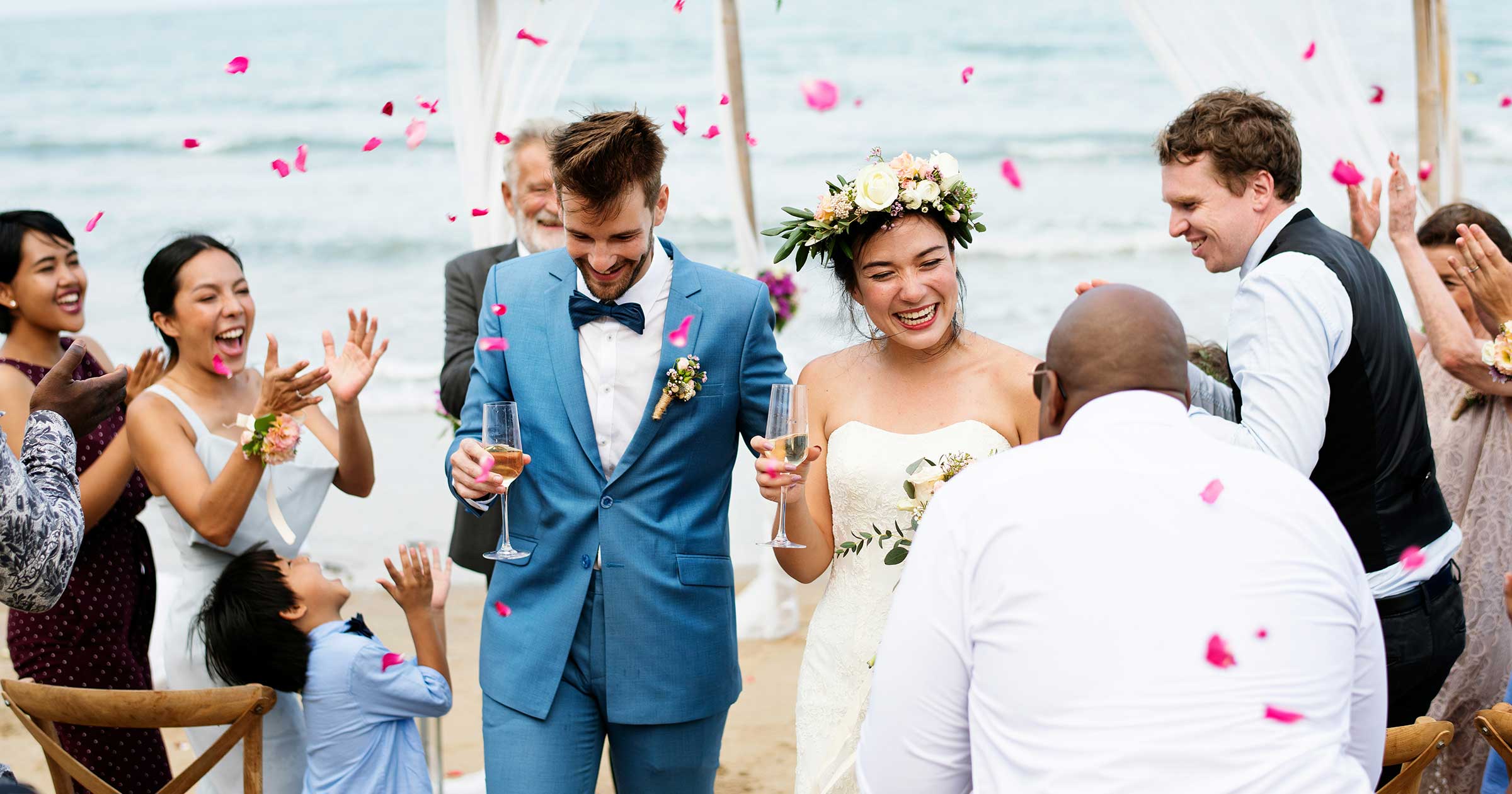
Every couple says it. "We want something cinematic." It's the single most requested style in modern wedding videography — and also the most misunderstood. Some videographers interpret "cinematic" as slow motion set to piano music. Others think it means desaturated color and black bars. The actual craft behind cinematic wedding video is more specific, more intentional, and more learnable than either of those shortcuts suggest.
Cinematic wedding video borrows the visual language of narrative cinema — controlled camera movement, shallow depth of field, deliberate color grading, music-driven editing, and selective storytelling — and applies it to a real, unscripted event. The result is a film that feels like a movie but documents something that actually happened. No scripts. No second takes. Just real moments captured with the techniques that make cinema emotionally powerful.
Whether you're a videographer building your style or a couple trying to understand what separates a cinematic wedding film from a highlight reel with a filter, this guide covers the five core elements, equipment at every budget, the editing workflow, audio strategy, and the delivery experience that completes the package.
What "Cinematic" Actually Means in Wedding Videography
The word "cinematic" gets thrown around loosely. Let's define it properly.
Cinema, from its earliest days, developed a visual grammar designed to pull audiences into a story. Wide establishing shots orient you. Close-ups create intimacy. Movement through space creates tension or release. Color temperature signals mood. Music guides emotional pacing. Every frame serves the narrative.
When we apply that grammar to a wedding, we're making a deliberate choice: this isn't a record of events. It's a story told through events. The couple's day provides the raw material. The videographer's cinematic decisions — where to point the camera, how to move it, which moments to include, which to leave out — shape that raw material into something that feels like a film.
This is why cinematic wedding video is the most requested style. Research on narrative engagement supports what couples intuit: when visual storytelling techniques are applied well, viewers experience what psychologists call "narrative transportation" — the sensation of being inside the story rather than watching it from outside. Green and Brock's foundational work on transportation theory (Journal of Personality and Social Psychology, 2000) demonstrated that transported viewers form stronger emotional connections with the content, remember it more vividly, and return to it more frequently. Smooth, intentional camera movement — the hallmark of cinematic production — is one of the strongest drivers of transportation. Gimbal-stabilized footage consistently scores higher on immersion metrics than static or handheld footage in controlled studies, because fluid motion mimics the way we naturally perceive movement through the world.
That's the scientific backing for what every couple already feels: a cinematic wedding video doesn't just look better. It feels different. It pulls you in. And that pull is why couples rewatch cinematic films more often and share them more widely than any other style. For a deeper dive into everything you need to know about wedding video, start with our complete guide.
The 5 Elements of Cinematic Wedding Video
Cinematic isn't a single technique — it's the combination of five distinct elements working together. Remove any one, and the result feels incomplete. Master all five, and even modest equipment produces genuinely cinematic results.
1. Camera Movement: Gimbal, Dolly, Crane, Handheld with Purpose
Static footage documents. Movement narrates.
This is the single biggest visual distinction between cinematic and documentary wedding video. A camera locked on a tripod captures what happens in front of it. A camera that moves through space — smoothly, intentionally, with motivated direction — creates the sensation of the viewer entering the scene.
The primary tools for cinematic movement in wedding videography:
- Gimbal (3-axis stabilizer): The workhorse. Walking alongside the couple's exit, pushing in during the first dance, orbiting during toasts — all gimbal territory. Modern gimbals handle full-frame cinema cameras and provide the floating quality that defines cinematic motion.
- Dolly / slider: Controlled lateral or forward movement on rails. Even a compact 24-inch slider transforms a static detail shot into a cinematic moment.
- Crane / jib: Vertical sweeps with enormous visual impact. Increasingly replaced by drones outdoors.
- Handheld: Not shaky documentary handheld — cinematic handheld is controlled imperfection, a slight organic movement that adds energy without disorientation. Best for getting-ready sequences and candid reception moments.
- Drone: Aerial establishing shots and venue reveals. The "impossible angle" that signals production value. Best used for 2-3 key moments, not continuous coverage.
The rule: every camera movement should be motivated. Moving left because the bride is walking left. Pushing in because the groom is about to see her. Pulling back to reveal the full venue. Unmotivated movement — panning randomly, orbiting for no reason — reads as amateur even when technically smooth.
2. Shallow Depth of Field: Fast Lenses, Sensor Size, Focus Pulls
The blurred background. The sharp subject floating in a sea of bokeh. It's the single most recognizable visual signature of cinematic video, and it comes down to physics: large sensors + wide apertures = narrow plane of focus.
Why shallow depth of field reads as "cinematic": our eyes naturally focus on one thing at a time, with everything else falling softly out of focus. Cinema lenses replicate this perceptual experience. Small-sensor cameras (phones, older camcorders) keep everything in focus, which reads as "video" — flat, undifferentiated, surveillance-like.
- Aperture: f/1.4 to f/2.8 for cinematic separation. f/2.0 is the practical sweet spot — beautiful bokeh with enough focus forgiveness for motion.
- Sensor size: Full-frame is the standard. Larger sensors produce shallower depth of field at any given aperture. APS-C works with faster lenses; Micro Four Thirds requires f/0.95-f/1.2 for equivalent separation.
- Focal length: 50mm-85mm for portraiture (compressed backgrounds, exaggerated bokeh). 24mm-35mm for environmental cinematic shots.
- Focus pulls: Racking focus from the rings to the bride's face, from the father's hands to his expression — pure cinema technique that directs viewer attention within the frame.
3. Color Grading: Warm Tones, Film Emulation, Consistency
Raw footage looks flat. Color grading transforms it into cinema — and the grading choices are arguably the most emotionally influential decisions in the entire edit.
The research backs this up. Valdez and Mehrabian (1994, Journal of Experimental Psychology) established that warm color palettes increase viewer reports of intimacy, comfort, and nostalgia, while cool palettes create psychological distance. Brunick et al. (2013, i-Perception) extended this into film, showing that audiences unconsciously associate warm color temperatures with emotional closeness. For wedding films — fundamentally about connection — warm grading isn't just an aesthetic preference. It's an evidence-based choice.
The dominant cinematic wedding grading approaches:
- Warm film emulation: The most popular cinematic look. Lifted shadows, warm highlights, subtle orange shift in skin tones, rolled-off highlights. Inspired by Kodak film stocks (Portra 400, Vision3). Feels nostalgic, romantic, timeless.
- Teal-and-orange: Hollywood's go-to palette. Warm skin tones against cool backgrounds. High contrast between complementary colors. Dramatic, polished, unmistakably "movie-like." Works exceptionally well for outdoor ceremonies and golden-hour portraits.
- Desaturated moody: Reduced saturation, lifted blacks, muted tones. Feels editorial, sophisticated, distinctly modern. Growing rapidly in popularity, especially for urban and industrial venue weddings.
- High-contrast cinematic: Deep blacks, bright highlights, strong contrast curve with split toning. Dramatic, bold, intentional. Works for high-production weddings with controlled lighting.
The critical requirement across all styles: consistency. A cinematic film maintains its color language from first frame to last. When the grade shifts between shots, the illusion breaks — overcast ceremony, tungsten reception, mixed-light dance floor all need to feel like one continuous world. Our exploration of how color grading affects emotion in wedding films dives deeper.
4. Music-Driven Editing: The Soundtrack Leads the Cut
In documentary wedding video, the timeline drives the edit: events happen in order, and music is laid underneath. In cinematic wedding video, the relationship inverts. The music leads.
This is the editing philosophy that separates cinema from documentation. A cinematic editor selects the music first, then cuts the footage to serve the musical structure. The result:
- Beat matching: Cuts land on beats or musical phrases. Not every beat — that reads as a music video. But major transitions, reveals, and emotional peaks align with the score's rhythmic structure.
- Emotional builds: The music's rising tension maps to the visual narrative's rising tension. Quiet strings during getting-ready sequences. Building percussion through the processional. Full orchestral release at the first kiss.
- Breathing room: Cinematic editing isn't fast cutting. It's knowing when to let a shot breathe — holding on the father's face for three beats longer than comfortable, letting the couple's laughter play under an instrumental break, sustaining a wide shot while the music swells beneath it.
- Musical structure = narrative structure: Verse, chorus, bridge, outro maps to preparation, ceremony, celebration, reflection. The best cinematic editors choose music whose emotional arc mirrors the day's emotional arc.
Finding the right music is its own discipline. Browse our curated wedding video songs resource for tracks that work specifically for cinematic wedding editing. And for a comprehensive breakdown of how audio decisions shape the viewing experience, see our research on audio quality's impact on wedding films.
5. Selective Storytelling: Narrative Arc Over Complete Documentation
A documentary videographer captures everything. A cinematic videographer captures what matters.
This requires editorial judgment — the discipline to exclude footage that's perfectly good but doesn't serve the narrative. The uncle's toast was fine, but does it advance the arc? The flower girl was cute, but have you already established the ceremony space?
Cinematic storytelling follows narrative principles:
- Setup: Establish the world. The venue. The details. The anticipation. Morning light through the hotel window. Hands buttoning a shirt. A veil being laid out.
- Rising action: Build toward the main event. The first look (or the walk down the aisle). Emotion building. Nervous energy. Parents' faces.
- Climax: The ceremony. Vows. The kiss. The moment the entire film has been building toward.
- Falling action: The celebration. First dance. Toasts that earned their place. Joy, relief, abandon.
- Resolution: The quiet ending. A sparkler exit. An empty venue. The couple walking away. Closure.
This structure is why cinematic wedding films typically run 5-10 minutes for a highlight and 20-40 minutes for a feature — not because the videographer was lazy, but because every second earns its place. A well-crafted shot list helps ensure you capture the key narrative beats without trying to film everything.
Cinematic vs Documentary: A Visual Comparison
These two styles aren't better or worse — they serve different visions. But understanding the differences helps couples communicate what they want and helps videographers refine what they offer.
| Element | Cinematic | Documentary |
|---|---|---|
| Camera | Gimbal, slider, drone; motivated movement; shallow DoF | Tripod, handheld; observational; deeper DoF for context |
| Editing Style | Music-driven; selective moments; narrative arc | Timeline-driven; comprehensive coverage; chronological |
| Music | Licensed soundtrack leads the edit; score-like treatment | Ambient audio leads; music supplements the real sound |
| Typical Length | Highlight: 5-10 min; Feature: 20-40 min | Full ceremony + speeches + feature: 60-120 min |
| Mood | Romantic, dramatic, emotionally heightened | Authentic, raw, emotionally honest |
| Color | Graded for mood: warm, filmic, stylized | Natural, accurate, minimal manipulation |
| Audio Approach | Layered: music + selected vows/speeches + ambient | Full audio: complete speeches, ambient, minimal music |
| Ideal Client | Couples who want their day to feel like a film | Couples who want to relive the full day as it happened |
Many modern videographers blend both — cinematic highlights paired with documentary ceremony edits, giving couples emotional cinema alongside complete documentation.
Equipment for Cinematic Wedding Video
Gear doesn't make a film cinematic. Decisions do. But certain tools make cinematic decisions easier to execute. Here are three equipment setups organized by budget, each fully capable of producing cinematic results.
Budget Setup ($3,000-$5,000)
| Category | Recommendation | Why |
|---|---|---|
| Camera | Sony A7IV | Full-frame, 10-bit 4:2:2, excellent autofocus, reliable dual card slots |
| Primary Lens | Sigma 35mm f/1.4 Art | Versatile focal length, fast aperture, sharp wide open, cinematic rendering |
| Stabilizer | DJI RS3 | Smooth 3-axis stabilization, handles full-frame setups, intuitive controls |
| Audio | Rode Wireless GO II (dual) | Two-channel wireless with onboard recording backup |
| Support | Compact slider (24") | Detail shots and ceremony angles |
Tradeoffs: Single lens means more footwork. No drone. Limited audio channels. But you can produce genuinely cinematic work with this kit if your composition, movement, and editing are intentional.
Mid-Range Setup ($5,000-$10,000)
| Category | Recommendation | Why |
|---|---|---|
| Camera | Sony FX3 | Cinema-oriented body, S-Cinetone, no record limit, active cooling, XLR audio |
| Lenses | Sigma Art primes: 24mm f/1.4, 50mm f/1.4, 85mm f/1.4 | Full focal range, consistent rendering, fast apertures |
| Stabilizer | DJI RS3 Pro | Higher payload capacity for cinema rigs, LiDAR focus support |
| Audio | Deity Connect + Rode NTG5 shotgun | Dual wireless channels + directional mic for ambient |
| Drone | DJI Mini 4 Pro | Sub-250g (no license needed in many jurisdictions), 4K, vertical/horizontal |
| Support | Manfrotto 504X fluid head tripod | Smooth pans and tilts for ceremony coverage |
Tradeoffs: Still single-operator. Multi-angle requires a locked-off second angle on tripod. But the FX3's cinema color science and three-prime kit provide genuine flexibility.
Premium Setup ($10,000-$20,000)
| Category | Recommendation | Why |
|---|---|---|
| Camera A | Canon R5C | Cinema Raw Light internal, Canon color science, dual-purpose stills/video |
| Camera B | Canon R6 III | Second angle, matched color science, excellent autofocus for run-and-gun |
| Lenses | Canon RF cinema primes or Sigma Cine Art set | Consistent size, weight, color rendering across the set; cinema-grade focus rings |
| Stabilizer | DJI RS4 Pro + Ronin 4D focus motor | Top-tier stabilization with integrated focus control |
| Audio | Tentacle Sync timecode + Sennheiser EW-DX dual wireless + ambient recorder | Multi-channel synced audio, professional wireless range |
| Drone | DJI Mavic 3 Cine | Hasselblad camera, Apple ProRes internal, 5.1K |
| Support | Sachtler Ace XL + compact slider + monopod | Full support ecosystem |
This setup enables: multi-camera coverage, RAW/ProRes acquisition, timecode-synced audio, and aerial cinematography. It's the toolkit for videographers charging $5,000+ and delivering feature-length cinematic films.
The Cinematic Edit Workflow
Cinematic editing is where raw footage becomes a film. The workflow is methodical, and skipping steps is how promising footage turns into a mediocre edit. Here's the six-step process used by professional cinematic wedding editors.
Step 1: Import & Organize
Ingest all footage with verified backups. Organize by camera, card, and scene (getting ready, ceremony, portraits, reception). Sync multi-camera and external audio sources using timecode or waveform matching. Create a clear folder structure that makes selects fast.
Step 2: Selects (The Most Important Step)
Watch everything — not skimming, watching. Mark moments with genuine emotion, visual beauty, or narrative weight. A 10-hour day yields 8 hours of footage. Your selects might total 45 minutes. Your final film uses 5-8 minutes. Cutting 99% is what makes cinematic editing cinematic.
Step 3: Music Selection
Choose the soundtrack before you start cutting. This is non-negotiable in cinematic editing. The music defines your pacing, emotional trajectory, and structural framework. Listen to dozens of tracks. Find the one whose emotional arc mirrors the couple's day. Drop it on the timeline. Let it guide everything that follows.
Step 4: Rough Cut
Place selects against the music. Focus on story and emotional arc, not transitions or color. Watch it back. Cut shots that don't serve the narrative — even beautiful ones. Especially beautiful but redundant ones. The rough cut should feel 80% right emotionally, even though it looks raw.
Step 5: Color Grade
Apply your color treatment to the cut. Start with a base correction (exposure, white balance, contrast) to normalize all footage, then apply your creative grade. Grade for consistency across scenes — morning sunlight, overcast ceremony, tungsten reception, mixed dance floor. The grade should feel like one continuous world, not a collection of differently lit scenes. Review our color grading science guide for evidence-based grading decisions.
Step 6: Audio Mix & Export
Layer your audio: music as the foundation, vows and key speech moments on top, ambient sound design (room tone, applause, laughter) woven underneath. Mix levels so dialogue is intelligible over music. Apply subtle compression and limiting for consistent playback across devices. Export at the quality your delivery platform supports — ideally 4K with high bitrate. Understanding video file sizes and compression ensures your cinematic quality survives delivery.
Color Grading for Wedding Films
The four popular cinematic wedding looks, in brief:
- Warm film emulation: Lifted shadows, amber highlights, subtle grain, soft highlight rolloff. Inspired by Kodak Portra and Vision3. Best for golden-hour ceremonies, garden and rustic venues. Watch skin tones — use a qualifier to prevent orange shifts.
- Desaturated moody: Saturation reduced 15-25%, lifted blacks, teal-shifted shadows. Editorial, modern, surging in popularity. Ideal for urban and industrial venues. Protect skin tones — desaturation without a skin qualifier makes people look ill.
- Bright & airy: Slightly overexposed, lifted shadows, reduced contrast, pastel rendering. Best for beach and garden weddings with natural light. Shoot slightly under to preserve highlight detail, then lift in post.
- Vintage Super 8: Heavy grain, halation, color channel shifting, vignetting, slight frame-rate stutter. Effective as seasoning — a montage interlude within an otherwise clean cinematic film. A full wedding in Super 8 emulation feels gimmicky.
A note on LUTs: they're a starting point, not a finish line. Apply a LUT as a creative baseline, then manually adjust per shot. Develop 2-3 personal base grades that define your signature look and fine-tune for each project — this builds brand consistency while respecting each wedding's unique lighting conditions.
Audio: The Overlooked Cinematic Element
Audio quality accounts for roughly half of the viewer's perception of production quality. A gorgeously graded 4K image with tinny, distant vow audio reads as "amateur." A competently shot image with crystal-clear, warm audio reads as "professional." Yet audio is where most wedding videographers underinvest.
The cinematic audio setup has four layers:
- Wireless lavaliers: At minimum, one lav on the officiant (captures vows and ceremony). Ideal: separate lavs on the officiant, groom, and a board feed from the DJ/sound system for toasts.
- Ambient recording: A shotgun mic or dedicated recorder capturing room sound — applause, laughter, music, cocktail-hour energy. This layer makes the mix feel three-dimensional rather than cutting between silence and dialogue.
- Sound design: Subtle enhancements that the viewer feels but doesn't consciously notice. Room-tone beds to smooth cuts, fabric rustle under getting-ready montages, natural sound at 20-30% volume. The invisible layer that creates immersion.
- Music mixing: Music leads during montages; live audio leads during vows and toasts. Crossfades are gradual (2-4 seconds). Sidechain compression ducks music when dialogue enters. The viewer should never fight to hear words over the score.
For a comprehensive analysis of how audio decisions shape perception, see our research on audio quality's impact on wedding films.
How to Achieve Cinematic on Any Budget
You don't need an FX3 to shoot cinematic. You don't need cinema lenses or a $2,000 gimbal. The most cinematic wedding films in history were shot on cameras that modern entry-level bodies outperform in every technical specification.
What you do need:
- Composition over equipment. The rule of thirds, leading lines, foreground framing, negative space — these principles defined cinema before autofocus existed. A thoughtfully composed shot on a $500 camera looks more cinematic than a poorly composed shot on a $5,000 camera.
- Light over lenses. Understanding light — direction, quality, color, how it falls on a face — is the single most valuable cinematic skill. Window light during preparations. Backlighting during golden hour. You can't buy better light with a faster lens.
- Editing discipline over footage volume. The willingness to cut a beautiful shot because the story doesn't need it. The patience to hold on one angle for five seconds instead of cutting every two. The confidence to deliver a 6-minute film instead of padding to 15.
- Motivated movement over expensive stabilizers. A $40 monopod with intention creates better cinematic footage than a $700 gimbal waved around randomly. The tool helps. The intention is what matters.
- Stories over spectacle. The most rewatched wedding films aren't the ones with the most impressive drone shots. They're the ones where you can feel the couple's story — the nervous laugh, the father trying not to cry, the grandmother dancing. Some of the best films about weddings achieve their power through simple human observation, not technical wizardry.
Delivering a Cinematic Experience
You've spent 10 hours shooting. 30 hours editing. You've crafted color, mixed audio, selected the perfect soundtrack. The film is genuinely cinematic. And then you upload it to Google Drive and send a link.
The presentation should match the production quality. This is where many videographers undermine their own work.
A cinematic film deserves a cinematic viewing experience:
- 4K streaming: Your color grade, your shallow depth of field, your carefully composed frames — all of this is visible at 4K. Compressed 720p on a file-sharing service strips away the visual quality you spent hours crafting.
- Branded gallery: The environment surrounding the video shapes perception. A dark, minimal, cinema-like interface signals quality. A cluttered file manager signals utility. The frame around the painting matters.
- Original quality downloads: When the couple does download, they should get the full-quality master — not a recompressed derivative. The file they save is the file that will exist in 20 years.
- Mobile optimization: Over 70% of first viewings happen on phones. The delivery experience must be flawless on mobile — fast loading, adaptive streaming, no buffering.
- Sharing without quality loss: When the couple shares with family, the shared link should deliver the same quality, not a further-compressed version.
This is why purpose-built platforms exist. OurStoria was designed specifically for this: a cinematic delivery experience with branded galleries, 4K streaming, original-quality downloads, and a client gallery built for videographers who take presentation seriously. The difference is immediate — a couple opens a branded gallery, presses play, and the film streams in 4K instantly, versus clicking a Google Drive link and troubleshooting codecs. The first experience respects the work. Both yours and theirs.
Pricing Cinematic Wedding Video
Cinematic videography commands higher rates for clear reasons: 3-5x the editing time of documentary (a 6-minute highlight requires 20-40 hours), higher equipment costs with faster wear, premium music licensing ($50-$200+ per track), and physically demanding gimbal operation over full-day shoots. A documentary ceremony edit from multicam footage might take 3-5 hours. A cinematic highlight from the same footage takes a week.
Cinematic videographers who invest in their craft, equipment, and delivery experience position at the premium end of their market because the perceived value is tangibly higher — couples can see the difference, feel the difference, and they're willing to pay for it.
Building Your Cinematic Style
Every cinematic videographer's style is a unique combination of the five elements. The path to finding yours:
- Study cinema, not just wedding videos. Watch Terrence Malick for natural-light storytelling. Study Emmanuel Lubezki's long-take movement. Analyze Roger Deakins for composition and light. The visual vocabulary of narrative cinema is your source material.
- Shoot personal projects. You can't experiment at a wedding. Shoot styled sessions where the only stakes are creative — try techniques, fail, learn.
- Develop a consistent grade. Pick a color palette and refine it across 10 weddings. Your grade becomes your visual signature.
- Edit the same footage to different music. Cut it three ways to three tracks. Notice how radically the music changes the emotional meaning of identical footage. This exercise builds editorial instinct faster than anything else.
- Watch your films with the sound off. If the story works visually, your cinematic fundamentals are strong. If it falls apart, you're relying on music as a crutch.
The craft is always evolving — AI-assisted editing tools are accelerating selects and rough cuts, phone cameras are raising the computational baseline, social media is driving demand for 60-90 second micro-films alongside traditional highlights, and 4K delivery is becoming the standard expectation. But the constant remains: the human eye behind the viewfinder — the ability to see, choose, and compose — is the difference between footage and cinema.
Conclusion
Cinematic wedding video is not a gear category or a filter preset. It's a creative philosophy — one built on movement, depth, color, music, and selective storytelling working in concert. The couple who requests "something cinematic" is asking for their wedding day to be treated with the same visual intention, emotional structure, and production discipline that makes narrative cinema powerful.
Whether you shoot on a budget setup or a premium cinema rig, the principles are the same. Move with purpose. Shoot wide open with intention. Grade for emotion. Let the music lead. Tell the story, not every moment. And deliver it through a cinematic presentation that matches the production.
The couples who watch their film ten years from now won't remember your camera model or your LUT. They'll remember how it made them feel. That's what cinematic means.
Ready to deliver your cinematic wedding films with the presentation they deserve? Start your free trial with OurStoria and give your work a home that matches its quality.
Related Articles
- The Complete Guide to Wedding Video: Everything You Need to Know
- The Science of Color Grading in Wedding Films: How Color Shapes Emotion
- The Sound of a Wedding: How Audio Quality Determines Whether Couples Treasure or Forget Their Film
- The Best Films About Weddings: Cinematic Inspiration for Videographers
- Wedding Video File Sizes: A Complete Guide to Resolution, Bitrate, and Delivery
- Wedding Video Length: What's the Optimal Duration?
- The First Viewing Effect: Why the Reveal Moment Defines Everything
- Wedding Videographer Pricing in 2026: What to Charge
- Best Wedding Videography Editing Software in 2026
- Video Delivery Platforms: Complete Guide