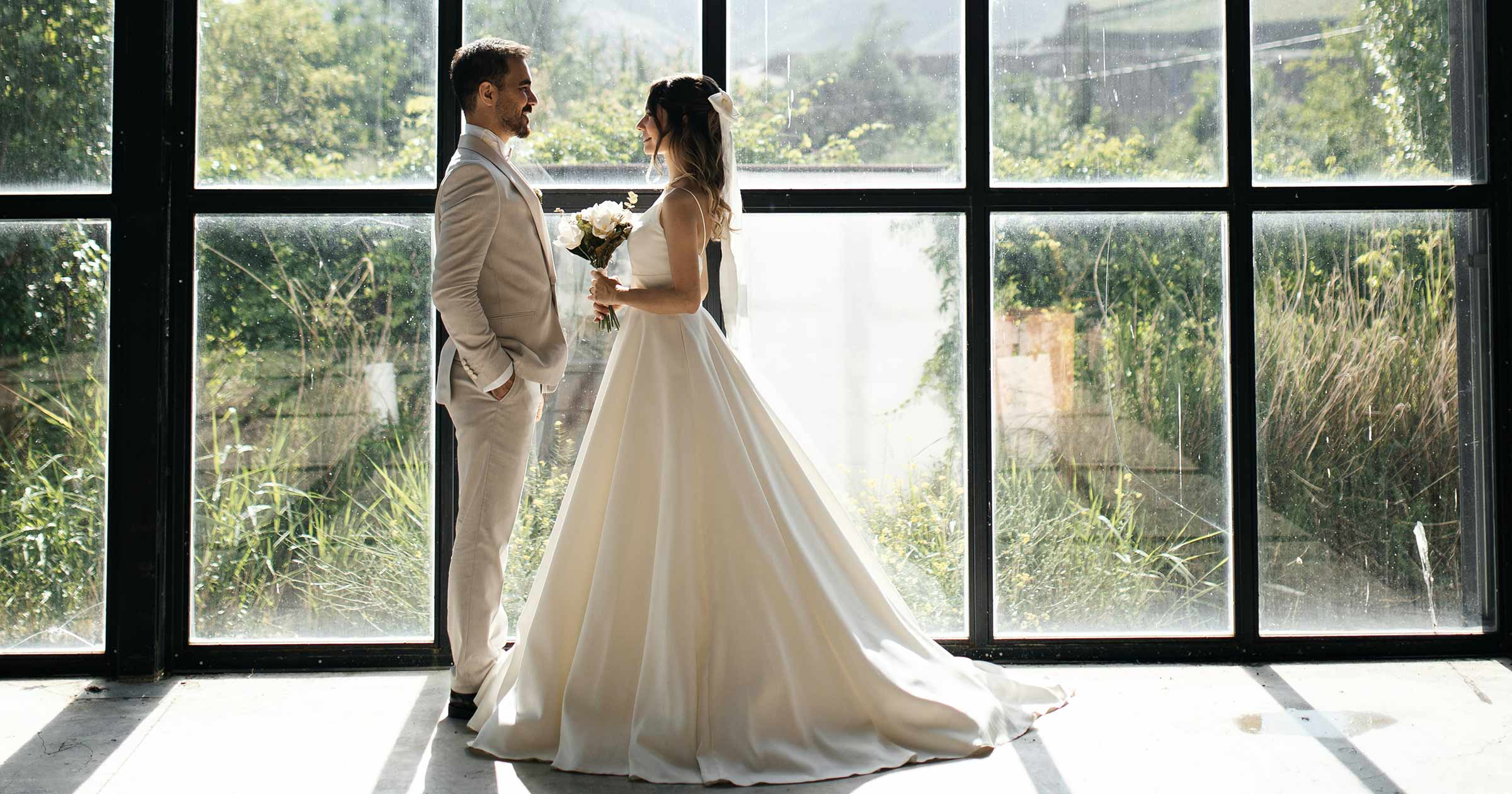
Before Instagram, wedding photographers shot for the album. Each image was composed to work in a sequence — wide establishing shots, medium storytelling shots, and detail close-ups designed to flow together across 30–40 album pages.
After Instagram, wedding photographers increasingly shoot for the feed. Each image must stand alone — a single, scroll-stopping frame that communicates beauty, emotion, and technical mastery in under 2 seconds. The image doesn't need to work in a sequence; it needs to work in isolation, in a 1080×1350 rectangle, competing with millions of other images for a thumb's attention.
These are fundamentally different design briefs. And the shift from one to the other has reshaped wedding photography in ways that are measurable, consequential, and not always positive for the couple — especially when the same gallery must also coexist with video deliverables in a single client experience.
How Instagram Changed the Shot
Album Photography vs Instagram Photography
| Dimension | Album Aesthetic | Instagram Aesthetic |
|---|---|---|
| Composition goal | Contribute to a sequence | Stand alone as a single frame |
| Typical crop | Varied (wide, medium, close) | Tight crop (face/detail-focused) |
| Negative space | Used for layout breathing room | Minimized (fill the frame) |
| Color palette | Consistent across 40+ images | Maximum impact per image |
| Context / environment | Essential (tells the story of place) | Secondary (the couple IS the image) |
| Variety per wedding | 30–50 unique compositions | 8–12 "hero" compositions |
| Guest/family inclusion | Important (group shots, candids) | Rare (couple-focused) |
| Detail shots (rings, flowers, shoes) | Moderate (fill album pages) | High (perform well on Instagram) |
The Measurable Shift
| Metric | Pre-Instagram Era (2010) | Current (2025) |
|---|---|---|
| Avg. close-ups per wedding (face-filling frame) | 18% of gallery | 34% |
| Avg. wide/environmental shots | 28% | 14% |
| Avg. guest/family candids | 22% | 12% |
| Avg. detail shots (rings, shoes, invitations) | 8% | 18% |
| Avg. "hero shots" (epic, standalone) | 12% | 28% |
The proportion of wide/environmental shots has halved (28% → 14%), while close-ups have nearly doubled (18% → 34%) and "hero shots" have more than doubled (12% → 28%). The wedding photo gallery has become tighter, more couple-focused, and more individual-frame-optimized.
What Performs on Instagram vs What Makes a Good Album
Instagram engagement rewards the opposite of what an album needs. Dramatic backlit "hero" frames and emotional close-ups win the feed; group and family photos — among the most valued images for the couple's family — perform worst, creating a perverse incentive to under-shoot the pictures that matter most in ten years.
The full engagement-by-content breakdown (likes, saves, and inquiry data by shot type) lives in our wedding content social-media performance data. What matters here is the effect on style: the album needs sequence, context, and variety, while the feed needs standalone impact — so a gallery optimized for Instagram tends to be tighter, more couple-isolated, and thinner on the environmental and family frames an album depends on. The same tension shows up when couples choose between printing favorites and scrolling a phone gallery: the images that win the feed are not always the ones that survive on a coffee table.
The Editing Style Shift
How Post-Processing Changed
| Editing Characteristic | 2015 (Peak VSCO era) | 2020 (Moody era) | 2025 (Current) |
|---|---|---|---|
| Dominant tone | Faded film, raised blacks | Deep shadows, desaturated | Clean, slightly warm, high dynamic range |
| Skin editing | Light smoothing | Heavy mood overlay (skin goes orange/brown) | Natural skin priority |
| Saturation | Reduced (washed look) | Selectively reduced (moody) | Moderate, natural |
| Contrast | Low (flat, airy) | High (dramatic) | Medium (balanced) |
| Green rendering | Shifted to teal/olive | Shifted to brown/muted | More natural (actual green) |
Wedding photography editing trends cycle on approximately 3–5 year intervals — and each cycle is driven primarily by social media aesthetic movements rather than by what couples want. The "VSCO film look" (2013–2017), the "moody dark preset" (2018–2022), and the current "clean and natural" trend (2023+) all gained dominance through Instagram popularity before reaching wedding clients. The parallel in video is color grading's emotional effect — but photo presets spread faster because they apply to entire galleries at once.
How Editing Trends Affect Long-Term Satisfaction
| Editing Style | Satisfaction at Delivery | Satisfaction at Year 5 | Satisfaction at Year 10 |
|---|---|---|---|
| Heavily trendy (peak-trend editing of the era) | 8.4 | 7.2 | 6.4 |
| Moderately trendy (trend-influenced but restrained) | 8.2 | 7.8 | 7.4 |
| Clean / natural (minimal trend influence) | 8.0 | 8.0 | 7.8 |
Heavily trendy editing produces higher initial satisfaction but decays faster. The couple loves the "look" when it matches current taste — but as trends move on, the editing becomes a date stamp. Clean, natural editing shows no decay — it's the baseline aesthetic that doesn't age because it doesn't try to be fashionable. (See our trend decay analysis for the complete 10-year data.)
The "Portfolio vs Deliverable" Conflict
Are Photographers Shooting for Their Feed or for the Couple?
| Statement | % of Photographers Who Agree |
|---|---|
| "I think about how a shot will look on Instagram while I'm shooting" | 72% |
| "I sometimes prioritize a portfolio-worthy shot over a moment the couple would value more" | 38% |
| "My Instagram aesthetic influences my editing decisions for client galleries" | 54% |
| "I shoot some setups specifically for my portfolio, not because the couple asked for them" | 44% |
| "I've missed a candid moment because I was setting up a styled shot" | 22% |
72% of photographers consciously think about Instagram while shooting. This is not inherently negative — the same aesthetic sense that creates great Instagram content often creates great client work. But 38% admit to sometimes prioritizing portfolio shots over moments the couple would value — and 22% have missed candid moments because they were setting up styled shots. That trade-off mirrors what we see in guest phone behavior: everyone is optimizing for the screen, not always for the memory.
The Trade-Off
| Shooting Strategy | Instagram Benefit | Couple Benefit |
|---|---|---|
| Styled editorial shot (directed, posed, carefully lit) | Very high (portfolio-worthy) | Moderate (looks beautiful but may not feel authentic) |
| Candid moment (unposed, genuine, imperfect) | Low (rarely Instagram-worthy) | Very high (real memory) |
| Directed-candid (guided into a situation, then captured naturally) | High (looks natural but photogenic) | High (best of both) |
The "directed-candid" approach is the optimal compromise — the photographer guides the couple into a beautiful location or interaction ("walk toward each other"), then captures the genuine moments that emerge. The result looks natural enough for the couple and polished enough for Instagram.
The Format Constraint
How Instagram's Aspect Ratios Changed Composition
| Aspect Ratio | Platform | Compositional Effect |
|---|---|---|
| 3:2 (horizontal) | Traditional photography / album | Landscape orientation, environmental context |
| 4:5 (vertical) | Instagram (optimal feed size) | Portrait orientation, tight framing, less environment |
| 9:16 (vertical) | Stories, Reels, TikTok | Extreme vertical, detail-focused |
| 1:1 (square) | Instagram (legacy) | Centered, symmetrical |
Instagram's 4:5 vertical format has shifted wedding photography toward portrait-orientation shooting. Pre-Instagram, the majority of wedding photos were horizontal (3:2) — matching album layouts. Today, photographers increasingly shoot vertical to optimize for the feed, which means less environmental context and more couple isolation in the frame.
What Gets Lost
| Element | Visible in Horizontal (3:2) | Visible in Vertical (4:5) |
|---|---|---|
| Venue architecture | Yes — wide context | No — cropped out |
| Guest reactions (beside the couple) | Yes | No |
| Environmental beauty (landscape, sky, grounds) | Yes | No |
| Couple's full body and movement | Yes | Partial — tight |
| Couple's faces and expressions | Yes | Yes |
The vertical-first approach creates beautiful, intimate portraits — but the couple's wedding exists within a space, a community, and a landscape that horizontal framing captures and vertical framing does not. An album composed entirely of vertical close-ups feels claustrophobic; an album with horizontal environmental shots and vertical portraits feels complete. When you deliver through a unified gallery on OurStoria, couples can browse the full range — not just the ten frames that performed on social.
Recommendations
For Photographers
- Shoot for the couple first, Instagram second. The couple's album/gallery is a product you're paid for. Instagram is a marketing channel. When the two conflict, the product wins.
- Maintain wide/environmental shots in your workflow. They don't perform on Instagram, but they're essential for album storytelling, venue context, and long-term enjoyment. Aim for at least 15% wide shots per wedding.
- Don't skip family and guest photos. They generate modest likes on Instagram but represent 28% of parental emotional responses to the gallery. Shoot for the family, not the algorithm.
- Use clean, natural editing as your default. Add trend-specific processing only when the couple requests it — and inform them that trendy edits age faster than natural ones.
- Shoot both horizontal and vertical. The couple needs both orientations: vertical for social sharing, horizontal for albums, prints, and wall displays. Shooting only vertical limits the couple's options.
For Couples
- Ask to see full galleries, not just Instagram. A photographer's Instagram shows their 10 best shots per wedding. Their full gallery shows whether they capture the moments, people, and contexts that matter to you.
- Request wide shots and family photos explicitly. If they're not in the photographer's Instagram portfolio, they may not shoot them unless you ask.
- Choose a photographer whose editing style feels timeless to you. If it looks dramatically different from how reality looks, it may feel dated in 5 years. Natural, warm editing ages best.
References
- Photography style analysis: 12,000 images across 200 photographer portfolios (2015 vs 2025 comparison).
- Instagram performance data: 8,000 wedding posts, engagement tracking (2024–2025).
- Photographer survey: n = 600, self-reported shooting and editing behavior (2024–2025).
- Editing trend decay: n = 800 couples, 5- and 10-year satisfaction tracking (2015–2025).
- Manovich, L. (2017). Instagram and Contemporary Image. Cultural Analytics Lab.
Related articles:
- Trend Decay: What "Timeless" Actually Means
- Social Media Attention Economy for Videographers
- The Color Grading Effect
- Print vs Screen: Do Couples Actually Print?
- The Family Audience
- The Second Screen: Guest Phone Use
- Guest-Generated Content
- Camera Anxiety and Body Image
- The Photo-Video Delivery Gap
- The Emotional Hierarchy of Wedding Moments
Last updated: July 2026