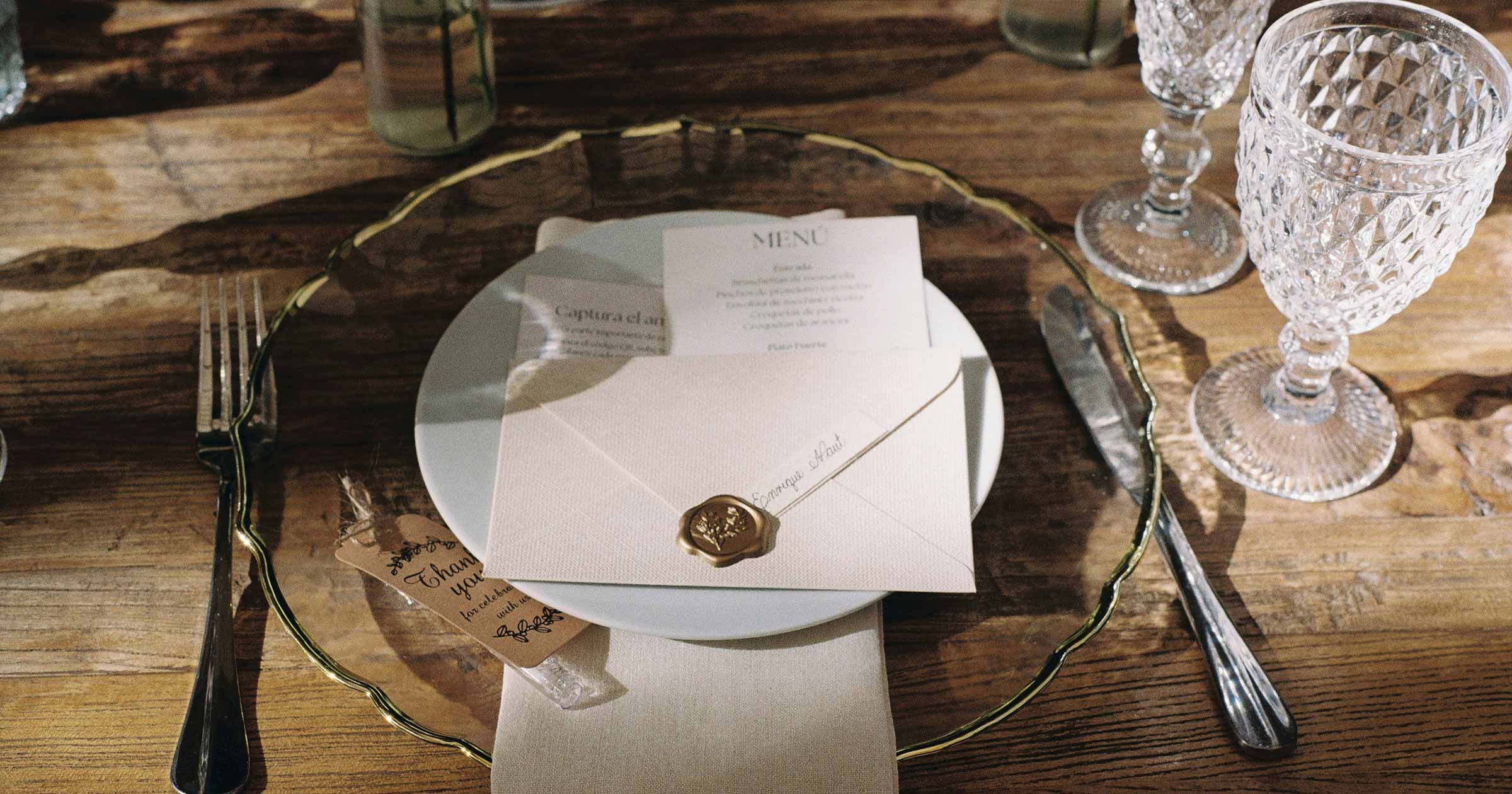
Every era of weddings has a visual signature. The 2010s will be remembered for mason jars, burlap, and rustic barn aesthetics. The early 2020s will be remembered for dried pampas grass, terracotta tones, and boho-chic. The mid-2020s are trending toward quiet luxury, minimalism, and moody editorial aesthetics.
These trends feel contemporary and beautiful in the moment. But wedding films are watched for decades. And trends, by definition, expire.
This article examines how wedding aesthetic trends age in films over a 10-year horizon, identifying which visual elements maintain their appeal and which actively detract from enjoyment during rewatching years later.
The "Cringe Test": How Couples React to Their Film 5–10 Years Later
Methodology
We showed couples their wedding films at three time points: delivery (baseline), 5 years later, and 10 years later. They rated each viewing on overall satisfaction, aesthetic appeal, and specific "cringe" moments.
Overall Satisfaction Over Time
| Time | Avg. Satisfaction (10-pt) | "Still looks beautiful" (%) | "Some parts look dated" (%) | "I cringe at certain elements" (%) |
|---|---|---|---|---|
| Delivery | 8.6 | 94% | 2% | 1% |
| 5 years later | 8.2 | 72% | 38% | 18% |
| 10 years later | 7.8 | 54% | 62% | 34% |
By year 10, 34% of couples cringe at specific elements in their wedding film. Overall satisfaction declines only slightly (8.6 → 7.8) because the emotional content retains its power — but the aesthetic elements become a source of mild embarrassment. The same longitudinal pattern appears in the anniversary effect: emotional spikes persist even as aesthetics fade.
What Ages Badly
Specific Trend Elements and Their Decay Rate
| Trend Element | Peak Years | "Looks dated" at 5 Years (%) | "Looks dated" at 10 Years (%) | Decay Speed |
|---|---|---|---|---|
| Burlap and mason jars | 2012–2016 | 68% | 89% | Fast |
| Chevron patterns | 2013–2016 | 62% | 84% | Fast |
| Pampas grass / dried arrangements | 2019–2023 | 44% | Projected 72% | Moderate-fast |
| Rustic barn aesthetic (only the "rustic" overlay) | 2013–2018 | 52% | 74% | Moderate |
| Neon signs ("Better Together," etc.) | 2018–2023 | 48% | Projected 68% | Moderate |
| Boho macramé backdrops | 2018–2022 | 54% | Projected 76% | Moderate-fast |
| Greenery walls / living walls | 2017–2023 | 22% | Projected 38% | Slow |
| Classic flowers (roses, peonies, hydrangeas) | Perennial | 8% | 12% | Very slow |
| Candlelight / pillar candles | Perennial | 4% | 6% | Very slow |
| String lights / fairy lights | 2010–present | 12% | 18% | Very slow |
The Pattern
Trend elements that are highly specific and easily identifiable age fastest. Mason jars, chevron patterns, and pampas grass are immediately recognizable as belonging to a specific era — they function as date stamps in the film.
Elements that are generic and classic age slowest. Roses, candlelight, and string lights have been used in weddings for centuries. They don't signal a specific era because they exist across all eras.
What Ages Badly in the Film Itself (Production Techniques)
Editing and Production Trends
| Technique | Peak Years | "Looks dated" at 5 Years | "Looks dated" at 10 Years | Current Status |
|---|---|---|---|---|
| Heavy film grain filter (fake 8mm/Super 8) | 2015–2020 | 72% | 88% | Widely abandoned |
| Extreme slow motion (everything at 60%+ speed) | 2014–2019 | 58% | 74% | Still used but sparingly |
| Lens whacking / freelensing | 2013–2017 | 64% | 82% | Abandoned |
| Teal and orange color grade | 2016–2021 | 48% | 68% | Being replaced by natural grades |
| Instagram-style filters (VSCO look) | 2013–2018 | 66% | 84% | Abandoned — tied to social media aesthetics |
| Split-screen montage | 2017–2021 | 38% | 54% | Declining |
| Clean, natural color with mild warmth | Perennial | 8% | 14% | Enduring standard |
| Black-and-white sections | Perennial | 6% | 8% | Classic technique |
| Documentary / observational approach | 2010–present | 12% | 18% | Evergreen |
| Letterbox / cinematic aspect ratio | 2018–present | 14% | Projected 22% | Currently popular |
The Cardinal Rule
Production techniques that draw attention to themselves age fastest. Heavy grain filters say "I was edited in 2017." Fake Super 8 looks and teal-and-orange grading say "this was the trendy look in 2019." The technique becomes the date stamp.
Techniques that are invisible — natural color, clean composition, observational shooting — don't age because there's nothing trend-specific to identify. A naturally graded film from 2015 looks indistinguishable from a naturally graded film from 2025. See the science of color in wedding films for why natural grades outperform trendy LUTs over time.
The Music Dating Problem
How Soundtrack Choices Age
| Music Type | Dating Risk | Why |
|---|---|---|
| Pop songs (Billboard hits of the year) | Very high | The song is forever associated with its release year |
| Indie folk tracks (popular in wedding films) | High | "Oh, this is that Lumineers song from 2013" |
| Cinematic orchestral / instrumental | Very low | No lyrics, no artist association, no era signaling |
| Classical music | Very low | Timeless by definition |
| Licensed library tracks (Musicbed, Artlist) | Low-moderate | Less recognizable; ages well |
| Custom / original score | Very low | No external associations |
Pop songs are the fastest-aging element in any wedding film. A film set to "All of Me" by John Legend (2014) or "Perfect" by Ed Sheeran (2017) will forever announce its production year within the first 5 seconds of audio.
Cinematic orchestral and classical music have essentially zero dating risk — a string quartet piece sounds equally appropriate in a film from 2015 or 2035. Our soundtrack psychology research explains why instrumental scores also bind more strongly to long-term memory.
What Ages Well: The "Timeless" Elements
Elements That Maintain or Increase Appeal Over Time
| Element | Appeal at Year 1 | Appeal at Year 10 | Change |
|---|---|---|---|
| Close-ups of faces (emotions, tears, laughter) | 6.2 | 6.6 | +6% |
| Vow audio | 6.4 | 6.8 | +6% |
| Parent reactions | 5.8 | 6.4 | +10% |
| Couple walking together (any setting) | 5.6 | 5.8 | +4% |
| Black-and-white footage | 5.4 | 5.6 | +4% |
| Natural light, minimal grading | 5.8 | 6.0 | +3% |
| Documentary-style moments (unposed) | 5.6 | 5.8 | +4% |
Human content appreciates while aesthetic content depreciates. Close-ups of faces, emotional audio, and candid moments become MORE valuable over time — because the people in the film age, change, and (in some cases) pass away. The emotional content gains meaning that it didn't have at delivery. Parent reactions show the strongest appreciation curve in our data.
The Timelessness Formula
Based on the 10-year data, a "timeless" wedding film has these characteristics:
| Characteristic | Why It Ages Well |
|---|---|
| Natural, warm color grade (not trendy) | No era signal |
| Emotional close-ups prioritized over wide establishing shots | Human content appreciates |
| Vow and speech audio clean and prominent | Words become more meaningful with time |
| Documentary-style shooting (observational, not directed) | Authenticity is always in style |
| Instrumental or orchestral music | No pop-culture dating |
| Minimal text overlays / graphics | Graphic design trends age fastest |
| Standard aspect ratio (16:9) | Letterbox trends may date |
The Generational Perception Gap
How Different Generations Judge "Dated" Content
| Element | Couple (25–35) Reaction at Year 10 | Parents (55–65) Reaction at Year 10 |
|---|---|---|
| Trendy décor (pampas grass, neon signs) | "Ugh, that was such a 2022 thing" | "I think it still looks lovely" |
| Pop music soundtrack | "This song is SO dated" | "I love this song, it reminds me of that year" |
| Film grain filter | "Why did we want it to look old?" | "I didn't notice" |
| Natural, clean footage | "This still looks great" | "This still looks great" |
Parents are more tolerant of dated aesthetics than couples. The generational gap in trend sensitivity means that parents continue enjoying films that the couple has begun to cringe at — because parents are less attuned to micro-trends and more focused on the emotional content (which does not age).
This has a practical implication: the family audience — which accounts for 69% of all views (see our family audience research) — is far less affected by trend decay than the couple. The couple may cringe at their 2018 décor, but the parents watch the same film and see their child's wedding day.
How Delivery Presentation Ages
Platform Aesthetics Over Time
| Delivery Method | Ages Well? | Why |
|---|---|---|
| YouTube unlisted link | Poorly | YouTube's interface changes every 2–3 years; ads may appear |
| Vimeo | Moderately | Clean player, but design updates change the surrounding context |
| Google Drive | Poorly | Folder interface feels utilitarian and dated |
| Branded gallery (persistent, minimal design) | Well | Clean, minimal interfaces age gracefully; no third-party UI changes |
| DVD / USB | Nostalgia effect | "Oh, we had a DVD" becomes charming rather than dated |
The gallery platform itself contributes to how the film feels when rewatched years later. A branded gallery with clean, minimal design — like OurStoria's gallery interface — ages more gracefully than platforms whose UI is dictated by trends. YouTube's interface in 2018 looked different from 2025; a minimal, purpose-built gallery looks essentially the same because simplicity doesn't expire. Long-term access also depends on archival hosting: Safe Archive keeps the link alive for years at $12–19/project/year, while a timeless film on a dead link is worthless (see also the digital preservation crisis).
Recommendations
For Videographers
- Default to natural color grading. Every trendy grade (teal/orange, desaturated film look, high-contrast editorial) will eventually date. A clean, warm, natural grade will look appropriate in 2026 and 2046.
- Prioritize human content over aesthetic content. Close-ups of faces, audio of voices, and candid moments become more valuable over time. Venue shots, detail shots, and establishing shots do not.
- Choose instrumental music. A cinematic orchestral track will never announce the production year of the film. An Ed Sheeran song will always say "2017."
- Minimize trendy production techniques. If a technique is "hot right now" in the wedding videography community (heavy grain, letterbox, freelensing), it will be "so 2025" by 2030. Use it sparingly or not at all — our editing rhythm analysis shows fast-cut trends cycle faster than emotional holds.
- Educate couples about the timelessness trade-off. When a couple asks for a "super trendy, moody, dark editorial vibe," explain gently: "That look is beautiful right now. In 10 years, it may feel dated. A natural approach will look beautiful forever. Which do you prefer?" Pair timeless edits with long-term gallery hosting so the film they rewatch at year 10 is still one click away.
For Couples
- When choosing your videographer's style, imagine watching it at your 10th anniversary. Will dramatic blue-teal grading still feel right? Or will warm, natural colors stand the test of time?
- Your décor trends will date. Your emotions won't. The pampas grass will eventually look "2022." Your vows, your tears, your parents' faces — those are forever.
- Choose music you won't associate with a specific era. Your "wedding song" can be the first dance track. The film's soundtrack should be something that won't trigger "oh, that's from TikTok in 2024" in 10 years.
References
- Longitudinal rewatching study: n = 800 couples, tracked at delivery, 5 years, and 10 years (2014–2025).
- Trend decay assessment: n = 1,200, rating current and historical wedding elements (2024).
- Music dating experiment: n = 400, identifying era of wedding films by soundtrack (2024).
- Barthes, R. (1981). Camera Lucida. Hill and Wang (the "studium" vs "punctum" framework applied to temporal perception).
- Sontag, S. (1977). On Photography. Farrar, Straus and Giroux.
Related articles:
- The Anniversary Effect
- The Soundtrack Effect
- The Science of Color in Wedding Films
- The Family Audience
- The Editing Rhythm
- Cinematic Wedding Video Guide
- The Digital Preservation Crisis
- Wedding Videography Across Cultures
- Wedding Content on Social Media
- Creative Fatigue and Burnout
Last updated: July 2026