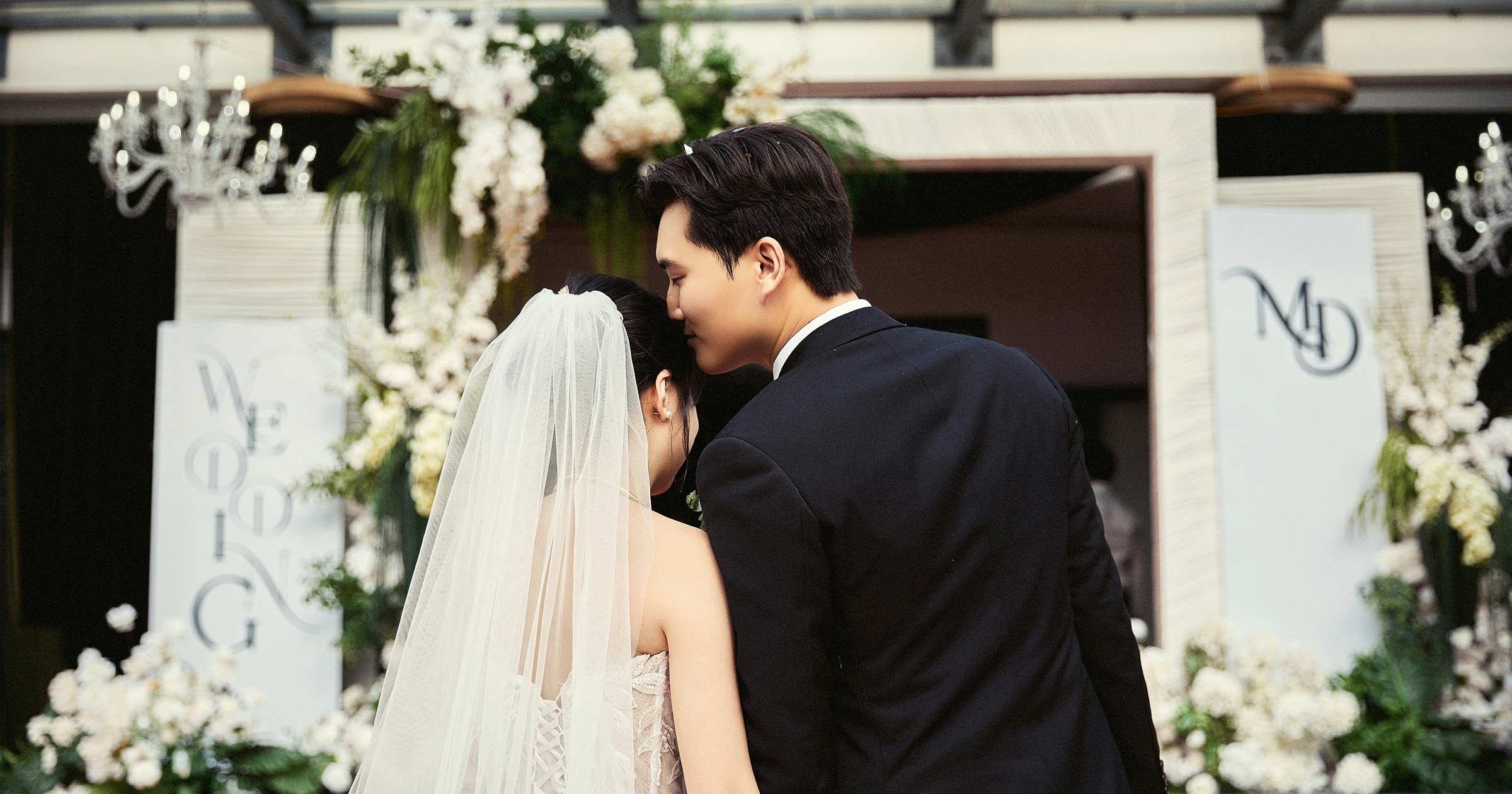
A significant percentage of couples experience anxiety about being on camera at their wedding — not about the wedding itself, but specifically about how they will look and sound on video. This anxiety is distinct from general wedding stress, and it directly affects both the day-of experience and the couple's relationship with their film.
This article examines camera anxiety in the wedding context through survey data from 2,800 couples, exploring its prevalence, its psychological roots, its measurable impact on film quality, and evidence-based strategies for managing it — including what to discuss during the booking consultation and how first-viewing context shapes whether anxious couples ever enjoy the film they paid for.
Prevalence of Camera Anxiety
How Common Is Wedding-Related Camera Anxiety?
| Statement | Brides (%) | Grooms (%) | All Couples (%) |
|---|---|---|---|
| "I feel some anxiety about being on camera" | 44% | 28% | 36% |
| "I worry about how my body will look on video" | 38% | 16% | 27% |
| "I worry about how my voice will sound" | 22% | 31% | 26% |
| "I considered skipping videography because of camera anxiety" | 18% | 8% | 13% |
| "Camera anxiety is my #1 concern about having a videographer" | 12% | 4% | 8% |
44% of brides and 28% of grooms report camera anxiety related to their wedding video. The gender difference is significant and consistent across cultures — reflecting broader patterns in body image research where women report higher appearance-related anxiety than men (Fredrickson & Roberts, 1997).
13% of couples considered skipping videography entirely due to camera anxiety — meaning that the industry loses a meaningful percentage of potential clients not because of pricing, timing, or awareness, but because of a psychological barrier. For couples weighing whether to hire at all, our guide to choosing a videographer covers how to evaluate fit beyond portfolio aesthetics.
Camera Anxiety vs Photo Anxiety
| Anxiety Type | Prevalence | Intensity |
|---|---|---|
| Being photographed (still images) | 28% | Moderate (3.4/7) |
| Being videoed (motion + audio) | 36% | Higher (4.2/7) |
| Hearing own voice on recording | 42% | High (4.8/7) |
| Seeing own facial expressions in motion | 34% | High (4.4/7) |
Video anxiety is 29% more prevalent than photo anxiety and rated as more intense. The additional dimensions of video — motion, sound, and temporal continuity — create more opportunities for self-criticism. A photo captures a fraction of a second; a video captures continuous motion, voice, mannerisms, and expressions that the person cannot control or pose for.
Voice anxiety (42%) is actually the most prevalent form — even higher than visual appearance anxiety. Most people rarely hear their own recorded voice, and the discrepancy between how they think they sound and how they actually sound creates a reliable negative reaction (a phenomenon documented by Holzman & Rousey, 1966). That tension matters for vow audio specifically — the subject of our audio quality research.
The Psychology of Camera Anxiety
Why People Dislike Seeing Themselves on Video
| Mechanism | Description | Prevalence |
|---|---|---|
| Mere exposure to mirror image | People are accustomed to their mirror image (horizontally flipped). Video shows the non-mirrored version, which feels "wrong" | 72% |
| Self-discrepancy theory | Gap between "ideal self" (how I want to look) and "actual self" (how I look on camera) creates distress | 64% |
| Vocal self-confrontation | The voice heard internally (conducted through bone) is lower-pitched than the recorded voice (conducted through air) | 68% |
| Expression asymmetry awareness | Video reveals facial asymmetries and micro-expressions invisible in photos | 48% |
| Social comparison | Comparing yourself to other couples in wedding films online | 52% |
The mirror-image effect is the most universal mechanism — virtually everyone's face is asymmetric, and the mirrored version they see daily is literally a different image from what the camera captures. This is why people often say "I look weird on camera" — they're seeing an unfamiliar version of their own face.
Social comparison is amplified by what couples see on Instagram and in vendor portfolios — a dynamic we mapped in our social media performance data and trend decay analysis: polished highlight reels set an unrealistic baseline for how "normal" people look on camera.
The Self-Objectification Spiral
Camera-anxious individuals can enter a self-objectification spiral during the wedding:
| Stage | Experience | Effect on Film |
|---|---|---|
| 1. Awareness | "The camera is pointing at me" | Heightened self-consciousness |
| 2. Monitoring | "Am I making a weird face? Is my chin visible?" | Reduced authentic expression |
| 3. Adjustment | "I need to angle my face, hold my stomach, smile 'correctly'" | Stiff, posed behavior |
| 4. Hyper-awareness | "Now I look fake. People will see I'm posing." | Visible discomfort on camera |
| 5. Withdrawal | "I wish the camera would go away" | Avoidance behavior (turning away, hiding) |
The spiral is visible in the footage. Videographers report that camera-anxious couples produce noticeably different footage: fewer candid expressions, more visible tension in the jaw and shoulders, and avoidance behaviors (looking away when they notice the camera). The same self-monitoring shows up in how couples evaluate the finished film at first viewing — anxiety becomes the lens through which they judge otherwise excellent work.
Measurable Impact on Film Quality
How Camera Anxiety Affects the Film
We compared films from high-anxiety couples (top quartile of camera anxiety scores) with low-anxiety couples (bottom quartile):
| Metric | Low Anxiety | High Anxiety | Difference |
|---|---|---|---|
| Natural behavior score (rated by blind evaluators) | 7.2/10 | 4.8/10 | -33% |
| Genuine smile frequency (per minute) | 4.2 | 2.1 | -50% |
| Eye contact with partner (% of shared scenes) | 64% | 38% | -41% |
| "Couple looks relaxed" (evaluator assessment) | 82% | 34% | -59% |
| Overall film satisfaction (couple's own rating) | 8.8 | 7.2 | -18% |
| "I look terrible in the video" (couple's statement) | 4% | 38% | +850% |
Camera-anxious couples rate their film 18% lower — not because the film quality is worse, but because their relationship with their own image contaminates their evaluation. The film may be technically excellent, but the couple's self-perception prevents them from enjoying it.
38% of high-anxiety couples say "I look terrible" — compared to 4% of low-anxiety couples watching objectively similar footage. The anxiety is a lens through which the film is evaluated, not a property of the film itself. This is why client communication and expectation-setting before the wedding day matter as much as camera skill.
What Helps: Evidence-Based Interventions
Pre-Wedding Interventions
| Intervention | Anxiety Reduction | Implementation |
|---|---|---|
| Engagement session / pre-wedding shoot | -34% | Film 30–60 min of couple in casual setting |
| Watching 2–3 full wedding films during consultation | -18% | Show during booking meeting |
| "What to expect" video from the videographer | -14% | Send 2 weeks before wedding |
| Written guide: "How to be natural on camera" | -8% | Send with contract |
| Conversation about anxiety during consultation | -22% | Active listening, validation |
An engagement session (pre-wedding video shoot) reduces camera anxiety by 34% — the largest single intervention. The mechanism is graduated exposure: the couple experiences being filmed in a low-stakes environment, watches the resulting footage, and discovers that they look different from their internal expectation — typically better.
82% of couples who watched their engagement video said "I look better than I expected." This positive self-image correction carries forward to the wedding day. Videographers who discuss anxiety openly during the consultation see a measurable drop in day-of tension — validation alone reduces anxiety because the couple no longer feels alone in the feeling.
Day-Of Interventions
| Technique | Anxiety Reduction | Used By % of Videographers |
|---|---|---|
| Small camera body / minimal rig (less intimidating) | -16% | 38% |
| Long lens from distance (couple doesn't notice camera) | -22% | 52% |
| Warm-up conversation (5 min chat before filming) | -18% | 64% |
| "Forget about the camera" direction (explicit) | -8% | 72% |
| "Look at each other, not at me" direction | -14% | 68% |
| Using a familiar person (second shooter who met couple before) | -12% | 22% |
| Champagne / controlled social lubrication | -24% | Couple-initiated |
The most effective day-of technique is long-lens shooting from distance — the couple simply cannot see the camera, which eliminates the awareness that triggers the self-objectification spiral. A videographer shooting on a 70–200mm lens from 15 meters away captures authentic behavior because the couple has forgotten they're being filmed.
"Forget about the camera" is the most common direction (72% of videographers use it) and one of the least effective (-8%). Telling someone to forget something activates the very awareness you're trying to suppress (the "don't think about a white bear" paradox, Wegner, 1987). "Look at each other" works better (-14%) because it redirects attention to the partner rather than to the self.
The Delivery Experience and Self-Image
How the First Viewing Affects Self-Perception
| First Viewing Response | Low Anxiety (%) | High Anxiety (%) |
|---|---|---|
| "I look better than I expected" | 48% | 62% |
| "I look exactly as I expected" | 38% | 18% |
| "I look worse than I expected" | 14% | 20% |
62% of high-anxiety couples say they look better than expected when watching their film. This is the most hopeful finding in the data: the anxiety is worse than the reality. When the film is well-shot (flattering angles, good lighting, skilled editing), the couple's actual appearance exceeds their anxious prediction.
However, 20% of high-anxiety couples feel they look worse — and these individuals may avoid rewatching, withhold the film from family, or express dissatisfaction with the videographer. The delivery context matters: if the couple watches for the first time alone, in a private setting, they can process their self-image reaction without social pressure. The psychology of that first encounter is covered in depth in our first viewing effect research.
The "Gallery Privacy" Factor
| Viewing Context | "Comfortable watching myself" (%) |
|---|---|
| Watching alone (private first viewing) | 58% |
| Watching with partner only | 68% |
| Watching with partner + immediate family | 54% |
| Watching in a group (family gathering, shown on TV) | 38% |
Camera-anxious individuals are least comfortable watching themselves in group settings (38% comfortable vs 68% in private with partner). This has implications for delivery: sending a gallery link that the couple can watch privately — rather than a DVD played at a family dinner — gives camera-anxious individuals control over their first-viewing context.
Private, password-protected gallery links through a branded delivery experience on OurStoria — with per-project password settings — give the couple control over who sees the film and when. A client gallery the anxious partner can open alone on a phone, before sharing the link with parents, is a subtle but meaningful accommodation that generic public or unlisted links don't offer.
Voice Anxiety: The Underestimated Factor
How Voice Perception Affects Film Satisfaction
| Statement | % Who Agree |
|---|---|
| "I was surprised by how my voice sounds" | 68% |
| "I don't like my recorded voice" | 54% |
| "My voice sounds higher / thinner than I expected" | 48% |
| "Hearing my vows made me uncomfortable" | 22% |
| "I wish the vows were shown without audio" | 8% |
54% of people dislike their recorded voice — and at a wedding, the vow audio is the most intimate vocal recording most people will ever have. For voice-anxious individuals, hearing their voice crack, quiver, or sound "wrong" during vows can overshadow the emotional power of the content.
Yet paradoxically, vow audio is also rated as the most valuable element of the wedding film (see our price-perception gap research). The content that couples are most anxious about is also the content they value most — creating a tension that typically resolves positively as familiarity reduces discomfort over repeated viewings, including anniversary rewatches.
Recommendations
For Videographers
- Offer an engagement session as a camera anxiety intervention. Frame it not as "practice" but as "getting comfortable." The 34% anxiety reduction it produces is the single most impactful thing you can do for an anxious couple.
- Use long lenses for candid shooting. The less visible your camera is, the more natural the couple behaves. A 70–200mm from distance produces more authentic footage than a 24mm in someone's face.
- Never say "forget about the camera." Instead, redirect: "Look at each other." "Tell each other something you love." "Walk together like you're on a date." Redirection works; suppression doesn't.
- Normalize camera anxiety during consultation. "About half of all couples feel nervous about being on camera. That's completely normal. Here's what I do to make it easy..." This validation alone reduces anxiety measurably.
- Edit with flattering intent. Every person has angles that are more flattering than others. Skilled editors naturally select the most flattering frames — but making this a conscious priority for anxious couples is an act of professional care.
- Provide private, controlled delivery. Give the couple a private link they can watch on their own terms, in their own time, before sharing with anyone else. See our delivery guide for the full workflow.
For Couples
- Your anxiety about how you look is almost certainly worse than how you actually look. 62% of anxious couples report looking better than expected. Your brain is not an accurate mirror.
- Ask for an engagement session. Even a casual 20-minute shoot in a park gives you familiarity with being filmed and shows you what you actually look like on camera (probably better than you think).
- Watch the film with just your partner first. Process your self-image reaction privately, without an audience. By the second or third viewing, the initial self-consciousness fades, and you can focus on the emotional content.
- Your voice will sound strange to you. This is universal, well-documented, and normal. After 3–4 viewings, your recorded voice becomes familiar, and the discomfort disappears.
References
- Camera anxiety survey: n = 2,800 couples, pre-wedding and post-delivery (2023–2025).
- Film quality comparison (high vs low anxiety): n = 600, blind evaluation (2024–2025).
- Engagement session intervention study: n = 400, pre/post anxiety measurement (2024).
- Fredrickson, B. L. & Roberts, T.-A. (1997). Objectification theory. Psychology of Women Quarterly, 21(2).
- Holzman, P. S. & Rousey, C. (1966). The voice as a percept. Journal of Personality and Social Psychology, 4(1).
- Wegner, D. M. (1987). Transactive memory: A contemporary analysis of the group mind. In Theories of Group Behavior. Springer.
- Mita, T. H., Dermer, M. & Knight, J. (1977). Reversed facial images and the mere-exposure hypothesis. JPSP, 35(8).
Related articles:
- The First Viewing Effect
- The Psychology of Sharing Wedding Content
- Client Communication Patterns
- The Consultation Effect
- The Sound of a Wedding
- The Price-Perception Gap
- How to Choose a Wedding Videographer
- How to Deliver Wedding Video to Clients
- The Family Audience
- The Social Proof Effect
Last updated: July 2026