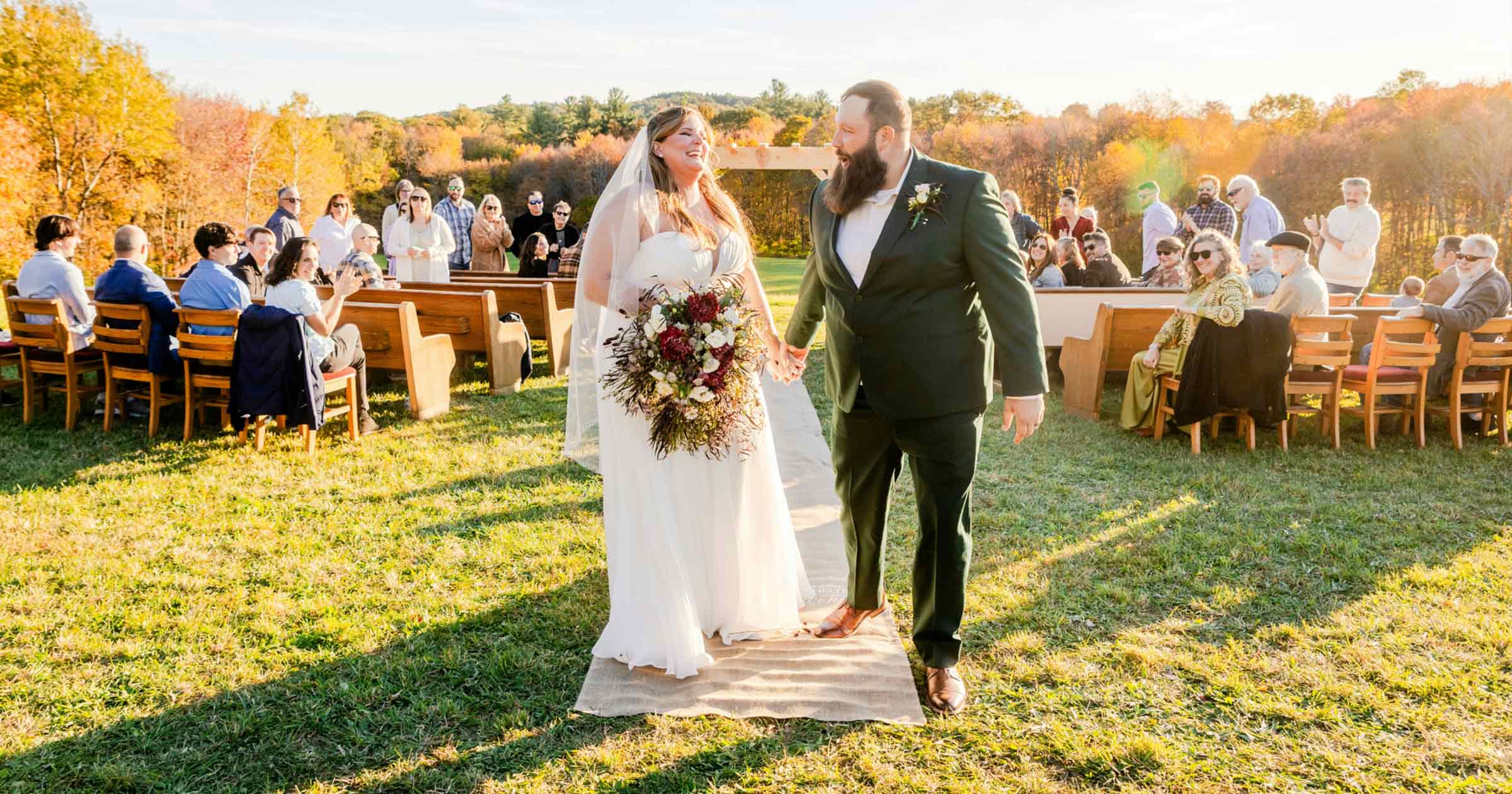
A 3:00 PM ceremony is rarely the default choice. The default is four or five. Three is a decision. Usually, there's a specific reason behind it: Grandma can't stay up late, half the guests have small children, the venue closes at ten, or the couple simply wants the celebration to take place in daylight rather than under fairy lights.
And it's a great decision. A daytime wedding has something an evening wedding doesn't: plenty of light, a relaxed pace, and an evening that ends before guests have time to tire. Children go home happy, not asleep in chairs. Elderly relatives stay until the cake. And after the formal part of the evening, the couple can slip away with friends.
But three o'clock has its pitfalls. Getting ready starts early. First look portraits take place in the harshest sun of the day. An outdoor ceremony in the summer occurs during the hottest hours. And the "golden hour," so beloved by everyone at evening weddings, falls at completely different points in the schedule depending on the month.
This guide includes two ready-made, minute-by-minute schedules (with and without a first look), an explanation of what happens in each block and why, how to work with midday light, how to keep guests from sweltering in the heat, and how to time portraits for sunset in any month. And if you're a photographer or videographer, there's a section at the end on how to shoot a daytime wedding.
Wedding Day Timeline 3pm Ceremony With First Look
The first look is the moment when the couple sees each other in their wedding attire for the first time before the ceremony. Typically, it's done alone, in a quiet location, with the photographer and videographer off to the side. Afterward, all portraits—of the couple, the wedding party, and the family—are taken before the ceremony, and by three o'clock, the photos are done. The couple joins the guests for cocktail hour and doesn't disappear again.
| Time | Event | Duration | Photo & Video Notes |
|---|---|---|---|
| 10:00 AM | Hair & makeup underway | — | Stylist's schedule — see Hair & Makeup Planner |
| 11:00 AM | Photo/video team arrives | — | Set up, test audio, scout window light |
| 11:15 AM | Details: dress, rings, shoes, invitation | 30 min | Flat lays, macro shots |
| 11:45 AM | Getting-ready candids (both partners) | 45 min | Second shooter with partner 2 |
| 12:30 PM | Getting dressed | 15 min | Mother / MOH helping |
| 12:45 PM | First look | 15 min | Two angles, keep audio rolling |
| 1:00 PM | Couple portraits | 40 min | Look for open shade |
| 1:40 PM | Wedding party photos | 30 min | |
| 2:10 PM | Family photos | 20 min | Work from a printed family photo list |
| 2:30 PM | Couple out of sight, guests arrive | 30 min | Ceremony B-roll, mic the officiant |
| 3:00 PM | Ceremony | 30 min | Processional, vows, rings, kiss |
| 3:30 PM | Cocktail hour | 60 min | Couple joins guests — candids |
| 4:30 PM | Reception room before guests | 10 min | Tables, cake, decor |
| 4:40 PM | Grand entrance + first dance | 15 min | Two angles minimum |
| 4:55 PM | Dinner | 60 min | Table candids; swap batteries and cards |
| 5:55 PM | Toasts | 20 min | Speaker + couple's reactions |
| 6:15 PM | Parent dances | 10 min | |
| 6:25 PM | Golden hour portraits | 20 min | Check sunset time — move if needed |
| 6:45 PM | Cake cutting | 10 min | |
| 6:55 PM | Open dancing | 75 min | |
| 8:10 PM | Send-off / end of coverage | 15 min | Sparklers, confetti, car |
How to read this schedule:
- 10:00 AM — getting ready is underway. This isn't the start time but the moment when the stylists are in full swing. The actual start depends on how many people need hair and makeup (more below).
- 11:00 AM — The photographer and videographer arrive. The first half hour is all about the details: the dress, rings, shoes, invitations. While you're still in your robe, these shots are taken calmly and unhurriedly.
- 12:45 PM — First look. Fifteen minutes that many couples later call the most personal of the entire day: no guests, just the two of you.
- 1:00 PM — Couple portraits. This is the sunniest time of day, and this is when a plan is needed (more on that in the lighting section).
- 2:10 PM — Family photos, 2:30 PM — The couple hides. The guests are arriving, and your photos are done, so you can breathe.
- 6:25 PM — golden hour portraits. Twenty minutes that almost always need to be adjusted to coincide with the actual sunset. How exactly is below.
- 8:10 PM — Send-off. The evening ends when it's still light outside (in summer) or just getting dark (in fall).
The main advantage of this option is the freedom after the ceremony. You don't miss cocktail hour, you can hug your guests while they're still holding their first glass, and the family photos are already over. The downside is that getting ready begins half an hour earlier, and the portraits are taken in the harsh midday light.
Wedding Day Timeline 3pm Ceremony No First Look
Without a first look, the couple sees each other for the first time at the altar—just like at our parents' weddings. Before the ceremony, each partner gets ready separately, with their half of the wedding party. Family photos, a group photo with the full wedding party, and couple portraits are taken immediately after the ceremony, during cocktail hour.
| Time | Event | Duration | Photo & Video Notes |
|---|---|---|---|
| 10:30 AM | Hair & makeup underway | — | Stylist's schedule — see Hair & Makeup Planner |
| 11:30 AM | Photo/video team arrives | — | Set up, test audio, scout window light |
| 11:45 AM | Details: dress, rings, shoes, invitation | 30 min | Flat lays, macro shots |
| 12:15 PM | Getting-ready candids (both partners) | 45 min | Second shooter with partner 2 |
| 1:00 PM | Getting dressed | 15 min | Mother / MOH helping |
| 1:15 PM | Reveal to bridesmaids / parents | 15 min | Reactions — keep rolling |
| 1:30 PM | Wedding party photos, each side separately | 30 min | Couple must not see each other |
| 2:00 PM | Individual portraits of each partner | 20 min | |
| 2:20 PM | Couple out of sight, guests arrive | 40 min | Ceremony B-roll, mic the officiant |
| 3:00 PM | Ceremony | 30 min | Processional, vows, rings, kiss |
| 3:30 PM | Family photos | 20 min | Right after the recessional — announce it at the ceremony |
| 3:50 PM | Full wedding party photos | 15 min | |
| 4:05 PM | Couple portraits | 40 min | During cocktail hour |
| 4:45 PM | Grand entrance + first dance | 15 min | Two angles minimum |
| 5:00 PM | Dinner | 60 min | Table candids; swap batteries and cards |
| 6:00 PM | Toasts | 20 min | Speaker + couple's reactions |
| 6:20 PM | Parent dances | 10 min | |
| 6:30 PM | Golden hour portraits | 20 min | Check sunset time — move if needed |
| 6:50 PM | Cake cutting | 10 min | |
| 7:00 PM | Open dancing | 75 min | |
| 8:15 PM | Send-off / end of coverage | 15 min | Sparklers, confetti, car |
Key moments:
- 1:15 PM — the bridesmaids and parents see the dress. Instead of a first look, this is the first reaction of loved ones. This moment is captured just as carefully: a father seeing his daughter in a dress for the first time often cries harder than the groom at the altar.
- 1:30 PM — the wedding party, each side separately. The couple shouldn't cross paths, so the coordinator or photographer should plan separate routes in advance.
- 3:30 PM — family photos immediately after the ceremony. The most vulnerable moment of the day: guests disperse, someone goes for a drink, Uncle Bill goes looking for parking. More on that below.
- 4:05 PM — couple portraits. And here's where 3 PM has an unexpected advantage.
Why Skipping the First Look at 3 PM Can Mean Better Light
A first look is usually recommended to save time. But there's a nuance to a 3:00 PM ceremony that's rarely mentioned: without a first look, the couple's portraits move from 1:00 PM to 4:05 PM. And there's a huge difference in light between these two times. At 1:00 PM, the sun is almost overhead; at 4:00 PM, it's noticeably lower, the light becomes softer and warmer, and the shadows are longer and more beautiful.
So if spending the whole cocktail hour with your guests matters less to you than beautiful portraits without hunting for shade, skipping the first look may be the better choice for a daytime wedding. Decide with your photographer: they know your venue and will advise you on what kind of light is best at what time.
| With a first look | Without a first look | |
|---|---|---|
| Couple portraits | 1:00 PM — the sun is harshest, shade is needed | 4:05 PM — the light is softer and warmer |
| Cocktail hour | Couple is with guests | Couple is at portraits |
| Getting ready starts | 30 minutes earlier | 30 minutes later |
| Pre-ceremony nerves | Fewer: you've already seen each other | More, but the moment at the altar hits harder |
| Family photos | Before the ceremony, unhurried | After the ceremony; needs discipline |
How to Keep Family Photos to 20 Minutes
Immediately after the ceremony, family photos can easily stretch from 20 minutes to 40. Guests hug the couple, relatives go for drinks, and the photographer searches the garden alone for the great-aunt. Two simple tricks almost completely eliminate this problem:
- Ask your officiant to announce at the end who should stay for photos: "Parents and families of the couple—please stay for a few minutes by the arch."
- Pick a family helper—a cousin or friend who knows everyone by sight—and give them a printed list of groups. They gather the people, and the photographer takes the photos.
One group usually takes 2–3 minutes, so 8–10 groups fit perfectly into 20 minutes. A ready-made group list is in our family photo list.
Wedding Day Timeline for 3pm Ceremony: Working With Midday Light
The main feature of a 3:00 PM ceremony is light. And it's worth planning for.
The sun is high in the middle of the day, so shadows fall almost vertically. On a face, that means dark hollows under the brows and nose, eyes in shadow, and a blown-out forehead and nose. Photographers call this "raccoon eyes." Add to this the squinting—looking toward the bright sky is almost impossible—and an overexposed white dress, where all the texture of the lace is lost.
It's not just a matter of photography. The Centers for Disease Control and Prevention (CDC) recommends seeking shade between 10:00 AM and 4:00 PM: these are the hours when ultraviolet radiation is strongest, and, according to the Environmental Protection Agency (EPA), nearly half of the day's UV arrives in that window. And your first look portrait is at exactly 1:00 PM, in the middle of this window. So shade is essential for both a beautiful shot and for your skin.
What you can do:
| Where to shoot at midday | Why it works |
|---|---|
| Open shade: side of a building, covered gallery, canopy, arch | The light is soft and even, but faces remain bright—the shadow is "open" to the sky |
| Under trees with dense canopy | Soft, diffused light; watch for dappled spots of sun on faces |
| With the sun behind the couple (backlight) | The sun illuminates the hair and silhouette, and faces are illuminated by reflected light without squinting |
| Indoors: large windows, lobby, library | Window light is one of the most beautiful and controllable in portrait photography |
| White walls and light-colored tiles nearby | Acts as a natural reflector and illuminates faces from below |
Tell the photographer about the first look in advance so they can find these spots at the venue—ideally at the same time of day as your wedding. A good photographer will usually arrive at the venue early or at least checks how it looks at midday in other couples' galleries.
How to Catch Golden Hour With a 3pm Ceremony
Photographers use "golden hour" for roughly the last hour before sunset. The sun is lower, its rays have to pass through a thicker layer of the atmosphere, the blue part of the spectrum is scattered along the way, and a warm, soft, almost honey-colored light reaches us. Shadows become longer, skin looks better, and the sky takes on a peachy hue.
Both schedules specify 20 minutes of portraits between 6:25 and 6:30 PM. But these are approximate times: the actual golden hour varies by date and city. See how it varies (sunset times are calculated for each city):
| City | June 20 | September 19 | October 17 |
|---|---|---|---|
| New York | 8:30 PM | 7:00 PM | 6:14 PM |
| Chicago | 8:29 PM | 6:55 PM | 6:07 PM |
| Atlanta | 8:51 PM | 7:40 PM | 7:02 PM |
| Dallas | 8:38 PM | 7:29 PM | 6:53 PM |
| Phoenix | 7:41 PM | 6:31 PM | 5:53 PM |
| Los Angeles | 8:07 PM | 6:55 PM | 6:17 PM |
| Seattle | 9:10 PM | 7:15 PM | 6:19 PM |
What does this mean for a wedding with a 3 PM ceremony?
- June and July. Sunset at 8–9 PM — after the send-off. Golden hour is during dancing, starting around 7:30 PM. Move the 20-minute portrait session from 6:25 PM to 7:30–7:50 PM: go outside while the guests are dancing — you'll hardly interrupt anyone's celebration. Later is fine in Seattle, earlier in Phoenix.
- September. Sunset around 7 PM, golden hour is from 6:00 to 7:00 PM, right during the toasts and parent dances. The 6:25 PM slot is almost perfect.
- October. Sunset around 6:15 PM — by 6:25 PM it will already be dusk. Move the portraits to 5:40–6:00 PM, between dinner and toasts.
Golden Hour Around the World
If you're getting married outside the US, the picture may be quite different:
| City | June 20 | September 19 | October 17 |
|---|---|---|---|
| London | 9:21 PM | 7:08 PM | 6:05 PM |
| Paris | 9:57 PM | 7:57 PM | 6:59 PM |
| Berlin | 9:33 PM | 7:14 PM | 6:09 PM |
| Rome | 8:48 PM | 7:14 PM | 6:27 PM |
| Madrid | 9:48 PM | 8:19 PM | 7:33 PM |
| Bucharest | 9:03 PM | 7:21 PM | 6:30 PM |
| Kyiv | 9:13 PM | 7:05 PM | 6:04 PM |
| Toronto | 9:02 PM | 7:22 PM | 6:32 PM |
| Sydney | 4:53 PM | 5:48 PM | 7:09 PM |
| Melbourne | 5:08 PM | 6:13 PM | 7:38 PM |
| Brasília | 5:48 PM | 6:07 PM | 6:10 PM |
In summer, sunset in Europe is an hour to an hour and a half later than in most American cities, and with a 3:00 PM ceremony, the golden hour occurs after the send-off. That's a reason to shoot portraits at the very end of the evening instead of at 6:25 PM—or to head out for them after the guests leave.
Look at Madrid and Paris: in June, the sun sets at almost 10 PM. It's not just a matter of latitude, but also of the clock. Spain shares the same longitude as the UK, but has been on Central European Time since 1940—when Franco adjusted the clocks to match German time, and they never changed back. So everything in Spain is "shifted" by an hour: sunset, and dinner too, which traditionally starts at 9 or 10 PM. For a Spanish wedding, a 3:00 PM ceremony is almost morning.
But in Australia and Brazil, it's the opposite: June is winter there. In Sydney, the sun sets at 4:53 PM on June 20, almost immediately after the ceremony, and the prime wedding season is October through April.
Check the sunset time for your date and venue and enter it into the schedule—our template has a dedicated field for this.
Keeping Guests Comfortable at an Afternoon Ceremony
There's a detail couples often only remember when they see a wedding video: guests at a summer ceremony at 3:00 PM are fanning themselves with programs, squinting, and looking for somewhere to hide.
The fact is, the hottest time of day isn't midday. The sun heats most strongly around 1:00 PM, but the ground and air continue to heat for several hours—just like a frying pan stays hot after you turn off the heat. Meteorologists call this thermal inertia. As a result, in most parts of the US, the peak daytime temperatures occur between 3:00 and 5:00 PM. In other words, right at your ceremony.
What to do about it:
- Seat guests so the sun is behind them or to the side, not in their eyes. This also keeps them from squinting in photos.
- Place water at the entrance to the ceremony. Cold water with lemon or lemonade in glass dispensers is both thoughtful and a beautiful detail in the photo.
- Fan-shaped programs or parasols for guests. American couples often make a fan-shaped ceremony program.
- Keep the ceremony short: 20–30 minutes. Long readings and three songs in a row in the heat are harder on guests than the couple at the altar might think.
- Mention the dress code. "Lightweight fabrics, comfortable shoes for the lawn" in the invitation will save guests a lot of suffering—especially anyone in heels on grass.
- Think about the men in the wedding party. Dark wool suits in the sun at 86°F (30°C) are an ordeal. Linen or light-colored suits, and permission to remove jackets after the ceremony are a simple solution.
There's another reason to keep the ceremony short. Sleep researcher Timothy Monk, in a review for the journal Clinics in Sports Medicine, described the so-called "post-lunch dip"—a period in the early afternoon when alertness and concentration decline. What's interesting is that this slump occurs even in people who haven't eaten lunch—it's built into our circadian rhythms. And a heavy, carbohydrate-rich lunch exacerbates it. So, guests who had a heavy lunch before the wedding may have a hard time focusing on a long address from the officiant at 3 PM A short, lively ceremony, cool drinks, and shade are the best answer.
Day of Wedding Timeline 3pm Ceremony: Getting Ready
The morning before a daytime wedding is short. The bride gets dressed at 12:30 PM with a first look and at 1:00 PM without one, so everything else is counted backward from there.
Hair and makeup wrap up 30 minutes before the dress. This is your buffer in case a curl doesn't hold or the makeup artist needs an extra five minutes for the mother of the bride. Ask the stylists how much time each person needs—this determines the start time. If the bride, four bridesmaids, and two mothers need hair and makeup done, and there's a two-person team, getting ready can easily start at 8:00 AM.
The bride's makeup is done closer to the end. This ensures the makeup looks fresh in the photos, not "tired" by the ceremony.
The photographer and videographer arrive about an hour and a half before the dress: at 11:00 AM with a first look and at 11:30 AM without one. The first half hour is all about details, then finishing touches and both partners getting ready.
Choose your getting-ready room wisely. For a daytime wedding, this is especially important: a large window (the best light for getting ready photos), air conditioning (in the summer, a room with six people, a hairdryer, and curling irons gets hot very quickly), and at least some tidiness in the background. Suitcases and coffee shop bags in the frame are a common pitfall during getting ready.
Eat breakfast and lunch. With a 3:00 ceremony, dinner starts around 5:00, and in the morning rush, it's easy to skip food. Order something light and mess-free for the getting-ready room: sandwiches, fruit, water with straws to avoid ruining your lipstick.
3pm vs 4pm vs 5pm Ceremony
A one-hour difference changes the entire day. Here are three common ceremony times side by side:
| 3pm | 4pm | 5pm | |
|---|---|---|---|
| Getting ready | ~10:00 AM | ~11:00 AM | ~12:00 PM |
| First look portraits | 1:00 PM, harsh sun | 2:00 PM, softer light | 3:00 PM, good light in summer |
| Dinner | ~5:00 PM | ~6:00 PM | ~7:00 PM |
| Send-off | ~8:10 PM | ~9:10 PM | ~9:50 PM |
| Best for | Summer daytime weddings, guests with kids, older relatives, venues that close early | Summer and early fall, classic pacing | Evening weddings with candles and string lights, a relaxed morning |
If you're still choosing a time, check out the adjacent schedules: Wedding Day Timeline 4pm Ceremony and Wedding Day Timeline 5pm Ceremony.
When the Party Ends at 8: Making the Most of an Early Evening
An early end isn't a disadvantage, but an opportunity. Here's what couples do with the evening that ends around eight:
- After-party. A nearby bar, a parent's backyard, pizza in a hotel room with close friends. The funniest wedding stories are often born right there.
- Portraits after the send-off. In the summer, the send-off is at 8:10 PM—before sunset. You can dismiss the guests and then take 15 minutes of portraits in the last light: no rush and no spectators.
- Send-off with sparklers—only when it's dark. In the summer, it's still light at eight PM, and the sparklers are barely visible in photos. Replace them with confetti, petals, or bubbles—and save the sparklers for a fall wedding.
- Savings. A shorter evening often means fewer hours for the bar, musicians, and photographer. Bring it up with your vendors when you book.
For Photographers and Videographers: Shooting a 3pm Wedding
A daytime wedding is a lot of light, and that's where it gets tricky. Here are a few things to consider in advance:
- ND filters for video. To shoot wide-open with natural motion blur in bright sunlight, a neutral density filter is essential. A variable ND on your main lenses saves a lot of time during the ceremony.
- Dynamic range and a white dress. At midday, the difference between a white dress in the sun and a dark suit in the shade is huge. Expose for the highlights to preserve the texture of the fabric, and shoot in a log profile if your camera allows.
- Wind and sound. Outdoor ceremonies are windy. Windscreens on lavalier mics (a furry "dead cat") and on your on-camera mic are essential, and on the officiant, hide the lav under the lapel rather than clipping it to the exposed edge.
- Heat and equipment. A camera overheats in the sun faster than you think, especially when shooting 4K. Keep a spare body in the shade, and batteries and cards in a bag, not on hot granite.
- Take care of yourself. Twelve hours on your feet in the heat is a serious strain. Water, a hat for breaks, and sunscreen are as much a part of your equipment as a lens.
- Suggest the couple move their portraits. If they chose a first look to save time, show them the difference between the light at 1:00 PM and at 4:00 PM using examples from your past weddings. This often changes their mind.
It's best to show such examples not as screenshots in a message, but as entire galleries: one wedding with portraits at midday, another with portraits in the late afternoon. If your past work is in the OurStoria client galleries, these are two links that a couple can open on their phone in a minute and see the whole day, not three best shots—with the film in 4K and photos in original quality. The next couple will get their gallery in the same way. Start a 7-day Free Pro Trial—no credit card required.
Wedding Day Timeline 3pm Ceremony Template
Both schedules are from our free wedding timeline template. It offers 11 options in total: by wedding style (classic, intimate, destination) and for 2, 3, 4, and 5 PM ceremonies—with or without a first look. Plus, there's a hair and makeup planner, a blank template, and a checklist for the coordinator with a separate line for sunset time. The template is available in PDF format for printing and in Word format, so you can fill in your own times.
To ensure every important shot is captured in this schedule, use our wedding shot list: 145 shots for the photographer and videographer for all stages of the day.
A Day Full of Light
A daytime wedding has a special atmosphere. Photos are full of sunshine, videos show the guests' faces, not silhouettes in the gloom. Children dance until they're tired, not until someone carries them out asleep. Grandma stays until the cake is served, managing to dance with her grandson.
And then, after the guests leave, you'll have a whole summer evening left over—perhaps the first evening of your marriage, spent just the two of you.
Related articles:
- Wedding Planning Checklist: A Month-by-Month Timeline (Free PDF)
- Wedding Day Timeline 4pm Ceremony: Sample Schedules With & Without a First Look
- Wedding Day Timeline 5pm Ceremony: Schedules for Every Season
- Wedding Family Photo List: Every Grouping, in Order
- Light and Perception: How Lighting Conditions at the Wedding Affect Viewer Perception of Film Quality
- The Timeline Effect: How Wedding Day Schedule Design Determines Both the Experience and the Film