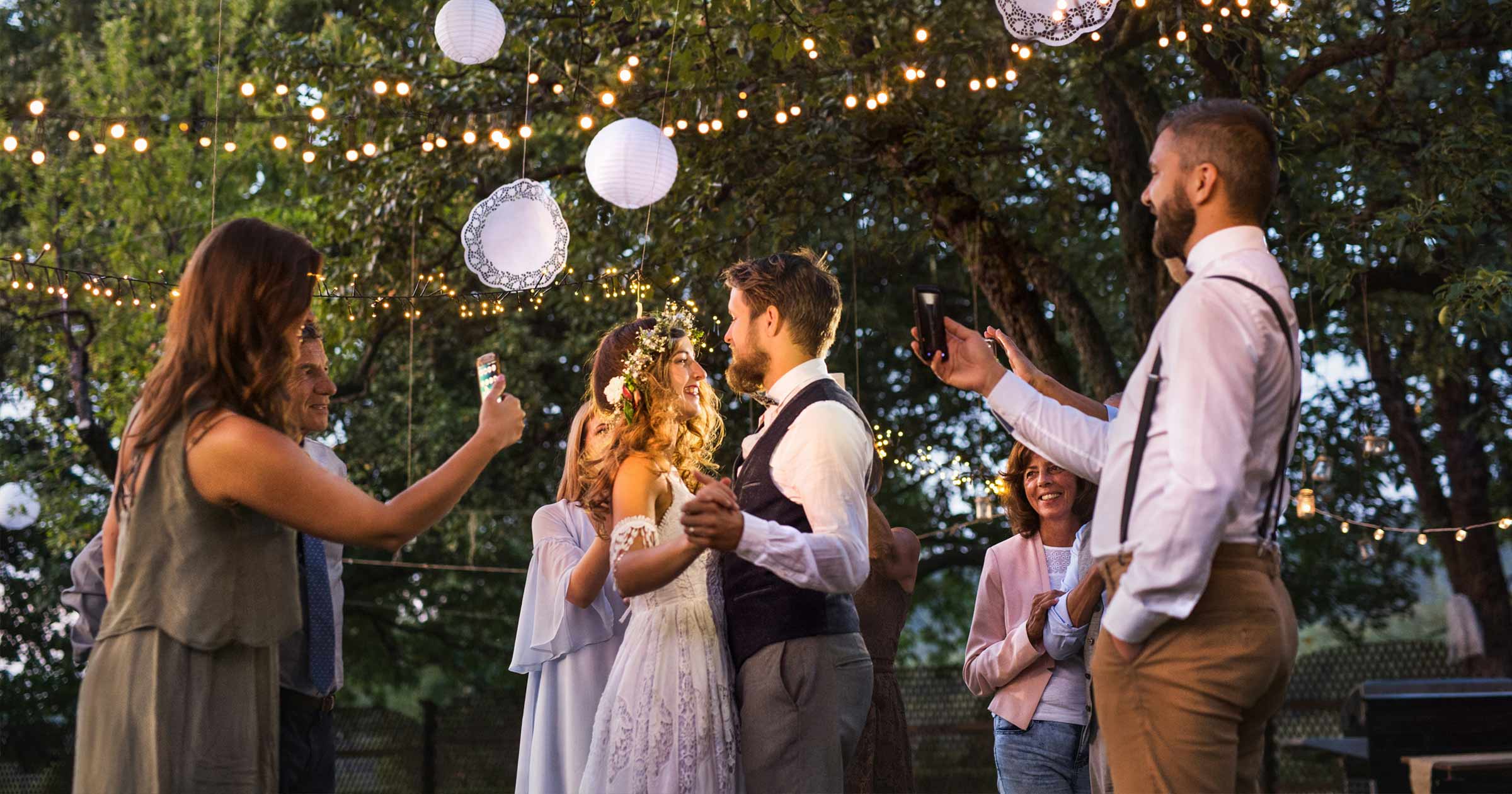
A five o'clock ceremony is an evening wedding. A relaxed morning, no six o'clock alarm. A ceremony in soft light. And then a candlelit dinner, string lights over the tables, dancing in the dark, and a send-off with sparklers that are finally visible.
But five o'clock has one characteristic that's more important than all the others: sunset. In June, the sun sets in New York City three and a half hours after the ceremony begins. In December, it's half an hour before. The same schedule in one month yields perfect sunset portraits, in another, portraits in a pitch-dark parking lot.
That's why a 5 PM schedule can't simply be copied. It has to be checked against the calendar. This guide includes two ready-made, minute-by-minute schedules (with and without a first look), a table of sunsets by city and month, a story about how one night in November takes an entire hour of light from a wedding, what to do after sunset, how candles and string lights affect photos, and why guests should be fed earlier than you'd think. And for photographers and videographers, there's a section at the end about shooting an evening wedding.
Wedding Day Timeline for 5pm Ceremony With First Look
The first look is the moment when the couple first sees each other in their wedding attire before the ceremony. For a 5:00 PM ceremony, it begins at 2:45 PM. After that come couple portraits, the wedding party, and family, and after the ceremony, the couple goes straight to the guests.
| Time | Event | Duration | Photo & Video Notes |
|---|---|---|---|
| 12:00 PM | Hair & makeup underway | — | Stylist's schedule — see Hair & Makeup Planner |
| 1:00 PM | Photo/video team arrives | — | Set up, test audio, scout window light |
| 1:15 PM | Details: dress, rings, shoes, invitation | 30 min | Flat lays, macro shots |
| 1:45 PM | Getting-ready candids (both partners) | 45 min | Second shooter with partner 2 |
| 2:30 PM | Getting dressed | 15 min | Mother / MOH helping |
| 2:45 PM | First look | 15 min | Two angles, keep audio rolling |
| 3:00 PM | Couple portraits | 40 min | |
| 3:40 PM | Wedding party photos | 30 min | |
| 4:10 PM | Family photos | 20 min | Work from a printed family photo list |
| 4:30 PM | Couple out of sight, guests arrive | 30 min | Ceremony B-roll, mic the officiant |
| 5:00 PM | Ceremony | 30 min | Processional, vows, rings, kiss |
| 5:30 PM | Cocktail hour | 60 min | Couple joins guests — candids |
| 6:30 PM | Reception room before guests | 10 min | Tables, cake, decor |
| 6:40 PM | Grand entrance + first dance | 15 min | Two angles minimum |
| 6:55 PM | Dinner | 60 min | Table candids; swap batteries and cards |
| 7:55 PM | Toasts | 20 min | Speaker + couple's reactions |
| 8:15 PM | Parent dances | 10 min | |
| 8:25 PM | Cake cutting | 10 min | |
| 8:35 PM | Open dancing | 75 min | Night portraits outside for 10 min if lit |
| 9:50 PM | Send-off / end of coverage | 15 min | Sparklers, confetti, car |
How to read this schedule:
- 12:00 PM — getting ready is in full swing. The morning is free: you can sleep in, have a leisurely breakfast, and even take a walk.
- 3:00 PM — couple portraits. In summer and early fall, this is nice, soft light. In late fall and winter, this is the last daylight.
- 4:30 PM — the couple hides, guests gather. By this point, all the photos have already been taken.
- 5:30 PM — cocktail hour with guests. That's the perk of a first look: you're at your own celebration, not a photo shoot.
- 8:35 PM — dancing and night portraits. The schedule says it directly: "Night portraits outside for 10 min if lit." More on that below.
- 9:50 PM — send-off. It's late evening, so sparklers look their best.
For a 5 PM ceremony, a first look isn't just a matter of convenience. From November to February, it's the only way to take portraits in daylight.
Wedding Day Timeline 5pm Ceremony No First Look
Without a first look, the couple sees each other for the first time at the altar. Before the ceremony, each partner gets ready separately with their side of the wedding party; family photos, a group photo with the full wedding party, and couple portraits are taken after the ceremony, during cocktail hour.
| Time | Event | Duration | Photo & Video Notes |
|---|---|---|---|
| 12:30 PM | Hair & makeup underway | — | Stylist's schedule — see Hair & Makeup Planner |
| 1:30 PM | Photo/video team arrives | — | Set up, test audio, scout window light |
| 1:45 PM | Details: dress, rings, shoes, invitation | 30 min | Flat lays, macro shots |
| 2:15 PM | Getting-ready candids (both partners) | 45 min | Second shooter with partner 2 |
| 3:00 PM | Getting dressed | 15 min | Mother / MOH helping |
| 3:15 PM | Reveal to bridesmaids / parents | 15 min | Reactions — keep rolling |
| 3:30 PM | Wedding party photos, each side separately | 30 min | Couple must not see each other |
| 4:00 PM | Individual portraits of each partner | 20 min | |
| 4:20 PM | Couple out of sight, guests arrive | 40 min | Ceremony B-roll, mic the officiant |
| 5:00 PM | Ceremony | 30 min | Processional, vows, rings, kiss |
| 5:30 PM | Family photos | 20 min | Right after the recessional — announce it at the ceremony |
| 5:50 PM | Full wedding party photos | 15 min | |
| 6:05 PM | Couple portraits | 40 min | During cocktail hour — check sunset time |
| 6:45 PM | Grand entrance + first dance | 15 min | Two angles minimum |
| 7:00 PM | Dinner | 60 min | Table candids; swap batteries and cards |
| 8:00 PM | Toasts | 20 min | Speaker + couple's reactions |
| 8:20 PM | Parent dances | 10 min | |
| 8:30 PM | Cake cutting | 10 min | |
| 8:40 PM | Open dancing | 75 min | Night portraits outside for 10 min if lit |
| 9:55 PM | Send-off / end of coverage | 15 min | Sparklers, confetti, car |
What to pay attention to:
- 3:15 PM — bridesmaids and parents see the dress for the first time. Instead of a first look, it's the reactions of the people closest to you. Keep the camera rolling.
- 5:30 PM — Family photos immediately after the ceremony. Ask the officiant to announce at the end of the ceremony who should stay for photos, and give a family helper a printed list of the groups. This way, 20 minutes stays 20 instead of 40. A ready-made group list is in our Wedding Family Photo List.
- 6:05 PM — couple portraits. The schedule specifically notes: "check sunset time." In summer, it's golden hour. In fall, it's twilight. In winter, it's darkness.
That's why skipping the first look for a 5 PM ceremony works mainly from May to September. The rest of the year, take a close look at the next table.
Sunset and a 5pm Ceremony
For a 5 PM ceremony, sunset time matters more than for any other ceremony time. Here's how it varies in different cities (calculated for each date):
| City | June 20 | September 19 | October 31 | November 7 | December 19 |
|---|---|---|---|---|---|
| New York | 8:30 PM | 7:00 PM | 5:55 PM | 4:47 PM | 4:31 PM |
| Chicago | 8:29 PM | 6:55 PM | 5:47 PM | 4:39 PM | 4:22 PM |
| Atlanta | 8:51 PM | 7:40 PM | 6:47 PM | 5:41 PM | 5:32 PM |
| Dallas | 8:38 PM | 7:29 PM | 6:38 PM | 5:32 PM | 5:24 PM |
| Phoenix | 7:41 PM | 6:31 PM | 5:38 PM | 5:32 PM | 5:23 PM |
| Los Angeles | 8:07 PM | 6:55 PM | 6:02 PM | 4:56 PM | 4:47 PM |
| Seattle | 9:10 PM | 7:15 PM | 5:55 PM | 4:45 PM | 4:19 PM |
Notice the two columns in the middle—October 31 and November 7. There's only a week between them, but sunset in New York has shifted from 5:55 PM to 4:47 PM. More than an hour.
One Night That Takes Away an Hour of Daylight
It's not nature—it's the clocks. On the first Sunday in November, almost all of America switches from daylight saving time to standard time—"fall back"—and clocks are set back an hour. This has been the case since 2007, when the Energy Policy Act of 2005 went into effect; in 2026, it falls on November 1.
For the average person, this is simply an extra hour of sleep. For a wedding with a ceremony at 5:00 PM, it's the difference between two completely different days. A couple getting married on October 31 in New York still has time for portraits after the ceremony, in the last light. A couple getting married a week later leaves the ceremony in the dark.
There is a curious exception. Arizona (except the Navajo Nation) and Hawaii don't change their clocks at all. So in Phoenix, sunset on October 31 is at 5:38 PM and on November 7 at 5:32 PM: the usual six minutes of seasonal shift, no cliff. If you're planning a destination wedding in Scottsdale or Sedona, you won't encounter this November "trap."
The Same Trap in Europe — One Week Earlier
Outside the US, clocks are changed according to different rules, and it's worth knowing this if you're getting married in Europe or another hemisphere:
| City | October 17 | October 24 | October 31 | November 7 | December 19 |
|---|---|---|---|---|---|
| London | 6:05 PM | 5:51 PM | 4:37 PM | 4:25 PM | 3:53 PM |
| Paris | 6:59 PM | 6:46 PM | 5:34 PM | 5:23 PM | 4:55 PM |
| Berlin | 6:09 PM | 5:54 PM | 4:40 PM | 4:28 PM | 3:53 PM |
| Rome | 6:27 PM | 6:16 PM | 5:07 PM | 4:59 PM | 4:41 PM |
| Madrid | 7:33 PM | 7:23 PM | 6:14 PM | 6:06 PM | 5:50 PM |
| Bucharest | 6:30 PM | 6:18 PM | 5:08 PM | 4:59 PM | 4:38 PM |
| Kyiv | 6:04 PM | 5:50 PM | 4:37 PM | 4:26 PM | 3:55 PM |
| Toronto | 6:32 PM | 6:21 PM | 6:11 PM | 5:02 PM | 4:43 PM |
| Sydney | 7:09 PM | 7:15 PM | 7:21 PM | 7:28 PM | 8:04 PM |
| Melbourne | 7:38 PM | 7:45 PM | 7:53 PM | 8:01 PM | 8:41 PM |
| Brasília | 6:10 PM | 6:12 PM | 6:15 PM | 6:18 PM | 6:40 PM |
- Europe changes its clocks a week ahead of America—on the last Sunday in October (in 2026, that's October 25). So the "cliff" in London, Paris, or Berlin comes between October 24 and 31, not between October 31 and November 7. In London, sunset shifts from 5:51 PM to 4:37 PM during this week.
- Toronto follows the American clock change, so the cliff there comes on the first Sunday in November, as in New York.
- Australia goes the other way. It's spring there in October, and on the first Sunday in October, they move their clocks forward. The evenings become longer: in Melbourne, the sun sets at almost 9 PM in December, and after a wedding at 5 PM, there are more than three hours of daylight left in the evening.
- Brazil stopped changing its clocks in 2019, and Brasília is close to the equator anyway. Sunset there is around 6 PM year-round—for a 5 PM wedding, that means an almost guaranteed hour of daylight after the ceremony.
What to Do in Each Season
- Summer (June–August). Sunset is around 8–9 PM. There's light both before and after the ceremony: portraits without a first look at 6:05 PM are in good light, and the golden hour falls during dinner—you can step out for 15 minutes between dinner and toasts. A first look is optional.
- Early Fall (September–early October). Sunset is around 7 PM. There's still time for portraits after the ceremony, but no margin: family photos have to stay within 20 minutes.
- Late October. Sunset is around 6:00 PM—almost immediately after the ceremony. Without a first look, portraits happen only at the very start of cocktail hour, and only for 15–20 minutes.
- November–February. The sun sets before the ceremony. Without a first look, daylight portraits won't happen. Options include a first look at 2:45–3:00 PM, portraits with the photographer's lighting equipment, or beautiful venue interiors.
Check the sunset time for your date and venue—our timeline template has a dedicated line for this.
After Dark: Blue Hour and Night Portraits
Sunset isn't the end of the shoot, but the beginning of another, very beautiful part.
Immediately after the sun has set, civil twilight sets in—the time when the sun is still just below the horizon and the sky remains bright. In New York, it lasts about half an hour. Photographers call this period the blue hour: the sky turns a deep blue, the venue's lights are already on, and everything together looks almost cinematic. These are the shortest and most spectacular 15–20 minutes of the evening.
When it gets completely dark, the night portraits begin. The schedule allocates 10 minutes for these during the dancing—"if lit," meaning if the venue has lighting. What you need for this:
- String lights, lanterns, a lit-up façade—anything that creates a beautiful backdrop. A couple against a glowing tent looks magical; a couple against a black void doesn't.
- The photographer's off-camera flash. It illuminates the faces, while the background remains dark and atmospheric. Ask at the meeting if the photographer uses off-camera lighting.
- Ten minutes, not forty. The guests are in the middle of the evening, and the couple shouldn't disappear for long. Ten minutes outside yields 15–20 great shots.
And, of course, the send-off. With a 5 PM ceremony, it happens around 10:00 PM, in full darkness, and the sparklers finally look like they do in wedding photos on Pinterest. At a summer wedding with a 3 PM ceremony, you won't get that effect.
Candlelight, String Lights, and Skin Tones
An evening wedding has its own palette. And to ensure it looks beautiful in photos and videos, it's helpful to understand one thing about the physics of light.
Light has a color, measured in kelvins—it's called color temperature. A candle flame is around 1,800–1,900 K, almost orange. A standard incandescent bulb or warm fairy lights are around 2,700 K, warm yellow. Daylight is 5,500 K and above, neutral white or bluish. Our eyes adjust to all this imperceptibly. A camera doesn't.
This leads to several practical conclusions:
- Don't mix warm and cool light. If there are candles and fairy lights in the room and cool white LEDs over the dance floor, faces in different parts of the room will come out different colors, and it's almost impossible to correct this in post-production. Ask the venue to turn off the cool light or replace it with warm light.
- Ask about dimmers. Many venues turn the lights on full blast by default. A slightly dimmed, warm light enhances the skin tone and ambiance.
- You can never have too many candles. Candles on tables provide warm illumination from below and beautiful highlights in the background. Just make sure the venue allows open flames.
- Talk to the DJ about colored lighting. Red and purple spotlights on the dance floor are striking in person, but in photos they turn faces into monochromatic blurs. It's best to turn off the colored lighting during the first dance and toasts.
Feeding Everyone: Mind the Long Gap Before Dinner
There's a detail often overlooked at evening weddings: dinner on both schedules begins around 7:00 PM. Guests who had lunch at noon have gone seven hours without eating by then. And the couple has gone even longer: getting ready starts around noon, and the bride might not have even ten minutes to eat all day.
Hunger affects mood more than you might think. A study by psychologist Brad Bushman of Ohio State University and his colleagues, published in PNAS, involved 107 married couples. For three weeks, participants measured their blood sugar levels every evening and then—get this—stuck pins into a voodoo doll representing their spouse: from zero to 51, depending on how angry they were. Those with the lowest evening blood sugar levels stuck twice as many pins as those with the highest. The study shows a connection, not a cause, but anyone who's ever seen hungry guests at a wedding will recognize its findings.
What to do about it:
- Heavy appetizers at cocktail hour. Not just token canapés, but something substantial—mini burgers, tacos, a cheese plate. At a 5 PM wedding, cocktail hour stands in for an early dinner.
- Ask the caterer to bring the couple an appetizer plate—right where portraits or family photos are taken. You'll miss cocktail hour, but you won't go hungry.
- Eat real food during the day. Not just coffee and a few grapes. A hearty lunch around noon, before you start getting ready, will ensure you'll have the energy to dance until 10:00.
- Don't delay serving dinner. If the first dance and welcome speeches are delayed, have the servers start bringing out food in parallel.
Day of Wedding Timeline 5pm Ceremony: Getting Ready
The morning of a 5 PM wedding is the most relaxed of all. The bride gets dressed at 2:30 PM with a first look and at 3:00 PM without one, leaving you free to dedicate the entire morning to yourself.
- Hair and makeup wrap up 30 minutes before the dress. Ask the stylists how much time each person needs, and count backward. The more people in the wedding party, the earlier the start.
- The photographer and videographer arrive about an hour and a half before the dress: at 1:00 PM with a first look and at 1:30 PM without one. First the details—dress, rings, shoes, invitations—then both partners getting ready.
- Make use of your free morning. American couples often have brunch with the bridesmaids or go for a short walk with their parents. If you want this to be included in the film, discuss it with the videographer—sometimes it's worth adding an extra hour of filming for such a morning.
- Check your vendors' hours. The evening ends around 10:00 PM, and if the photographer and videographer start at 1:00 PM, that's 9 hours of coverage. Decide in advance how many hours you need or negotiate overtime.
- Consider guests with children. A wedding that runs until 10:00 PM is late for small children. If there are many families on the guest list, a kids' room with a babysitter or a separate entertainment area is a good idea.
5pm vs Earlier Ceremonies
| 3pm | 4pm | 5pm | |
|---|---|---|---|
| Morning | Early, getting ready from ~10:00 | Mid-morning, from ~11:00 | Relaxed, from ~12:00 |
| Portraits without a first look | ~4:05 PM, soft daylight | ~5:05 PM, warm light in summer | ~6:05 PM, golden hour in summer, darkness in winter |
| Dinner | ~5:00 PM | ~6:00 PM | ~7:00 PM |
| Send-off | ~8:10 PM | ~9:10 PM | ~9:50 PM |
| Evening atmosphere | Daytime celebration | Day turning into evening | Candles, string lights, dancing in the dark |
Also check out the schedules for the 3 PM ceremony—more daylight and an early evening—and the 4 PM ceremony for details on how to build in a buffer and how long each block of the day actually lasts.
For Photographers and Videographers: Shooting a 5pm Wedding
An evening wedding means half the day in the dark. A few things to consider in advance:
- Fast lenses and high ISO. For dancing and toasts by candlelight, you'll need f/1.4–f/2 lenses and a camera that handles ISO 6400–12800 cleanly. Check your camera's noise levels beforehand, not at the wedding.
- Mixed lighting and white balance. Candles, incandescent bulbs, LEDs, and colored spotlights produce completely different color temperatures. Set the white balance manually based on the main light source, not on "auto." Otherwise, skin tones will "drift" from frame to frame, making editing a pain.
- Your own lighting. A small LED panel on a video camera or an off-camera flash can save toasts and the first dance when the room is lit only by fairy lights. Agree with the venue and DJ in advance on where to set it up.
- Audio in a loud room. By 10 PM, the room is loud. Record toasts from the DJ's board, plus a backup source near the speaker.
- Send-off with sparklers. Sparklers throw a lot of light into the frame, but faces between them can fall into darkness. Set exposure in advance on a test sparkler and ask guests to hold them higher.
- Batteries and cards. Nine hours of shooting is a long time. Dinner is the only window to safely change batteries and cards.
And finally, about what happens to evening footage after editing. Dark scenes suffer the most from compression: when a film is uploaded to YouTube or Vimeo or sent via messenger, the smooth shadows in the candlelit hall turn into "steps" and square spots, and warm faces turn into mush. During the day, it's barely noticeable, but in the evening, it eats up the very reason you were shooting at f/1.4. Therefore, it's especially important to deliver an evening film to the couple in its original quality: in OurStoria client galleries, the film is streamed in 4K and downloaded without recompression, and the photos sit right next to it, at the same link. Start a 7-day Free Pro Trial—no credit card required.
Wedding Day Timeline 5pm Ceremony Template
Both schedules are from our free wedding timeline template. It includes 11 options in total: by wedding style and for 2, 3, 4, and 5 PM ceremonies—with or without a first look—plus a hair and makeup planner, a blank template, and a checklist for the coordinator with a separate line for sunset time. The template is available in printable PDF and Word formats.
Our wedding shot list is also useful: 145 shots for the photographer and videographer, including sunset shots and night drone footage.
The Night Is Part of the Story
A daytime wedding is remembered for its light. An evening wedding is remembered for its lights. Candles on the tables, string lights overhead, sparklers flashing in the dark, friends' faces illuminated by warm light. Years from now, these very shots will look like stills from a movie.
You just need to coordinate with the sun in advance. Look at the calendar, check the sunset—and let your evening begin on time.
Related articles:
- Wedding Planning Checklist: A Month-by-Month Timeline (Free PDF)
- Wedding Day Timeline 4pm Ceremony: Sample Schedules With & Without a First Look
- Wedding Day Timeline 3pm Ceremony: With and Without a First Look
- Wedding Family Photo List: Every Grouping, in Order
- Light and Perception: How Lighting Conditions at the Wedding Affect Viewer Perception of Film Quality
- The Timeline Effect: How Wedding Day Schedule Design Determines Both the Experience and the Film