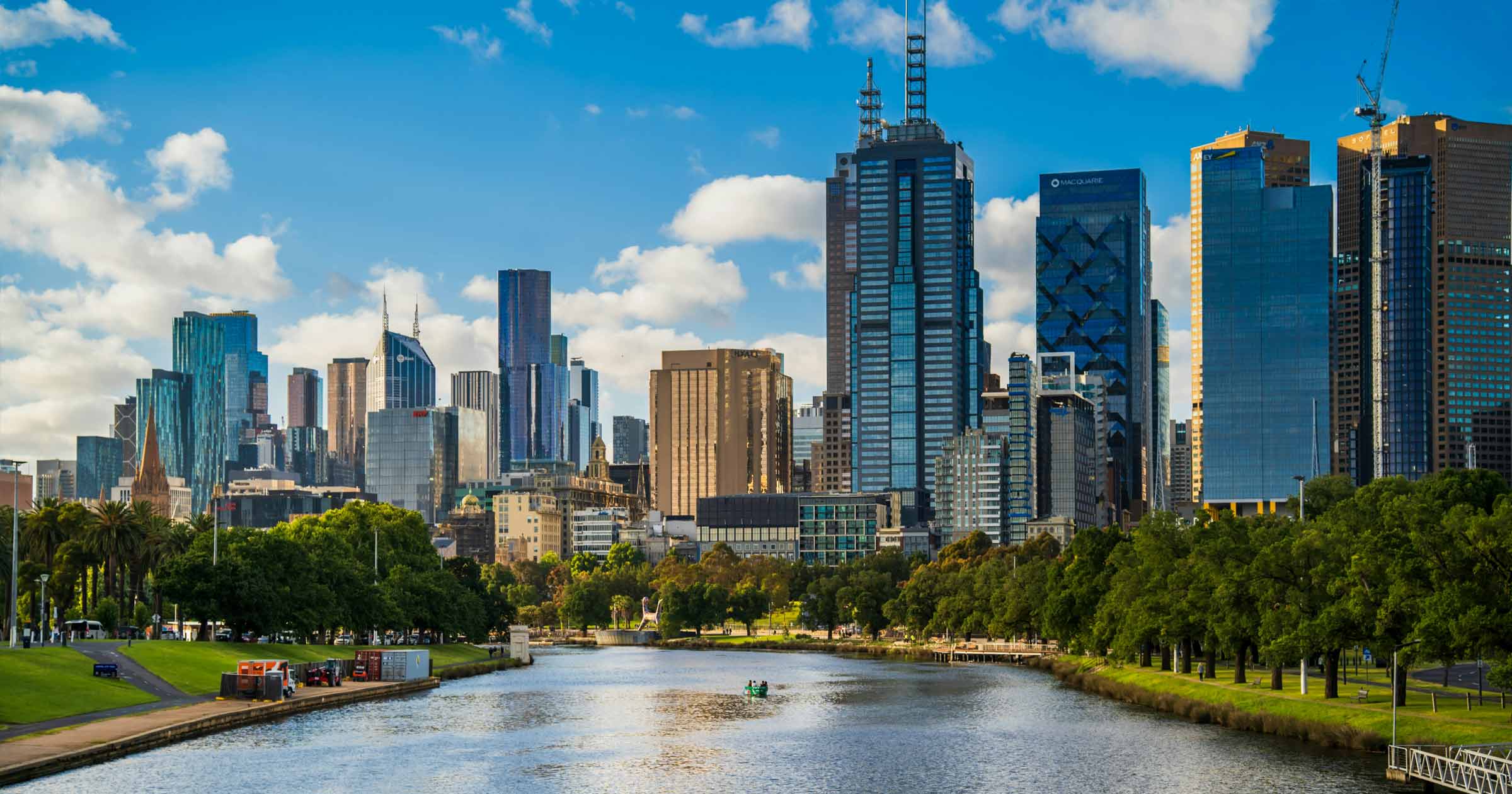
There's a joke in Melbourne that locals repeat to visitors with barely concealed pride: here you can experience four seasons in a single day. In the morning, it's sunny and 28°C (82°F). At lunchtime, a northerly wind blows, dry and hot as a hairdryer. At three, a cold front sweeps in from the ocean. At five, it's rain, which wasn't in any forecast when the couple was choosing the date.
For the guests, it's a joke. For the videographer, it's a working day.
A ceremony in Fitzroy Gardens. Portraits under the elm trees. A reception at a winery in the Yarra Valley, an hour away. Light over the vineyards that will last exactly twenty minutes, if it lasts. And in between all this, three different agencies, each with their own permits, and one of them demands more for a drone than the national aviation regulator itself. This guide is for videographers shooting weddings in and around Melbourne: locals who need everything in one place, and visitors from Sydney, Adelaide, or overseas. It's a collection of information scattered across websites of the city, parks, the Botanic Gardens, CASA, and the Bureau of Meteorology: when a permit is needed and how much it costs, why a drone in a Victorian state park is a whole other story, what the state law says about recording speeches, what to ask a winery, how to plan a day when the weather changes every two hours, and how to deliver the footage to a family living on the other side of the world.
Amounts are in Australian dollars. Rules and fees are subject to change; we provide links to agencies as we go along—check them before each shoot and before your 2027 season.
Do You Need a Permit to Film a Wedding in Melbourne?
First, the short answer. In city parks with a handheld camera—usually no. In the Botanic Gardens—yes, always. In state parks—yes, and you have to apply two months in advance. With a drone—yes, anywhere they're even allowed.
Now the long answer. Melbourne isn't divided between its various owners as confusingly as Sydney Harbour (more on that in our Sydney guide), but there are pitfalls. The most important thing is not to confuse city parks with state parks. They look like the same lawns and eucalyptus trees, but the rules are vastly different.
| Where | Who's the owner | Wedding photography permit | What to watch for |
|---|---|---|---|
| Fitzroy, Treasury, Carlton Gardens, Flagstaff, Kings Domain | City of Melbourne | Typically not required unless you book a venue | Drone - only with a filming permit |
| Royal Botanic Gardens, Melbourne and Cranbourne | Royal Botanic Gardens Victoria | Always required, $187 for 3 hours (Melbourne) | Drones prohibited |
| Werribee Park, Dandenong Ranges, Point Nepean, etc. | Parks Victoria | Required, application at least 8 weeks in advance | Drone - Full CASA package, 20 working days |
| Mornington Peninsula Beaches and Foreshore | Mornington Peninsula Shire | Ceremony permit, $304-435 per day | Confetti and marquees not allowed |
| Federation Square, University of Melbourne Campus | Own managers | Required | Separate applications |
Before promising a location to a couple, find out whose land it is. This is especially true if the couple found "the perfect spot" on someone else's Instagram.
When Is a Permit Required?
That's the name of the City of Melbourne wedding page, and the answer is handy. For a ceremony in a city park, a permit is required if you're booking a specific venue, bringing catering and cooking equipment, or need access for cars. Regarding filming, the city states almost verbatim: a permit is generally not required; photography in city parks and gardens is free, unless you need a reserved location.
The page is specifically about photography, not video. For a videographer with a camera in hand and a lav mic on the groom, it's reasonable to think the same way—you're no different from a photographer in terms of the number of people and equipment. But if in doubt (for example, if you're traveling with a slider, lights, and a crew), write to the city's filming department—an email response is worth more than a studio blog.
The line is where "real filming" begins for urban Melbourne. The city considers filming to be low-impact as long as there are no more than six people, one camera, one tripod, handheld sound, and the sidewalks and roads are clear. As soon as there are more people or you block a path, a full filming permit comes into effect. Here's the cost, though (City of Melbourne rates from 1 July 2026):
| What | Amount |
|---|---|
| Application | $70 |
| Base fee (per location, per day, excluding GST) | $641.45 |
| Hour of filming | $353.30 |
| Up to 4 hours, per day | $847.70 |
| More than 4 hours, per day | $1,696.50 |
| Conservatory at Fitzroy Gardens, 1.5 hours / 3 hours (outside public opening hours only) | $638.60 / $1,278.30 |
| Submission deadline | 5 business days (7 if traffic management is needed) |
These figures seem daunting, but they almost never apply to a typical wedding with just one videographer. This is the rate for a situation where you're turning your wedding walk into a film set.
Two city rules regarding the photo. First: confetti and rice are prohibited in city parks, including biodegradable confetti. If the couple is dreaming of a confetti exit at Fitzroy Gardens, they'll have to come up with a different photo—for example, with streamers or bubbles (check with the city about what exactly is allowed, along with other questions). Second: marquees are prohibited in four parks with historic status—Carlton Gardens, Fitzroy Gardens, Kings Domain, and Queen Victoria Gardens. If the couple's rain plan is a marquee, check where exactly.
And one more thing worth reading aloud to the couple: the city does not refund fees in the event of rain or heat. In Melbourne, this is not a formality. More on that in the weather section.
Royal Botanic Gardens Victoria
The Botanic Gardens in Melbourne is both the strictest and the simplest place. Strict because a permit is required for any professional photography, and weddings are specifically mentioned on the list. Simple because the rules are summarized in one line: $187 with GST for a three-hour window at Melbourne Gardens. Submit the form, receive an invoice, and after payment, the permit arrives. Cranbourne Gardens, an hour to the southeast, requires its own form.
Three things to know before a couple buys a permit:
- Drones are prohibited in the garden. Not "with prior approval," but prohibited. Don't promise anyone aerial photography over the garden's lakes.
- Hours. The garden's website lists the shooting hours: at Melbourne Gardens, 9:00 AM to 5:30 PM Mondays and Tuesdays, and 9:00 AM to 3:00 PM Wednesdays through Sundays. Check with the garden to see if these hours apply to your wedding permit. If so, your Saturday garden walk should end by three o'clock—and in summer, three o'clock in the afternoon is the harshest time of daylight over the lawns.
- Who does the permit cover? The page mentions professional photo and video shoots together, but the permit is usually purchased by the couple or the photographer. Check if it covers you, and keep the confirmation in your phone.
Wedding Ceremony and Wedding Photography and Filming Permit
This is the literal title of the Parks Victoria section, the agency that manages the state's parks. And it's the first place in the guide where a simple wedding shoot requires real planning.
A permit is required for both the ceremony and for wedding photography and videography on any Parks Victoria property. An application with all documents must be submitted at least eight weeks in advance, and this is not a request: the online form simply doesn't accept closer dates. You can't save a draft of the form, so gather everything in advance. The agency recommends indicating a second, backup date.
The price on the page is listed as "Varies": it depends on the activity, location, and infrastructure. However, the refund policy is clearly stated:
| When canceled | Refund amount |
|---|---|
| 30+ days in advance | 100% |
| 8-30 days in advance | 85% |
| 4-7 days in advance | 50% |
| 0-3 days in advance | nothing |
Another detail for Melbourne spring: Parks Victoria reserves the right to cancel an event in extreme weather for the safety of the public.
Photography rules here are stricter than in the city: Confetti, rice, petals, and balloon releases are prohibited. Nothing can be attached to trees or buildings. Music is permitted depending on the location and only if you specify it in your application. If the wedding has more than 100 guests, including the wedding band, $20 million in liability insurance is required.
Each popular park has its own specific features, which a videographer should be aware of before visiting:
- Werribee Park. Photo shoots in the gardens are no more than two hours. Ceremonies are two and a half hours, including preparation and cleanup. The steps and arches of the mansion are closed during opening hours. Cars, including wedding cars, are not allowed in the gardens, meaning the shot of a couple getting out of a vintage Rolls-Royce by the fountain is out of the question.
- Dandenong Ranges Gardens. Electricity is available only at Serenity Point and Camellia Garden. Glassware for toasting is prohibited. Bring battery-powered lights and recorders, and don't expect glasses in the frame.
- Point Nepean National Park. The reception at the Commanding Officer's House is open only during the day, until 6:00 PM. This means you'll be able to capture the evening light over the strait, but not the first dance at dusk.
Werribee, Dandenong Ranges, and Point Nepean have separate application forms. Please ensure the couple has submitted the correct one.
Beaches: Mornington Peninsula and the Bay
Beaches are a separate topic, as each municipality has its own rules.
Mornington Peninsula Shire is the most straightforward. A ceremony permit for parks, beaches, and the Shire foreshore is valid for up to three hours and costs $304 per day during the low season (May–September) and $435 during the high season (October–April). A minimum of four weeks in advance is recommended. Portable music and up to 20 chairs are permitted. Confetti and marquees are prohibited. And a detail that anyone who has set up stands on the sand will appreciate: umbrellas are only allowed with weights, not stakes—the Shire protects coastal vegetation. This means that both lights and microphone stands require sandbags, not stakes. Rain is non-refundable, but the Shire offers its halls as a backup.
Brighton and the bathing huts. The colorful huts on Dendy Street Beach are one of Melbourne's most recognizable images. But the huts themselves are private: their owners hold a municipal license and are not allowed to rent them out or use them for advertising. A couple with a hut in the background is a normal shot. A couple entering someone else's hut or leaning against its door for "that special" shot requires a conversation with the owner. Commercial photography in public spaces in Bayside requires a municipal permit; check with Bayside City Council to see how they view a wedding stroll with a videographer.
Can You Fly a Drone at a Wedding in Melbourne?
Yes, it's possible. But not where the couple typically wants it.
CASA sets national drone regulations in Australia, and on paper they're relatively lenient for wedding videographers—in the air, they're not: CASA explicitly lists weddings among "populous areas," where flying is prohibited under standard conditions. Drones up to 2 kg can be flown without a pilot's license: all you need is a free online operator accreditation (test, valid for three years), registration of each drone you fly, and compliance with standard conditions—no higher than 120 meters, line of sight, no closer than 30 meters to people, and never over them. We discussed these conditions in detail in our Sydney guide, and the US regulations are in our article on wedding aerial photography under FAA regulations. As a reminder, a US license is of no use in Australia. Melbourne's unique feature is different. State parks require more than CASA. Parks Victoria states explicitly: a permit is required for any drone photography, and only a fully licensed pilot and CASA-certified operator can fly drones—"including drones lighter than 2 kg." This means that the same lightweight drone that you can safely fly at a private winery under national regulations won't fly in a Victorian park without a pilot license (RePL) and operator certificate (ReOC).
A complete list of what Parks Victoria requires in a drone application:
| Document | What is this |
|---|---|
| RePL per pilot | CASA Pilot License |
| ReOC per pilot | CASA Operator Certificate |
| Certificate of Currency | $20 million in insurance with aviation coverage; the ReOC company must match the insured company, and the drone make and model must be specified. |
| Aircraft Operations Map | Map: takeoff and landing points, route, exclusion zone, observer and sign locations |
| Job Safety Analysis | Risks and how you manage them |
| Deadline | Minimum 20 business days after receiving all documents |
Twenty working days is four weeks. Combined with the eight weeks required for the wedding permit itself, it means that drone use in the park must be arranged before the couple even sends out invitations. Recreational drones are prohibited entirely on Parks Victoria lands, so "someone with a small drone" is also not an option.
Other hosts:
- Botanic Garden — drones are prohibited.
- City of Melbourne — a filming permit is required with a drone, even if you didn't need one without one. The city has separate regulations for drones, and the Victoria Police filming notification form includes a separate category for drones with a "maximum altitude" field. Keep in mind that flying in the city requires an application, deadlines, and fees.
- Private Venues — wineries, estates, private homes. CASA regulations apply here, plus written consent from the owner. This is a realistic location for aerial wedding photography near Melbourne.
Melbourne's Airspace: Four Towers Around One City
Melbourne's second unique feature is its airports. There's not just one controlled airfield around the city, but four: Melbourne Airport in Tullamarine, Essendon Fields, Moorabbin, and Avalon on the road to Geelong. Air traffic control at all four is handled by Airservices Australia. The tower in Essendon, according to Airservices' heritage report, was built in 1954 and is considered the oldest operating control tower in the country. For over sixty years, it has been monitoring the skies over the northwestern suburbs—and your drone will have to take that into account.
CASA's rule for drones over 250 grams is to stay more than 5.5 km from a controlled airfield. For weddings, this means specific things. A private residence or restaurant in Essendon and Strathmore may be within the Essendon Fields zone. The sites to the northwest, on the road to Tullamarine, are near the state's main airport. The southeastern suburbs near the bay are near Moorabbin. Sites around Werribee and Geelong are worth checking for proximity to Avalon.
Drones up to 250g can fly up to 45 meters within this zone, but not on the aircraft approach path or over the airport grounds. For a wedding shot "looking down on guests by the tent," 45 meters is often sufficient—but the 30-meter distance rule for lightweight drones still applies.
Don't rely on Google Maps. Open one of the apps CASA has tested and recommends (OpenSky by Wing is one of them) and check the takeoff point, not the site address. A winery may be outside the zone, but the far edge of its parking lot, convenient for takeoff, may be inside.
Temporary Drone Flying Restrictions for Melbourne
That was the title of a CASA news item that Melbourne pilots remembered. In early March 2024, when the ASEAN summit was taking place in the city, temporary restrictions were imposed over part of Melbourne for a week: only approved operators were allowed to fly in the restricted area, and recreational drones were not permitted.
Weddings aren't cancelled, but they can disrupt your aerial photography plans. Major events—summits, football season finals, the Albert Park Grand Prix—sometimes have temporary restricted areas. So, check the CASA app not a month in advance, but the morning of the wedding. If a restricted area appears, the drone remains in its case, and the couple must have a shot without it.
Is It Legal to Record a Conversation in Victoria?
In Victoria, conversation recording is regulated by the Surveillance Devices Act 1999. For videographers, its meaning can be summarized as follows: you cannot record a private conversation in which you are not participating without the consent of those involved. The law defines a private conversation as one in which the circumstances indicate that the participants want only themselves to hear it. The current text of the law is at legislation.vic.gov.au (Surveillance Devices Act 1999).
Consider this in conjunction with what happens at a wedding, and the picture becomes more reassuring.
Vows, a father's speech, a bridesmaid's toast—these are not private conversations. A person takes up a microphone in front of a hundred guests precisely so that everyone can hear them. That's why you were hired.
But a lavalier microphone between events is a different matter. The groom's microphone continues recording while he walks away with his father to the car or whispers to the bride in the corner of the garden, thinking no one can hear them. This is exactly what the law defines as a private conversation, and you are not a participant in it. Something accidentally recorded is no reason to include it in a film.
The law specifically prohibits the transmission and publication of recordings of private conversations. This means that even something you accidentally recorded won't end up in a movie, on Instagram, or in "funny takes" for the couple's friends.
Victoria's law is more lenient with images than with sound: the ban on covert filming of private activity doesn't apply to anything that happens outside buildings. But "legal" doesn't mean "appropriate." A grandmother crying on a bench away from guests is a shot to ask her about first.
Three working rules:
- Audio recording is in the contract. Warn everyone you're using the microphone on: the groom, the celebrant, and anyone giving a speech.
- Lavalier microphone between events is turned off or marked. If turning it off is inconvenient, mark the beginning and end of the "public" portions on the recorder and don't record anything beyond that.
- Anything questionable is not published. Neither in the film nor on social media.
We are not lawyers, and this is not legal advice. If you have an unusual situation—for example, you're filming the preparations in a house where there are strangers—check the law or consult a lawyer.
How to record the audio itself—how many sources, where to place the recorder, how to protect against radio failure—is covered in detail in the article on recording audio at a wedding. For Melbourne, we'll add wind: in a northerly wind and with changing weather, lavalier microphones without a fur windshield turn vows into a roar.
Speeches are both editing and delivery. At a winery, a reception lasts five to six hours, and there are usually five or six speeches, while at a Greek or Italian wedding, there are more. A full reception film is long, and no one will watch it straight through. So, in Premiere Pro or DaVinci Resolve, set markers for the beginning of each speech, first dance, and cake. If you deliver your film through OurStoria's client gallery, these markers can be uploaded as chapters—CSV from Premiere or EDL from Resolve—and the family can skip to their uncle's toast with one click, rather than spend an hour scrolling blindly. The article about wedding film chapters explains how to prepare chapters.
Wineries in the Yarra Valley and on the Peninsula
Half of the Melbourne weddings filmed by videographers don't take place in Melbourne. The Yarra Valley is about an hour's drive northeast. The Mornington Peninsula wineries are just over an hour south. These are private venues, and each has its own rules. Wineries almost never post public rules for videographers, so everything is decided during the tour and through correspondence with the coordinator.
Here's what you should ask in advance—and why:
| Question | Why | Good Answer |
|---|---|---|
| Is a drone allowed, and if so, where should I take off? | A private venue is the only viable location for aerial photography; a takeoff point outside of 30 meters from guests is required. | "Yes, from the field behind the cellar, after the ceremony"—in writing. |
| Are there any neighboring plots, and whose are they? | A view of the vineyard often means flying over someone else's land. | The venue knows the neighbors and their stance on drones. |
| Where can I stand during the ceremony? | Many venues have rules for the celebrant and vendors | Camera layout |
| Can I connect to the DJ's and celebrant's sound? | Reception speeches are often made through the venue's system | An output from the mixer, checked during the site visit |
| Where is the backup venue in the rain, and what kind of lighting is there? | In Melbourne, a Plan B isn't a theory | A room with windows, not a basement with lamps |
| What time is the venue open until? | Late summer - sunset at almost 9:00 PM | Sunset view within the rental time |
| Where do you eat and recharge? | Five to six hours of reception time | Vendor table and power outlet |
Light in the vineyards. Rows of vines line the ground, and at sunset they act as guides in the frame. But the slopes in the Yarra Valley and Peninsula quickly fade into shadow: the sun still illuminates the top of the hill, while the couple below stands in the blue light. Go uphill, not downhill.
Lenses. Sweeping vineyard vistas and cramped cellars are two different tasks in one day. What to pack for both is in the article on lenses for wedding videography.
Why Melbourne Can Have 4 Seasons in One Day
That's the title of an article from the Australian Bureau of Meteorology, and the explanation is simple. Melbourne lies between the hot, dry interior of the continent to the north and the cold Southern Ocean to the south—and lies in a belt of westerly winds that quickly push weather systems through the city. First, a warm northerly wind and clear skies arrive. Then a cold front rolls in from the ocean—and, as the Bureau writes, everything can change in a matter of minutes: the temperature drops, clouds arrive, followed by rain, sometimes a thunderstorm. Fronts move quickly. This gives the feeling that the weather changes, like the light in a room.
For a wedding, this means one thing: a weekly forecast is a mood, not a plan. Decisions are made on the morning of the shoot, and a plan B is prepared in advance.
How this changes the work:
- Northerly wind before the front. Hot, dry, gusty. The veil flies away, the bride's hair gets in her face, and wind protection on the microphones is a must. Cameras get hot in the sun.
- Weather Change. If the forecast calls for a "cool change" in the afternoon, move the couple's portraits earlier. It's better to photograph a walk at 2:00 PM in bright light than not to photograph it at all.
- Wind off the water. On the beaches of the Mornington Peninsula and by the bay, it is stronger than in a garden in the city center. Use weights for stands, and install lighting with a safety margin.
- Rain Fees. The City and Shire do not refund fees for bad weather, and Parks Victoria refunds based on the cancellation date. Discuss with the couple when and who decides to move indoors. The earlier the decision, the more money you'll save.
- Light After a Front. After a cold front, the sky often becomes clear and transparent, and the clouds break up. Sometimes the best sunset of the day is right after rain. Don't pack your camera until the sun has set.
Golden Hour in Melbourne, Month by Month
Melbourne is south of Sydney, and this is noticeable in the light. Summer days are longer and sunsets are later, while winter days are shorter. Victoria switches to daylight saving time on the first Sunday in October and returns on the first Sunday in April.
| Date | Sunset (approximately) | What does this mean |
|---|---|---|
| Late December – early January | around 8:40–8:45 PM | Golden hour – during dinner; allow for the couple's departure from the reception |
| Late January | around 8:35 PM | Ditto; heat and northerly winds |
| Mid-March | around 7:40 PM | Cozy timing: sunset after the ceremony at 4:00–4:30 PM |
| Mid-April (after the time change) | around 5:55 PM | Sunset moves an hour earlier – recalculate the timing |
| Late June | around 5:05 PM | Short daylight hours; ceremony at 3:00 PM – and the walk begins at sunset |
| Mid-September | around 6:10 PM | Spring, windy |
| Mid-November | around 8:10 PM | Wedding season, changeable weather |
Times are our estimates for central Melbourne; please check with your wedding date and location.
In Melbourne's summer, civil twilight—the time when it's still light without streetlights—lasts until 9:15 PM. This is a gift for a sparkler exit: at 9:00 PM, the sky is still blue, not black. And this is a scheduling trap: if the venue is open until 10:00 PM, and the photographer wants a "sunset walk" at 8:30 PM, someone has to tell the DJ that the first dance is moving up.
In winter, it's the opposite. In June, the sun sets around 5:00 PM, and a 3:00 PM ceremony is a sunset in the middle of the walk. Fast lenses and your own lighting are a must, not an option.
Getting Around With Gear
Trams in central Melbourne are convenient for people, but inconvenient for suitcases. If you're shooting the ceremony at Treasury Gardens and portraits on Hosier Lane, the equipment will travel in the car, and you'll walk.
Parking at the city gardens on Saturday is a lottery, as is parking at the Botanic Gardens. Allow plenty of time and bring a cart.
Drive to the wineries: About an hour to the Yarra Valley and over an hour to the Mornington Peninsula—that's our estimate. On Friday evenings, the drive out of the city is longer. If the ceremony is in the city and the reception is at a winery, arrange with the couple in advance: you'll arrive before the guests to secure the venue before it fills up.
Holidays: The first Tuesday in November is the Melbourne Cup race day, a public holiday in Victoria. Venues, hotels, and roads are especially busy on this day. If the wedding is this week, check the rental companies' schedules and travel times.
For those visiting. Wedding season runs from spring to fall, so it's best to book lighting, a second camera, or a drone with a local rental agency in advance. If you're flying from Sydney, compare state regulations with our Sydney guide. If a couple is flying to Bali after Melbourne to celebrate, here's the Bali guide, and if you're also filming in California, here's the Los Angeles guide.
Let's do the math to find out how much permits cost for a typical day in Melbourne: portraits in the city, a stroll through the Botanic Gardens, a ceremony on a Peninsula beach (our estimate, rates from agency websites):
| What | Amount |
|---|---|
| Portraits at Fitzroy or Treasury Gardens, handheld camera | $0 |
| Melbourne Botanic Gardens, 3 hours | $187 |
| Mornington Peninsula Beach Ceremony, high season | $435 |
| Total | ~$622 |
Add a drone to a state park, and you'll need a Parks Victoria fee, $20 million in insurance, and a pilot's license. Include permits as a separate line item in your proposal or specify who purchases them in the contract.
Delivering the Film Across Time Zones
Melbourne is one of the most multicultural cities in the world, and it's evident at the wedding. Half the guests speak English with an accent that betrays their homeland. The grandmother, who couldn't make it, is waiting for the film on the other side of the world.
Let's break down the scenario. Zoe and Nikos got married in January: a ceremony in Fitzroy Gardens, portraits under the elm trees, a reception at a winery in the Yarra Valley. Yiayia Eleni, Nikos's grandmother, lives in Athens—at eighty-six, a 24-hour flight was out of the question. Aunt Fiona, Zoe's mother's sister, lives in London.
Eight weeks later, you deliver the film. And then:
- Time zones. In January, Melbourne is on daylight saving time (UTC+11), Athens on standard time (UTC+2): a difference of nine hours. London is eleven hours behind. You sent the link at lunchtime—Yiayia Eleni is asleep, and so is Aunt Fiona. They'll both open it in the morning, on their phones, without you or any explanation.
- Language. Yiayia Eleni only reads Greek.
- Length. The full film of the reception is almost two hours long, and Yiayia Eleni wants to see her son's toast.
- Photos. Aunt Fiona wants not only the film but also the photos—to download and print.
A good delivery addresses all of this upfront: one link that opens in the browser without registration, everything in one place, a short, clear greeting, and the chapters within a longer film.
In OurStoria's client gallery, it's a single link: the film, the chapters of the reception, and the photos are all right there, and neither of them needs to create an account. Aunt Fiona opens it in the morning in London and downloads the photos, while Yiayia Eleni clicks on the chapter with the toast in Athens.
As for language: the gallery interface is translated into eight languages, and you select one for each project individually, but Greek isn't among them. However, the greeting you write yourself is displayed exactly as you wrote it, without automatic translation. Ask Nikos to write two lines for Grandma in Greek—who's opening the film, what's in it, where's her son's toast—and insert them into the greeting. And if the main viewer speaks one of the eight languages—for example, the groom's parents live in Germany—select Deutsch for the project: the buttons, download window, and password form will be in German. You can find out how this works in the article about the client gallery language.
And finally, and this is something that's least often considered. The couple downloads the exact file you uploaded from the gallery—with your color and sound, without any messaging compression. Try it at your next wedding: upload the full film with chapters, the highlight, and photos, write a greeting in your grandmother's language, and send one link to everyone from Fitzroy Gardens to Athens.
Start a 7-day free Pro trial →
To learn how to structure the entire delivery process—from the deadlines you set during the consultation to the email a week after delivery—read the guide on how to deliver a wedding film to a client. And what the client gallery looks like from the inside is on the client gallery for videographers page.
Four Seasons, One Day
The weather in Melbourne won't ask what time your ceremony is. The front will arrive when it arrives. A north wind will blow away your veil three minutes into your vows. The sun will come out after the rain for exactly twenty minutes when the couple is about to leave.
You can fight it. Or you can film it. Wet elms in Fitzroy Gardens after a downpour. The sky over the Yarra Valley, turning from gray to pink in an hour. Guests running up to the roof, laughing, glasses in hand.
Permits, eight weeks for Parks Victoria, zones around four airports, a lav mic turned off at the right time—that's the boring part. But it's what makes those twenty minutes worth of filming worthwhile, standing on a slope with a loaded camera, not explaining things to a ranger.
And somewhere in Athens, Yiayia Eleni clicks on the chapter with her son's toast. Melbourne had four seasons that day. The film will only remember the moment he raised his glass.
Related articles:
- All Wedding Filming Guides for Videographers
- Filming Weddings in Sydney: Permits, Drone Rules, Venues and Light
- Wedding Drone Videography: FAA Part 107 Rules, Venues and Gear (2026)
- How to Record Audio at a Wedding: Vows, Toasts, Readings and the Kit
- Wedding Film Chapters: How to Add Them from DaVinci Resolve and Premiere Pro
- Client gallery language per project: delivering weddings in the couple's language
- How to Deliver Wedding Video to a Client: A Step-by-Step Workflow
- Filming Weddings in Bali: Visas, Drone Rules, Temples and Nyepi — a Videographer's Guide