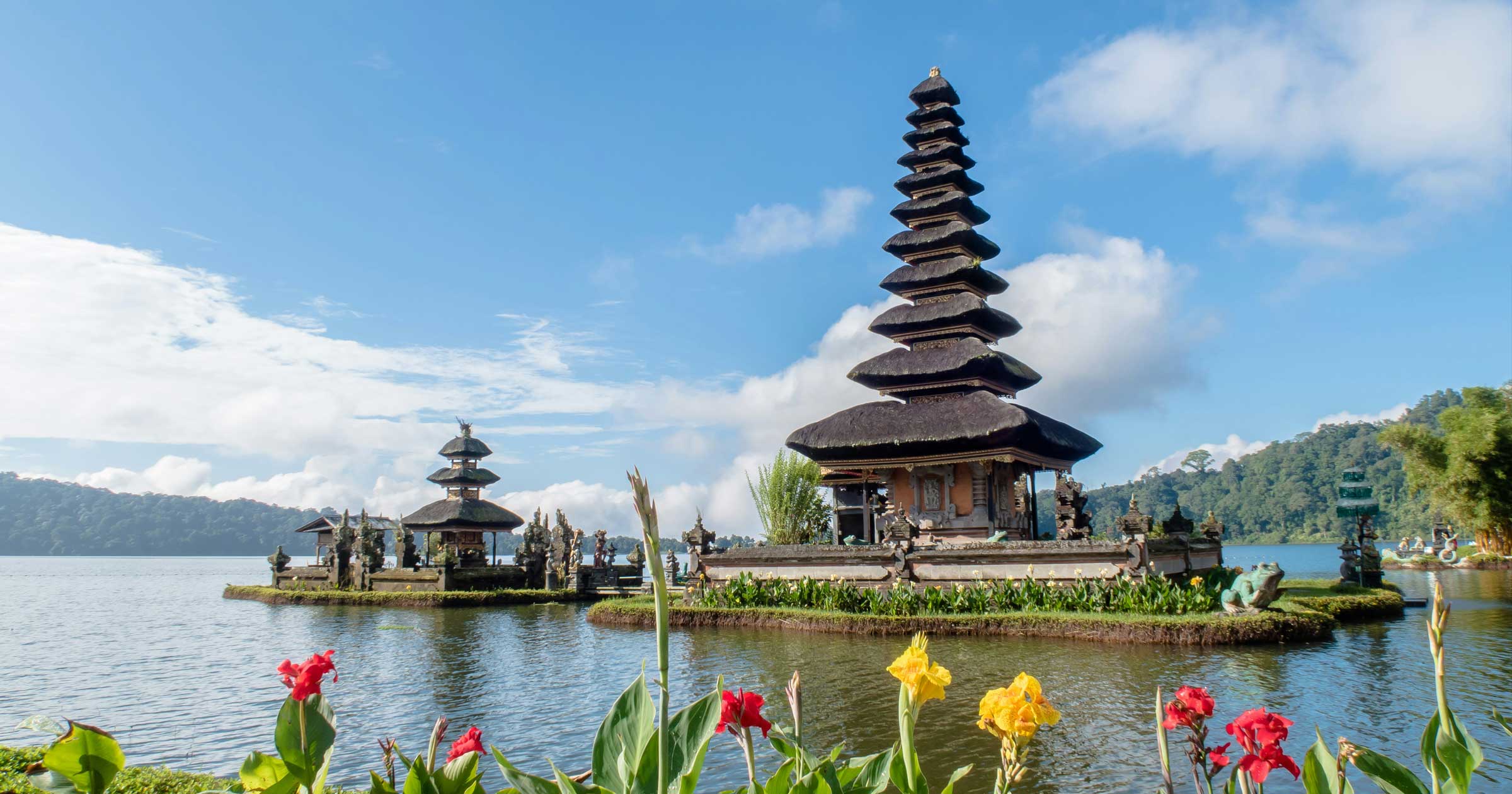
The Indonesian Immigration Service once found a foreign photographer in Bali without checking a single hotel. Intelligence and surveillance officers were simply scrolling through Instagram. The man entered with a visa upon arrival, photographed the island, and posted his work to his feed. A few weeks later, he flew home—not on his own schedule, but by order of the Denpasar Immigration Service.
This isn't a horror story. It's a standard news item on the official website of the Indonesian Immigration Service.
Bali is the most common destination for Australian couples: a six-hour flight from Sydney, Uluwatu cliffs, rice terraces, villas with pools overlooking the ocean. And for a videographer, it seems like a simple trip: the same passport for a vacation, the same backpack for a wedding in the Hunter Valley. Buy a VoA at the airport—and off you go.
And then comes the island, with its own rules. A visa that allows tourism, but not work. A drone that requires an Indonesian pilot's license. A temple whose main part you're not allowed into. A day in March when the airport is closed and the lights aren't allowed. And a sunset that lasts noticeably shorter than back home.
This guide is for a videographer flying to shoot a wedding in Bali: what Indonesian immigration, customs, and aviation authorities say (with links to primary sources), how to behave in a temple, when not to plan a wedding, how equatorial light works, what humidity does to a lens, and how to deliver film to a family living across three time zones. We run OurStoria, a platform for delivering films to clients, and the last section is exactly about that. If you're shooting weddings in Australia, there are related guides for Sydney and Melbourne.
A disclaimer. We are not lawyers or visa agents. Everything below about visas, customs, and drones is taken from Indonesian government websites as of November 2026. Rules are subject to change, so please check these pages again before your trip and before your 2027 season.
Can You Work in Bali on a Visa on Arrival?
Let's start with the most awkward question, because everything else depends on it.
What does the visa on arrival allow? On the Indonesian Immigration Service website (imigrasi.go.id), it's officially called the B1 Tourism Visitor Visa (Visa on Arrival). It allows you to vacation, visit family and friends, participate in meetings, conferences, and exhibitions, and transit. It's valid for 30 days with one extension for another 30 days. The fee is Rp 500,000. A sponsor is not required. And, as a separate point, visa holders cannot sell goods or services or receive salaries, fees, or other remuneration from people or companies in Indonesia.
Where does filming fit into the visa list? Indonesia has a separate category for filming: the C14 Film-Making and Film Production Visitor Visa. Its description on the same website: for those traveling to create films, music videos, reality shows, documentaries, and similar projects using locations in Indonesia. The requirements are more stringent than those for VoA:
| B1 (Visa on Arrival) | C14 (Film-Making) | |
|---|---|---|
| For what purpose | tourism, family, meetings and exhibitions, transit | films, music videos, documentaries, and similar projects using locations in Indonesia |
| Sponsor | not required | required, with an account at evisa.imigrasi.go.id; the sponsor submits the application |
| Location Permit | — | government agency permission to use the location for filming |
| Duration | 30 days + 30 | up to 60 days, extendable up to 180 |
| Fee | 500,000 IDR | 1,000,000 IDR |
| Remuneration from individuals and companies in Indonesia | prohibited | prohibited |
What these pages don't say. Not a single official page explicitly states the category of the Australian videographer hired by the Australian couple, with payment in Australia, at a private villa. This is the gray area that fuels the debate in Facebook groups. Some argue that since the money isn't Indonesian, it's not work in Indonesia. Others respond that filming is still filming. We won't pretend to know the answer better than immigration.
What is known for sure. The Governor of Bali, in a 2025 circular for foreign tourists, specifically banned doing business and working without official documents. And immigration does monitor social media. In the very case mentioned in the introduction, officials found the photographer on Instagram, cited Article 75 of the Immigration Law, and deported him. There's no mention of weddings in that news item, but the logic is clear: if your profile is full of behind-the-scenes footage "in Bali this week," it's visible to more than just couples.
How to approach this without panicking. - Ask in writing. The Indonesian Embassy in Canberra or the consulate in Sydney, Melbourne, or Perth respond to such questions. A written response is the best document you can have. - Learn about the sponsor. The C14 is submitted not by the videographer themselves, but by the sponsor. Often, this is a local production company or agency. If you shoot in Bali regularly, this is a long-term relationship, not a one-time service. - Compare this to working with a local studio. Some Australian videographers shoot in partnership with a Balinese crew that is registered locally. How this is formalized is also determined by a lawyer or agent, not a forum. - Don't post stories from the airport. This isn't advice to circumvent the law, but rather common sense: until you've sorted out your status, don't turn your trip into an advertising campaign.
Bringing Camera Gear into Indonesia
The next border is customs at Ngurah Rai Airport.
Declaration is now digital. Starting September 1, 2025, arrivals to Ngurah Rai will fill out the All Indonesia card—a single electronic card that replaces the separate e-CD customs declaration and immigration card. It can be completed three days before arrival or after landing; it's free. You show the QR code at the exit.
What customs says about passenger belongings. The Indonesian Customs website (beacukai.go.id) lists the following rule for personal belongings: goods valued up to USD 500 (FOB price) per person are duty-free. Anything more expensive is subject to 10% duty, 11% VAT, and income tax. This rule applies to items that remain in the country. Your camera will be sent back, but it's not obvious to the customs officer at the baggage belt until you show it.
The ATA Carnet also works in Indonesia. A carnet is a "passport for equipment": an international document that allows equipment to be temporarily imported duty-free and then re-exported. According to the International Chamber of Commerce, Indonesia joined the system on May 15, 2015, becoming its 75th member; KADIN, the Indonesian Chamber of Commerce and Industry, serves as the guarantor within the country. On the KADIN website, film crews are specifically listed among those for whom the carnet was created.
Carnets are issued in your country, through the chamber of commerce that issues such documents. There, you should also check the most important thing: whether Indonesia accepts carnets in the professional equipment category for your specific trip. Each country chooses which categories it accepts carnets for, and the chamber, not this blog, is responsible for this. A current list of countries and categories can be found at the ICC World Chambers Federation and at the chamber that issues your carnet.
Carnet or no Carnet? An honest calculation on a napkin:
| Situation | What to choose | Why |
|---|---|---|
| One camera, two lenses, microphones in carry-on baggage | Many fly without a Carnet, with receipts and serial numbers | The kit resembles a traveler's personal belongings |
| Two cameras, a slider, a light, a drone, cases in luggage | It's worth asking about the Carnet | Clearly a professional kit, more questions on the conveyor belt |
| Regular trips to Bali and Asia | Carnet (it's annual and reusable) | One document for multiple entries |
In any case, keep a list of your equipment with serial numbers—the same one you use for insurance. It's needed both by customs and by you in case anything goes missing.
Batteries. Lithium-ion batteries and power banks must be carried in carry-on baggage, as on any flight. Airline regulations are more important than any guidebook, so check them before packing.
Bali Drone Laws
Indonesian drone regulations are not established by the city or the park, but by the Directorate General of Civil Aviation of the Ministry of Transport (Ditjen Hubud, also known as DGCA). Its website has a FAQ and a description of services, and here's what it says.
Basic conditions for flying over Indonesia: - the pilot must have a valid Remote Pilot Certificate (RPC)—an Indonesian drone pilot certificate; - the drone must be registered with the agency; - the altitude must not exceed 120 meters (400 feet) above ground level in uncontrolled airspace; - flying over the airport's KKOP is prohibited without permission. The KKOP is a flight safety zone around the airfield, essentially the airport's airspace.
When a separate flight permit is required. If you fly above 120 meters (400 feet), fly in controlled airspace or near the KKOP boundary. Applications must be submitted no later than 14 business days in advance through the SIDOPI GO system. The application includes dates and times, a mapped flight zone (KML or KMZ file), emergency procedures, and third-party liability insurance. The application is evaluated by AirNav (air traffic control) and the Directorate of Navigation, each for 7 days. For drones up to 25 kg, this is free.
How to obtain a pilot certificate. Drone registration is valid for three years, and a pilot certificate is valid for one year. To obtain a certificate, you need a training center certificate, a health certificate, and an online test according to Indonesian regulations (up to three retakes). There are no specific rules for foreigners on the agency's website; the application only has a "citizenship" field. There's no mention of whether an Australian CASA license is recognized, so assume it's a separate document and check the current requirements for foreign pilots at Ditjen Hubud before your trip.
Why this is important in Bali. Ngurah Rai Airport is located on a narrow isthmus between Kuta and Jimbaran, in the heart of the southern wedding district: Seminyak, Jimbaran, Nusa Dua, and Uluwatu are all within a half-hour drive. Whether a specific villa falls within KKOP is verified using a map in SIDOPI GO or by speaking with a local pilot, not by eye.
What they do in practice. The most common option for visitors is a local pilot with an Indonesian certificate, registration, and insurance. He knows the best spots near the airport and how to communicate with villa security and the banyar—the village community on whose land the temple or beach stands. Your job is to keep a shot list and monitor the situation; his is to ensure a legal flight.
Studio blogs contain claims about a new "2025 directive" on drones in Bali. We couldn't find it on the agency's website, so we rely on the official publication. If you're more familiar with American regulations, we have an article about drones at US weddings—it's useful as an example of how FAA regulations work, but it doesn't apply to Indonesia.
Filming at Temples in Bali
In Bali, a temple—a pura—is everywhere: on a cliff overlooking the ocean, by a spring, in a rice field, in the courtyard of a villa. And almost every wedding has a moment when the camera lands close to it.
What the Governor Says. In March 2025, the Governor of Bali signed Circular No. 7/2025 for foreign tourists. According to the state news agency Antara, it requires respect for the sanctity of temples and religious symbols, proper dress, especially in sacred sites, and payment of a tourist tax of 150,000 rupiah (the full text is on the Bali Provincial Government website). Among other things, the following is prohibited: - entering the main and central parts of the temple (utama mandala and madya mandala) unless you have come to pray; - climbing sacred trees; - Behaving in a way that desecrates a sacred place; - Working without official documents.
How it looks during filming. The temple is divided into courtyards: the outer, central, and main. The outer is for everyone. As a foreigner with a camera, you are not allowed into the central and main courtyards, even if the gates are open and no one is watching. A long-focus lens here is not a luxury, but a tool of ethics: a 70-200mm lens from the outer courtyard provides a shot that doesn't require breaking any rules. We discussed how to choose such a set in the article on wedding lenses.
Sarong and belt. A sarong and a selendang belt are usually given or rented at the temple entrance. Carry yours in a case: there's no time to look for a rental in the middle of the wedding day. Shoulders are covered, knees are covered—this applies to you, your assistant, and the couple if they are going to the temple for portraits.
If the wedding includes a Balinese blessing. Many villas offer a ceremony with a local priest, a pemanku. For the couple, this is the highlight of the day, but for the videographer, it's the most delicate. Ask the planner in advance where you can stand. Don't walk between the priest and the couple, don't place a tripod on the canang offerings (small palm leaf baskets on the ground), and don't raise a drone over the ceremony without explicit permission. A good rule of thumb: when in doubt, film from where the guests are standing.
What you shouldn't film at all. Local rituals unrelated to the wedding: processions, cremations, prayers at a village temple. This isn't a backdrop for B-roll. If you need such a shot for the story, ask permission through your driver or planner.
Nyepi 2027: The Day Bali Shuts Down
There is one day a year when no one films in Bali.
Nyepi is the New Year according to the Balinese Saka calendar and the Day of Silence. In 2027, it is Monday, March 8: the date was approved by three Indonesian ministers in a joint decree on holidays published on the Government Secretariat website.
How serious is this? In March 2026, Ngurah Rai Airport suspended all scheduled flights for exactly 24 hours—from 6:00 AM on Nyepi until 6:00 AM the following morning, local time. According to Antara, 440 flights were cancelled: 231 domestic and 209 international. The reason for this was a Notice to Airmen (NOTAM) issued by AirNav Indonesia. Only emergency flights were permitted, subject to prior approval.
On this day, the island observes the four prohibitions of Balinese Hindus, Catur Brata Penyepian: no fire or light, no work, no travel, no entertainment. Tourists stay in their hotels, the streets are empty, and order is kept by the pecalang, the village guards.
What does this mean for you: - A wedding on March 8, 2027, is impossible. Even a symbolic one. Even in a private villa. - Arrival and departure. If the wedding is on March 6-7 and you were planning to fly out on Monday, you'll be stuck until at least Tuesday. If the wedding is on March 9-10, arrive no later than Sunday. - The night before — ogo-ogo. On the evening before Nyepi, ogo-ogo are carried through villages and then burned. If the couple flies in early, this makes for a very lively filming experience (with the same respectful rules as at a temple). - March 2027 — busy. That same week, Muslims in Indonesia celebrate Eid al-Fitr, and the country goes on a long weekend. Tickets and transportation become more expensive. Keep this in mind when choosing a date.
Best Time of Year for a Bali Wedding
Bali experiences two seasons, not four. Roughly speaking: the dry season is mid-year, and the rainy season is from late in the year to spring. According to the Bali Climate Station forecast, as reported by Indonesian media, the rains of 2026/2027 will arrive in November–December, peaking in February, and ending by April.
What it looks like on set:
| Period | What to expect | What should a videographer do |
|---|---|---|
| Dry season (approximately May–September) | Peak season for weddings and tourists from Australia, school holidays, congested roads in the south | Book a car and driver in advance, allow an hour for the Uluwatu–Ubud journey |
| Transitional months | A mix of sun and short showers | Plan B under cover at every portrait location |
| Rainy season (approximately November–March) | Tropical downpours, often in the afternoon, high humidity | Protective covers, spare towels, early portraits |
A downpour isn't a disaster. Tropical rain often ends as quickly as it begins, but a wet villa, reflections in a pool, and mist over rice fields provide shots unavailable during the dry season. The trouble begins when you don't have shelter for your equipment and sound. Wind and the sound of rain on an awning are the main enemies of vows in an outdoor venue. Lavalier microphones with a windscreen and a spare recorder solve half the problem—more on that in our guide to recording audio at a wedding.
Golden Hour in Bali
Here's what surprises almost every Melbourne videographer the first time: the sunset seems to come faster in Bali.
This isn't an impression. The closer you get to the equator, the steeper the sun sets below the horizon. In Melbourne, it glides toward the horizon at an angle, hanging low for a long time and casting a long, soft light. In Bali, at a latitude of about 8° south of the equator, it falls almost vertically.
Our calculation using the standard solar position formula:
| Bali (Denpasar) | Melbourne | |
|---|---|---|
| Sunset throughout the year | around 6:10 PM in June, around 6:35 PM in December | from ~5:10 PM in June to ~8:40 PM in December |
| The sun is from 6° above the horizon to 4° below it (the so-called "golden hour") | ~40–45 minutes | ~50–60 minutes |
| From sunset to complete darkness (civil twilight) | ~21–23 minutes | ~25–32 minutes |
Two things from this table are most important. First, the golden window in Bali is about a quarter shorter. Second, sunset on the island remains almost constant throughout the year. This is convenient—you can learn the schedule once.
Sunset ceremony timings (our estimate for June, villa in Uluwatu): - 4:00 PM — ceremony, the light is still harsh, but faces are in the shade of the awning; - 4:45 PM — congratulations, drinks, group photos; - 5:35 PM — the couple goes to the cliff edge for portraits; - 5:40–6:20 PM — that same window: warm, low light, then a pink sky; - 6:30 PM — already dark, transition to dinner.
If the ceremony is extended beyond 20 minutes, there won't be any portraits—the sky will go dark before you finish the group shots. Therefore, in Bali, working with the planner on timing isn't a formality, but your key shot.
Another detail: Uluwatu and almost the entire southern wedding district face west, toward the Indian Ocean. The sun sets into the water, and almost every villa is backlit by the sea. For stabilization on the cliff edge, where it's windy and the path is narrow, a proper gimbal is useful—we compared them in the article about gimbals.
Short Light—Powerful Clips. Because the light in Bali is so short, the shot of the pemangku blessing and the speeches over dinner often outshines sunset portraits. The couple's family views them very differently than the couple themselves: the bride's grandmother values the one minute where the priest sprinkles holy water on their hands. In OurStoria client galleries, the ceremony and speeches can be posted as separate videos next to the film, and Nan will open exactly what she was waiting for without having to rewind forty minutes.
Humidity and Camera Gear
In Bali, the lens fogs up not because of the weather, but because of the air conditioning.
The scenario is familiar. You spent the night in a villa at 18°C, and in the morning you go out onto the terrace, where it's 30°C and humid. You take out the camera and see milky water through the front element. The same is true inside the camera housing.
Why is that? Air has a "dew point"—the temperature at which moisture in it begins to settle on surfaces. According to our calculations, if it's 30°C outside with 80% humidity, the dew point is around 26°C. Any object colder than 26°C in such air will immediately become covered in water droplets. The camera in the air-conditioned room is a good eight degrees colder. It will "cry" until it warms up.
What to do: - Don't keep the camera in the coldest room. Leave the case in the bathroom or in a room where the air conditioning is turned off. - Acclimatization in a closed bag. Before heading out, place the camera in a zip-lock bag or close the case. Condensation will settle on the bag, not the sensor. Remove it after 20-40 minutes, when the camera has warmed up. - Silica gel in every case. Desiccant packets are inexpensive and easy to replace. - Don't wipe the lens right away. You'll just smear the water. Let the glass warm up. - It works the other way too. The camera transitions from the heat to the air-conditioned car without drama, but back outside, it's the same cycle all over again. If the drive is 10 minutes between locations, keep the case closed.
And a special note about flash drives, cards, and disks: back up your footage every evening. A wedding in Bali is a one-day experience that no one will ever repeat, and the flight, rain, and heat are three extra risks that don't exist at home.
Bali Wedding Venues: Cliffs, Rice Terraces and Villas
We're deliberately not publishing "venue rules" with numbers here: each villa, cliff, and terrace has its own, changes seasonally, and is rarely officially posted anywhere. Instead, we'll explain what to ask based on the type of venue.
| Venue Type | What's Typical for Videos | What to Ask in Written Form |
|---|---|---|
| Cliff villas and chapels in the south (Uluwatu, Jimbaran, Nusa Dua) | Wind, surf, narrow paths to the edge, proximity to the airport | Are drones allowed (and who approves it?), are there fences at the edge, where are the charging sockets? |
| Beach clubs | Music from neighbors, strangers in frame | Is there a separate ceremony area, and what time is the music turned down? |
| Rice terraces (Ubud and the center of the island) | Field owners and communities, tourists, entrance fees | Who pays for filming, is it possible to leave the path and go to the boundaries? |
| Private villas | Neighbors, music curfew | Until what time is it permissible to make noise, is there a vendor fee, where can I park the driver? |
| Temples by the sea | Ceremonies, dress code, tourists | Is it permissible to film outside the main courtyards at the time of your wedding, is a guide required? |
Vendor fees are common in Bali: villas and venues charge visiting photographers and videographers. This is discussed before the wedding, not at the entrance. Ask the couple or the planner to add you to the vendor list in advance.
The rice field is someone else's work. The boundaries between the terraces appear to be a path, but they are part of the irrigation system that supports the crops. Don't place your tripod in the water or lead the couple along the edge. Ask the owner of the field where you can stand.
Is a Bali Wedding Legally Binding?
For a videographer, this isn't a legal issue, but a scripted one. Many Australian couples register at home—in a registry office or with a celebrant—while in Bali, they hold a symbolic ceremony for guests. This means the film could have two "days": a short registration in Australia and a larger wedding on the island.
What does this mean for you? - Ask at the first meeting if there will be a legal portion at home. If it can be filmed in Sydney in an hour, that's a ready-made beginning to the film. - The words of the ceremony in Bali are written by the couple, not the law. This means the vows are almost always written—and the sound for them must be perfect. - In the contract, separate the filming at home and in Bali: different days, different expenses, different travel times.
Delivering the Film to Family in Three Time Zones
This is the last thing people rarely think about until it's time to deliver the film.
Let's take Indi and Callum from Newcastle. Their wedding is at a villa in Uluwatu, and their videographer is Kirra from Byron Bay. Indi's mother lives in Newcastle, Nan Beverley lives in Adelaide, Callum's brother lives in London, and half the guests are from Perth. This means the film has four different mornings.
| Where to watch | Time difference with Bali (WITA, UTC+8) |
|---|---|
| Perth | 0 hours (same time) |
| Adelaide | +1.5 hours in winter, +2.5 in summer |
| Sydney / Newcastle | +2 hours in winter, +3 in summer (daylight saving time) |
| London | -7 hours in summer, -8 in winter |
Convenient fact: Bali time is the same as Perth. If guests are from Western Australia, no recalculation is required.
How this becomes a task. A week after the wedding, everyone returns home, and the question "When is the film coming out?" comes up in four different chats. The link is passed on: the brother to his friends in London, Nan to her club friends, and Mom to the aunt who couldn't make it. Someone will open it on their phone at 7 a.m. on the train, someone else on the TV eight hours later.
What works well: - One link that opens without registration. No one needs to create an account to see the wedding. Especially Nan. - Film, highlight, and photo side by side. Otherwise, the links are fragmented: the video in one place, the photo in another, the speeches in a third, and a month later half of them will be impossible to find. - The interface language is for the viewer. If the groom's family is from Germany or Italy, they find it easier in their own language. - Anyone can watch, but only the family can download. The couple wants all 120 guests to watch the film, and only the parents can download the original.
This advice works with any tool: you can create a cloud folder, a website page, and a separate password for the archive. We, naturally, prefer our own. In the OurStoria client gallery, the film, clips, and photos are stored under a single link with your logo, with no registration required for viewers. The gallery language is selected for each project—eight languages, including German, Italian, Spanish, and French (for details on how this works, see the article about client gallery language). And for downloading, you can set a separate password, which you give only to the family: everyone can watch, and only those who are allowed to save can do so. For more information on the delivery process itself, check out our guide to delivering video to a client, and for general data on destination weddings, check out our research on filming weddings abroad.
Start a 7-day free Pro trial →
---
Bali forgives almost everything except disrespect and haste. A visa you asked about in advance. A pilot with an Indonesian certificate. A sarong in a suitcase. Portraits started ten minutes earlier than you thought necessary. A camera left overnight in a warm room.
Sunsets there are short. Forty minutes, and the sky fades over the ocean.
But twenty years later, Indi won't open the link for the sky. She'll open it for the moment when the priest sprinkled holy water on their clasped hands, and Nan Beverley in the front row didn't wipe away her tears. For Callum's voice, which broke on the second sentence of the vow. For what was at the edge of the cliff, when the light was almost gone.
That's your job on the island. Everything else is logistics.
Related articles:
- All Wedding Filming Guides for Videographers
- Destination Wedding Videography: Logistics, Storytelling Challenges, and Satisfaction Data From 1,400 Events
- How to Deliver Wedding Video to a Client: A Step-by-Step Workflow
- Client gallery language per project: delivering weddings in the couple's language
- How to Record Audio at a Wedding: Vows, Toasts, Readings and the Kit
- Wedding Drone Videography: FAA Part 107 Rules, Venues and Gear (2026)
- Best Gimbal for Wedding Videography: When You Need One, Which to Buy, How to Use It
- Filming Weddings in Sydney: Permits, Drone Rules, Venues and Light
- Filming Weddings in Melbourne: Permits, Drone Rules, Venues and Weather