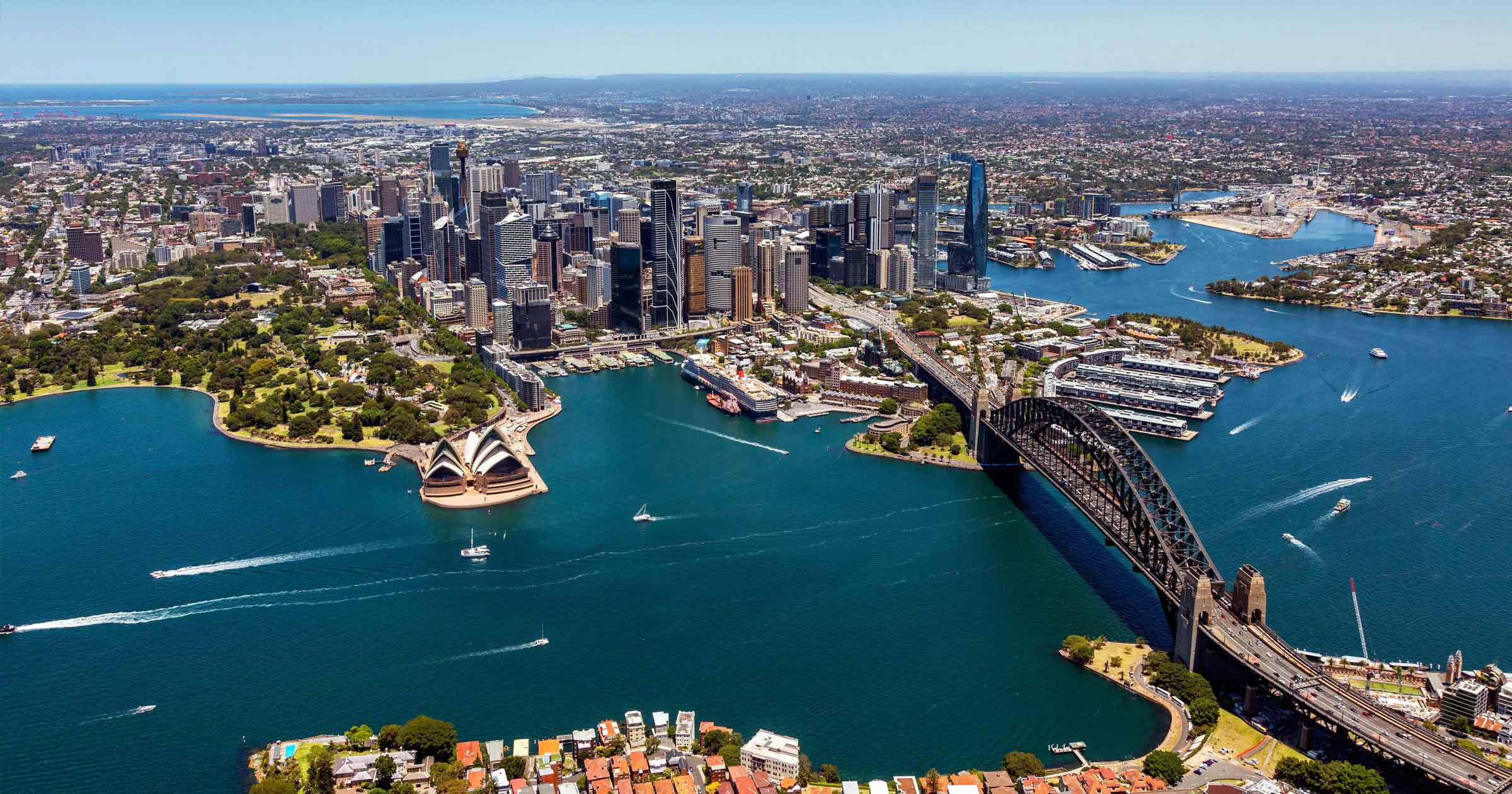
Sydney looks like it was invented for wedding videographers. The harbor. The Opera House. The bridge at sunset. The sandstone headlands, the palm trees of the Botanic Gardens, the ferries that swerve into the frame.
And then you start preparing for the shoot, and it turns out that each beautiful spot has its own owner. The waterfront at Circular Quay belongs to the city. The garden behind it belongs to a separate trust. The headland across the harbor belongs to the federal government. Centennial Park belongs to another trust, and the headland next door belongs to the NSW National Parks and Wildlife Service. Each has its own permits, its own fees, its own deadlines, and its own answer to the question "Can I use a drone?" More often than not, the answer is "no."
This guide is for videographers shooting weddings in Sydney: locals tired of rereading the rules before each season, and visitors flying in from Melbourne, Auckland, or Los Angeles. Here's a collection of information scattered across dozens of government websites: when a permit is required and when it isn't, how much it costs and how many days in advance it must be submitted, what drones are permitted to do, how to record speeches according to New South Wales laws, where and when to capture light over the harbor—and how to deliver the film to a family scattered across three continents.
All amounts are in Australian dollars, fees are based on the 2026–2027 financial year rates. Rules are subject to change; before each shoot and before your 2027 season, check the specific agency's website—we provide links as we go.
Do You Need a Permit to Film a Wedding in Sydney?
The short answer: on city streets and squares—usually no; in parks, gardens, and on harbour headlands—almost always yes. The long answer depends on whose land you're standing on.
City of Sydney land. The city states explicitly: a permit is "typically needed" for any filming on its land that isn't purely private—sidewalks, roads, parks, and squares. But it also adds a caveat: for things like wedding photography on the day of the ceremony, a permit is generally not required. The city leaves it up to you to verify that your specific situation doesn't require a permit.
To help you determine whether this applies to you, the city has a clear scale. "No-impact" filming—up to six people including crew, minimal handheld equipment, no obstructions, props, pyrotechnics, or drones. No application required. As soon as there are seven to twenty-five of you, or if you have lights, vehicles with equipment, or multiple locations, it's already low impact, and then the bureaucracy begins:
| What | Low impact on City of Sydney land |
|---|---|
| How many people | 7-25, including everyone in and out of frame |
| Submission deadline | at least 5 full working days before the shoot |
| Fees | $100 for review + $180 for approval |
| Missed deadline | $450 — and only in exceptional cases |
| Insurance | public liability; for photography — $10 million, a certificate of currency is required |
Note the wording regarding deadlines: applications submitted after the minimum deadline are rejected by the city. Not "take longer to review," but rejected. So if a couple decides on Wednesday that they want a stylish stroll around The Rocks with their 12-person crew on Saturday, the correct answer is "not this Saturday."
The wedding couple, you and your assistant—that's no impact. The couple, you, a second cameraman, a photographer with an assistant, and two friends holding a bouquet—that's seven people. Plan ahead for who you'll be taking for a walk after the ceremony.
Other people's islands within the city. The most insidious thing about Sydney is that other government properties lie in the middle of city land. The city itself lists the main ones: Centennial Parklands, Royal Botanic Garden, and the Sydney Opera House courtyard. There, the city's "no permit required" policy doesn't apply—the owner's permission is required. And at Paddington Reservoir Gardens, one of the most photogenic spots in eastern Sydney, the city doesn't accept applications for photography at all.
Other harbour owners. Here's what it looks like on the map, in short:
| Location | Who owns | What's important to a videographer |
|---|---|---|
| Royal Botanic Garden, The Domain | Botanic Gardens of Sydney | Paid 2-hour permit, drones prohibited at private events |
| Centennial Park, Moore Park | Greater Sydney Parklands | Paid permit or ceremony booking required, drones prohibited at private events |
| Parramatta Park, Western Sydney Parklands | Greater Sydney Parklands | Permit for any wedding photography |
| Bradleys Head, Nielsen Park, and other locations in Sydney Harbour National Park | NSW National Parks and Wildlife Service | Approval required, advance application required |
| Cockatoo Island, Chowder Bay, Middle Head (part), North Head Sanctuary, Woolwich | Harbour Trust (federal) | Own application, drones only with permit |
| Barangaroo Reserve | Placemaking NSW | Small groups do not need a permit |
Before promising a location to a couple, find it on a map and find out who owns it. That's ten minutes that save an unpleasant conversation with a ranger on your wedding day.
Wedding and Special Occasion Photography Permit
This is the name of the permit at Greater Sydney Parklands, and similarly at other gardens and parks. Almost everywhere, it's a photography permit, and almost nowhere on the page is there a separate mention of video. Hence, the first rule of thumb: when a couple or photographer purchases a permit, check with the agency whether it covers a videographer, and keep the confirmation in your phone. The ranger doesn't care who paid.
Centennial Parklands
The most popular park for wedding strolls in eastern Sydney. A two-hour permit can be purchased online and costs $355. If a couple books a ceremony at the park, a separate photo permit is not required: renting the ceremony site provides three hours of exclusive use, and photos can be taken in other parts of the park if they are available.
One important detail from the ceremony rules is important for sound: the celebrant is allowed only a quiet, battery-powered speaker, and the sound must not extend beyond the boundaries of your site. Therefore, don't count on an outdoor DJ booth—record speeches and vows with a lavalier microphone and recorder (more on that below).
Wedding and Engagement Photography (Royal Botanic Garden)
The Botanic Gardens—that same lawn overlooking the Opera House and the bridge. Rates for 2026–2027:
| What | Price |
|---|---|
| 2-hour permit without site rental (RBG Sydney and The Domain) | $380 |
| Add-on to picnic or garden party rental | $320 |
| Permit included in rental of Harbour View Lawn, Tarpeian Lawn, Rose Garden, etc. | included |
| Australian Botanic Garden Mount Annan or Blue Mountains Botanic Garden, 2 hours | $315 |
Minimum: two hours; the garden does not sell split-hour rentals. Photographing is from 8:00 AM to 5:00 PM. Note that 5:00 PM is still daytime: in summer, the sun sets much later in Sydney, and the golden hour over the harbor falls outside this window. After the garden closes, filming is moved to The Domain. The permit is not valid inside The Calyx, Palm House, and Lion Gate Lodge—these are separate rentals.
Parramatta Park and Western Sydney Parklands
Here's the shortest rule: any wedding photography requires a valid permit. The Old Government House, sports facilities, and conservation areas are not covered.
Studio blogs are circulating the advice that "Greater Sydney Parklands is only allowed to be filmed on weekdays." This is only half true: commercial filming—advertisements, music videos, and catalogs—is only permitted from Monday to Friday. Wedding permits have their own rules. But if a couple asks to "also shoot a commercial for their dress brand" in the same park, that's commercial filming, and it won't happen on Saturday.
National Parks and the Harbour Trust
Sydney Harbour National Park (Bradleys Head, Nielsen Park, and some of the headlands) belongs to the NSW National Parks Service. Its rule is clear: wedding photography in national parks and reserves requires approval, and an application must be submitted before the shoot. The good news: weddings are considered "small-scale" shoots, and there is no application fee for review. The minimum deadline is seven working days for low-impact shoots. Applications received after 1:00 PM are considered submitted the next working day.
The Harbour Trust is a federal trust that owns Cockatoo Island, Chowder Bay, North Head Sanctuary, Woolwich, and part of Middle Head. Wedding photo shoots are booked through their Wedding Venues section. According to the Trust's FAQ (July 2021, check for updates), locations are available for three hours, there is no electricity at the venues, and generators are prohibited. And a detail that anyone who has carried suitcases to the island will appreciate: Sydney Ferries limits luggage, so on Cockatoo Island, bring only what you can carry in your hands.
Barangaroo Reserve is a pleasant exception. If there are fewer than ten of you, including the couple, with minimal equipment, and don't need to block the area, you can film in public areas without a permit. Drones require a separate permit.
Drone Photography at Weddings
Let's start with news that's usually discovered on the spot in Sydney: drones are prohibited at weddings in the city's most beautiful parks, even if you have all the necessary licenses.
Greater Sydney Parklands states this explicitly in its drone regulations: the use of drones for recreational purposes or to film private or corporate events on trust land is prohibited. This rule applies to Centennial Parklands, Parramatta Park, Western Sydney Parklands, Callan Park, and Fernhill Estate. The Botanic Gardens state the same in almost identical terms: drones are for commercial photography only, private and corporate events are not allowed. A wedding is a private event. There's nothing to discuss.
Even for commercial photography, both authorities require a full package: a CASA operator certificate (ReOC), a pilot license (RePL), $20 million in insurance, a risk assessment, a takeoff and landing map, a minimum five-working-day advance notice, and, at the Botanic Gardens, a ranger for every flight. GSP specifically warns that light drones weighing up to 2 kg will not be allowed to fly on Trust land without these documents.
National parks operate similarly. Drones are not covered by a "small" wedding application: any commercial drone requires separate approval, a separate fee, and a minimum of 10 working days. Drones are prohibited in parks near controlled airfields—the service specifically mentions Sydney Airport.
The Harbour Trust only allows drones with a permit for filming or an event, and this must be included in the application. The City of Sydney excludes drones from the "no-impact" category, meaning that with a drone, you are automatically subject to the application process, which includes deadlines and fees. And at Sydney Park, as the city itself states, all drones are prohibited.
So, a realistic plan for a wedding in Sydney looks like this: aerial photography – at a private site (winery, estate, private houseboat) with the written consent of the owner and in accordance with CASA rules, and in parks and gardens – only from the ground.
What CASA Requires From a Paid Wedding Pilot
National drone regulations in Australia are set by CASA (the Civil Aviation Safety Authority). If you're filming for money, it's considered a commercial flight, and you have two options.
Option 1: Drones up to 2 kg (excluded category). Suitable for most wedding drones. A pilot license is not required, but you must:
- obtain an ARN (Account Registration Number) in the CASA system (personal and, for companies, also an organizational number);
- pass operator accreditation—an online test that's free and valid for three years;
- register the drone: in Australia, every drone flying commercially is registered, regardless of weight;
- fly strictly within standard operating conditions.
Option 2: RePL and ReOC. A pilot license and operator certificate are required if the drone is heavier than 2 kg or if you want to fly outside standard conditions—for example, flying closer to people or in airport areas. And, as we've seen, parks and the Botanic Garden require them even for lightweight drones.
Standard conditions that directly apply to weddings:
| Rule | What does this mean at a wedding? |
|---|---|
| Line of sight only, during the day | No flights over the reception after sunset |
| No higher than 120 meters above the ground | You won't need more at a wedding |
| No closer than 30 meters to people not involved in the flight | Guests, the couple, and the photographer are all "outsiders" |
| Never over people | No flying over rows of guests at the ceremony |
| Drones heavier than 250 grams — no closer than 5.5 km to a controlled airport | No flying near Sydney Airport and Bankstown |
| One drone at a time | A co-pilot with a second drone is a different story |
Flying Over and Near People
The 30-meter rule is the one pilots most often get caught on in Sydney. The distance is measured along the ground from a point directly beneath the drone. A couple walking on the beach, guests at an arch, a photographer "just standing nearby"—all of these are people you can't fly within 30 meters of without special permission from CASA.
And even stricter: CASA specifically states that flying over "populous areas" is prohibited, and its list of such places names weddings alongside parks, beaches, and roads. While the ceremony is in progress and guests are gathered, this is the populous area: under standard conditions, a drone must remain outside it, and filming over it is permitted only with special permission from CASA. CASA also cites iconic locations within the restricted airspace—Sydney Harbour and its surrounding area. So, a "drone over the Opera House" shot isn't a question of your skills, but of your permission.
Drones under 250 grams are subject to more lenient airport regulations: within a 5.5-kilometer zone, they are allowed up to 45 meters, but not on the approach path of aircraft or over airport grounds. The 30-meter rule and the prohibition on flying over people apply to them the same as to larger drones. CASA is discussing changes to the rules on flying over people, so check them before the season.
To avoid guessing where you are, use the OpenSky app—Greater Sydney Parklands calls it a CASA-approved app. It displays controlled airfields and restricted areas. Check not only the landing site but also the takeoff point: in Sydney, the boundary can run right through the middle of a park.
A story remembered by CASA. In the summer of 2017, CASA fined a pilot $900 for flying a drone over the wedding of TV presenters Sylvia Jeffreys and Peter Stefanovic in New South Wales. The regulator deemed the flight dangerous. The sum is small, but the headlines with names are forever. And this is the case even if the pilot wasn't a hired videographer: imagine the same conversation with your couple.
If you're filming in the US, compare it to how it works there, in our article on wedding aerial photography and FAA regulations: the logic is similar, the details are different, and an American license is useless in Australia.
A Drone Plan That Works in Sydney
A short checklist that really works:
- Ask the venue who owns the land under the takeoff point and what you'll be flying over. Private land—written consent from the owner. A park or garden—almost certainly not.
- Open OpenSky at the takeoff point, not at the venue's address.
- Check your documents: ARN, accreditation, drone registration—or RePL/ReOC, if more is needed.
- Draw a 30-meter map: where the guests are standing, where the couple is walking, and where you're filming from. Flying over the ceremony rows is not an option.
- Agree with the couple in advance that the "overhead view of the harbor" will be filmed before or after the ceremony, over empty water or over an empty shore—or not at all.
Recording Speeches and Vows: Surveillance Devices Act NSW
In New South Wales, the Surveillance Devices Act 2007 (NSW) regulates the recording of conversations. It prohibits recording a "private conversation" without the consent of the participants. This sounds terrifying when you have a lav mic on the groom, but for a wedding, it's simpler than it seems. The current text of the law is available at legislation.nsw.gov.au (Surveillance Devices Act 2007).
A speech delivered into a microphone in front of hundreds of guests is not, by its nature, a private conversation: the person is speaking for everyone to hear. Vows at the ceremony, a toast from the father of the bride, a speech from the best man—that's what you were hired for. It's more complicated when a lapel microphone records between events. The groom walks with his brother to the car and tells him what he really thinks about his mother-in-law. That sounds like a private conversation, and you shouldn't include it in your edit.
Therefore, three practical rules:
- Specify audio recording in the contract and notify those you're using the microphone for: the groom, the celebrant, and anyone giving speeches.
- Turn off or at least mark the lavalier recording between the ceremony and the speeches. Anything the groom says privately is not included in the film.
- Do not publish excerpts filmed "from behind the scenes" without the consent of those in the frame. This is a matter not only of law but also of the recommendations you will receive—or not receive—from the family.
We are not lawyers, and this is not legal advice: if there is anything unusual in your case (for example, you are filming the preparations in a house where there are strangers), check the law or consult a lawyer.
The technical aspects of recording—how many sources, where to place the recorder, how to avoid losing vows due to radio failure—are covered in detail in the article about recording audio at a wedding. For Sydney, we'll add one more thing: wind. On headlands and by the water, it's almost always there, and lavalier microphones without a fur windscreen will turn vows at Bradleys Head into a roar.
And one more thought about speeches, which concerns delivery. A well-recorded toast is something a family watches most often, but few are willing to search for it within an hour-long film. Therefore, many studios provide speeches as separate clips. In OurStoria's client gallery, this is how it works: the film, individual clips of vows and toasts, and photos are all located side by side under a single link, so the father of the bride can find his speech within a second, not at the forty-minute mark.
Venues: What Sydney Venues Tell Videographers
Sydney venues rarely publish specific rules for videographers, but the rules for ceremonies and rentals paint a clear picture. Here are the most common ones:
| Restriction | Where to find | What to do |
|---|---|---|
| Non-exclusive use | Almost all parks, gardens, and Harbour Trust | Plan for passersby in the frame and extra time for "clean" takes |
| Quiet speaker for the celebrant, sound within the venue | Centennial Parklands | Your own recording with lavalier microphones and recorders |
| No power, generators prohibited | Harbour Trust | Battery-powered lights, spare batteries for the entire day |
| Permit time window | RBG (8:00–17:00), Centennial (2 hours) | Check sunset in advance |
| Drones at private events | GSP, RBG — prohibited | Aerial photography only at private venues |
| Parking cannot be reserved | GSP, Harbour Trust | Arrive early, bring a cart |
Ask the coordinator about video rules separately. Many floating restaurant venues restrict where a tripod can be placed during the ceremony and whether lights are allowed in the hall. It's better to find out during the inspection than when the celebrant asks you to "take a step back" right before the vows.
Lenses and stabilization. Sydney has a lot of open space and limited opportunities to get up close: rangers, guests, and the water. A long zoom lens works better here than usual for a ceremony. What to bring is in the article on lenses for wedding videography, and if you're planning long walks along the waterfront, see the gimbal review.
Best Light for Wedding Filming in Sydney
The light in Sydney is the main reason people come here. And the main pitfall.
In summer (December–February), the sun sets late. New South Wales switches to daylight saving time on the first Sunday in October and returns on the first Sunday in April, and in the height of summer, sunset occurs around 8 p.m. A 3:30 p.m. ceremony is a harsh overhead sun, white dresses with overexposed textures, and guests squinting. The golden hour is after dinner. So many couples move their walk to the evening, but you should factor a "20-minute sunset break" into the wedding timeline.
In winter (June–August), it's the opposite. The sun sets around 5 p.m., and by 4 p.m., you've already got beautiful, soft light. Soft, low, warm—but short. A 3:00 p.m. ceremony with an hour of photos afterwards means sunset right in the middle of the walk, and the rest is taken in the dark. Bring fast lenses and light.
The sun sets in the west over the harbor—behind the bridge and the city, as viewed from the eastern headlands. This is the picture that couples come to Sydney for: the silhouette of the bridge and Opera House against a pink sky. But remember the permit window at the Botanic Gardens: in May or June, this sunset overlaps with the garden's opening hours, but not in January.
Heat. Summertime in Sydney means 30+°C and humidity. Cameras overheat, especially mirrorless cameras when recording 4K in the sun; a couple can get tired after an hour of walking. Keep shade, water, and a spare set of batteries in a cooler bag.
Wind and Weather. In summer, after a hot day, Sydney can experience a sudden change in weather from the south—locals call it a "southerly buster": within half an hour, the heat gives way to a strong, cold wind. Wind is commonplace near the water and on the headlands. For a videographer, this means windscreens for all microphones, weights for stands, and a Plan B under cover for the ceremony. Remember that refund policies also depend on the weather: most parks only allow cancellations due to rain until noon on the day of the shoot.
| Season | Sunset Guidelines | What to Consider |
|---|---|---|
| Summer (Dec-Feb) | around 8:00 PM | Harsh daytime sun, heat, thunderstorms, late golden hour |
| Fall (Mar-May) | from ~7:00 PM early to ~5:00 PM late | Soft light, less wind—the most comfortable season |
| Winter (Jun-Aug) | around 5:00 PM | Short days, early darkness, cool water |
| Spring (Sep-Nov) | from ~5:45 PM to ~7:45 PM | Windy, time change in October – recalculate timings |
Sunset time is a guideline; check with your wedding date.
Getting Around: Ferries, Parking and Gear
Sydney is a city cut by water. A twenty-minute ferry ride turns into an hour by car if you detour around the harbor on a Friday evening.
Ferries are a convenient way to get to Cockatoo Island, Watsons Bay, or Manly, but there are baggage restrictions. Cases, racks, sliders—anything you can't carry in your hands will be a problem. If you need a full set of equipment, look for a water taxi or bring everything in advance.
Parking is almost never reserved: neither in parks nor on Harbour Trust property. On Saturday afternoons, finding a free space near Centennial Park or Watsons Bay is a stroke of luck. Allow 30 minutes for searching and bring a folding cart.
For visitors, two things. First, wedding season and equipment rental prices in Sydney are at their peak from October to April. Book your lights and a spare camera with a local rental company in advance. Second: if you're bringing a drone, check not only CASA but also the airline's battery regulations. If you're flying from Melbourne, our guide to filming weddings in Melbourne will help you compare prices between states, and if a couple is heading to Bali after Sydney to celebrate, here's our guide to Bali.
Let's do the math to find out how much a "legal" wedding day with a harbor walk costs (our estimate, 2026-2027 rates):
| What | Cost |
|---|---|
| Botanic Gardens, 2 hours | $380 |
| Centennial Park, 2 hours (if the couple wants to go there too) | $355 |
| City of Sydney streets and waterfront, up to 6 people | $0 |
| National Parks, small-scale | no application fee |
| Total | ~$735 |
This isn't much compared to a wedding budget, but it's an amount couples often don't budget for. Include permits in your proposal as a separate line item or specify who is purchasing them. And check whether the couple or the photographer has already purchased the permit to avoid paying twice.
Delivering the Film to Family Overseas
Sydney is one of the most multicultural cities in the world, and this is evident at any wedding. Half the guests flew in. The bride's grandmother lives in Leichhardt and speaks Italian to her grandchildren. The groom's uncle is in Manchester. The cousins are in Auckland.
Let's look at a real-life scenario. Matilda and Hamish got married in March at Bradleys Head. The ceremony lasted 30 minutes, followed by a sunset walk and dinner at a restaurant in Mosman. Six weeks later, you deliver the film.
And then comes the thing that few people think about when preparing:
- Time zones. In March, Sydney is on daylight saving time (UTC+11), and London is still on winter time (UTC+0): an 11-hour difference. When you send the link at lunchtime, Uncle Graham in Manchester is asleep. He'll open it in the morning—without you, without explanation, on his phone.
- Language. Nonna Rosa barely reads English, and the "Download" button and password prompt are a mystery to her.
- Registration. If you need to create an account to watch, half the family will never see the film.
- What to download. Matilda wants the original film, Hamish only wants his father's toast, and the cousins from Auckland can watch it online.
A good delivery answers all this upfront. One link that opens in the browser without registration. A short note explaining where everything is located. Clear file names. And separate clips of speeches—we already mentioned them above.
OurStoria's client galleries handle this without unnecessary emails. The link opens without registration—Uncle Graham watches the film in the morning in Manchester, and he doesn't need to ask you anything. You choose the gallery interface language for each project separately from eight languages. If the main viewer is Nonna Rosa, choose Italiano: the buttons, download window, and password form will be in Italian. The language isn't determined by the viewer's country—you choose, ideally after consulting the couple. For more information, see the article on choosing a gallery language for a project.
And to allow extended family members to view but not download everything, you can set separate passwords for photo and video downloads and give them only to the couple—we covered how to set this up in the article on download passwords. Try it at your next wedding: upload a film, speech clips, and photos, choose a language, and send a single link to everyone who attended the event at the harbor.
Start a 7-day free Pro trial →
To learn how to structure the entire delivery process—from the deadlines you promise during the consultation to the email a week after delivery—read our guide on how to deliver a wedding film to a client. And if you're filming in California, here's our guide to filming weddings in Los Angeles.
The Harbour Will Still Be There
The bridge will stand for another hundred years. The Opera House will still glow white at sunset. Ferries will continue to sail to Manly, and new couples with new bouquets will stand at Bradleys Head.
And this evening will never be repeated. The wind in Matilda's hair. The voice of Hamish's father, who faltered on the second sentence and finally finished. Nonna Rosa, watching a film in Leichhardt and pausing to call her neighbor.
Permits, the 30-meter rule, sunset timing—that's the boring part. But that's what ensures you're standing in the right spot at the right moment, with a charged battery, instead of having to explain things to a ranger. The harbor will be there tomorrow. This day won't.
Related articles:
- All Wedding Filming Guides for Videographers
- Wedding Drone Videography: FAA Part 107 Rules, Venues and Gear (2026)
- How to Record Audio at a Wedding: Vows, Toasts, Readings and the Kit
- How to Deliver Wedding Video to a Client: A Step-by-Step Workflow
- Client gallery language per project: delivering weddings in the couple's language
- Download Passwords for Wedding Galleries: Guests Watch, the Couple Downloads
- Filming Weddings in Melbourne: Permits, Drone Rules, Venues and Weather
- Destination Wedding Videography: Logistics, Storytelling Challenges, and Satisfaction Data From 1,400 Events