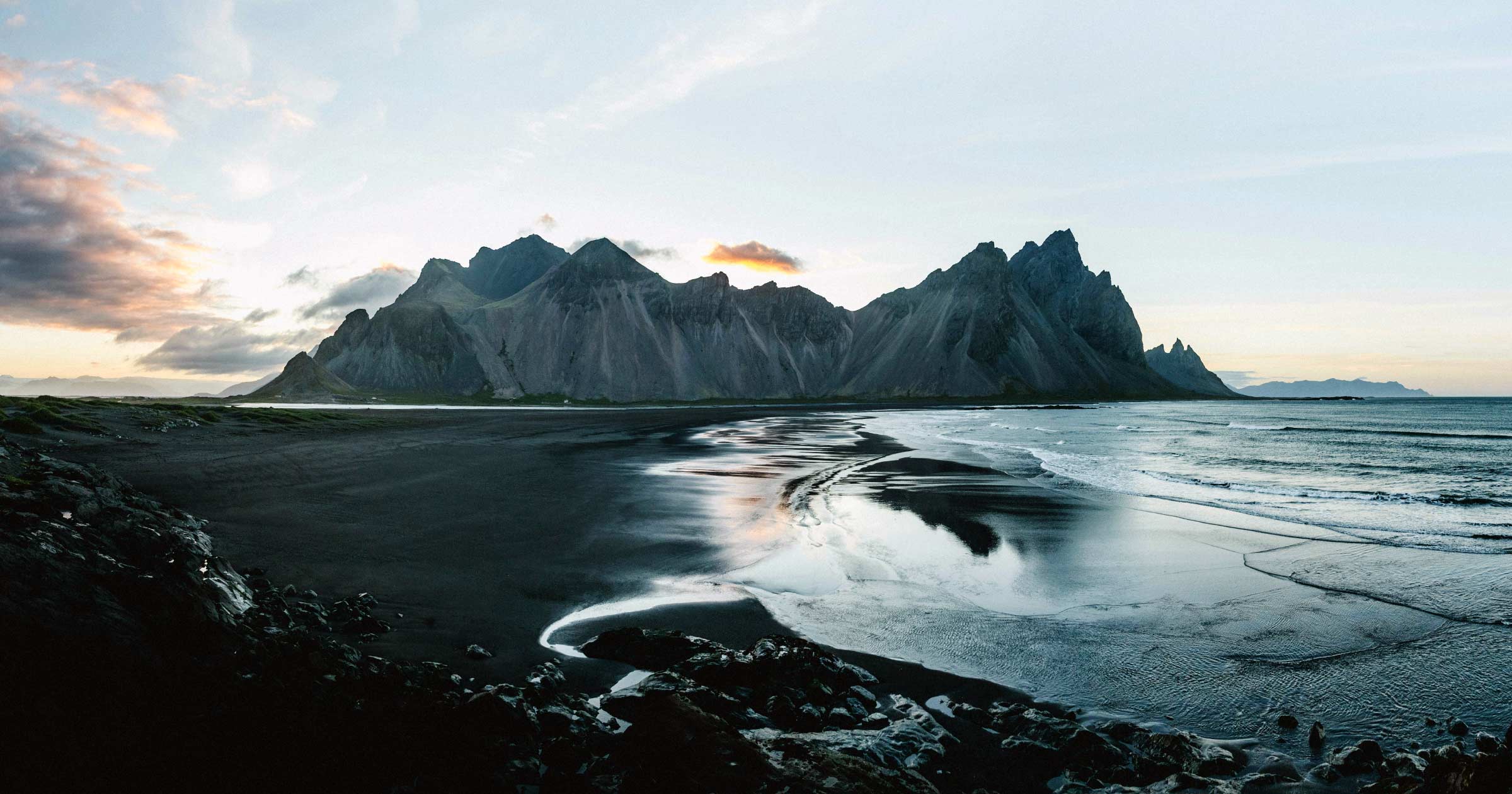
Filming a wedding in Iceland's protected areas, including national parks and famous waterfalls, needs a Nature Conservation Agency permit: 83,200 ISK, applied for about a month ahead. Since May 17, 2026, drone permits there are issued only for commercial projects. At Thingvellir, a single videographer with their own equipment needs no permission.
In May 2026, the Icelandic Nature Conservation Agency changed its drone regulations almost overnight. Starting May 17, drone permits were issued only for commercial use at 15 of the most famous protected areas—Gullfoss, Geysir, Skógafoss, Dyrhólaey, and others. The same rule applies at 11 other areas, but only from May 1 to September 15. Three weeks later, the agency published an amendment, acknowledging that the concerns about incomplete information on the website were valid and promising to meet with the Association of Professional Photographers of Iceland.
For a tourist with a drone, this means a ban. For a wedding videographer, it means something else: professional filming still has a legal option, but only through an application, a deadline, and a fee. Anyone arriving in June with a drone in their backpack, thinking, "I'll ask on site," will return without any aerial footage of Skógafoss.
Iceland is a prime destination for elopements. Black sand, a glacial lagoon, a waterfall, two people wearing jackets over their wedding dresses, and the wind in the microphone. Filming it is both interesting and challenging: there are its own agencies, its own fees, a beach that literally kills you, roads that are closed nine months a year, and light that's too much in summer and almost nonexistent in winter.
This guide is for a videographer flying to shoot an elopement or a small wedding in Iceland: what Icelandic agencies say (with links to primary sources), how much permits cost, how drone regulations work, where to register a marriage, what to do with weather, light, and equipment in the cold, and how to deliver the film to a family living on three continents. We make OurStoria – a platform for delivering films to clients, and the last section is about that. Other country and city guides are in the Wedding Filming Guides section.
Disclaimer: We are not lawyers. Everything below about laws, permits, and fees is taken from Icelandic government websites as of November 2026. Rules change mid-season—2026 proved that—so double-check before your trip.
Do You Need a Permit to Film in Iceland?
The short answer: in protected areas, yes, officially. And they're home to almost everything that couples fly to Iceland for.
Who issues permits? Since 2025, protected areas have been managed by Náttúruverndarstofnun, the Nature Conservation Agency of Iceland. Previously, it was part of Umhverfisstofnun, the Environment Agency, which is why old permits and many blogs still refer to it by the old name. Vatnajökull National Park has also been transferred to this agency. Only Þingvellir remains separate: it has its own administration and its own rules.
What the official website says. On the island.is portal, the page about filming permits in protected areas states simply: a permit is required if the project involves filming or photography in protected areas, including national parks. Exceptions for small groups or weddings are not mentioned. The application is submitted by the applicant themselves, not through an intermediary. The processing period is up to 15 working days, and up to 30 days for the Lake Mývatn and Laxá River areas. A special phrase worth remembering: do not begin the project or preparations until the permit has been issued.
How much does it cost? Agency fee, published in March 2026:
| Application | Fee |
|---|---|
| Filming and/or photography in a protected area | 83,200 ISK |
| Activities and events | 62,400 ISK |
| Private drone, up to two areas | 41,600 ISK |
| Surcharge if the application is submitted less than 5 working days in advance | +41,600 ISK |
| If the processing takes longer than the basic fee covers | 20,800 ISK per hour |
The last two lines are crucial for a videographer. The fee is for review, not for a day of shooting, and rushing costs double.
What an issued permit looks like. The agency publishes the permits it has issued, and they clearly show what they expect from you. A permit for drone filming near Skaftafell and Jökulsárlón in 2025 lists the following conditions: keep the letter with you, notify rangers 24 hours before arrival and again before departure, only use approved trails, do not disturb other visitors, and do not fly near people. And one condition that wedding videographers often don't realize: if the footage is intended for public display, you must indicate in the video or caption that the filming is permitted by the Nature Conservation Agency. A teaser on Instagram is considered a public display.
Vatnajökull National Park. This includes Skaftafell and Jökulsárlón, a glacial lagoon that almost everyone who has flipped through a wedding portfolio has seen. The park issues film and advertising permits—applications must be submitted at least 30 days in advance. For events—weddings are specifically mentioned in the list of examples—applications are requested as early as possible. Fees are based on the park's price list; the published 2025 drone filming permit is 50,000 ISK. Current prices are available on the park's website.
Thingvellir. This is the most convenient rule for videographers in the entire country. The park's general rules regarding photography and videography state that filming is generally permitted, commercial filming requires permission from the park committee, but permission is not required for a single cameraman or photographer carrying their own equipment. A videographer with a camera and a gimbal is exactly that case. If you're coming with a team of five and have lights, submit an application: seven days in advance if there are no more than ten of you, and 30 days in advance if there are more. The park can send a staff member to supervise the filming—at your expense.
What to do in practice. In Facebook groups, you'll find both opinions: "nobody ever asks" and "a ranger stopped us." We won't argue with the agency. If your day's itinerary includes a protected area, submit an application a month in advance, detailing everything—locations, time, people, equipment, drone—and include the fee in the couple's budget. 83,200 ISK is roughly the price of a good lens rented for a week, and it's cheaper than explaining to the couple why they took a photo at a waterfall without permission.
Can You Fly a Drone in Iceland?
Yes, but there are three layers of regulations, and each is checked separately.
Layer One: Aviation Regulations. Iceland is not part of the EU, but as a member of the European Economic Area, it adheres to the same drone regulations: Regulation No. 1360/2024 transposes European Regulations 2019/947 and 2019/945 into Icelandic law. The authority is Samgöngustofa, the Icelandic Transport Authority. What this means:
- Open Category: Drones up to 25 kg, within line of sight, up to 120 m above the ground. Subcategory A1 allows flying over people, but never over crowds, A2 – close to people with a safe distance, A3 – far from people and buildings.
- Operator Registration: You must register with your national authority and only in one European country. If you're from the US, UK, or Australia, register at flydrone.is: 5,863 ISK for an individual and 7,462 ISK for a company, valid for five years. The A1/A3 exam is free, while A2 costs 7,462 ISK. If you're already registered in Germany or Italy, you don't need to register a second time in Iceland.
- Insurance. The regulations require third-party liability insurance for drones over 20 kg, as well as for flights in subcategory A2 and in the specific and certified categories. If you're filming in A1 or A3 with a small drone, it's not required by law. But check whether your regular insurance covers flights abroad: there are people at a wedding, and there's always wind.
- Prohibited Areas. Flying within 150 meters of "sensitive infrastructure"—power plants, substations, embassies, police stations, and hospitals—is prohibited without the owner's consent. In airport areas, only with permission from the airport operator. A map of restrictions is available at island.is.
EU regulations are similar to US ones in logic, but not in numbers and documents. If you're used to FAA Part 107, our article on drones at US weddings will help you compare, but it doesn't apply in Iceland.
Layer two: Protected areas. This is where we started. Since May 17, 2026, the Nature Conservation Agency has issued drone permits in protected areas only for commercial projects. This list explicitly mentions professional photography and events requiring permits. Permits are not issued for anything else.
| Where | When only commercial permits |
|---|---|
| Geysir, Gullfoss, Skógafoss, Dyrhólaey, Goðafoss, Háifoss, Hjálparfoss, Gjáin, Látrabjarg, Mývatn and Laxá, Skútustaðagígar, the Arnarstapi–Hellnar coastline, and others | all year round |
| Snæfellsjökull National Park, Dynjandi, Dimmuborgir, Hornstrandir, Ingólfshöfði, Grótta, and others | May 1st to September 15th |
| Fjallabák (Landmannalaugar) Nature Reserve | June 15th to September 15th |
The full list is on the agency's website. Paid wedding photography is closer to professional than amateur, but the decision is made by the agency, not you. Therefore, state clearly in your application: wedding photography, paid for by the client.
Layer Three: Park Rules. Vatnajökull has its own zoning system, and it's very specific:
- Skaftafell - drones are prohibited everywhere except in front of Skaftafellsjökull glacier, and only in the morning and evening: before 9:00 AM or after 6:00 PM in summer, and before 11:00 AM or after 3:00 PM in winter.
- Jökulsárlón and Fetlsfjara (lagoon and "diamond beach") - drones are prohibited from April 15 to July 15 to protect birds. The rest of the year, there are windows that vary seasonally: from mid-July to September 21, before 9:00 AM or after 6:00 PM, and from November 22 to January 21, before 12:00 PM or after 2:00 PM.
- Ásbyrgi and Jökulsárgljúfur Canyon, Askja — prohibited.
- Everywhere in the park — never over or near people without permission.
Commercial flights in the park require park permission.
Calculation on a napkin: December by the lagoon. Let's say a couple wants a winter elopement on "Diamond Beach" on December 21st. According to our calculations, the sun at Jökulsárlón rises around 10:57 AM and sets around 3:07 PM. Drones are permitted before 12:00 PM and after 2:00 PM. This gives us about an hour of legal flight time in the morning light and an hour in the afternoon — and the sun will only rise two or three degrees above the horizon throughout the day. In summer, the opposite extreme occurs: the "after 6:00 PM" window in July offers five more hours of daylight. So, in winter, aerial photography should be on the agenda first, not "if there's time."
Thingvellir and drones. Flight regulations in the park are published on its website, and the application form has a separate section for "Aerial photography." The most current regulations are available at thingvellir.is, and for commercial flights, a written application should be submitted to the park administration: [email protected].
Private land. Many famous sites—gorges, beaches, farms with glacier views—are owned by farmers, not by the state. Vatnajökull National Park specifically states that permission may need to be obtained from the landowner outside its boundaries. The local planner usually knows who to call.
Can Foreigners Get Married in Iceland?
It's possible, and many couples do. But for a videographer, something else is more important: the legal part and the beautiful part are often two different places and two different days.
Who registers the marriage? According to the marriage page on island.is, the right to conduct the ceremony belongs to sýslumenn—district commissioners (in Iceland, these are government officials with registration functions), priests of the National Church, and heads of registered religious and ideological organizations. A civil ceremony is performed by a sýslumaður.
What you need to know about the procedure: - Certificate of verification of marriage conditions. First, the commissioner verifies that the couple is legally fit to marry. The ceremony must take place within 30 days of the issuance of this certificate, otherwise the verification process is repeated. Foreigners require documents from their home country; the exact list and translations are available from the sýslumaður, at the office that will register the marriage. - Two witnesses. Required. For an elopement, the witness is often a photographer, a guide, or yourself—discuss this with the couple in advance, as the witness cannot simultaneously take close-up photos of the signature. - Price. A ceremony at the sýslumaður office costs 15,400 ISK. An off-site ceremony or one outside of business hours can be requested, but this varies by office and costs more. - Guests. When booking online at the capital office, up to eight guests are allowed. The videographer usually counts as one of them.
Symbolic ceremony. Many couples register their marriage at home or at a sýslumaður in Reykjavík, and exchange vows on a glacier, by a waterfall, or on black sand—without a celebrant. Legally, this isn't a marriage, but for the film, it's the key moment. The ceremony is conducted by a friend, a guide, or the newlyweds themselves, and they write their own vows.
What does this mean for filming? You'll likely have two "days": ten minutes in an office in Reykjavík and a long day in the south of the island. This means different light, different sound, and different emotions. The office is quiet and cramped—you need a small lavalier microphone and a short lens. On the glacier, there's wind and space. These two parts don't easily fit together into a single film, but they live perfectly side by side. In OurStoria client galleries, the registration and vows can be posted as separate videos next to the main film—grandma will see the whole registration, and friends will see four minutes on the ice.
Working in Iceland as a Foreign Videographer
Another question that's often overlooked is whether it's even possible to work in Iceland if you're arriving as a tourist.
Iceland is part of the Schengen Area, and citizens of the US, UK, and Australia enter visa-free. However, visa-free entry does not qualify as a work permit. According to the Directorate of Labor's description in search results, Iceland's law on the right of foreigners to work allows certain professions—including photographers and film crews—to work up to 90 days per calendar year without a work permit, provided they notify the Directorate of Labor in advance of their arrival. We couldn't access the original source, so we won't rehash the details: the current rules and notification form are available at island.is, Directorate of Labor. If you hold an EU or EEA passport, this issue doesn't apply to you.
Bringing Camera Gear into Iceland
Temporary Import. On island.is, film and content creation equipment is listed as a separate category of equipment that can be imported temporarily duty-free. The procedure is as follows: submit an application to the Icelandic Tax and Customs Authority (Skatturinn) on an E1 customs declaration form with an exemption code, plus security in case of non-payment of duties. Security can be an ATA Carnet—an "equipment passport," an international document for temporary import—or a bank guarantee. The period is up to 12 months. And most importantly: upon export, you must obtain customs confirmation, otherwise duties will be assessed as if the equipment remained in the country.
Carnet or not. One camera, two lenses, and lav mics in carry-on luggage are considered traveler's belongings. Two cameras, a slider, lights, a drone, and cases in checked luggage are considered professional equipment. For the latter case, a carnet eliminates all questions. It's issued by your country's Chamber of Commerce, which will also confirm whether Iceland accepts a Carnet for your category of equipment. In any case, keep a list of your equipment with serial numbers—both customs and insurance require it.
Batteries. Lithium batteries and power banks—only in carry-on baggage, as on any flight. Airline regulations are more important than any guidebook; check them before packing.
Is Reynisfjara Safe?
No—if you're standing with your back to the ocean.
Reynisfjara is a black beach with basalt columns near Vik, approximately 185 km from Reykjavik. It's arguably the most popular vacation spot in the south. And the only one that the official travel safety service, SafeTravel, refers to in warnings rather than in travel brochures.
What are "sneaker waves"? In English, they're called sneaker waves—waves that "creep up." SafeTravel says three things about them. They come without warning. They can easily sweep an adult out to sea in a matter of seconds. And they can hit after a long period of smaller waves—that is, when you've already relaxed.
Now imagine a typical shot: a couple twenty meters from the water, a long dress, a train on the sand, the videographer steps back to get a wide shot and looks at the monitor. None of the three are looking at the ocean.
Warning System. The beach uses a color scale; the current level is published on safetravel.is:
| Level | What it means | What to do during filming |
|---|---|---|
| Yellow | Moderate danger | Filming is permitted; one person on the team must keep an eye on the water at all times |
| Orange | Significant danger | No closer than 25 meters from the water; long lens only for shots near the water's edge |
| Red | Beach closed | Viewing platform only; postpone filming |
Add to this the possibility of rockfalls near the cliff—SafeTravel warns about them as well.
Team Rule. Designate a "sea watcher." This could be a second camera operator, a guide, or a photographer, but one person must stand facing the ocean and not take any photos while you're near the water. A long lens isn't a quirk here, but a safety feature: a 70–200mm lens gives the same shot "at the surf" without bringing the couple right into the surf. We discussed how to choose such a kit in our article on lenses for wedding videography.
Best Time of Year to Elope in Iceland
Iceland essentially has two filming seasons, and they differ not in the weather, but in the light and roads.
| Period | What's good | What's difficult |
|---|---|---|
| June - August | Almost 24/7 daylight, high-altitude F-roads open (usually from June-July), green moss | Lots of tourists at all known spots, drone restrictions in many areas (birds), no darkness for the aurora |
| September - October | Autumn colors, steady daylight for about 12 hours, first chance for the aurora | F-roads close from mid-September, weather changes dramatically |
| November - February | Low sun all day, snow, ice, long nights for the aurora | 4-5 hours of daylight, wind, road closures, ice on trails |
| March - May | The days are quickly lengthening, there's still snow, and it's still dark at night until mid-April | Changeable weather, drones banned on Jökulsárlón from April 15th |
The weather in Iceland is planned daily, not seasonally. Wind forecasts and warnings are published by the Icelandic Meteorological Office—up-to-date information is available at vedur.is. Road conditions are available at umferdin.is. SafeTravel recommends checking the forecast at least once a day. On the day of the shoot, check it in the morning before departure and again at lunchtime.
Midnight Sun and Four-Hour Days
Light in Iceland is the main reason to go there for photography and the main pitfall in planning.
Our calculation using the standard solar position formula (Iceland observes UTC year-round, without daylight saving time):
| Reykjavik, 2027 | Sunrise | Sunset | Daylight | What does this mean for filming |
|---|---|---|---|---|
| June 21st | ~02:55 | ~00:03 | ~21 hours | The sun drops just a couple of degrees below the horizon: it's bright at night |
| September 21st | ~07:07 | ~19:33 | ~12.5 hours | A normal day, evening twilight lasts about 45 minutes |
| December 21st | ~11:22 | ~15:29 | ~4 hours | The sun rises just 2-3 degrees: low, warm light all day |
Summer: the golden hour is as long as the night. In June, sunset and sunrise almost merge. The soft light lasts for hours, and many couples shoot portraits at 10 PM or even midnight, after the tour buses have departed. There's just one downside: you're only human. A 20-hour shoot is easy to plan but hard to stick to. Schedule sleep and don't plan a 300-km drive after a midnight shoot.
Winter: all day — sunset. In December, the sun doesn't rise above 3 degrees. It's beautiful: long shadows, warm light from morning until evening. But there are only four working hours. Example timing, our estimate for December 20th, south coast:
- 9:30 AM — getting ready at the hotel in the dark, details, reading letters to each other by lamplight;
- 10:30 AM — departure, the first blue twilight on the way;
- 11:15 AM–12:00 PM — vows at dawn, sun on the horizon;
- 12:00 PM–2:00 PM — portraits, transfer to the next location;
- 2:00 PM–3:15 PM — last light, drone (if the location allows);
- 3:30 PM–4:45 PM — blue hour, then darkness and dinner.
Any delay in the morning will ruin the portraits. Timing is discussed with the couple not “approximately”, but by the minute.
Can You Film the Northern Lights?
It's possible, but this isn't the shot the couple saw on Instagram.
When is the aurora even possible? The Northern Lights require a dark night. According to our calculations, in Reykjavik, from mid-May to early August, the sun dips below the horizon by less than 8-9 degrees at night—the sky remains bright, and the aurora isn't visible, even if it's there. Normal darkness appears around the end of August and lasts until mid-April. So, the midnight sun and an aurora in the same film is a promise that can't be made.
What's needed, besides darkness? Clear skies and aurora activity. The Meteorological Office publishes a cloud cover and aurora activity forecast—check it out on vedur.is on the evening of the day of the shoot. Even with a good forecast, the aurora could appear as early as 11:00 PM or as late as 2:00 AM.
Video vs. Timelapse. Most "aurora over a glacier" videos are timelapses of still photographs taken several seconds at a time. In live video, the aurora appears weaker and grainier. Our assessment of the starting settings for live video: a fast, wide-aperture lens (f/1.4–f/2), shutter speed of 1/25, ISO 6400 or higher, manual focus at infinity, checked against a bright star beforehand, at dusk. A strong aurora on a good full-frame camera produces a usable shot; a weak aurora produces only noise.
How to shoot this at a wedding. Don't make the aurora a must-see shot. Promise the couple "if they're lucky" and have everything ready in advance: a tripod, a headlamp with a red light, and a warm place to wait. The couple under the aurora with a flashlight on their faces is a short shot, but it could be the ending of the film.
Driving in Iceland: 4x4, F-Roads and Long Transfers
An elopement in Iceland is almost always a road trip. Reykjavik to Vik is about 185 km, and Reykjavik to Jökulsárlón is about 370 km along the ring road. Many couples book two or three days with overnight stays along the way.
F-roads. High mountain roads with an F in the number lead to Landmannalaugar and other destinations inland. SafeTravel is straightforward about them: conditions change quickly, there are unbridged rivers, and the road is uneven. They are usually closed from mid-September until June or July. And not every four-wheel drive vehicle is suitable for them—for some, you need a large SUV, for others, a modified "superjeep." A separate line worth reading twice: No insurance covers damage to your car when driving across a river. This is entirely your own risk.
Wind. Strong winds, snow, and rain can make roads dangerous even when they appear clear, according to SafeTravel. In practice, hold the car door with both hands when opening it in the waterfall parking lot; a gust of wind can rip it off its hinges. Check your rental car's insurance coverage.
What else. Off-road driving is prohibited in Iceland—this is repeated in every filming permit. Parking in protected areas is paid: the agency rate is 1,110 ISK per car; in Landmannalaugar, it's 1,500 ISK. Before traveling inland, plan your route on safetravel.is, and in an emergency, call 112. The SafeTravel app allows you to send your GPS coordinates to rescuers.
The Tank Rule. Distances between gas stations in the south and east can be long, and in winter, the day is shorter than the road. Our advice: Fill up when the tank is half empty, and always keep water, food, and a power bank for your phone in the car.
Cold, Wind and Your Kit
Cold and the camera. Manufacturers specify an operating temperature range, and it's narrower than you might think. The Sony a7 IV's manual states 0 to 40°C. The DJI Air 3S drone's range is -10 to 40°C, but its batteries can only be charged at 5–40°C. In winter, on a glacier, you're almost always below the lower limit of the camera's operating temperature. This doesn't mean the camera will fail, but batteries drain noticeably faster in the cold, and the screen and buttons become sluggish.
What to do: - Batteries - in an inside pocket, close to your body, not in a case. Change them more often than you would at home, and warm up dead ones in your pocket—some of the charge will come back. - Spare parts. Our assessment: In winter, take twice as many batteries as you would for a typical wedding of the same size, and charge them all in the car during transfers. - Condensation in reverse. A cold camera brought into a warm car or café will fog up. Before going inside, put the camera in a closed bag or plastic bag and let it warm up inside. - Drone. Keep its batteries warm until takeoff, monitor the voltage, and don't use up the last percent: the wind on the return flight will eat it up faster than predicted. - Gloves with fold-down fingers or thin touchscreen gloves under thick mittens—otherwise, your fingers won't be able to hit the record button after half an hour.
Wind and Sound. In Iceland, vows are almost always said outdoors, and wind is the main enemy of sound. A lavalier microphone under clothing with a fur windscreen, a backup recorder on a second person, and the couple standing with their backs to the wind—without this, the words on the glacier will turn into a roar. For more information on recording in wind, see our guide to recording audio at a wedding. On the edge of a cliff or on wet sand in strong gusts, stabilization also reaches its limits—we compared gimbals in a separate article.
Water and sand. The spray of waterfalls, the sea salt at Reynisfjara, and volcanic sand blown horizontally by the wind—three reasons to keep a rain cover on your camera even on a sunny day and to clean the lens only with a blower, not a napkin.
Delivering the Film to Family in Four Time Zones
An elopement is a wedding without guests. And that's why more people watch the film than would be at a regular wedding: everyone who wasn't invited.
Take Claire and Owen from Portland, Oregon. They got married at a sýslumaður in Reykjavik on Thursday and exchanged vows at Jökulsárlón in late September. Tessa from Seattle filmed them. Claire's mom is in Portland, Grandpa Hank is in Ohio, Owen's sister lives in Melbourne, and Aunt Maureen lives in Dublin. None of them were at the wedding, and everyone is waiting for the film.
| Where to watch | Time difference with Iceland (UTC+0, no daylight saving time) |
|---|---|
| Portland | -7 hours in summer, -8 in winter |
| Ohio | -4 in summer, -5 in winter |
| Dublin | 0 in winter, +1 in summer |
| Melbourne | +10 in their winter, +11 in their summer |
The link sent by Tessa at 9 AM Seattle time reaches Maureen in the evening and Owen's sister at 2 AM. It doesn't matter when you send it: someone won't open it right away, whether it's on their phone, on the train, or on TV a week later.
What works: - One link without registration. Grandpa Hank won't create an account to see his granddaughter on the glacier. - The film, vows, and photos—all in one place. The office registration, the vows on the ice, the highlight, and the photos are all in one place, not in three cloud folders where half the links will be lost within a month. - The interface language is for the viewer. If Owen's family speaks German or Italian, they find it easier in their own language. - Anyone can watch, but only the family can download. The couple wants all their friends to watch the film, but only their parents to download the original.
This works with any tool. We, naturally, prefer our own. In the OurStoria client gallery, the film, individual clips, and photos are all available under a single link with your logo, with no registration required for viewers. The gallery language is selected per project—eight languages are available, including German, Italian, Spanish, and French; Icelandic isn't among them, but for the Portland couple and their family, it's not necessary (see the article about client gallery language). Downloads can be assigned a separate password and shared only with family members. More details on the delivery process itself can be found in the guide to delivering videos to clients, and general data on destination weddings can be found in our research on destination filming. Similar guides for other destinations include Bali and Los Angeles.
Start a 7-day free Pro trial →
Iceland doesn't forgive haste. A permit filed a month in advance. A drone window written into the daily plan. Someone watching the ocean while everyone else watches the couple. Batteries in an inside pocket. A forecast checked morning and afternoon.
The light here is sometimes endless, sometimes almost nonexistent. The wind steals half the words.
But twenty years later, Claire will open the link not for the glacier. For the moment when Owen couldn't finish the second sentence of his vows because the wind was blowing in his face, and he laughed and tried again. For Grandpa Hank, who never came but later watched the film forty times.
That's your job on the island. Everything else is logistics.
Related articles:
- All Wedding Filming Guides for Videographers
- Destination Wedding Videography: Logistics, Storytelling Challenges, and Satisfaction Data From 1,400 Events
- How to Record Audio at a Wedding: Vows, Toasts, Readings and the Kit
- How to Deliver Wedding Video to a Client: A Step-by-Step Workflow
- Client gallery language per project: delivering weddings in the couple's language
- Download Passwords for Wedding Galleries: Guests Watch, the Couple Downloads
- Wedding Drone Videography: FAA Part 107 Rules, Venues and Gear (2026)
- Best Gimbal for Wedding Videography: When You Need One, Which to Buy, How to Use It