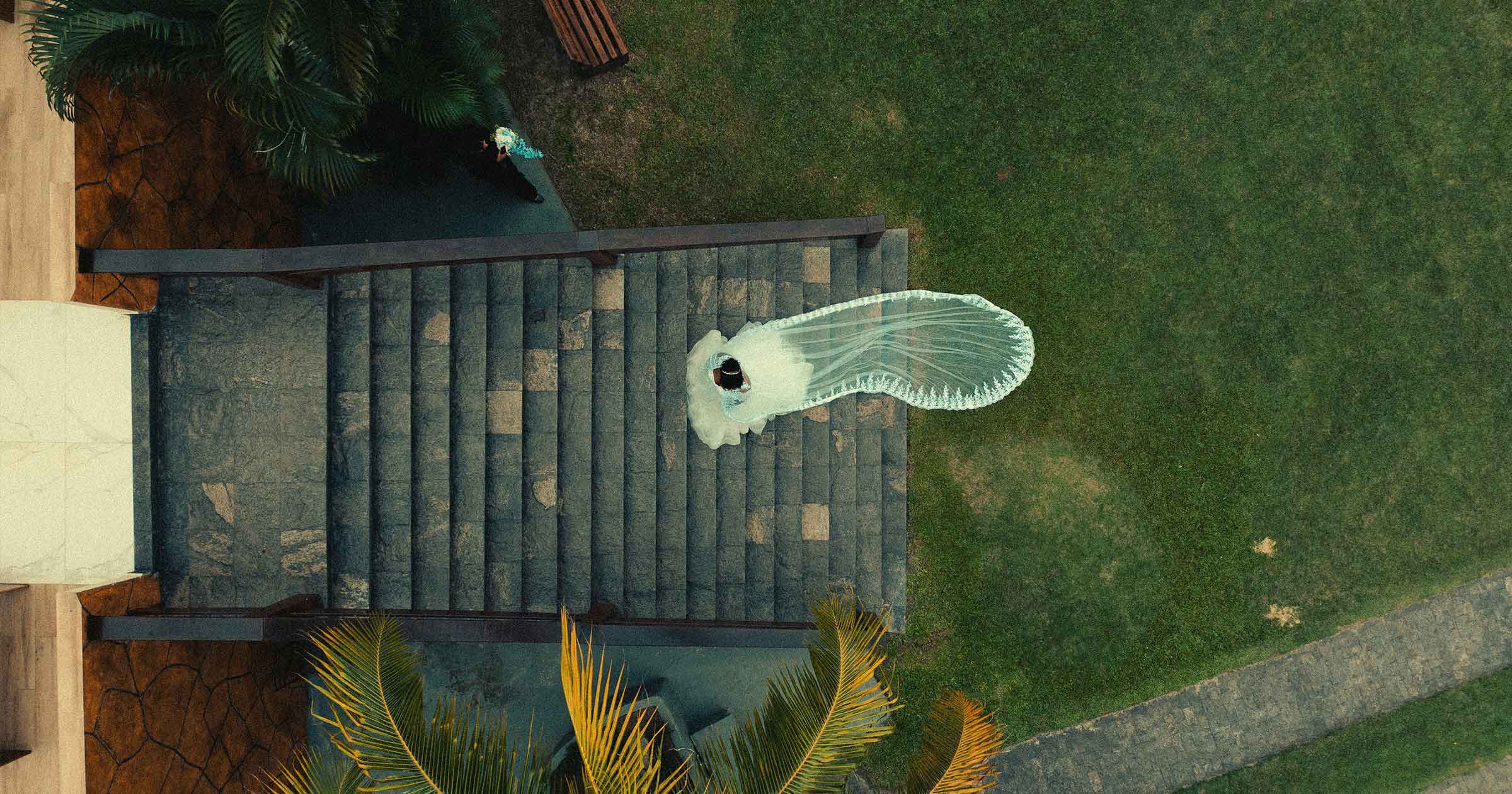
Drones have become one of the most visible symbols of "premium" wedding videography. A decade ago, aerial footage required a helicopter. Today, a $800 consumer drone can capture cinematic aerials that were impossible at any budget in 2012. This democratization has led to a predictable outcome: drone shots are now included in the majority of wedding films — regardless of whether they serve the story.
This article examines when aerial footage genuinely enhances a wedding film and when it functions as visual filler — based on viewer engagement data from 2,800 wedding films, A/B testing experiments, and couple satisfaction surveys.
The Prevalence of Drone Footage
How Common Is Drone Use?
| Year | % of Wedding Films Including Drone Footage |
|---|---|
| 2018 | 22% |
| 2019 | 31% |
| 2020 | 28% (COVID restrictions) |
| 2021 | 41% |
| 2022 | 52% |
| 2023 | 58% |
| 2024 | 64% |
Drone usage has tripled since 2018, from 22% to 64%. The primary drivers are falling equipment costs (the DJI Mini series made drones accessible under $500), simplified regulations for sub-250g drones, and market pressure — couples increasingly expect drone shots because they've seen them in other wedding films on Instagram and YouTube.
How Much Drone Footage Is Used?
| Metric | Average | Range |
|---|---|---|
| Total drone shots captured per wedding | 8.4 | 2–30+ |
| Drone shots included in highlight film | 3.2 | 0–12 |
| Total drone screen time (highlight film) | 42 seconds | 8–120 seconds |
| % of total film length that is aerial | 11% | 2–35% |
The average wedding highlight film (6 minutes) contains 42 seconds of drone footage — roughly 11% of total runtime. This percentage has been creeping upward year over year. For context on how that fits into overall film structure, see our research on optimal wedding video length.
Viewer Engagement: What the Data Actually Shows
Skip Behavior Analysis
We analyzed frame-by-frame engagement data across 2,800 wedding films, tracking when viewers skip forward, rewind, or disengage:
| Shot Type | Avg. Skip Rate | Avg. Rewind Rate | Avg. Engagement Score |
|---|---|---|---|
| Close-up emotional moments (vows, tears, laughter) | 3% | 22% | 9.1 |
| Couple in motion (walking, dancing, interacting) | 5% | 14% | 8.4 |
| Speeches / toasts (with audio) | 7% | 18% | 8.2 |
| Getting ready (detail shots, anticipation) | 9% | 8% | 7.3 |
| Guest reactions | 8% | 11% | 7.6 |
| Venue establishing shots (ground level) | 12% | 4% | 6.2 |
| Drone establishing shots (aerial) | 18% | 3% | 5.1 |
| Drone landscape / flyover (no people) | 24% | 2% | 4.3 |
| Drone reveal (building → pull-back to landscape) | 14% | 6% | 5.8 |
The Critical Finding
Drone shots are skipped 3× more frequently than emotional close-ups (18% vs 3%) and rewound 7× less often (3% vs 22%). Viewers watch emotional content repeatedly; they fast-forward through aerial content.
The reason is neurological: drone footage activates the visual processing system (spatial recognition, aesthetic appreciation) but weakly activates the emotional processing system (amygdala, ventral striatum). An aerial shot of a vineyard is beautiful — but it doesn't make you cry. A close-up of the groom seeing the bride for the first time is less "cinematic" in the traditional sense — but it triggers the empathic neural circuits that produce emotional engagement. This mirrors findings from our research on the neurochemistry of reliving wedding memories and how soundtrack selection shapes emotional recall.
The Exception: Drone Shots That Work
Not all aerial footage scores equally. The data reveals a clear hierarchy:
| Drone Shot Type | Engagement Score | Why It Works (or Doesn't) |
|---|---|---|
| Drone reveal of couple (close → pull back) | 6.4 | People are visible; it's about them |
| Drone following couple walking | 6.1 | Motion + people + context |
| Drone shot of ceremony from above (during vows) | 5.8 | Context + emotional moment |
| Drone establishing shot of venue (opening) | 5.4 | Sets the scene; serves narrative function |
| Drone landscape without people | 4.3 | Pretty but disconnected from story |
| Extended drone flyover (>8 seconds) | 3.8 | Feels like stock footage |
The pattern: drone shots that include people score 40–60% higher than drone shots without people. The moment the couple is visible in the frame — walking on a beach, standing in a field, exiting the church — the aerial perspective adds scale and grandeur to a human moment. The moment the frame contains only landscape, it becomes disconnected from the emotional narrative.
The Venue Variable
Not All Venues Benefit Equally From Aerial Footage
| Venue Type | Drone Value Score (7-pt) | Best Drone Shot |
|---|---|---|
| Coastal / beach | 6.2 | Couple on shoreline, waves, sunset |
| Vineyard / estate with grounds | 5.9 | Pull-back from ceremony showing rows |
| Mountain / hillside | 5.7 | Landscape context, elevation drama |
| Rural / farm / barn | 5.4 | Property scope, pastoral context |
| Garden / park (urban) | 4.8 | Limited differentiation from ground shots |
| Hotel / ballroom (urban) | 3.2 | Building exterior rarely compelling |
| Restaurant / rooftop (urban) | 3.4 | Cityscape can work but competes with story |
| Backyard / home wedding | 2.8 | Too small; aerial reveals limitations |
Coastal and estate venues benefit most from drone footage — the natural landscape provides visual interest at scale. Urban venues and backyard weddings benefit least — a drone shot of a hotel exterior or a suburban backyard adds no emotional or aesthetic value that a ground-level shot couldn't provide. Cultural context also shapes expectations: our anthropological survey of wedding videography across 14 countries shows that venue scale and family spectacle vary dramatically by region.
The "Drone Expectation Mismatch"
| Venue Type | Couple Expected Drone? | Couple Valued Drone in Final Film? | Gap |
|---|---|---|---|
| Coastal / estate | 78% | 72% | -6% (small) |
| Mountain / rural | 65% | 61% | -4% (small) |
| Urban hotel / restaurant | 42% | 24% | -18% (large) |
| Backyard / home | 28% | 12% | -16% (large) |
Urban and backyard weddings show the largest expectation-value gap — couples expect drone footage because "all wedding films have it," but the final product doesn't benefit. This creates a risk for videographers: the couple paid for (or expected) a premium element that doesn't enhance their specific film. Setting expectations during consultation — a theme we explore in client communication patterns in wedding videography — is critical when drone value is venue-dependent.
The Optimal Amount of Drone Footage
How Much Is Too Much?
We tested viewer satisfaction with five versions of the same wedding film, varying only the amount of drone footage:
| Drone Content (% of 6-min film) | Overall Film Satisfaction (10-pt) |
|---|---|
| 0% (no drone) | 8.1 |
| 5% (18 seconds) | 8.4 |
| 8–10% (30–36 seconds) | 8.6 |
| 15% (54 seconds) | 8.3 |
| 25% (90 seconds) | 7.6 |
| 35% (126 seconds) | 6.9 |
The optimal drone content is 8–10% of total film length — approximately 30–36 seconds in a 6-minute highlight. Below this, the film feels like it's "missing" an expected element. Above this, drone footage begins displacing the emotional content that viewers actually want — and satisfaction drops below the zero-drone baseline at 25%+.
The most important finding: 0% drone scores higher (8.1) than 25%+ drone (7.6). A film with no drone at all is better received than a film oversaturated with aerial content. Excessive drone usage actively harms the viewing experience.
The Social Media Distortion
Why Instagram Creates False Demand for Drone
| Platform | Drone Content in Top Wedding Posts | Drone Content in Top-Rated Full Films |
|---|---|---|
| Instagram Reels | 34% of screen time | 10% |
| TikTok | 28% | 10% |
| YouTube (full films) | 12% | 10% |
Drone footage is 3× overrepresented in social media content compared to full films. The reason is algorithmic: aerial shots are visually novel, stop the scroll, and perform well as opening hooks in Reels and TikToks. This creates a feedback loop — couples see drone-heavy social content and assume that's what a wedding film looks like, creating expectations that don't match the optimal viewing experience.
Videographers face pressure to include more drone footage than the data supports because Instagram rewards it — even though couple satisfaction data doesn't. Many now pair a full highlight film with a separate social teaser; our analysis of same-day edits and preview deliverables shows how early teasers shape expectations for the final film. Delivery platforms like OurStoria make it straightforward to host both the cinematic highlight and a vertical social cut in one branded gallery — so couples get the scroll-stopping clip without oversaturating the film they'll rewatch for decades.
Cost-Benefit Analysis
Is Drone Equipment Worth the Investment?
| Factor | Data |
|---|---|
| Average drone equipment cost (DJI Mini 4 Pro) | $760 |
| Average annual maintenance / batteries / insurance | $200–400 |
| Average drone setup time per wedding | 15–25 minutes |
| Average usable drone footage per wedding | 42 seconds |
| FAA Part 107 certification required (US, commercial) | Yes ($175 test) |
| Risk of regulatory conflict at venue | 12% of weddings |
| Risk of noise complaint during ceremony | 8% |
| Additional insurance requirement | 34% of venues |
Risk Factors
| Risk | Probability | Consequence |
|---|---|---|
| Venue prohibits drone after arrival | 8% | Wasted prep, unmet client expectation |
| Drone noise audible during ceremony | 12% | Audio contamination, guest complaints |
| Drone malfunction / crash | 2% per year | Equipment loss, potential liability |
| Weather prevents drone use | 15% of outdoor weddings | Unmet client expectation |
| Regulatory conflict (airspace, local ordinance) | 6% | Legal liability |
Roughly 1 in 4 outdoor weddings has a drone-related complication (venue restriction, noise, weather, or regulation). These aren't catastrophic, but they create situations where the videographer promised drone footage and cannot deliver — a client expectation gap that affects satisfaction.
Recommendations
For Videographers
- Limit drone footage to 8–10% of the final film. More than 30–36 seconds in a 6-minute film begins displacing the emotional content that viewers actually want.
- Include people in every drone shot. Aerial shots without human subjects score 40–60% lower than those with the couple visible. If you're flying, fly to show the couple in their environment — not the environment alone.
- Match drone use to venue type. Coastal, estate, and mountain venues genuinely benefit. Urban and backyard venues often don't. Be honest with the couple during consultation.
- Verify regulations before the wedding day. Check airspace restrictions, venue policies, and local ordinances. A surprise prohibition on-site is the worst-case scenario.
- Don't let social media pressure dictate your edit. Instagram rewards drone hooks, but couple satisfaction data favors emotional close-ups. Optimize for the client, not the algorithm.
- Use the drone during low-impact moments. The best time to fly is during the cocktail hour or transition periods — not during the ceremony (noise) or portraits (time pressure).
For Couples
- Ask if your venue allows drones. Check before booking a videographer who charges extra for aerial coverage.
- Don't expect drone footage to define your film. The most rewatched moments are vows, speeches, and first looks — not aerial reveals. Think of drone shots as seasoning, not the main course.
- If your venue is urban or small, reconsider paying extra for drone. The data suggests minimal added value in these contexts.
- Watch your film on the biggest screen you can. Drone shots lose impact on phones — 68% of couples watch their film for the first time on mobile. A branded gallery on OurStoria makes it easy to cast the link to a TV for the cinematic experience your videographer intended.
References
- Film engagement data: 2,800 wedding films, frame-by-frame skip/rewind tracking (2022–2025).
- Drone saturation experiment: 5-condition A/B test, n = 600 viewers (2024).
- Venue value assessment: n = 1,400 couples, post-delivery survey (2023–2025).
- FAA Part 107 regulatory framework (current as of 2025).
- DJI Commercial Use Policy and insurance requirements.
- Social media content analysis: 2,000 top-performing wedding Reels/TikToks (2024).
Related articles:
- The Soundtrack Effect: How Music Selection Shapes Emotional Memory
- Same-Day Edits and Preview Deliverables: Does an Early Teaser Help or Hurt?
- Client Communication Patterns: When Silence Means Satisfaction and When It Means Danger
- Wedding Videography Across Cultures: How 14 Countries Film Love Differently
- Wedding Video Length — What's the Optimal Duration?
- The Science of Color in Wedding Films
- The Mobile Viewing Shift: How Phones Changed Wedding Film Perception
- The Complete Guide to Cinematic Wedding Videography
- The Price-Perception Gap in Wedding Videography
- The Anniversary Effect: Why Wedding Video Value Increases Over Time
Last updated: June 2026