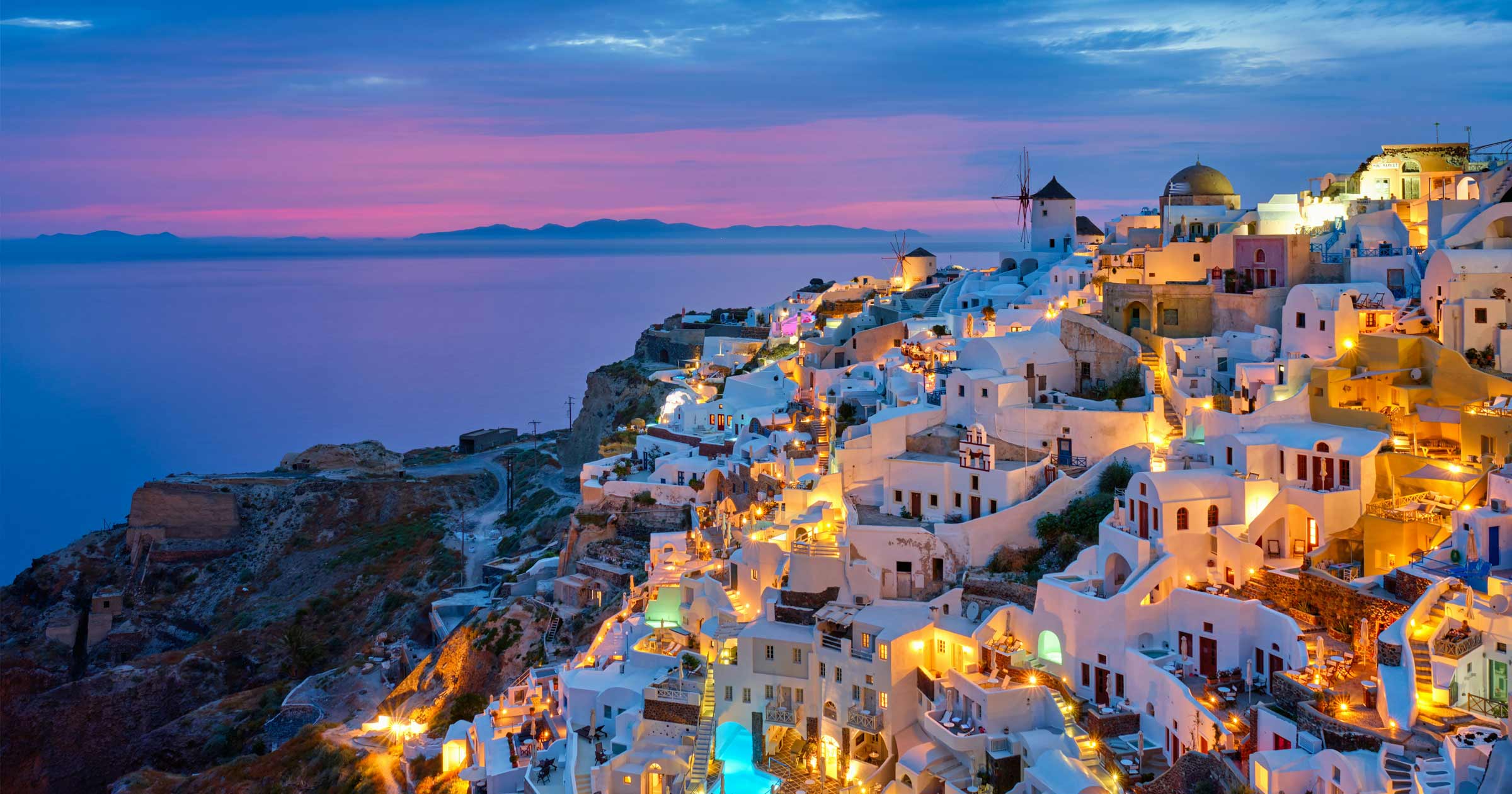
There is no separate "wedding" permit for filming on Santorini: permission comes from the villa, the church and, at archaeological sites, the Ephorate of Antiquities of the Ministry of Culture. Drones must be registered with the HCAA (foreigners without a Greek tax number use a separate form). Home-country licenses are not valid, flying over guests is prohibited, and aerial photography over monuments costs €800 per day plus VAT.
In 2017, Gucci wanted to hold a show on the Acropolis. Not in the museum at its foot, but up there, on the platform between the Parthenon and the Erechtheum: one evening, about three hundred guests, fashion editors, and Hollywood stars. The Greek Central Archaeological Council said no. The explanation was summed up in one thought: the special cultural character of the monuments, symbols of world heritage, is incompatible with such an event.
If Gucci was turned down, your wedding tripod won't get in either. But this story isn't about prohibitions. It's about how power over the shot is distributed in Greece. The stones belong to the Ministry of Culture. The sky belongs to the Aviation Authority. The church belongs to the Metropolis. The roof overlooking the caldera belongs to someone's grandmother, who dries towels on it. For every part of your wedding day, you'll have a different owner and a different yes or no.
This guide is for videographers flying to Greece to film a wedding or elopement, most often Santorini. It covers: what the Hellenic Aviation Authority (HCAA) says about drones (and how to register if you're from the US, UK, or Australia), when permission from the Ministry of Culture is required, the layout of Oia, the caldera, and local churches, how to film an Orthodox wedding, what data protection law says about guests, how to carry gear cases on a ferry, and when the sun sets in Santorini. And finally, how to deliver a film to a family living in Chicago, Thessaloniki, and Melbourne. We run OurStoria—a platform for delivering films to clients, so this last section is our domain. Other countries and cities can be found in the guide directory.
Disclaimer: We are not lawyers or flight instructors. All information about laws, drones, and site regulations is taken from government department websites and the sites themselves as of November 2026. Rules are subject to change, so please check the source before your trip.
Do You Need a Permit to Film a Wedding in Santorini?
The short answer: there's no single "wedding" filming permit on Santorini. Neither the island nor Greece issues a "permitted to film a wedding" document. However, each location has its own owner, and you need to ask them.
| Where are you filming | Who issues permission | What's important |
|---|---|---|
| Villa, hotel, winery | Venue owner | Vendor rules, drone, hours, noise |
| Church or chapel | Parish, chapel owner, archdiocese | Standing positions, lighting, microphone on the priest |
| Streets of Oia and Fira, stairs, observation decks | Fira Municipality, rooftop and courtyard owners | Rooftops are private property |
| Archaeological sites (Ancient Thera, Akrotiri, Acropolis) | Ministry of Culture, local Ephorate of Antiquities | Professional filming only with permission |
| The sky above it all | HCAA (Aviation Authority) + zone map | Registration, pilot certificate, zones |
The island knows how much filming takes place here. In 2018, Fira Mayor Nikos Zorzos told the Greek press that about a thousand official civil weddings take place on Santorini each summer. And alongside them are weddings he called "maimou," or fake ones: ceremonies staged solely for photo ops, without any formal registration. Municipal officials have even received more exotic requests: to marry in a submarine, in a tourist helicopter, on a volcano.
This leads to a practical conclusion. For the locals, you are just one of hundreds of photographers and videographers during the season. The better you understand whose rooftop, whose staircase, and whose church is whose, the fewer unpleasant conversations you'll have in the middle of the day.
We couldn't find any specific municipal regulations for wedding photo shoots in Oia in the public domain. If a couple wants something more than a walk—an arch, flowers, chairs on the observation deck—that's already using a public space, and the question should be addressed to the Municipality of Fira (thira.gov.gr) or the planner who works with them.
Greece Drone Laws
Greece is an EU member state, so drones here operate under the common European regulations of EASA (the European Aviation Safety Agency). These regulations are enforced by the national agency, the Hellenic Civil Aviation Authority (HCAA) (called YPA in Greek). Operator registration is through its system uas.hcaa.gov.gr.
What you need before your first flight. According to the agency's FAQ:
- Operator registration. You receive an operator number, attach it to each drone, and enter it into the drone's Remote ID system.
- Pilot certificate. For categories A1 and A3, an online course and a 40-question online exam are required. For A2, there's also practical self-study in a location where there's no risk of a drone crash, and another 30-question exam covering ground risk mitigation, meteorology, and drone performance.
- Zone awareness. Airports, national parks, and city centers may be closed to drones, restricted, or require permission. Flying is prohibited in areas where there's an ongoing emergency (fire, rescue operation).
The HCAA FAQ doesn't mention insurance. Check your drone insurance requirements at hcaa.gov.gr, and also check whether your home policy covers flights in Greece.
Where and how high. EASA Open Category - flights below 120 meters above ground, three subcategories:
| Subcategory | What's allowed | What does this mean at a wedding |
|---|---|---|
| A1 | Over individuals, but not over crowds | Over a couple on an empty observation deck – yes, over a dinner for 80 people – no |
| A2 | Closer to people: 30 m horizontally from bystanders, 5 m in slow mode | A separate A2 certificate and a drone of the appropriate class are required |
| A3 | Far from people: 150 m from bystanders and from residential and urban areas | An empty beach, cliffs away from villages – not Oia or Fira |
There's a detail that's often overlooked: drones without a class marking (older models) after January 1, 2023, can only fly in A1 if they weigh less than 250 grams, or in A3 if they are heavier. If your drone was purchased before the introduction of these classes, the caldera above the villages is off-limits to it.
Can a Non-EU Resident Register a Drone in Greece?
This is the main point of dispute in search results. Some blogs claim that foreigners are required to register in Greece. Others claim that only people with a Greek tax ID number can register, and everyone else must register in another country. Still others cite three different agency email addresses.
The answer is on the HCAA website, in two places.
Where to register. The agency's FAQ clearly states: an operator based outside the EU and flying in the open category must register in the first EU country where they intend to fly. The same rule is in the EASA FAQ itself. This means:
| Where are you from | What to do |
|---|---|
| From an EU or EASA country (Ireland, Germany, France, etc.) | Home registration is also valid in Greece |
| From the US, Canada, Australia, if Greece is the first EASA country you fly in | HCAA registration |
| From the UK | After Brexit, the UK is no longer a member of EASA, so British CAA registrations are not valid in Greece – the rules are the same as for the US |
| Already registered, for example, in Italy | Italian registration is also valid in Greece, no need to re-register |
What if you don't have a Greek tax identification number? The HCAA website has a separate operator registration form with the note: it "only applies to those who DO NOT have a Greek AFM (tax identification number)." The fields include name, citizenship, permanent address, telephone number, email, and a scanned copy of your passport. This means that a foreigner without Greek documents can register without registering in another country first.
Pilot certificate – separate. EASA puts it bluntly: training and qualifications obtained in your country of residence are not recognized in the EU. FAA Part 107, a British Flyer ID, or an Australian CASA license are not valid in Greece. You need a certificate from an agency of one of the EASA countries – Greek, Italian, Irish, or any other. If you've already passed the EASA exam in Italy or Germany, it applies here as well.
If you're more accustomed to American regulations, we have an article about drones at weddings in the US. It's useful as an example of how FAA regulations work, but it doesn't apply to Greece.
Can You Fly a Drone in Santorini?
Yes, but Santorini is a difficult island for a drone. Three reasons.
An airport in the middle of the island. Santorini Airport is located on the eastern coast, between Kamari and Monolithos. The beaches of Kamari and Perissa, and Ancient Thera on the mountain between them—all are nearby. Airport zones in Greece are shown on the Drone Aware GR (DAGR) map, maintained by the HASP air navigation service. The most up-to-date map is available at dagr.hasp.gov.gr. Check it twice: when planning and the day before the wedding.
Flight Notification. How this works in practice is clearly illustrated by the instructions distributed to its employees by the American School of Classical Studies in Athens. The email should be sent to the HCAA drone department ([email protected]) with a copy to HASP ([email protected]). Please include a brief flight description, a completed "Drone flight notification form" from the DAGR website, a screenshot of the flight zone, and—please note—a written consent from the site administrator, if required: for an archaeological site, stadium, or infrastructure. The flight is initially approved by the HCAA, and finally by the HASP. The instructions don't specify a review period, so it's best to send the letter well in advance, not on the wedding day.
People everywhere. Sunset in Oia means hundreds of spectators on the walls and stairs—precisely the kind of "crowd" that neither A1 nor A2 fly over. Dinner at a villa is the same. Therefore, the real window for a drone flight in Santorini is early morning: an empty caldera, a couple on a cliff or on a boat, a village still half-asleep. Grace and Liam from Perth scheduled a sunrise flight for this purpose—they got both the drone and the empty streets of Oia without having to wait in line.
The most common option for visitors is a local pilot with Greek registration, who knows the airport's flight zone boundary and which villas permit takeoffs. Your job is the shot list and time; theirs is a legal flight.
Wind. More on this in the section on light and the meltemi. In short: during the daytime in summer, a drone might simply not be able to take off over the caldera.
Photography and Filming in Greece
This is the name of the Greek Ministry of Foreign Affairs' page, and it's where almost everyone who Googles this question starts. The most important thing a videographer needs to know is that archaeological sites, monuments, and museums are state-owned, and filming there is under the jurisdiction of the Ministry of Culture.
Amateur or professional. According to the ministerial decision on fees, filming with a simple amateur camera without flash in museums and archaeological sites is free of charge—as long as the images are not used for professional purposes. A paid wedding film is considered professional filming, even if you're filming "just a couple strolling through ruins." Flash is prohibited entirely without permission.
Who issues the permit? The Hellenic Film Commission (the state-run Center for Cinema and Audiovisual Media) describes the procedure:
- one site—an application to the service that manages it: the local Ephorate of Antiquities or a museum. On Santorini, Ancient Thera and Akrotiri belong to the Ephorate of Antiquities of the Cyclades;
- several sites – to the Directorate General of Antiquities and Cultural Heritage;
- UNESCO World Heritage sites, if there are special reasons for protection – through the Central Archaeological Council, the decision is made by the minister. This is the same council that rejected Gucci.
The application includes the filming dates for each site, the crew composition, and a list of equipment. The fee depends on the type of filming and is determined by ministerial decision; payment is made before filming and a receipt is provided. The current procedure and forms are available at culture.gov.gr.
A drone over a monument is doubly expensive. Registration and permission from the HCAA are required, and the Film Commission specifically states: aerial photography over archaeological monuments and historical sites costs 800 euros per day plus VAT. And that's before the question of whether the Ephorate will approve the flight.
Can You Take Wedding Photos at the Acropolis?
Visiting is a yes. Shooting a professional wedding photoshoot on the Acropolis hill without permission is a no, and permits are hard to come by: it's a UNESCO World Heritage Site, as the Gucci story reminds us. A realistic plan for a couple dreaming of the Acropolis in a film: portraits with views of it—from Philopappou Hill, from the Plaka neighborhood, from a hotel rooftop. The Acropolis is in the frame, but you're not on its territory.
And one summer detail. During hot weather, the ministry closes the Acropolis during the hottest hours: from 1:00 PM to 5:00 PM in July 2025, and from 12:00 PM the year before. If a couple is planning a morning stroll around Athens before flying to the island, plan for the morning, not the afternoon.
Oia, the Caldera and Santorini's Churches
Oia. The island's most recognizable village is also the most crowded. The old part is made up of pedestrian streets and stairs; most villas are inaccessible by car; everything is carried by hand. At sunset, the walls and observation decks are crowded. In the morning, until eight or nine o'clock, Oia is almost empty, which is the main reason why serious photoshoots here begin at dawn.
Rooftops belong to other people. The white rooftops and terraces overlooking the caldera almost always belong to specific people: houses, hotels, apartments. The "private" signs here aren't just for show. Climbing onto someone else's roof for a shot of the blue dome is a surefire way to ruin the day for both you and the couple. If you need a rooftop, make arrangements with the owner in advance: many hotels rent out their terraces for photo shoots.
Churches and Chapels. Santorini has hundreds of churches, many of which are not parish churches but family chapels, built with private funds and owned by families. Permission to photograph at a chapel, and especially inside it, is granted by the owner or the priest officiating there. If a couple wants to get married in a specific church, everything is arranged through the planner and the archdiocese, and the question of your position in the church is asked at the same time.
Cruise Days. Fira is the island's capital and the point where cruise passengers disembark: ships are moored at the old port, and passengers ascend to the city by cable car. According to Greek media reports, since 2025, the island has limited cruise passengers to 8,000 per day, and during the high season from June 1 to September 30, each person pays a fee of 20 euros. Eight thousand is still a lot for Fira's narrow streets. If you're planning portraits in Fira or Firostefani, check the ship docking schedule for that date and shoot after the last tender has departed for the ship.
Villas on the Caldera. A typical location is a terrace with a pool overlooking a cliff. For a videographer, this means three things: the railings are low, and beneath them are dozens of meters of drop: position your tripod and stands so a gust of wind doesn't knock them over. The space is small: there's no "quiet corner" for a second camera on a terrace for thirty guests. And the neighbors are close: many villas restrict music and noise after a certain hour—inquire before scheduling speeches for later.
Timeline on the caldera (our estimate for June):
- 6:00 AM – portraits of a couple in empty Oia, drone over the sea, if flight approved;
- 11:00–15:00 — getting ready in the shade, harsh light, wind picking up;
- 17:30 — church wedding or ceremony;
- 19:00 — group shots, soft light;
- 20:00–20:40 — "golden" hour over the caldera;
- 20:40 — sunset, guests look at the sun, and you photograph the guests.
Filming a Greek Orthodox Wedding
If one of the couple is Greek, there will most likely be an Orthodox church wedding. It's structured differently than an American ceremony, which changes both the storyboard and the sound.
Who can get married? The Orthodox Church marries couples where at least one partner is Orthodox. The other, according to the rules of the Greek Orthodox Archdiocese, must be baptized in a Christian church in the name of the Holy Trinity. The couple and the priest prepare the documents; you need to know this for one reason: to understand whether there will be a church wedding at all or a symbolic ceremony.
What won't happen. In an Orthodox wedding, there are no vows spoken by the couple to each other. There is no "I do" to applause. If you're used to building a film around vows, here the anchor points are different:
- the exchange of rings — the koumbaros, the couple's sponsor, swaps the rings three times;
- stefana — crowns joined by a ribbon, which the koumbaros swaps three times over the couple's heads;
- a shared cup of wine;
- the Dance of Isaiah — the couple and the priest circle the table three times, during which guests often shower them with rice;
- readings and chants, which provide the sonic fabric of the ceremony.
Sound. The main voices are the priest and choir, not the couple. A lav mic on the priest is only possible with his consent—ask in advance through the koumbaros or planner, not five minutes before the service. A recorder at the lectern and a second one in the choir will save more than a lav mic on the groom, who will only say a few words during the service. For more information on assembling such a set, see our guide to recording audio at a wedding.
Where to stand. There's almost no room in the small island church: the family stands tightly together, the koumbaros next to the couple. A long lens from the doorway and one camera on a tripod to the side (if allowed) are usually the maximum. The Dance of Isaiah takes place right in front of you, and rice flies into the lens: a protective filter wouldn't hurt.
A long service means a long film. A church wedding lasts about 40–50 minutes (our estimate based on a typical rite), and the family will want to watch it all. But not everyone will watch the whole thing. Papou Stavros will look for the moment when the crowns were changed over his grandson's head, just as they once did over his own. Lily's mom—the rings. Break the service into chapters: entrance, rings, stefana, cup, Dance of Isaiah, exit. In OurStoria client galleries, chapters can be imported directly from Premiere Pro or DaVinci Resolve markers, or set manually—we described how this works in our article about wedding film chapters.
Getting Married in Greece as a Foreigner
For a videographer, this isn't a legal question, but a screenplay one: will the film feature a real marriage registration and who conducts it?
Civil marriage. A marriage license is issued by the municipal mayor, and the civil ceremony is conducted by the mayor or deputy mayor. According to the procedure outlined by the state registry of procedures, the upcoming marriage is announced in the local daily newspaper. After submitting the documents, there is a week to wait for objections, and the license is valid for six months. Foreigners need their own documents: a birth certificate, a certificate of no impediment to marriage from the consulate, and official translations. Check the list with your municipality and your consulate: British citizens should contact the British consulate in Greece, and Americans should visit the website of the US Embassy in Greece. Same-sex marriage has been legal in Greece since 2024.
Religious marriage. An Orthodox wedding in Greece has the same legal force as a civil marriage and is then registered at the registry office. For you, this means there may not be a separate "town hall registration."
Symbolic ceremony. Many couples register at home, but on Santorini, they hold a ceremony for guests at a villa. They write the script themselves, as do the vows. The sound must be impeccable: the wind on the caldera erases voices faster than you think.
What to include in the contract: where the registration takes place (if in Chicago a week before Santorini, it's a separate shoot), who leads the ceremony and in what language, and whether a lav mic can be put on the officiant.
Photographing Guests in Greece: GDPR and the Hellenic DPA
In Greece, the EU General Data Protection Regulation (GDPR) applies, together with Greek Law 4624/2019, which supplements it. Videos of recognizable people are considered personal data. This is monitored by the Hellenic Data Protection Authority, or ΑΠΔΠΧ in Greek.
Consent to film is not consent to publish. This is clearly demonstrated by a recent decision by the Greek authority, although it was not about a wedding. A plastic surgeon's patient signed a consent form for "before and after" photographs—for medical purposes, without revealing her identity. At her next appointment, she explicitly stated that she did not want the photos to appear on social media. The next day, they appeared on the clinic's Instagram and Facebook pages—with her face cropped, but still recognizable. After her complaint, the posts were removed. A few months later, they reappeared.
The doctor explained that it was an accident. The authority rejected this argument. It obligated him to keep a record of consents and withdrawals for each publication and rewrite the consent form: it must state the purpose of the publication, not just the method. Simply stating "we will hide your face" on the form isn't enough; it must include "why and where we will show it."
Translate this to a wedding. The couple agreed to be photographed. The guests know they are being filmed. But a teaser on the studio's Instagram is a different purpose, and it should be stated separately.
What to do in practice:
- Contract with the couple. Separate clause: can the footage be used in portfolios and advertising, where exactly, and whose faces—the couple, guests, children—can it be used?
- Warning to guests. A line in the invitation or on the wedding website: there will be photography and video recording at the wedding.
- Advertising—only with those who agree. Guests remain in the film for the family.
- Keep a record. If any guest has asked not to be shown in public videos, write it down. The Greek authority expects this kind of record.
The film does not have to be public. Once the film with guests is on YouTube, you have no control over who sees it or where. It is safer to keep it in a private gallery for the family. In OurStoria's client galleries, viewers can access the film via a link without registering. The gallery can be locked with a password, and you can edit the teaser for social media separately—only for those who agree.
Santorini Sunset Times and the Meltemi Wind
Sunset. Santorini is famous for its sunsets, and the whole day here is planned around the sunset. We calculated the time using the standard formula for the sun's position:
| Date | Sunset in Oia | "Golden Hour" (from +6° to -4°) | From sunset to end of civil twilight |
|---|---|---|---|
| April 15 | ~7:52 PM | ~51 min | ~27 min |
| May 15 | ~8:18 PM | ~54 min | ~29 min |
| June 21 | ~8:40 PM | ~57 min | ~31 min |
| July 15 | ~8:37 PM | ~56 min | ~30 min |
| August 15 | ~8:10 PM | ~52 min | ~27 min |
| September 15 | ~7:26 PM | ~50 min | ~26 min |
| October 15 | ~6:43 PM | ~51 min | ~26 min |
In Athens, sunset is 8-11 minutes later. On October 31, 2027, Greece switches to winter time, and sunset moves an hour earlier: in mid-November, the sun sets in Oia around 5:10 PM.
Note the last column. Twilight in the south is shorter than in Northern Europe: from sunset to darkness is less than half an hour. If you're used to the long blue hour in London or Iceland, it's almost non-existent here. Take portraits before sunset, not after.
Oia faces west, so the sun sets directly into the sea, and the horizon is open—the astronomical sunset here coincides with the real one. The downside: at sunset, the sun hits the lens directly and into the couple's eyes. The most flattering shots are often not of the couple facing the sun, but of the couple in sidelight and the warm faces of the guests gazing into the sun.
Meltemi. The summer north wind of the Aegean Sea blows from approximately mid-May to mid-September. It arrives in clear weather, without warning, and is strongest during the day, often dying down by night. For a videographer, this presents three challenges:
- sound — a lavalier microphone is useless on an open terrace in the wind without a windscreen; you need a "fur" windscreen and a backup recorder for each person speaking;
- drone — gusts on the caldera during the day can be stronger than a lightweight drone can withstand, so the best time to fly is morning and sometimes late evening;
- dust — volcanic dust and sand fly into joints; change lenses in the car or indoors, not on the cliff.
Heat. Santorini is windy, but the sun is harsh, and there is no shade. Cameras overheat, especially when shooting 4K with a black body in direct sunlight. Keep a spare camera and batteries in the shade and a cooler bag, but not colder than the surrounding air, otherwise condensation will form on the lenses. And bring water and a hat. Eight hours on a cliff in July without water is the biggest risk of the day.
Off-season. April-May and late September-October have softer light, fewer crowds, and a milder meltemi. However, the weather is less predictable, and fewer ferries operate to the island during the off-season. If you're planning a wedding in October, plan an extra day for portraits.
Getting to Santorini with Camera Gear
There are two ways to get to Santorini: by plane to the island's airport (from Athens and, in season, direct flights from Europe) or by ferry from Piraeus, Rafina, or neighboring islands. Ferries arrive at the new port of Athinios, located below the cliff, from where a serpentine road leads up.
Ferry: 50 kilos and one important "but." The general terms and conditions of Blue Star Ferries, one of the main carriers to the Cyclades, state that passengers may carry baggage up to 50 kilograms or one cubic meter free of charge. Baggage is stored in designated areas as instructed by the crew—usually in racks near the entrance from the car deck. And then there's something worth reading for anyone transporting electronics: valuables are not allowed in baggage; they can be deposited with the Chief Purser. The company is responsible for baggage only if it is deposited and a receipt is issued. The company is not responsible for items left in cabins, common areas, or vehicles.
Back-of-the-napkin math (our estimate). Maya from Toronto is filming Lily and Theo on the caldera and is sailing from Piraeus. She is carrying a backpack with two cameras and lenses, a case with a gimbal, a bag with lights, and a tripod. All weigh under 50 kg. However, the backpack with cameras and lenses is exactly the kind of "valuables" that cannot be left on the rack at the entrance: it travels with Maya in the cabin. The case with the gimbal can be checked in with a receipt or kept on you. Only items that you can safely lose go on the rack: the tripod and stands. And most importantly, when disembarking in Athinios, the crowd disembarks at the same time, and you need to be the first at the rack.
Plane. If you are flying to the island, the rules for batteries and baggage are those of the airlines and general aviation; domestic flights often have lower weight limits than intercontinental flights. Check this before purchasing your Athens-Santorini ticket, not at the check-in counter.
Car and parking. Renting a car or ATV is common on Santorini, but an ATV isn't an option if you have gear cases. In Oia and Fira, leave your car in the parking lots at the entrance, then walk up the stairs. If your villa is on the caldera, ask in advance where the nearest point where a shuttle can pick you up is, and how many steps there are from there to the terrace. A "few" on Santorini might mean 200.
Delivering the Film to Chicago, Thessaloniki and Melbourne
A Santorini wedding is almost never exclusively Greek. Let's get back to Lily and Theo. They live in Chicago, along with Lily's family and half of her friends. Papou Stavros and Theo's entire Greek family live in Thessaloniki. Theo's aunt lives in Melbourne, part of one of the largest Greek communities outside of Greece.
| Where to watch | Time difference with Greece in summer (EEST, UTC+3) |
|---|---|
| Thessaloniki, Athens, Santorini | 0 |
| London | -2 hours |
| Toronto, New York | -7 hours |
| Chicago | -8 hours |
| Melbourne, Sydney | +7 hours (before Australia switches to daylight saving time in October) |
Send the link at 10 AM Greek time—it's 2 AM in Chicago, 5 PM in Melbourne. There's no perfect time for everyone. But there's a better idea than just sending a link.
Joint Premiere. Greek families love to watch the film together: in Thessaloniki, they'll gather at Papou's, in Chicago, at Lily's parents'. If the film opens for everyone at the same time, it's no longer a "link in a chat" but an event. For example, Sunday, 7:00 PM in Thessaloniki is 11:00 AM in Chicago. Melbourne gets 2:00 AM—Theo's aunt will watch it in the morning, and the film will already be open.
What works here:
- One link that opens without registration. Papou Stavros will not create an account.
- The film, ceremony chapters, speeches, and photos—all next to each other. Otherwise, the links will be spread across three family chats, and half of them will be lost in a year.
- Interface language. If the family doesn't read in English, buttons in their language help.
- Everyone watches, the family downloads. Two hundred guests will watch the film, and the parents will keep the original.
This advice works with any tool: a cloud folder, a website page, or a separate archive password. Naturally, we prefer our own. In the OurStoria client gallery, your film, clips, and photos are stored under a single link with your logo; viewers don't need to register. For general viewing, there's a premiere: you select a date and time, and until that moment, the gallery link opens a countdown screen, and each viewer sees the start time based on their phone or laptop clock—11:00 AM in Chicago, 7:00 PM in Thessaloniki. Guests can add the premiere to their calendar, and the gallery will open automatically at the appointed time. The premiere must be scheduled at least 24 hours in advance. It's available in the Pro and Studio plans, as well as during the trial period.
Language options: the gallery interface is translated into eight languages—English, German, Spanish, French, Italian, Portuguese (Brazil), Romanian, and Ukrainian—and is selectable for each project. Greek is not included. For Theo's family, the gallery will remain in English, but any custom text you write—like greetings and video captions—can be written in Greek. We described how the language is selected in our article on client gallery language. Downloads can be protected with a separate password, which only the family knows. You can learn more about the process in our guide to delivering videos to clients, and general data on weddings abroad can be found in our research on destination filming. If you're also visiting Italy, London, or Canada this season, check out our guides to Italy, London, and Banff.
Start a 7-day free Pro trial →
A gear case left on a ferry rack. A drone raised above a crowd at sunset. Someone else's rooftop for a blue dome. All this can be solved if you find out in advance.
Lily will open the link for the second when Papou Stavros, standing behind the koumbaros, silently repeated the priest's words—the same ones chanted over him sixty years ago in Thessaloniki. And for the sound of rice pattering on the floor during the dance of Isaiah, while the meltemi slams the church door.
Related articles:
- All Wedding Filming Guides for Videographers
- Filming Weddings in Banff & the Canadian Rockies — Parks Canada Licences, Drone Ban, Moraine Lake Shuttles and Light
- Filming Weddings in Italy: Lake Como & Tuscany — Drone Rules, Villas, Churches and ZTL
- Filming Weddings in Germany: Drone Rules, Castles, Registry Offices and Privacy Law
- Destination Wedding Videography: Logistics, Storytelling Challenges, and Satisfaction Data From 1,400 Events
- How to Deliver Wedding Video to a Client: A Step-by-Step Workflow
- Wedding Film Chapters: How to Add Them from DaVinci Resolve and Premiere Pro
- How to Record Audio at a Wedding: Vows, Toasts, Readings and the Kit
- Wedding Drone Videography: FAA Part 107 Rules, Venues and Gear (2026)