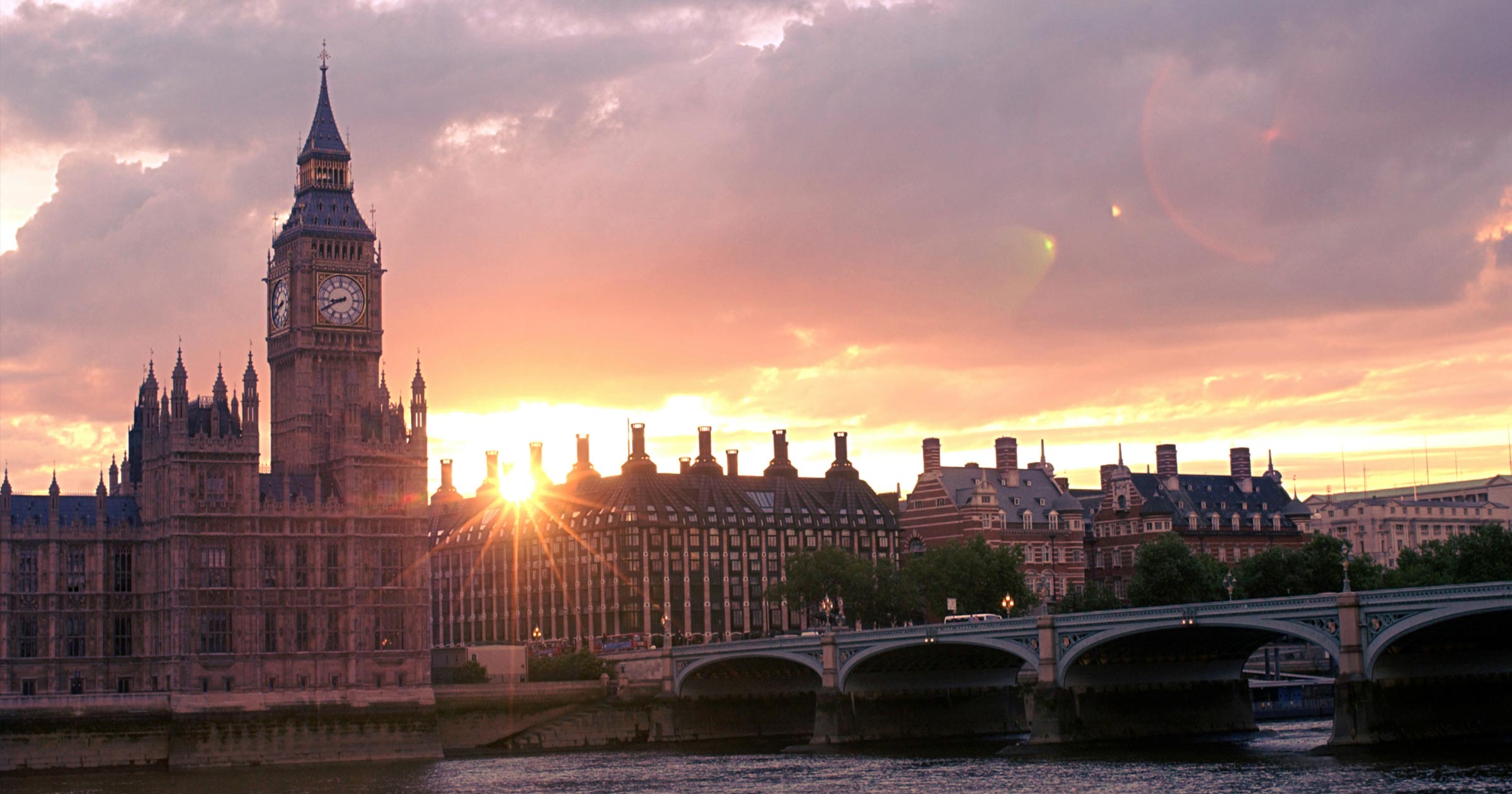
You don't need a permit to film a wedding on London streets with a handheld camera and a crew of five or fewer. A tripod in Westminster or the City needs a Notice of No Objection, a Royal Parks walk costs £120 for one hour, and drones need a UK Flyer ID and Operator ID.
In London, you can film an entire wedding within a single postcode. Morning: getting ready at a hotel in Marylebone. Noon: the ceremony at Old Marylebone Town Hall—fifteen minutes that make all the difference. Then a stroll through Regent's Park, an evening in a wood-paneled pub with speeches that no one rehearsed.
On the map, these are three neighborhoods. On paper, they belong to three different owners. The streets belong to the borough of Westminster, which has its own rules for tripods. The park belongs to the Royal Parks charity, which has its own permit, its own fee, and its own hourly limit. The sky above all this is a restricted airspace zone, and you'll have to go to air traffic control to obtain a drone permit.
This guide is for videographers shooting weddings in London: locals and those visiting from New York, Sydney, or Dublin. Inside: permits by district, Royal Parks and the City of London, CAA drone regulations, register office ceremonies, UK GDPR, light, the Congestion Charge—and how to deliver the film to a family on three continents.
All amounts are in pounds; rules and fees are current as of November 2026. Before the 2027 season, check the agency's website—links are provided as we go. If you're planning trips to different countries, all our guides are collected on the Wedding Filming Guides page.
Do You Need a Permit to Film in London?
The short answer: on the street with a camera in hand and a small crew—usually no; with a tripod in the city center, in the Royal Parks, in the City Gardens, and at Tower Bridge—yes.
The long answer begins with the fact that there is no single "permit to film in London." The city is divided into 32 boroughs plus the City of London, each with its own film service. Film London collects their rules in one place and maintains contact information, but the boroughs themselves issue permits.
Small Crew. Film London formulates the rule this way: if there are five or fewer of you, including participants, you're a small crew. You can film on a public street with a handheld camera that doesn't obstruct anyone's path without any paperwork. Note the "including participants" part: a couple, you, and your second shooter are four. A photographer is fifth. A bridesmaid with a bouquet is sixth, and you're no longer a small crew.
Tripods are a limitation. Many boroughs allow small crews to use tripods. But Film London states explicitly: in Westminster and the City of London, any crew with a tripod requires a Notice of No Objection—a letter from the borough stating it has no objection. Westminster adds bluntly on its website: many boroughs allow tripods, Westminster does not. And Westminster is Mayfair, Soho, Covent Garden, Marylebone and the embankment near Parliament, that is, half of “postcard” London.
| What | How does it work |
|---|---|
| Handheld camera, up to 5 people, not disturbing anyone | No permit required on public streets; Film London still recommends notifying the local film service |
| Tripod in Westminster or the City of London | Notice of No Objection, request in advance |
| Submission deadline for small teams | minimum 3 days (Film London); in Westminster, the deadline is calculated based on the fee payment |
| District fees for Notices | from free to £25–£100 (Film London), in Westminster — according to the list price + 20% VAT |
| Private property, interiors, hotel courtyards | Permission from the owner, not the district |
And one caveat, which Film London writes in small print but the police enforce in large: a Notice is not a "carte blanche." If a crowd of tourists unexpectedly gathers around you and blocks the sidewalk, a constable may ask you to leave, with or without a notice.
Buildings are allowed to be photographed. A question visitors often ask: "Can I photograph the Shard, St. Paul's, or the Gherkin—will I be infringing someone's rights?" The UK Copyright Act (Copyright, Designs, and Patents Act 1988, Section 62) clearly states that a photograph or film of a building permanently standing in a public place does not infringe copyright. The architecture in the background is yours. The only question is where you stand when you photograph it.
Wedding & Lifestyle Photography in the Royal Parks
London's eight largest parks—Hyde Park, Kensington Gardens, St. James's Park, Green Park, Regent's Park with Primrose Hill, Richmond Park, Greenwich Park, and Bushy Park—are owned not by the city or any of the boroughs, but by the charity The Royal Parks. It also manages Brompton Cemetery and Victoria Tower Gardens near the Houses of Parliament.
Royal Parks' policy (March 2026 edition) begins with a phrase worth reading twice: any filming, photography, or audio recording in parks requires permission. The exception is personal filming, which Royal Parks defines very narrowly: footage and recordings that are not published or shown to the public, taken with small, hand-held devices like a mobile phone. Your camera with a lav mic does not fit this definition under any reading.
The policy further states explicitly: anyone wishing to shoot a wedding or lifestyle shoot—photos or video—in any of the royal parks requires a permit. The conditions are as follows:
| What | Condition |
|---|---|
| Price | £100 + VAT (£120 with VAT) — "for one photographer only" |
| Duration | exactly one hour |
| People | up to 10 people |
| Where | only in designated park areas |
| Submission deadline | minimum 10 days (the policy adds: applications less than 5 days in advance are not guaranteed) |
| Insurance | public liability, minimum £5 million |
| Confetti | prohibited |
| Refunds | after issue — no |
| Regent's Park | separate online booking |
Three details that trip up videographers.
"One photographer" means exactly that. A permit is issued for one person with a camera. If you and a photographer are working on a walk, check with Royal Parks in advance whether a second permit is required, and specify in your application that you will be filming. The policy specifies "photography or filming," so don't expect the photographer's permit to cover the videographer. Save the answer in your phone: the ranger doesn't care who paid.
Ten people and an hour isn't enough. A couple, a photographer, you, a second cameraman, and two witnesses—that's six. If a couple wants "all the family by the pond in St. James's," it's not a lifestyle shoot, but an event. And an hour is a real hour: the walk from one point to the other in the park is included in the hour. In Hyde Park, it's a fifteen-minute walk from the Serpentine to the Italian Gardens.
Portfolios are commercial. Royal Parks' policy states specifically: using royal parks footage for commercial purposes requires permission, "this includes professional portfolios." A wedding permit covers couples' shoots. If you want to include Hyde Park footage in a website showreel or advertisement, check whether your permit covers it.
One more minor point: filming near park playgrounds is generally prohibited, and Royal Parks designates Brompton Cemetery, memorials, and Victoria Tower Gardens as sensitive areas—applications there are reviewed separately and more strictly.
Hampstead Heath and Kew Aren't Royal Parks
Two famous green spaces often confused with royal parks.
Hampstead Heath is managed by the City of London Corporation. For small wedding and portrait shoots at the Hill Garden and Pergola, there's a two-hour online license for £234—"for a small number of participants and handheld equipment." And most importantly: Monday to Friday only, not weekends or bank holidays. A Saturday wedding with a walk through the pergola gallery is out of the question. At the time of inspection, the Pergola was undergoing renovations and had scaffolding in place—please review photos of the current condition before promising the couple this shot. Recreational drones are prohibited on the Heath, and requests will take up to 14 working days to respond.
Kew Gardens operates by its own rules—with its own wedding photography permit system and its own list of prohibited items. Current terms and conditions are available at kew.org.
Film and Photography Permissions in the City of London
The Square Mile is a world unto itself. The City of London is not just another borough, but an independent corporation with its own police force, its own gardens, and its own rules. For a videographer, this means two things.
Streets. On public roads, the City issues a Notice of No Objection for a fee (+ VAT):
| What | Fee |
|---|---|
| Small crew, handheld camera, up to 5 people | £95 |
| Camera and tripod, up to 10 people | £210 |
The fee is collected after your application has been approved, and payment must be made before filming.
Corporate Property. The rule is stricter here: on City Corporation-owned property, you must first contact the Film team – regardless of crew size. The list includes venues favored by wedding couples: Leadenhall Market (that Victorian market with its red and gold arches), the Barbican—both the Centre and the Estate with its concrete terraces and ponds, and the Guildhall and Guildhall Yard. If a couple asks for "a few shots in Leadenhall after dinner," it's not "a few shots," it's an application.
Filming and Photography in City Gardens
City Gardens are small green courtyards and former churchyards between office towers. The most famous among couples is St. Dunstan in the East, a roofless church overgrown with ivy. A wedding and portrait license at City Gardens costs £294 for two hours, from 8:00 AM to 6:00 PM, and can be applied for online or by email at [email protected]. The City website doesn't say whether the license includes video or how many people are allowed—please ask both questions in the email.
Tower Bridge
Tower Bridge is also owned by the City Corporation, although it's located outside the City of London. Filming the bridge from the embankment is permitted (see above for buildings). However, filming on the bridge's sidewalks, on the roadway of Tower Bridge Road, inside, and in the air requires an application through FilmApp—at least five working days in advance. The City also states that a location fee applies. Private drone flights from the bridge are prohibited, while commercial ones are considered on a case-by-case basis. Weddings inside the bridge require renting a venue, a separate matter through Venue Hire.
Can You Fly a Drone in London?
Yes, but not where the couple envisions the shot.
CAA: What do you need to fly a drone at all?
In the UK, drone regulations are set by the CAA (Civil Aviation Authority), and it's not EASA: British regulations have a life of their own since Brexit. They have changed significantly since January 1, 2026. According to the Drone and Model Aircraft Code (March 2026 edition):
- A Flyer ID is required if the drone weighs 100g or more. This is a free online test; the ID is valid for five years.
- An Operator ID is required for drones weighing at least 250g, and at least 100g if the drone has a camera. This applies to virtually any wedding drone, including the lightest ones. It costs £12.34 per year, is renewed annually, and can only be obtained by those over 18.
- New drones released since January 1, 2026, carry UK class marks UK0–UK6. Those purchased earlier must fly according to the rules for their weight.
- Remote ID is mandatory for UK1, UK2, and UK3 classes from January 1, 2026.
- Third-party insurance is mandatory if you are being paid for photos or videos.
For visitors – this is the most important thing. The CAA states explicitly: it does not recognize foreign registrations and qualifications. Your US Part 107, Australian CASA accreditation, or European operator registration are not valid in the UK—you must obtain a Flyer ID and Operator ID from the CAA before your flight. We discussed how this works in the US in our article on drone wedding filming and FAA regulations—the logic is similar, but the paperwork is different.
How many meters from guests
Wedding drone work is usually done in the Open category, which is divided into three subcategories. Here's what each one means at a wedding:
| Subcategory | What kind of drone | What does it mean at a wedding |
|---|---|---|
| A1 — Over People | up to 250g or class UK0/UK1 (C1 — until the end of 2027) | Can fly closer to people and even above them — but never above a crowd |
| A2 — Near People | class UK2 (C2 — until the end of 2027) + A2 Certificate of Competence | No closer than 30m to strangers (5m in low-speed mode), not above them |
| A2 for drones up to 2kg without UK2/C2 class | — | No closer than 50m to strangers, not above them |
| A3 — Far from People | UK2–UK4, DIY drones and any drones manufactured before 2026 (up to 25 kg) | 50 m from people and 150 m from residential, recreational, and commercial areas |
Height — no more than 120 meters. And the key word for weddings is "crowd." The CAA defines it as a group of people who cannot quickly move away due to other people around them, and directly cites parties and crowded parks as examples. Guests standing in tight rows at a ceremony constitute a crowd for any drone, even a 249-gram one.
A drone heavier than 250 g, purchased before 2026, is likely flying in A3 — and 150 meters from any built-up area in London means "almost nowhere."
Airspace: Heathrow, City, and Central London
Three things above London that ruin aerial photography plans.
Airport Flight Restriction Zones (FRZ). Heathrow, London City, Gatwick, and other airports have Flight Restriction Zones, where flying is permitted only with permission from the airport itself. The boundaries are available on the NATS map and in apps, but the CAA warns that the built-in maps in drone software can be out of date; it's important to check with a current source.
One story explains why airports are so nervous. On December 19, 2018, a week before Christmas, a Gatwick employee reported seeing a drone over the airport perimeter. The airport closed its only runway. Reports of drones continued throughout the night and the following day; the runway was partially reopened only on the morning of December 21. About a thousand flights were canceled or diverted, and more than 100,000 passengers were stranded before the holidays. Whoever launched the drone was never found. After Gatwick, no one in Britain takes "I'll be quick, just five minutes" as a joke.
Restricted areas in the center. Central London has three restricted airspace zones—Hyde Park, the City of London, and the Isle of Dogs (R157, R158, and R159). Flying there requires an Enhanced Non-Standard Flight approval through NATS. NATS asks for applications at least 21 days in advance and warns that London zones may take longer. Submitting an application is not a permission.
The Thames. If you take off or land on the foreshore (the riverbank exposed at low tide) or from a vessel, you need permission from the Port of London Authority—at least three working days in advance, with a flight plan, a risk assessment, and insurance. Taking off from an embankment requires the written consent of whoever owns that embankment.
Royal Parks and Drones
Since 2015, drone flights have been effectively banned in Royal Parks. Legally, this is cleverly structured: according to park regulations, flying a "model aircraft" becomes an offense as soon as a prohibiting notice is posted or a constable asks you to stop. The notices are posted.
The only recreational space is Flying Field in Richmond Park, and that's for recreational flights. For commercial filming, Royal Parks can issue written permission, but a CAA license, risk assessment and method statement, flight plan, and drone specifications are required—and for Hyde Park, Kensington Gardens, St. James's, Green Park, Regent's Park, and Primrose Hill, NATS approval is also required. A minimum ten-working-day period is required, and the fee is a filming fee plus a drone fee. And Royal Parks is forthright: suitable locations are few and there are no guarantees. A wedding drone flight over the Serpentine is not a matter of pilot skill, but of weeks of paperwork with an unpredictable outcome.
A Drone Plan That Works
A realistic setup for a London wedding is as follows: central London: no drone; aerial footage: at a country venue. A Surrey estate, a barn in Hertfordshire, a country house in the Cotswolds – you're dealing with one landowner, not three agencies.
Pre-flight checklist:
- Flyer ID and Operator ID from the CAA – yours, not "someone I know."
- Operator ID tag on the drone and, for UK1–UK3, Remote ID enabled.
- Third-party insurance valid in the UK.
- NATS map for the takeoff point – is there a FRZ for the nearest airfield?
- Written consent from the site owner for takeoff and landing.
- Distance diagram: where the guests are standing, where the couple is walking, and where you are shooting from. No shooting above the ceremony rows.
Filming a Register Office Ceremony
Many London weddings begin at the register office—and it's a completely different experience than a ceremony at a country estate.
Take Westminster Register Office in Old Marylebone Town Hall, one of London's most famous registry offices. Its rules are typically short and to the point: the photographer and/or videographer at the ceremony may be present and do not count as seated guests; they must work according to staff instructions. Guests are typically allowed into the hall 30 minutes before the ceremony begins. The ceremony itself lasts approximately 15-20 minutes. All halls have Bluetooth speakers for entrance, signing, and exit music—and the music must be essentially non-religious: a civil ceremony in England cannot be religious.
What does this mean for the videographer:
- Fifteen minutes is all it takes. No second takes. Please coordinate with the staff beforehand whether you want to use a lapel microphone for the registrar or groom—different offices have different attitudes toward microphones.
- The speaker sound is not your sound. The music is playing from the speaker in the hall; you'll still use your own for the film. Record a clean track of the vows separately (for details, see the article on recording audio at a wedding).
- "Book signing" is no longer a book. As of May 4, 2021, paper registry books are no longer required in England and Wales: the couple signs a one-page marriage schedule, and the entry is entered into the electronic registry after the ceremony. A certificate is not issued at the ceremony—it must be ordered separately. If the couple dreams of a "signing in an old book" shot, explain in advance that they will be signing a sheet of paper.
- Confetti—on the steps only and only biodegradable. Plan your location for the shot outside.
Each office sets its own rules, so before any registration—not just at Westminster—check with the office about video, microphones, and lighting.
For couples from abroad. To legally marry in England, you must submit a notice at least 29 days in advance and have lived in the registration district for seven days beforehand, according to GOV.UK. Couples from the US or Australia often register at home, while in London, they hold a celebration and a symbolic ceremony. This is good news for you: a symbolic ceremony doesn't have a fifteen-minute time limit set by the registrar, but it does have the venue's rules.
Is It Illegal to Film Someone Without Their Permission in the UK?
The short answer for a wedding videographer: filming guests at a hired wedding is fine. The complications arise when you use the footage.
Guests and you are under different rules. The UK GDPR does not apply to the processing of a person's data "in the course of purely personal or domestic activities." A woman filming a toast on her phone falls under this exception. You are not: you are filming for money, which means the guests' faces and voices are personal data to you, which you process as a business. The CAA, in its drone code, states the same thing in a nutshell: if you are filming for commercial purposes, you have the responsibilities of a "data controller."
In practice, this means:
- Contract and notification. Specify in the contract that video and audio recording will be conducted, and ask the couple to notify guests (a line on the wedding website or in the invitation is the easiest way).
- What's private remains private. Film London formulates the test this way: did the person have a reasonable expectation of privacy? Speaking into a microphone in front of a hundred guests is public by nature. A lav mic that keeps recording after the groom has walked off to the car with his brother is something else entirely. Such clips don't make it into a film or onto social media.
- Children. Film London writes that publishing images of children without the child's and/or parents' consent is rarely appropriate. Especially for a portfolio.
- Storage. Store your footage securely and delete what is no longer needed—the CAA also advises this.
- ICO Registration. If you operate in the UK, your business will likely be required to pay an annual data protection fee to the ICO regulator. You can check whether this applies to you and how much to pay in the self-assessment at ico.org.uk.
We are not lawyers, and this is not legal advice. If your case is unusual—for example, filming getting ready in a house with strangers—check the law or consult a lawyer.
And one more thought about speeches, which concerns delivery. A well-recorded toast is often re-watched by the family, but few are willing to search for it within an hour-long film. That's why many studios deliver speeches as separate clips. OurStoria's client gallery is set up this way: the film, individual clips of vows and toasts, and photos are all located side by side under a single link. Anything recorded with a lavalier microphone between events isn't included anywhere—the gallery only contains what you upload.
Best Light for Wedding Filming in London
London's light isn't "always cloudy," as visitors often think, but rather very different seasons with very different day lengths.
Summer — daylight until 10 p.m. At the end of June, the sun sets around 9:20 p.m. summer time, and civil twilight ends around 10:10 p.m. (our estimate). Golden hour occurs after dinner, and this is the best news for a videographer: the walk can be scheduled between the main course and cake, when guests are busy and the light is soft and warm. The downside is that the midday ceremony takes place in the harsh sun, while daytime shots in the parks are full of tourists.
Winter — short days. In December, the sun sets around 3:50 p.m. (our estimate). Registration at 2 p.m. and the walk afterward means sunset right in the middle of the walk, and the rest is done by streetlight. But winter London, with the lights of Covent Garden and illuminated bridges, looks like a postcard. Bring fast lenses (read about what to bring in the article on lenses for wedding videography) and on-camera lighting.
Daylight Saving Time. In 2027, clocks move forward on March 28th and back on October 31st. Weddings on the last weekend of October – check the couple's start time and whether the sunset will be shifted by an hour.
Rain. It's possible any month, and London's weather is famous for changing twice in an hour. A Plan B under cover is always necessary, and for your equipment—rain covers, microphone windscreens, and a towel in your case. The good news: the wet cobblestones of Soho and the reflections of streetlights in puddles make for some of the most beautiful evening shots in the city.
| Season | Sunset (reference, our calculation) | What to Consider |
|---|---|---|
| Spring (March–May) | ~6:05 PM in mid-March → ~8:45 PM in mid-May | Clock change at the end of March; parks are blooming—and crowds of tourists |
| Summer (June–August) | ~9:20 PM in late June → ~8:25 PM in mid-August | Late golden hour, harsh midday, peak permit season |
| Fall (September–November) | ~7:15 PM in mid-September → ~4:10 PM in mid-November | Soft low light, foliage in parks, clock change at the end of October |
| Winter (December–February) | ~3:50 PM in late December | Short days, city lights, early darkness |
Sunset time is a guide; check your date.
Getting Around London with Camera Gear
London is a city where a 5-kilometer drive can take longer than 15 kilometers on the Tube. And where a car costs money even before you've found parking.
Congestion Charge. Entering the central zone costs £18 per day if paid on the day of travel, and £21 if paid within three days. It applies from 7:00 AM to 6:00 PM on weekdays and from 12:00 PM to 6:00 PM on weekends and bank holidays—meaning a Saturday wedding in the center isn't exempt. Current rates and hours are available at tfl.gov.uk.
ULEZ. The Ultra Low Emission Zone covers all of London and operates 24 hours a day, except Christmas Day. Cars that don't meet the standards pay £12.50 per day, on top of the Congestion Charge. If you're renting a van or borrowing a friend's car, check the number on the TfL website before your trip: tfl.gov.uk.
Parking. There's almost no parking in the city center, and what's available is expensive and time-limited. If you still need a car and equipment at the location, many boroughs sell parking suspensions for filming—but you have to apply through the borough's film service, and Westminster, for example, has a 10-working-day turnaround.
The Tube with cases. For light kit—a camera, two lenses, lavalier microphones, a recorder, and a gimbal—the Tube is the fastest. However, during rush hour, large cases won't fit on the train, and many older stations don't have lifts. If you're bringing lights and poles, check the route on the step-free access map at tfl.gov.uk or book a taxi. The lighter your kit, the easier your day—for a stroll through the parks, consider a compact gimbal.
Let's do the math to find out how much a "legal" walk costs after a register office ceremony in central London (our estimate, November 2026 fees):
| What | Cost |
|---|---|
| Royal Parks, 1 hour, photographer's permit | £120 with VAT |
| Royal Parks, videographer's permit (if Royal Parks says a second one is needed) | an additional £120 |
| Westminster Streets, handheld camera, up to 5 people | £0 |
| City Gardens, 2 hours (if the couple also wants St. Dunstan) | £294 |
| Congestion Charge if driving | £18 |
| Total | ~£430–£550 |
This isn't much for a wedding budget, but couples almost never think about it. Include permits in the estimate as a separate line item or agree on who will purchase them—and check if the photographer has already purchased their permit to avoid paying twice.
If you're flying in from another continent, consider whether it's more cost-effective to bring your entire kit or rent some on-site. We covered this in detail in our study on local and visiting wedding videographers.
Beyond London: Country Houses and the Cotswolds
Many "London" weddings actually take place outside the city: an estate in Surrey, a barn in Oxfordshire, a honey-stone village in the Cotswolds. For the videographer, this is usually a relief—one landowner instead of three agencies and a skyline free of central London's zones. But three things are worth checking.
The sky isn't empty everywhere. There are also restricted areas around military and civilian airfields, and the CAA warns that smaller airfields may not even show up in apps. Open the NATS map for takeoff points outside the city, too.
Historic houses have their own rules. Many estates and gardens outside London belong to the National Trust or English Heritage, and each house has its own rules for wedding photography and drones: in some places, photo sessions are permitted by prior arrangement, while in others, drones are prohibited altogether. The most current rules are on the specific house's page on nationaltrust.org.uk; please contact them before promising a photo shoot.
Private venue – private rules. On a private estate, the owner decides on drone use, ceremony location, and lighting in the hall. Ask during the viewing, not on the wedding day.
Delivering the Film to Family Abroad
London is a city where people fly to get married. Half the guests are from other countries, and this is evident at any wedding.
Let's take a scenario. Chloe grew up in Islington, Rafael is from São Paulo. They get married in June at Old Marylebone Town Hall. After the registration, there's an hour in Regent's Park with a Royal Parks permit, and the evening is spent in a Marylebone pub with speeches. Six weeks later, you hand over the film.
And then comes something that few people think about when preparing:
- Time zones. In the summer, London is on UTC+1, São Paulo on UTC-3: a four-hour difference. Cousin Bea is in Boston, an hour further away. Uncle Nigel is in Edinburgh, on the same time as you, but opens the link on Saturday morning, without you and without explanation, on his phone.
- Language. Avó Teresa, Rafael's grandmother, only reads Portuguese, so the "Download" button and password form are a mystery to her.
- Registration. If you need to create an account to view the film, half the family will never see it.
- What to download. Chloe wants the original film, Rafael only wants his father's toast, and Bea only needs to watch it online.
OurStoria's client galleries address this without unnecessary emails. The link opens without registration—Uncle Nigel watches the film over breakfast in Edinburgh and doesn't ask you anything. You choose the gallery interface language for each project separately from eight languages. If Avó Teresa is the main viewer, choose Português (Brasil): the buttons, download window, and password form will be in Portuguese. The language isn't determined by the viewer's country—you choose it, preferably after talking with the couple. For more details, see the article on choosing a gallery language for a project.
And to ensure extended family can view everything without downloading everything, set separate passwords for photo and video downloads and give them only to the couple—we discussed how to set this up in the article on download passwords. Try it at your next wedding: upload the film, speech clips, and photos, select the language, and send a single link to everyone who was in Marylebone that day.
Start a 7-day free Pro trial →
To learn how to organize the entire delivery process—from the deadlines you promise during the consultation to the email a week after delivery—read our guide on how to deliver a wedding film to a client. If the couple is flying further afield after London, here are our guides to Italy, to Sydney, and to Los Angeles.
The City Will Still Be There
Tower Bridge will rise for ships to pass for another hundred years. Hyde Park will be green every spring, and new couples will marry in Old Marylebone Town Hall every Saturday—for fifteen minutes each.
And this day will never happen again. The wind in Chloe's hair on the bridge in Regent's Park. Rafael's father's voice, which began in English, faltered and ended in Portuguese—and the audience still stood. Avó Teresa in São Paulo, who in six weeks will press "Play" and call her neighbor.
The one-hour permit, the tripods at Westminster, Operator ID, Congestion Charge—that's the boring part. But it's what ensures that at the right moment you're standing in the right place with a charged battery, instead of explaining to a park keeper why you're not holding your phone. London will be here tomorrow. This day won't.
Related articles:
- All Wedding Filming Guides for Videographers
- Wedding Drone Videography: FAA Part 107 Rules, Venues and Gear (2026)
- How to Record Audio at a Wedding: Vows, Toasts, Readings and the Kit
- How to Deliver Wedding Video to a Client: A Step-by-Step Workflow
- Client gallery language per project: delivering weddings in the couple's language
- Download Passwords for Wedding Galleries: Guests Watch, the Couple Downloads
- Destination Wedding Videography: Logistics, Storytelling Challenges, and Satisfaction Data From 1,400 Events