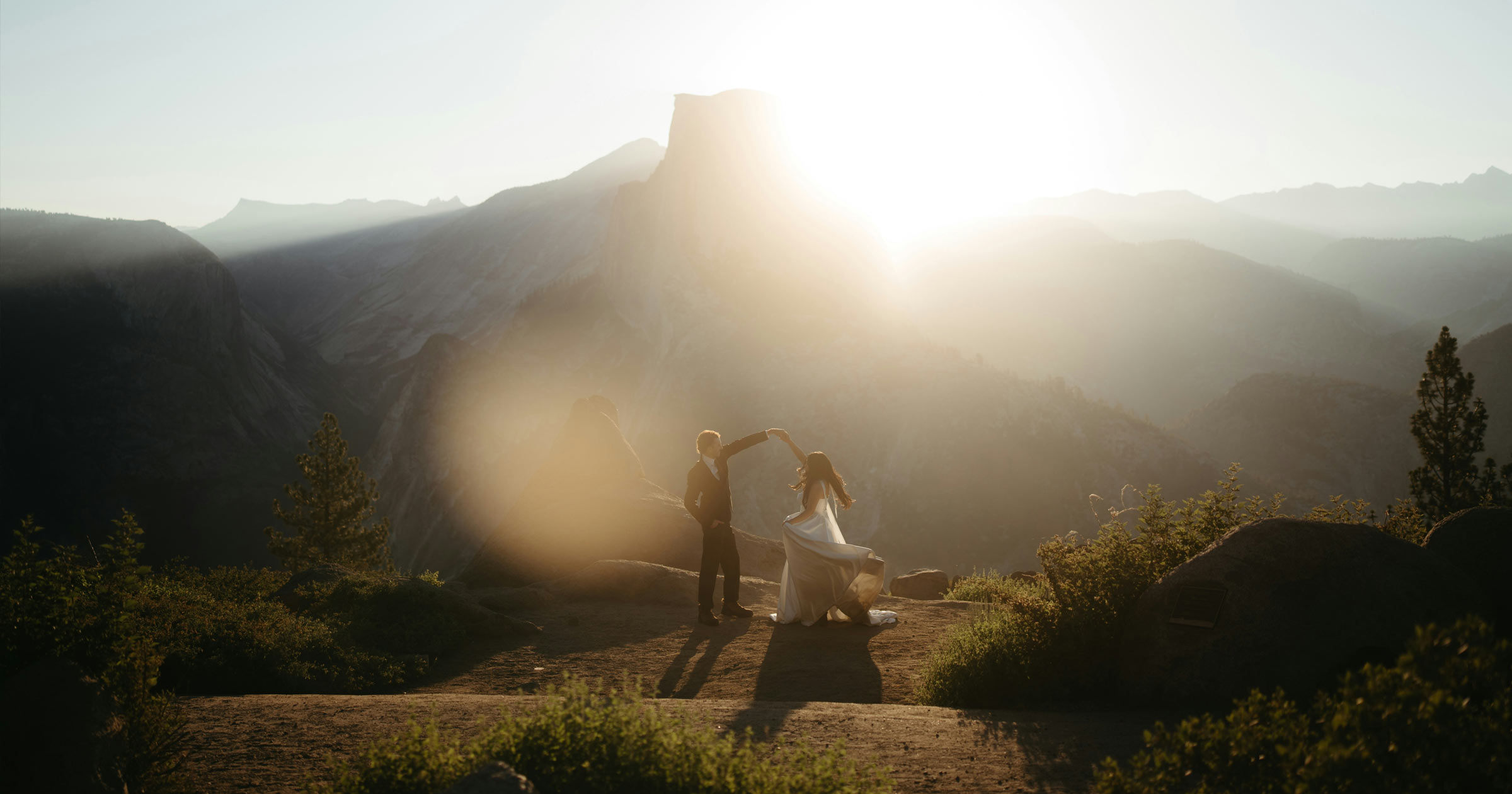
Yes, any wedding ceremony in Yosemite requires a special use permit from the NPS. The NPS lists a $150 permit cost and a non-refundable $150 application fee; apply no later than 21 days and no earlier than one year in advance. A separate permit is not required for the wedding photographer or videographer. Drones are prohibited in the park, and permits are not issued for holiday weekends.
Getting married just the two of you on the edge of Taft Point, overlooking the cliff, is fine. Placing two folding chairs there is not. Flying a drone is also not allowed. And popping a glass bottle of champagne on the sand at Cathedral Beach is against the law, due to a completely different rule that almost no one knows about.
Yosemite is one of the most coveted wedding destinations in America, and one of the most heavily regulated. There's no venue with a manager to handle everything for you. There's the National Park Service (NPS), its ceremony permit, a list of locations with limits on people and vehicles, and a thick document called the Superintendent's Compendium—a collection of local park regulations, updated in May 2026.
This guide is for two readers at once. For the couple deciding where to say "I do": how much a permit costs, where you can and can't go, when the roads are open, and why the July ceremony at Glacier Point won't happen. And for the videographer who's going to film this couple: do they need a permit (spoiler: not for the wedding itself), what changed in the 2025 law, can they bring a tripod, and where does the NPS's patience with drones end?
We run OurStoria—a platform through which videographers deliver films to couples. An elopement has one special feature: almost no one sees the wedding in person. The film is the only way for the family to experience it. More on that at the end. Other countries and parks are in our guide directory.
Disclaimer: We are not lawyers or rangers. All rules, fees, and deadlines are taken from the NPS Yosemite pages and the park compendium as of November 2026. Rules change—check before you travel at nps.gov/yose.
Elope Yosemite National Park: Step by Step
In short, an elopement is a wedding where you are the main audience (for more details, see our article about what an "elopement" means). In Yosemite, this "just us" has an official form. Here's what the process from idea to ceremony looks like.
1. Choose a date, not just a season. NPS does not issue permits for holidays and holiday weekends—the list of locations explicitly states: Saturday, Sunday, and Monday of such weekends are off-limits. Memorial Day, Fourth of July, and Labor Day are off-limits. Regular weekends are fine, but the park itself recommends weekdays and early or late hours of the day: a permit doesn't close the site to tourists.
2. Choose a location. There is an official list of 12 locations with limits on people and vehicles (table below). If you have fewer than 11 people—including the photographer and videographer, who count toward the total—there's no limit to your options: you can choose almost any location, except open meadows and riverbanks.
3. Submit your application. No later than 21 days and no earlier than one year in advance. A paper form, payment by check or money order, mailed to El Portal. Details in the next section.
4. Obtain a marriage license. An NPS permit is a permit for an event in the park, not a marriage license. The license is issued by the state of California; the NPS itself refers you to the state website. Check with your county clerk for details on terms (timeframe, witnesses, and who can perform the ceremony)—we don't offer legal advice here.
5. Decide who will be filming. You're in luck: your wedding photographer and videographer don't need a separate permit—filming is covered by your permit. For more information, see the section on filming. Ask the videographer in advance how they'll deliver the film: relatives who didn't go will only see the day this way. You can see what it looks like in the sample gallery.
6. Plan your entry. Park entry is $35 per car for seven days, and each guest car pays separately. In 2026, Yosemite abandoned its timed entry reservation system. The park hasn't yet announced what will happen in 2027—keep an eye on nps.gov/yose and recreation.gov.
If you're still deciding between Yosemite and other places, we have a list of the best places to elope and a general plan on how to elope.
Yosemite Wedding Permit: Cost, Deadlines and What's Not Allowed
Let's start with the main phrase from the NPS page: a special use permit is required for any wedding or commitment ceremony anywhere in the park. A couple without guests is still a wedding. A quickie ceremony while no one is watching is also a wedding.
How much does it cost?
| What | Amount | Comment |
|---|---|---|
| Application fee | $150 | Non-refundable, included with the application |
| Permit cost | $150 | As per the NPS page |
| NPS event monitor | $50 per hour | For outdoor events of approximately 30–50 people; thresholds vary at each venue |
| Park entrance | $35 per car, 7 days | Non-waivable for the couple and guests alike |
| Guests—non-US residents, 16+ | +$100 per person | If you don't have an annual pass |
Please note the first two lines. NPS lists both "permit cost $150" and "non-refundable application fee $150," but doesn't add them together. To confirm whether this is one or two amounts, please call 209/379-1858 for wedding permits. All fees are non-refundable.
Deadlines. Applications must be submitted no earlier than one year and no later than 21 days before the date. Permits are allocated up to two hours, and the site is first-come, first-served. Please indicate alternate dates, locations, and times on the form; the park will consider them if the first option is taken.
How to submit. This is not an online form, but a PDF (NPS form 10-930s), which is printed and mailed:
- The application requires the Social Security number (SSN) of one of the couple; without it, the application will not be processed (a tax ID number can also be included in the form itself);
- Payment — by check or money order; cash is not accepted;
- Address — Special Park Uses / Film and Weddings, P.O. Box 700, El Portal, CA 95318; by courier — 5083 Foresta Rd, El Portal, CA 95318;
- If you are driving, please include a parking plan with the form;
- The approved permit must be in your possession during the ceremony.
For an international couple, the SSN requirement is the first question to ask the office at 209/379-1858.
What's not allowed. This is a list that often surprises couples accustomed to "normal" weddings:
- Balloons, arches, and other decor. Bouquets and boutonnieres are allowed;
- Signs and plaques;
- Chairs, tables, and other furniture at the ceremony site. Existing benches and picnic tables are allowed, plus one table for food and chairs for guests with special needs;
- Releasing butterflies, scattering rice, seeds, or anything else—living or otherwise;
- Amplifiers, speakers, and any sound louder than 60 decibels at a distance of 50 feet;
- Ceremonies at the base of giant sequoias;
- Carriages, hot air balloons, and other special vehicles;
- Drones;
- Cars outside designated areas, dogs on trails;
- Events in meadows and near water, if they are harmful to nature.
At the beach picnic areas, you can lay a short, light runner on the sand or a single mat for the couple. Formal receptions are not permitted in the picnic area; small receptions can be arranged through Yosemite Hospitality, the park's concessionaire.
For a videographer, two points on this list are important. The first is 60 decibels at 50 feet: a speaker for a first dance to your favorite song on the beach won't cut it. Music will be added to the film during editing, but it's better to record live sound on location: the river, the wind, and voices. The second is no furniture: this means no rows of chairs, which usually create the "guests looking at the couple" shot. The composition will be based on the landscape.
If you prefer a chapel. Ceremonies at Yosemite Valley Chapel are scheduled by the secretary of Yosemite Community Church: 209/372-4831. You can invite your own officiant.
Yosemite Wedding Locations: Where to Elope in Yosemite
The NPS has an official list of ceremony sites. Here it is in full, with limits:
| Location | Area | Maximum people | Vehicles | Important information |
|---|---|---|---|---|
| Cascades Picnic Area | Valley | 30 | 8 | Not at the falls observation deck; year-round |
| Lower Yosemite Fall (trail) | Valley | 50 | No dedicated parking | Not on the Yosemite Creek bridge or at the base of the falls |
| Swinging Bridge Picnic Area | Valley | 20 | Limited space | Not on the bridge or in the meadows |
| Cathedral Beach Picnic Area | Valley | 50 | 6 | Monitor for 35–50 people; closed November through Memorial Day |
| Sentinel Beach Picnic Area | Valley | 100 | 8 | Monitor over 50; closed November until Memorial Day |
| Bridalveil Fall | Valley | 50 | — | Monitor for 50 |
| Glacier Point Amphitheater | Glacier Point | 50 | — | 7,214 ft.; no weddings in July and August |
| Chilnualna Falls Trailhead | Wawona | 50 | 10 | Monitor for 35–50 people |
| Tenaya Lake Beach | Tioga Road | 50 | — | 8,150 ft. |
| Tuolumne Meadows Lodge | Tuolumne | 25 | — | 8,600 ft.; limited parking, carpooling required |
| Tuolumne Grove | Big Oak Flat | 30 | — | 2.5-mile roundtrip hike, trailhead only |
| Merced Grove | Big Oak Flat | 30 | — | 3-mile roundtrip hike, trail only |
And the rule that makes Yosemite a true elopement park: if there are fewer than 11 people, you're not tied to the list. Except for open meadows and riverbanks. Therefore, Tunnel View and Taft Point, which aren't listed, are viable options for a small elopement. A permit is still required.
Now, about the six places couples most often come here for.
Tunnel View
The most recognizable view of Yosemite: the entire valley, El Capitan on the left, Half Dome ahead, Bridalveil Fall on the right, plus Sentinel Rock and Cathedral Rocks. The lookout off Wawona Road is accessible by car year-round and stroller-friendly: the view opens right from the parking lot, and a short asphalt path leads to the walking area.
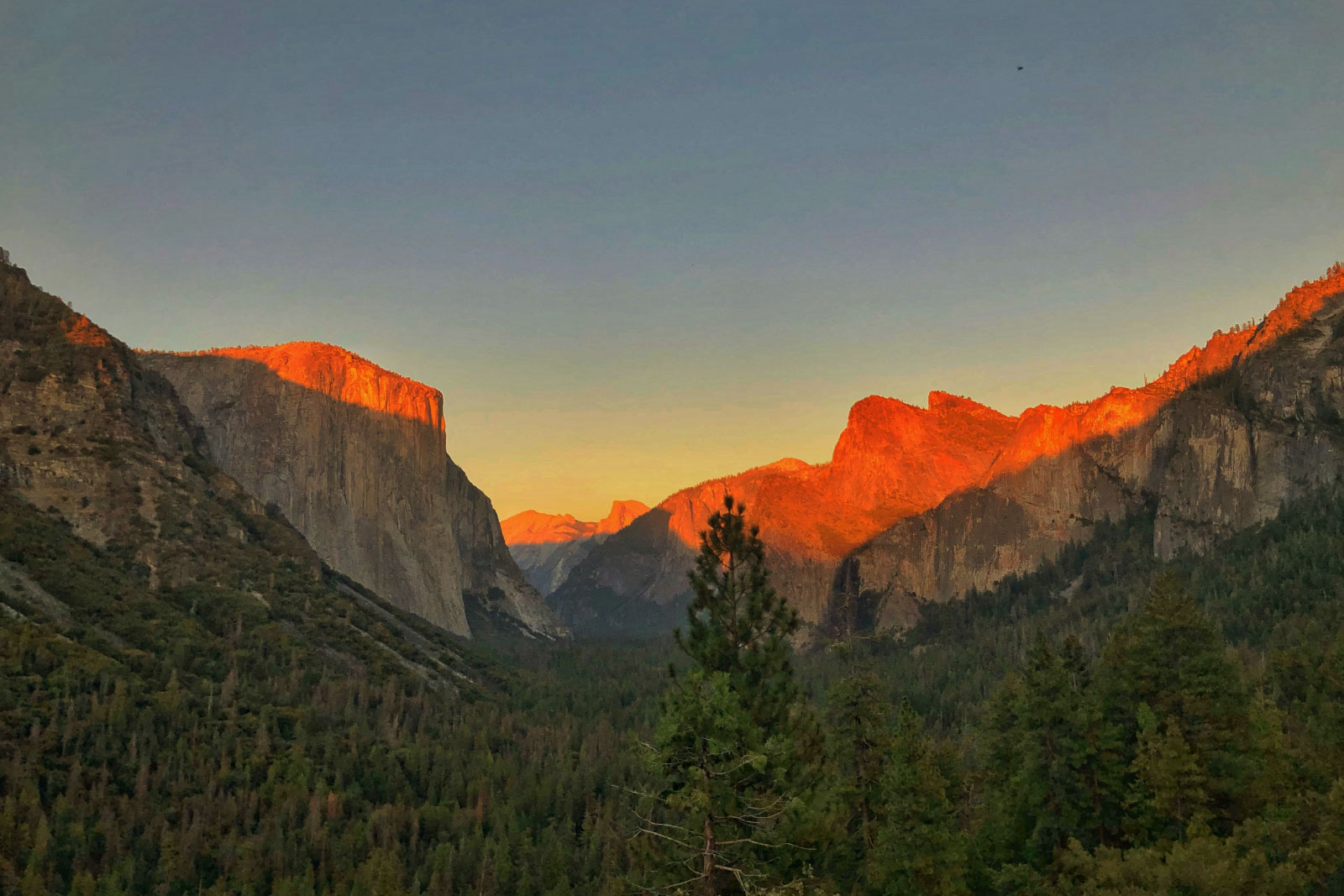
The advantage is that it's easy for grandparents to access, and the scenery is instantly recognizable to all relatives. The disadvantage is that it's one of the most crowded spots in the park. The couple is almost never alone in the frame. The videographer should time the ceremony for early dawn and shoot with a long lens from the edge of the lookout: strangers disappear from focus, and Half Dome appears larger.
Glacier Point Amphitheater Wedding
The Glacier Point Amphitheater is an official venue for 50 people at an elevation of 7,214 feet, overlooking Half Dome from above. There are two catches. First, weddings aren't scheduled there in July and August—precisely when the road is reliably open and everyone wants to get there. Second, the road to Glacier Point is closed in winter, and ceremonies are only possible from approximately May to November (more details in the section on roads).
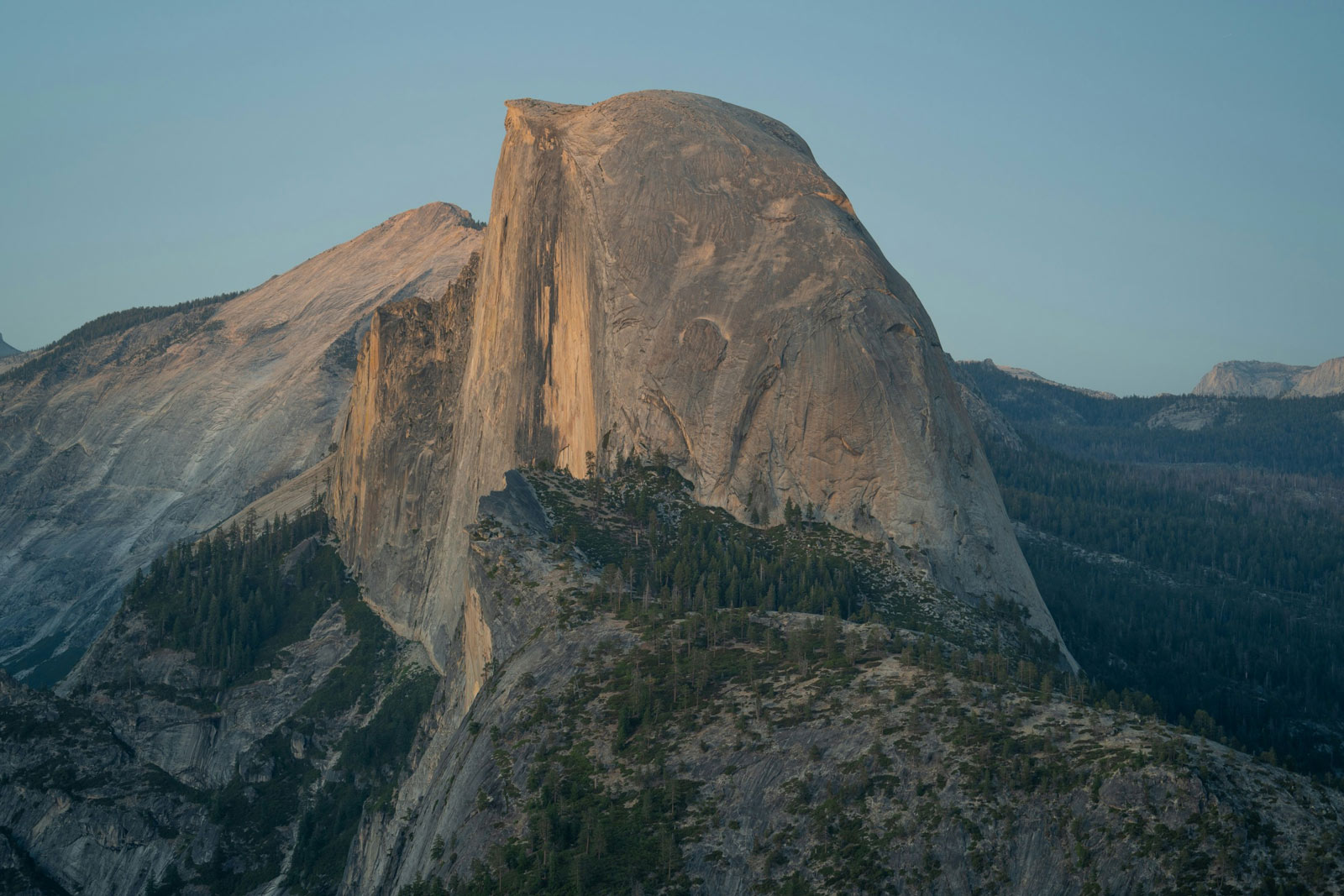
From the parking lot to the observation deck, it's a 300-yard paved path, a 10–15-minute walk. Near the observation deck, there's an area closed to the public—Overhanging Rock, an overhanging cliff marked as dangerous. It's closed under the compendium, and taking photos "at the very edge" there is a violation, not a sign of courage.
Taft Point
The trail from the Sentinel Dome/Taft Point parking lot on Glacier Point Road is 2.2 miles roundtrip, with about 200 feet of elevation gain on the way back, taking an hour or two. At the end is a bluff overlooking the valley. For groups of up to 10 people, this is a classic spot for sunrise or sunset vows.
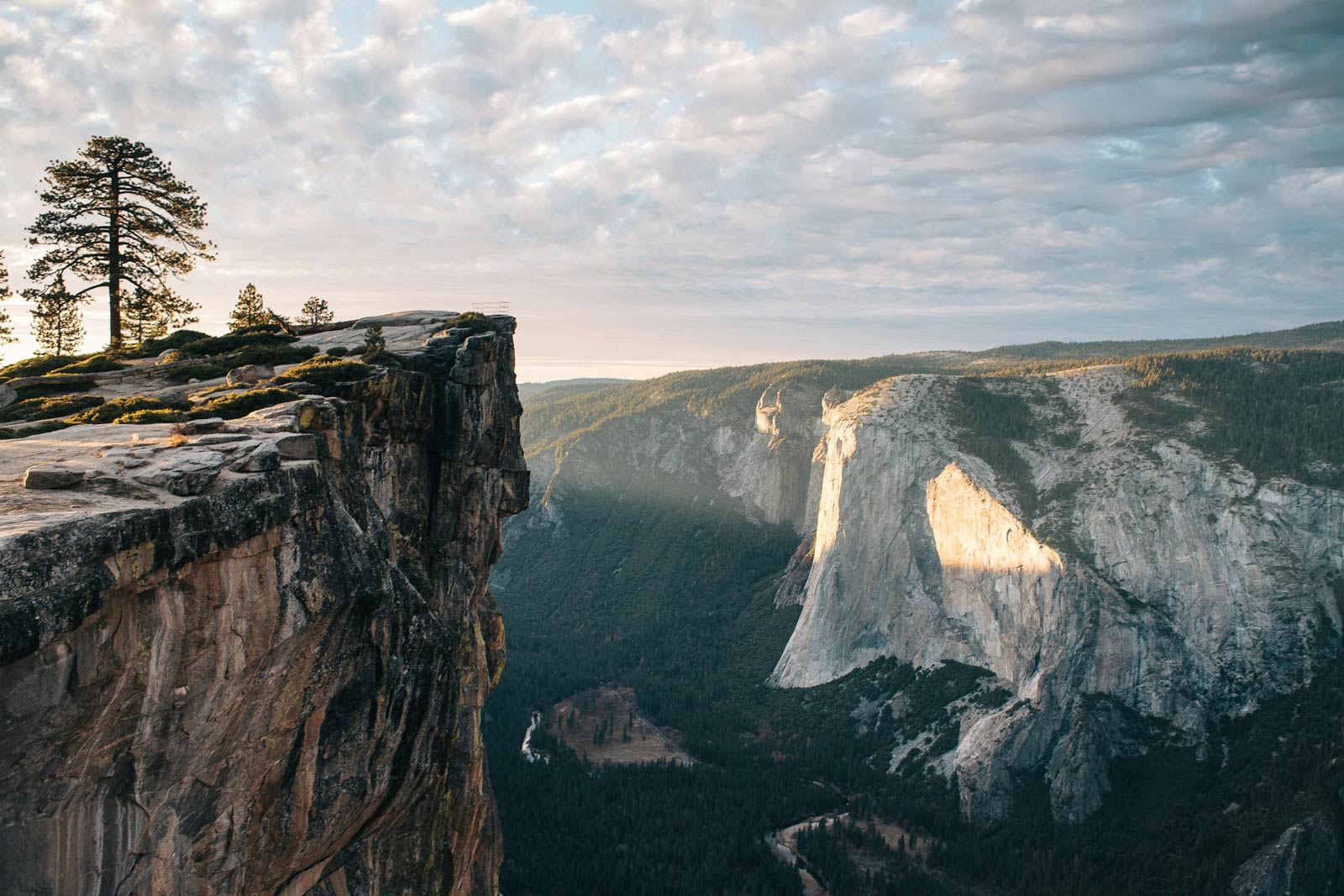
Shooting here means shooting in the wind. Whispered vows over the bluff are the couple's main reason for coming here, and the main thing they could lose. A lavalier microphone with a windscreen on each person and a second recorder are a must (we have a separate article on how to record audio at a wedding). And then this fragment should be given to the couple separately: in the OurStoria galleries, the vows can be posted as a separate clip next to the film—Nora can rewatch them without having to rewind ten minutes of the trail.
The neighboring Sentinel Dome is a two-mile roundtrip hike with 400 feet of elevation gain. NPS specifically warns visitors to stay off the domes during thunderstorms.
Cathedral Beach
A sandy beach on the Merced River overlooking Cathedral Rocks. Official site: up to 50 people, 6 cars, monitor for groups of 35–50. Closed from November until Memorial Day weekend. And in mid- and late February, when the entire park flocks to see Horsetail Fall glow at sunset, the beach from Cathedral Beach to Sentinel Beach is completely closed.
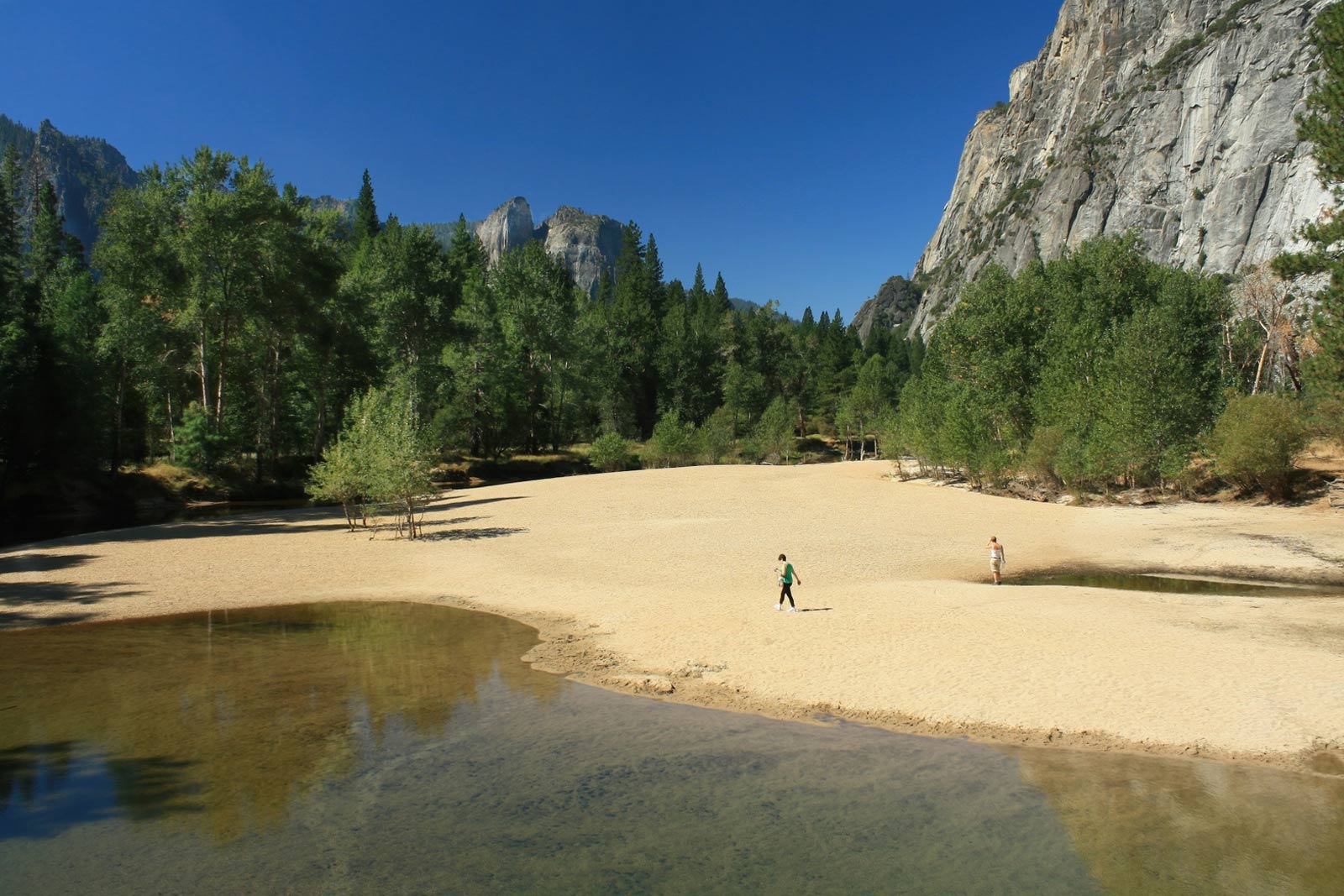
Two more rules from the compendium that are worth knowing in advance. The El Capitan, Cathedral Beach, and Sentinel Beach picnic areas are closed from one hour after sunset to one hour before sunrise, meaning a ceremony "under the stars" on the beach will not be possible. And glass: keeping glass containers within 50 feet of the river or lake shore is prohibited—people walk barefoot there. Champagne on the beach must be served in cans or plastic glasses.
Swinging Bridge
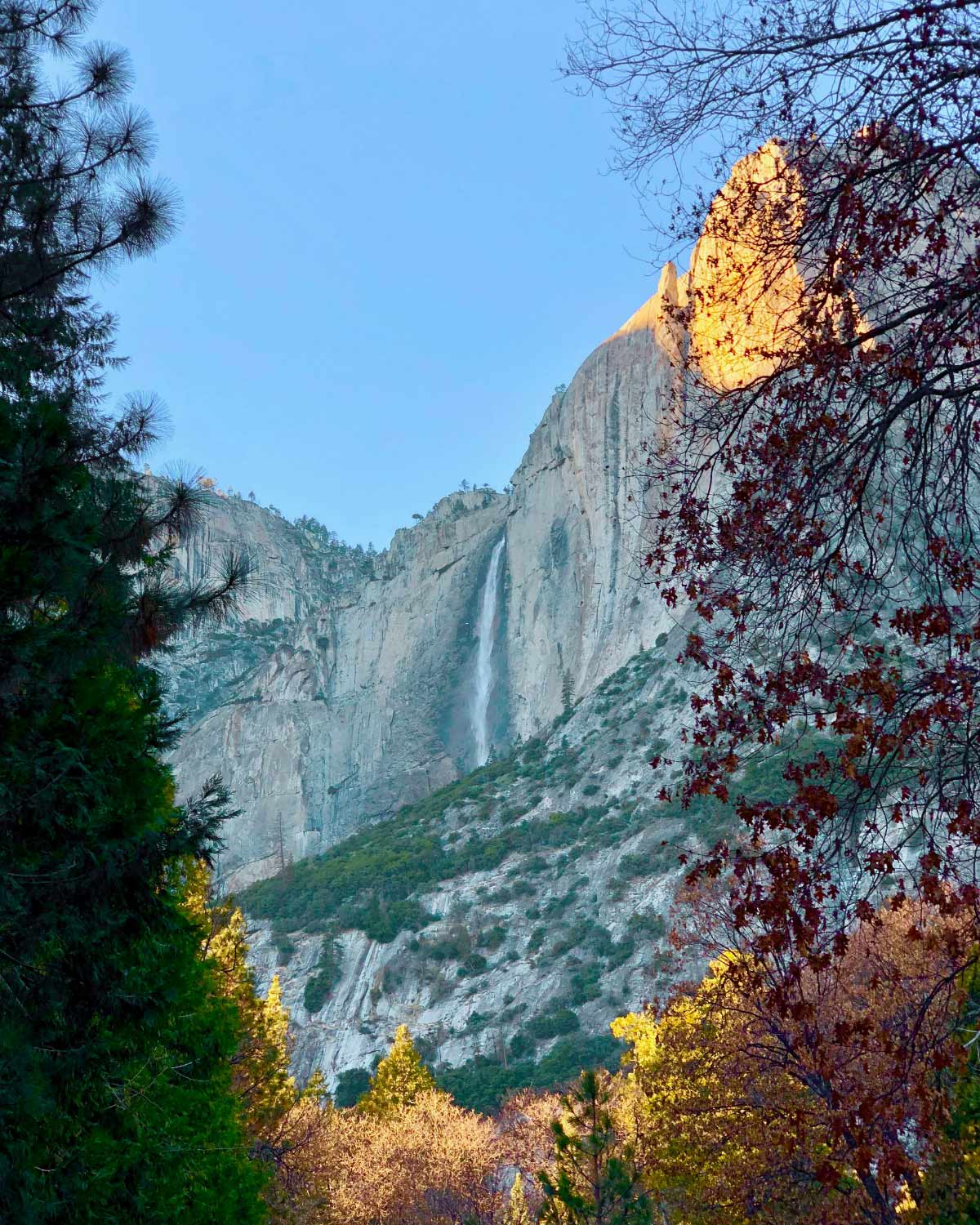
Picnic area near the pedestrian bridge over the Merced with a view of Yosemite Falls. The limit is 20 people, and parking is limited. The NPS specifically states: no ceremonies on the bridge itself or in the meadows. The bridge is for walking and taking photos after the ceremony, not for vows.
Tuolumne Meadows
The high-elevation section of the park along Tioga Road: Tenaya Lake (50 people, 8,150 feet) and the Tuolumne Meadows Lodge area (25 people, 8,600 feet, carpool). There are fewer people here than in the valley, and the scenery is completely different: granite domes, a lake, and wide meadows. However, the meadows themselves are closed for ceremonies—standing on the grass of Tuolumne Meadows for vows is prohibited. And all this only exists when Tioga Road is open.
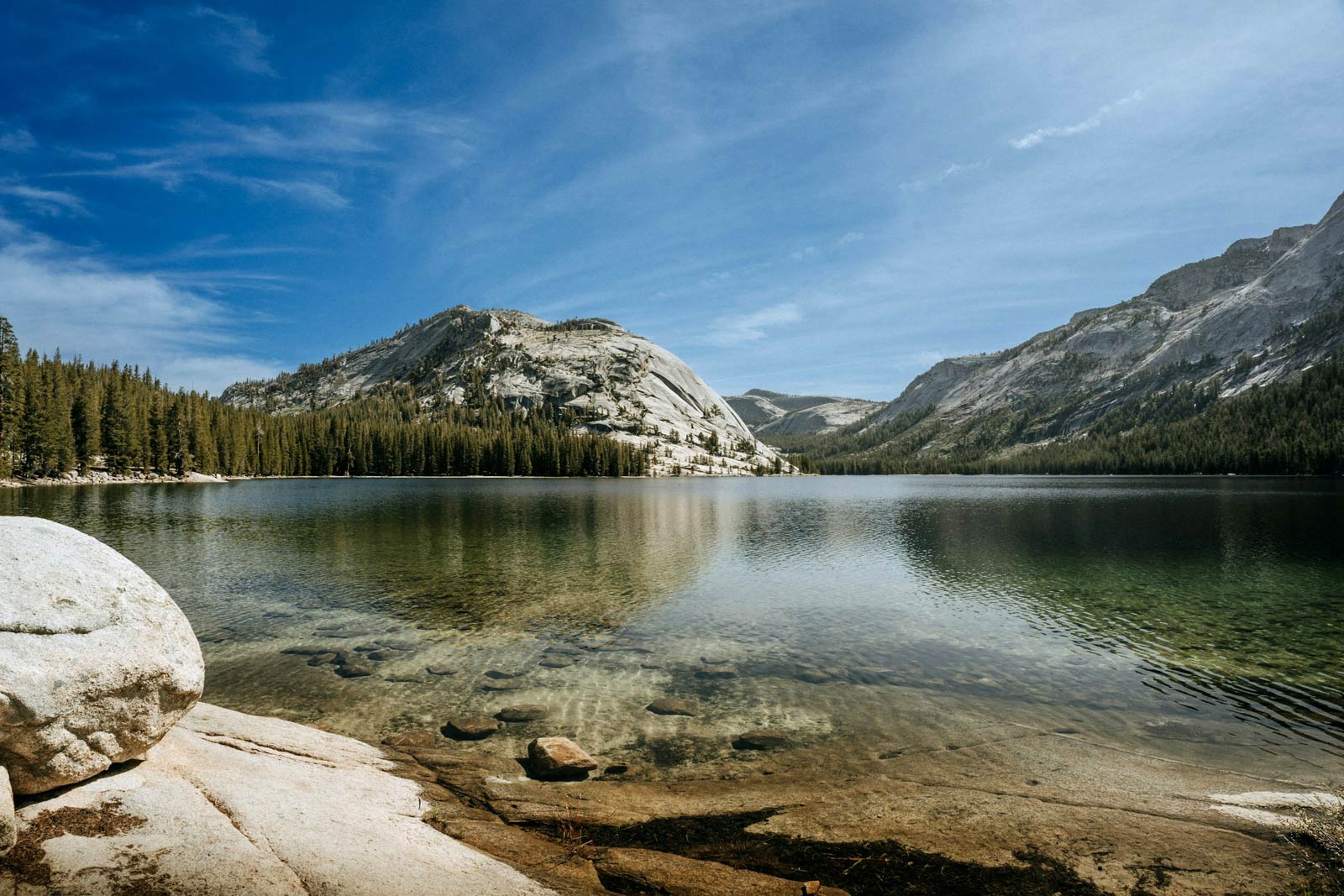
Don't forget the altitude. 8,600 feet can cause shortness of breath for older guests, quick sunburn, and chilly evenings even in July. Batteries drain faster in the cold—keep spares in an inside pocket.
Yosemite Elopement Photographer and Videographer: Do They Need a Permit?
The search results here are full of contradictions. Some blogs say that a photographer needs a separate permit for every wedding. The NPS has a different opinion—and it's worth looking into, because both your money and your peace of mind depend on the answer.
What's changed. In January 2025, the EXPLORE Act went into effect. It rewrote the rules for filming in national parks. Now, film, photography, and audio recording are all the same for the NPS: no matter whether the filming is commercial, personal, for a blog, or for news. Previously, a permit was tied to the word "commercial"; now it's tied to what you're doing and how many of you are there.
Wedding photography. Yosemite's page on photography clearly states: permits and fees are never required to film an event authorized by a written document, such as a wedding. The Compendium reiterates this in legalese. If the couple has a wedding permit, you can shoot within its terms: at the same time, in the same location, for the same two hours.
Shooting on a different day (portraits the day before, a walk "after the wedding," or a day-after shoot) is not covered by this permit. In this case, the general rule applies: a permit is not required if:
- there are eight or fewer people participating;
- you are in areas open to the public;
- all equipment is handheld;
- the location is not exclusively occupied;
- there is no harm to nature or other visitors.
The catch is the tripod. The Yosemite Compendium specifically lists "equipment other than handheld": a tripod, monopod, and handheld light. Unless covered by a wedding permit, a permit is required. The park's website also adds: photography requiring a permit is completely prohibited on weekends and holidays. Taking couple portraits with a monopod on the Saturday before the wedding is no longer just "hanging out with a camera."
Wilderness. In designated wilderness, photography always requires a permit, except for casual photography by visitors, regardless of the number of people and equipment. If the couple wants an overnight stay in the backcountry, they will also need a wilderness permit (reserved on Recreation.gov; from late April to October, 60% of the quota is released by lottery 24 weeks in advance) and a separate consultation with the Special Park Uses office regarding the shoot.
If you do need a permit, here are the figures from the Yosemite page:
| What | Video | Photo |
|---|---|---|
| Application fee | $300 | $200 or $300 |
| Site, 1–2 people with camera and tripod | $0 per day | — |
| Site, 1–10 people | $150 per day | $50 per day |
| Monitor | $500 per day | $500 per day |
| Review period | from 30 days | from 30 days |
What to include in the contract. One line with the date and time from the couple's permit. One line stating that filming on other days is subject to NPS filming regulations and may require a separate permit. And one line stating that there will be no drone.
Can You Fly a Drone in Yosemite?
No. And this isn't a case of "you can't, but you can if you really want to."
In June 2014, NPS Director Jonathan Jarvis sent out a directive to parks banning drones. Specific incidents prompted the order. At Mount Rushmore, a drone flew over evening spectators in the amphitheater, and rangers confiscated it. At the Grand Canyon, a noisy drone disrupted a quiet sunset, flew back and forth for a long time, and crashed in the canyon. In Zion Park, a drone reportedly startled a herd of bighorn sheep, separating the adults from the calves.
In Yosemite, the ban is written into the compendium. The 2026 text states: The takeoff, landing, and operation of drones on NPS lands and waters within park boundaries is prohibited except with written approval from the superintendent. The rationale is something videographers rarely consider: drones are dangerous for helicopters, which constantly fly in the park on rescue missions, and interfere with animals' nesting, migration, and hunting. The peregrine falcon is specifically mentioned. Another reason is that people come here for the views and the quiet. Drones are also listed separately in the list of prohibited items on the wedding page.
Getting written approval from the superintendent for a wedding is unrealistic. The filming page states that aerial photography is permitted "rarely" and with strict restrictions.
What to do instead of a drone:
- Long lens from a high vantage point. A couple on Taft Point, shot from a nearby ledge with a telephoto lens—the same "tiny people in a vast world" effect;
- Glacier Point as an "aerial" view. The view from above the valley is a drone shot, only with feet on granite;
- Gimbal and movement—on the trail and on the beach.
If the couple really wants aerial photography, it can be done outside the park, where FAA regulations for commercial pilots apply (for more details, see our article on drones at weddings). However, please check the park boundaries and restricted areas yourself, not from memory.
Tioga Road and Glacier Point Road: Seasons and Closures
Two roads determine your site options.
Tioga Road is the only road through the park from west to east, through Tuolumne Meadows and Tenaya Lake. In winter, it is closed from Crane Flat to the eastern boundary. NPS begins clearing around April 15, and it takes a month or two; the park honestly warns that it can't predict the opening date even in late spring. In 2026, the road opened on May 15—according to the NPS, the earliest opening in 16 years. So, it's usually later. Scheduling a ceremony at Tenaya Lake for late May is a lottery.
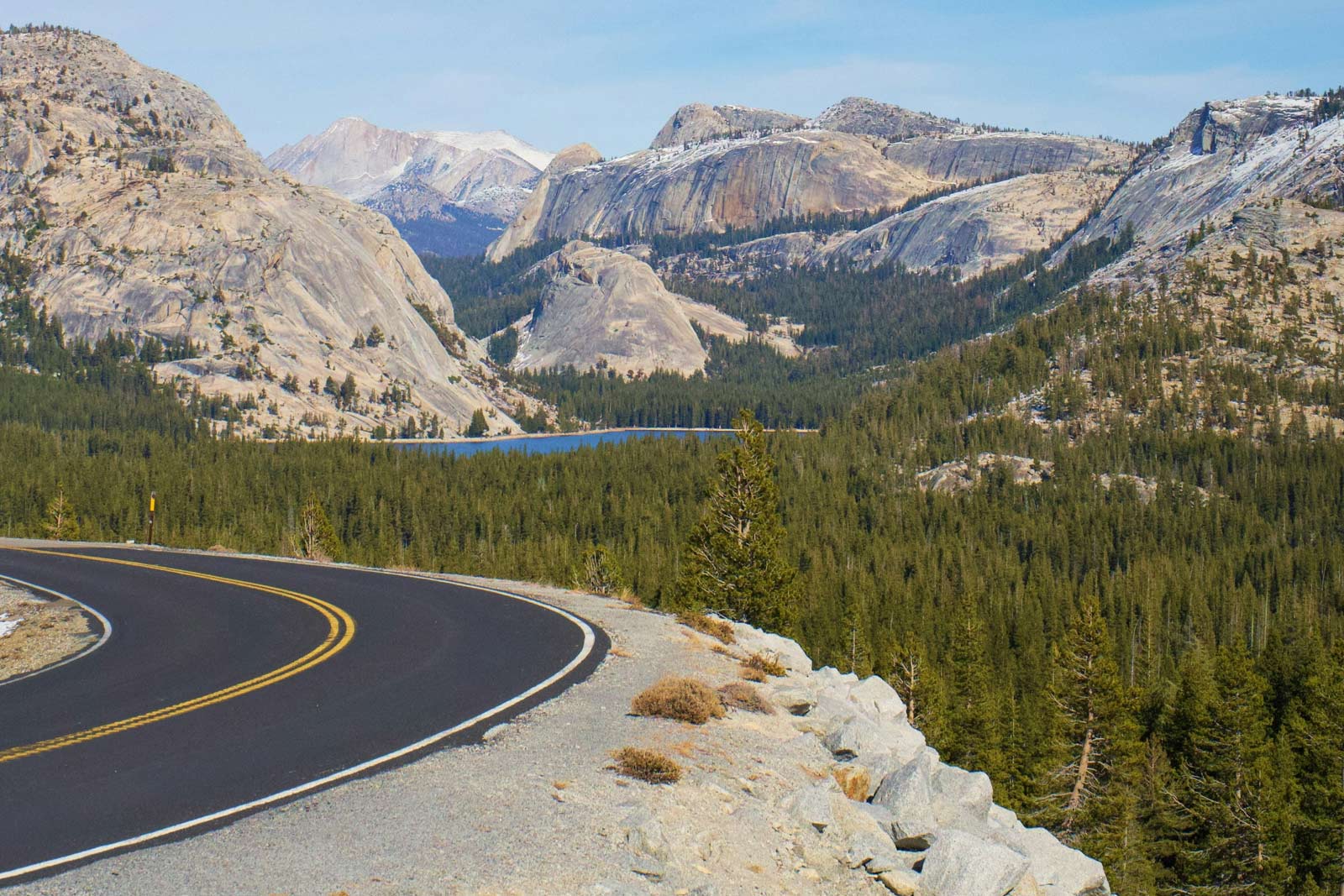
Glacier Point Road leads to Glacier Point and the trails to Taft Point and Sentinel Dome. It is usually open from May to November. In winter, only the section to the Badger Pass ski area is open. In 2026, the road opened on May 9. And in 2022, it did not open at all due to reconstruction; in 2023, it opened later than usual. It happens.
Fall. Starting October 15, overnight parking on Tioga Road and Glacier Point Road (east of Badger Pass) is prohibited until the spring reopening: the first snowstorm can block your car until spring. The first snowfalls close roads temporarily and without much warning. Example: on November 12, 2026, as we wrote this, both roads were closing at 5:00 PM due to a snow forecast, and the current conditions page warns that chains may become mandatory at any time.
What this means by month:
| Month | Valley (Tunnel View, Swinging Bridge, Cascades) | Cathedral / Sentinel Beach | Glacier Point, Taft Point | Tioga Road, Tuolumne |
|---|---|---|---|---|
| December–March | Yes | Closed | No (road closed) | No |
| April–May | Yes | From Memorial Day weekend | Usually from May | Luck of the draw; in 2026, from May 15 |
| June | Yes | Yes | Yes | Usually yes |
| July–August | Yes, crowded | Yes | Taft Point—yes; amphitheater—no weddings | Yes |
| September–October | Yes | Yes | Yes | Yes, until first snow |
| November | Yes | Closed | Until road closure | Until road closure |
There are two practical implications for videographers. First, it's worth including a backup location in the valley in your contract if the ceremony is planned at altitude in the spring or late fall. Second, on the long, narrow climb to Glacier Point, vehicles longer than 30 feet and those with trailers are not allowed past Sentinel Dome—a small RV for a film crew won't make it there.
Light in Yosemite: Sunset Times and the Valley Walls
Yosemite Valley is sandwiched between granite walls. This changes the light more than the seasons. We calculated the sunset time for the valley using the standard solar position formula (our calculation, for a level horizon):
| Date (2027) | Sunset | Sun from 6° above the horizon to 4° below it ("golden hour") | From sunset to end of civil twilight |
|---|---|---|---|
| February 20 | ~5:43 PM | 53 min | 27 min |
| June 21 | ~8:24 PM | 58 min | 31 min |
| September 15 | ~7:07 PM | 51 min | 26 min |
| October 15 | ~6:22 PM | 52 min | 26 min |
| December 15 | ~4:41 PM | 59 min | 29 min |
That's astronomy. The reality in the valley is different: the sun sets behind the south wall significantly earlier than that (our estimate—an elevation map app will show the exact time). A soft, even shadow falls on the valley floor, while El Capitan and Half Dome linger above for a long time. Therefore, a "golden" shot in the valley is often not a couple in the sun, but a couple in shadow against a backdrop of burning granite.
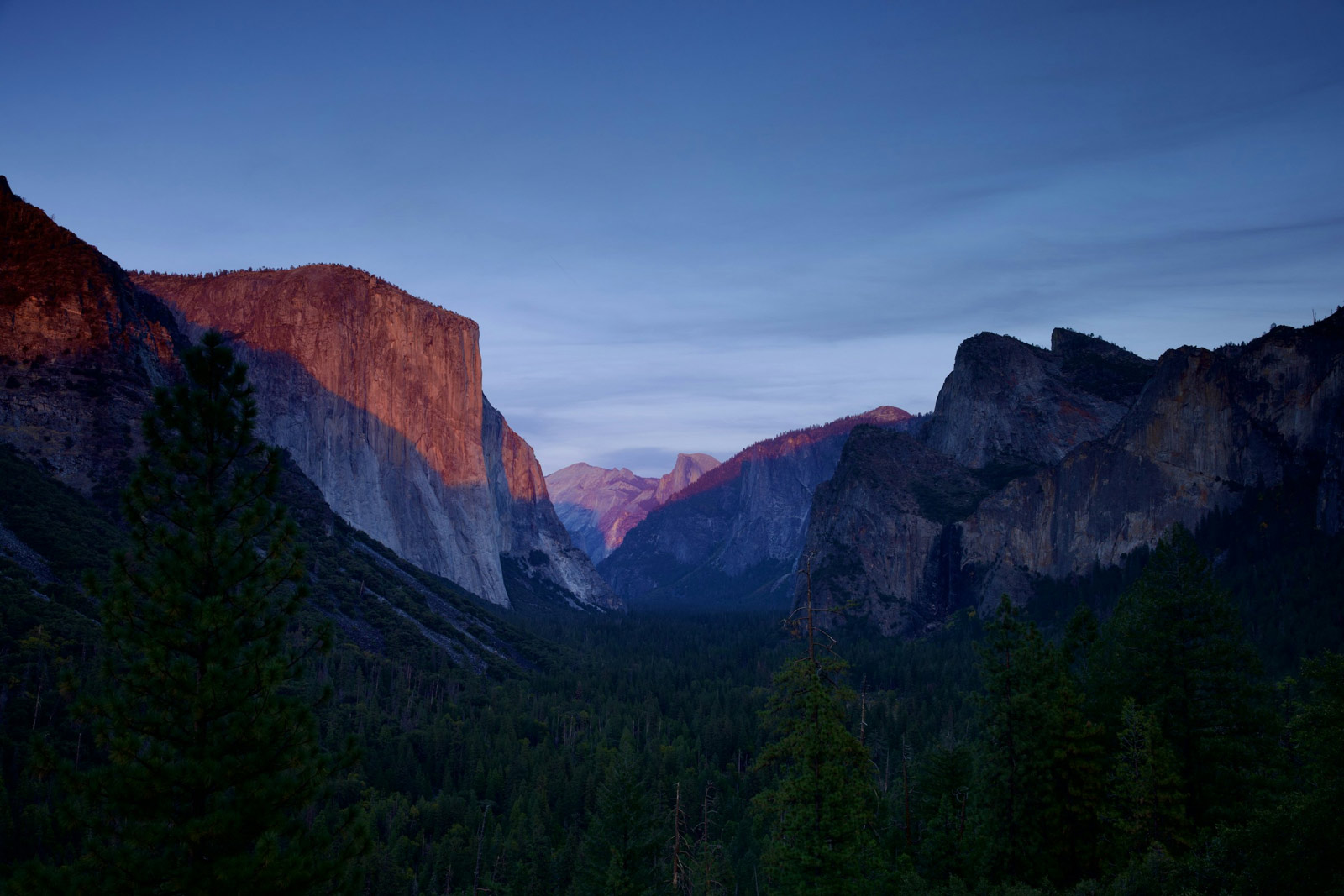
At Glacier Point and Taft Point, it's the opposite: you're high up, the horizon is open, and the sunset is clear. This is the place for sunset portraits and the blue hour that follows.
Sample day (our estimate, mid-September):
- 6:00 AM — departure from the hotel in Wawona or El Portal;
- 7:00 AM — Tunnel View in the early morning, when there are fewer tourists; first shots of preparation and reading letters to each other;
- 9:00 AM — breakfast, rest, transferring equipment;
- 4:30 PM — Sentinel Dome/Taft Point parking lot;
- 5:30–6:15 PM — ceremony at Taft Point within the permit's two-hour window;
- 6:30–7:20 PM — sunset portraits, blue hour;
- 7:40 PM — back to the car down the trail by headlamp.
Don't forget about the time change: in 2027, the United States switches to daylight saving time on March 14 and back on November 7. After November 7, sunset in the valley is around 4:45 PM.
Bears, Coolers and Champagne: Wildlife Rules
A wedding in Yosemite is a wedding in the home of bears. The rules are strict, and the ones who break them most often are those with their wedding party in a car.
Distance. According to the compendium, you cannot intentionally approach bears within 50 yards—or any distance at all if doing so disturbs the animal or creates a danger. For the videographer: a bear in the background of a couple's frame is a great shot if captured with a long lens from a car or from a distance, but it's a violation if you approach it for the sake of an angle.
Food is anything that smells. This is the NPS definition: canned goods, drinks, soap, cosmetics, trash—and portable coolers, even empty ones and even those certified bear-resistant. A cake, a fruit bouquet, bottles, the bride's hairspray—all count as "food."
- Food may only be left in a car during the day, out of sight, with the windows closed. At night, keep it in a metal food locker.
- In a hotel room, keep it inside, with the doors and windows closed.
- At a picnic or while camping, keep it within arm's reach, never unattended.
Violation: fine up to $5,000, vehicle towing, and eviction from the campsite or hotel. A cake left in the car at Tunnel View during nighttime stargazing may become the most expensive cake of your life.
Sounds and lights. Calling animals with sounds or devices is prohibited. So is spotlighting animals with a flashlight. Videographers: no "shouting to get the deer to raise their heads" and no shining lights on animals at dusk.
Glass near water. Again, because this is the most obscure rule of a wedding day: glass containers are prohibited within 50 feet of a river or lake shore. This applies to both Cathedral Beach and Tenaya Lake.
Getting the Film to Family Who Weren't There
Let's get back to Nora and Miles. They got married at Taft Point in September: just them, Nora's brother Otis and his girlfriend, and videographer Priya from Sacramento. Five people—so no listed site and no monitor needed.
The rest of the family stayed home. Grandma Pearl, in Ohio, wouldn't have been able to handle the trail and the altitude. Miles's grandmother, Nana Paloma, lives in Guadalajara and doesn't understand English well. Nora's parents are in Boston—three hours ahead.
| Where to watch | Time difference with Yosemite (September, PDT) |
|---|---|
| San Francisco | 0 |
| Guadalajara | +1 hour |
| Ohio, Boston | +3 hours |
An elopement is a wedding where the film isn't just an "addition to memories," but the memories themselves for everyone who wasn't there (how filming small weddings is changing is in our research on micro weddings). Hence, what works for delivery:
- One link that opens without registration. Grandma Pearl won't create an account for her granddaughter's wedding.
- The film, the vows separately, and the photos side by side. The vows at Taft Point are a minute and a half the family will rewatch. They need their own clip, not a timecode.
- The interface language is for the viewer. Nana Paloma will understand the "Ver" and "Descargar" buttons faster than "Watch" and "Download."
- Anyone can watch, but the family can download. The link is shared through chats, and the original remains with the couple and parents.
- Sending time. A link sent at 10:00 a.m. California time arrives in Boston by lunchtime, and in Guadalajara at 11:00 a.m. (This is our estimate of a "convenient" window, not a rule).
This set can be assembled from various tools. We, of course, prefer our own. In the OurStoria client gallery, the film, individual clips, and photos are located under a single link with your logo; viewers don't need to register. The gallery language is selected per project—eight languages, including Spanish (see the article about client gallery language). For Nora and Miles, you can create two galleries: English for Ohio and Boston, and Spanish for Guadalajara. A separate password is set for downloads, which only the family knows. For the full delivery process, check out our guide to delivering wedding video to clients.
If you're a California videographer, check out our guide to filming weddings in Los Angeles. And if a couple is choosing between Yosemite and the Canadian Rockies, check out our guide to Banff: it has its own rules, its own licenses, and the same ban on drones.
Start a 7-day free Pro trial →
No chairs, no speaker, no arch, no drone. No champagne in a glass on the beach, no cake in the car after sunset. The list of no-nos in Yosemite is long—and almost all of them exist to preserve the place as Nora and Miles envisioned it.
A wind was blowing at Taft Point, and Miles started the vows over because the first phrase had blown away. Priya recorded both attempts.
A week later, Grandma Pearl opened the link in Ohio. She watched the vows five times. On the fourth, she noticed her granddaughter laughing—at the second attempt. She said that was the best part.
Related articles:
- All Wedding Filming Guides for Videographers
- Filming Weddings in Los Angeles: FilmLA Permits, Drones, Beaches and Light (2027)
- Filming Weddings in Banff & the Canadian Rockies — Parks Canada Licences, Drone Ban, Moraine Lake Shuttles and Light
- How to Elope: 8 Steps From the First Talk to Sharing the Film
- Best Places to Elope: 14 Spots in the US and Abroad, and the Catch at Each
- Wedding Drone Videography: FAA Part 107 Rules, Venues and Gear (2026)
- How to Deliver Wedding Video to a Client: A Step-by-Step Workflow
- The Micro-Wedding Revolution: How Smaller Events Changed Wedding Videography Forever